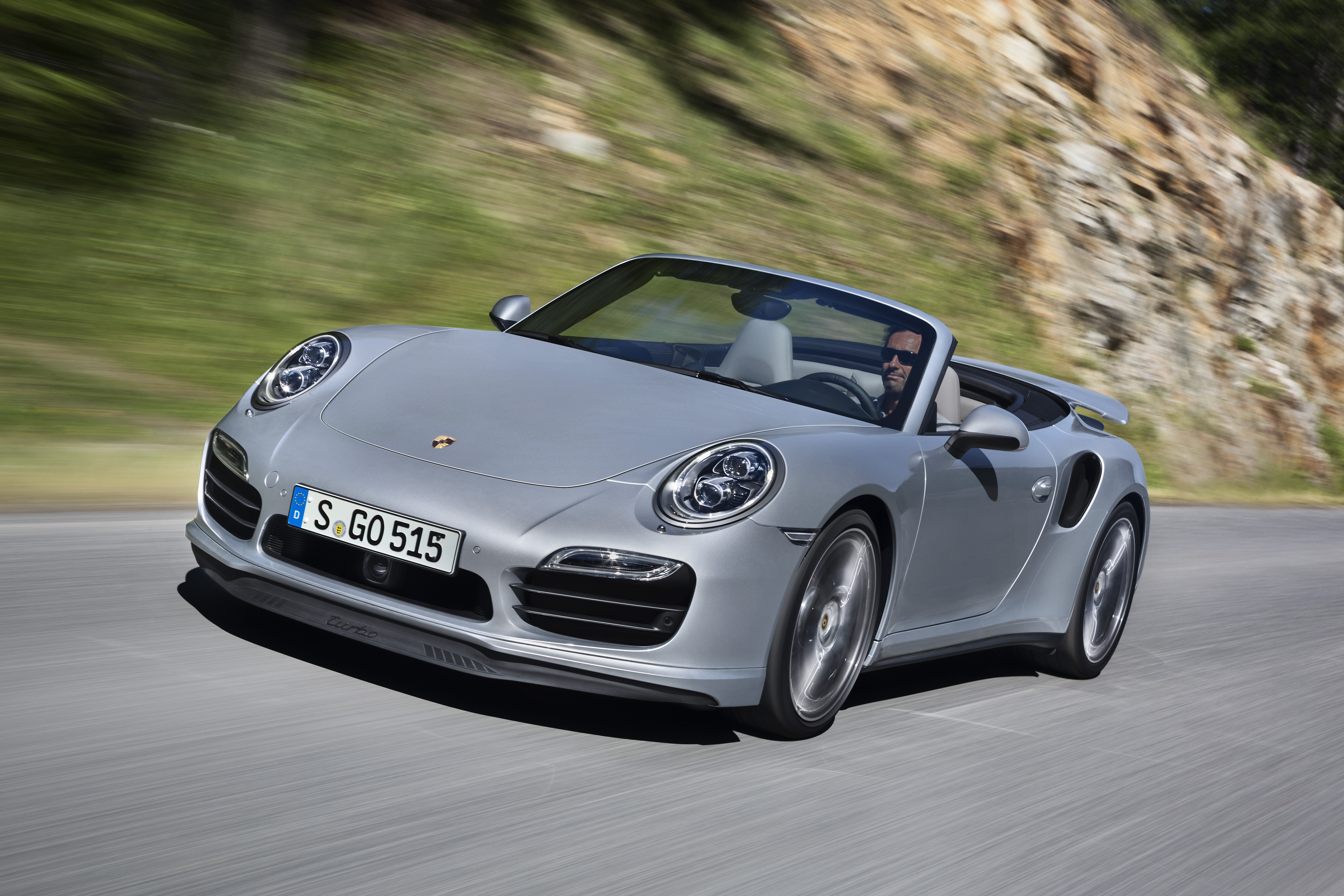
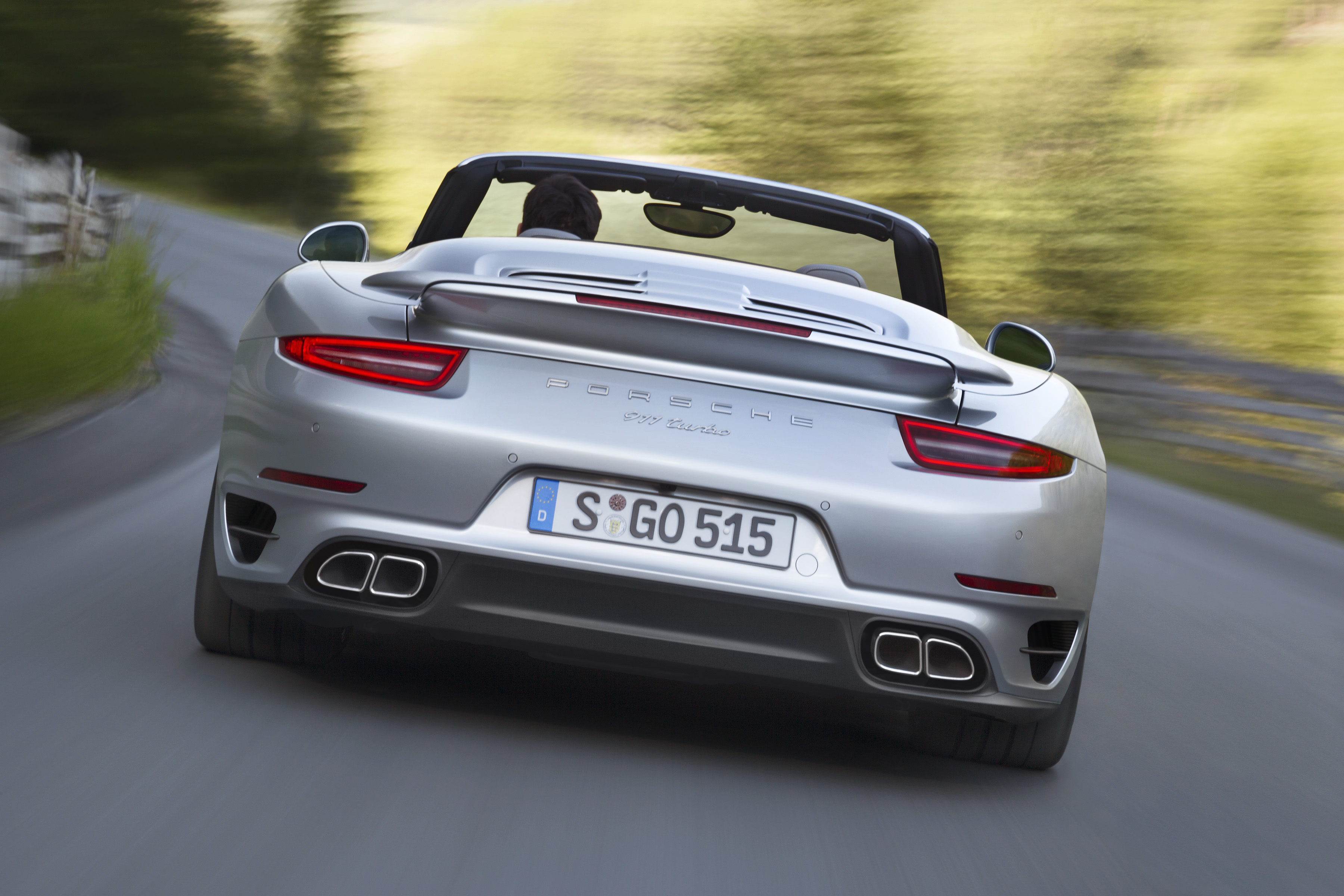
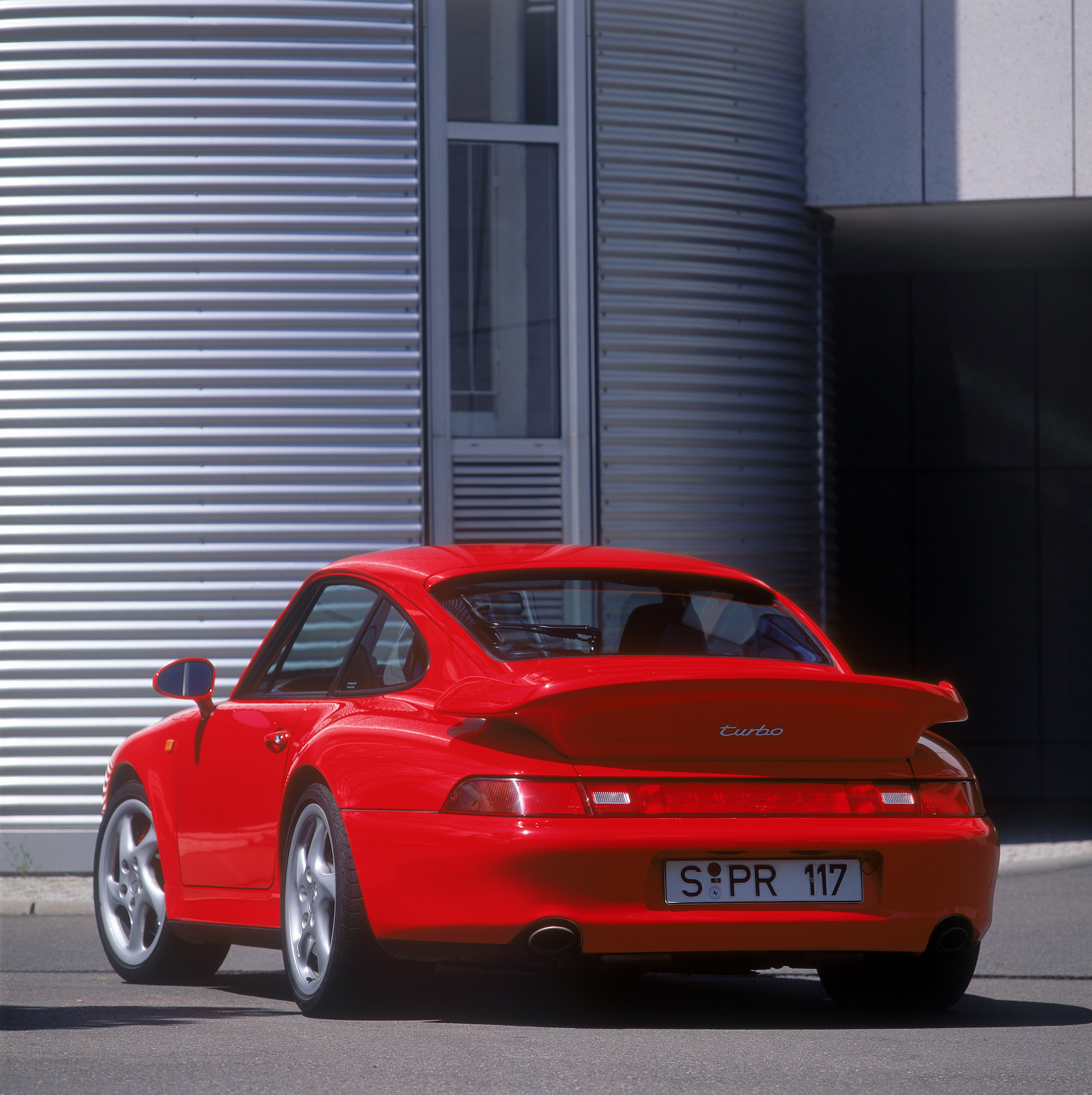
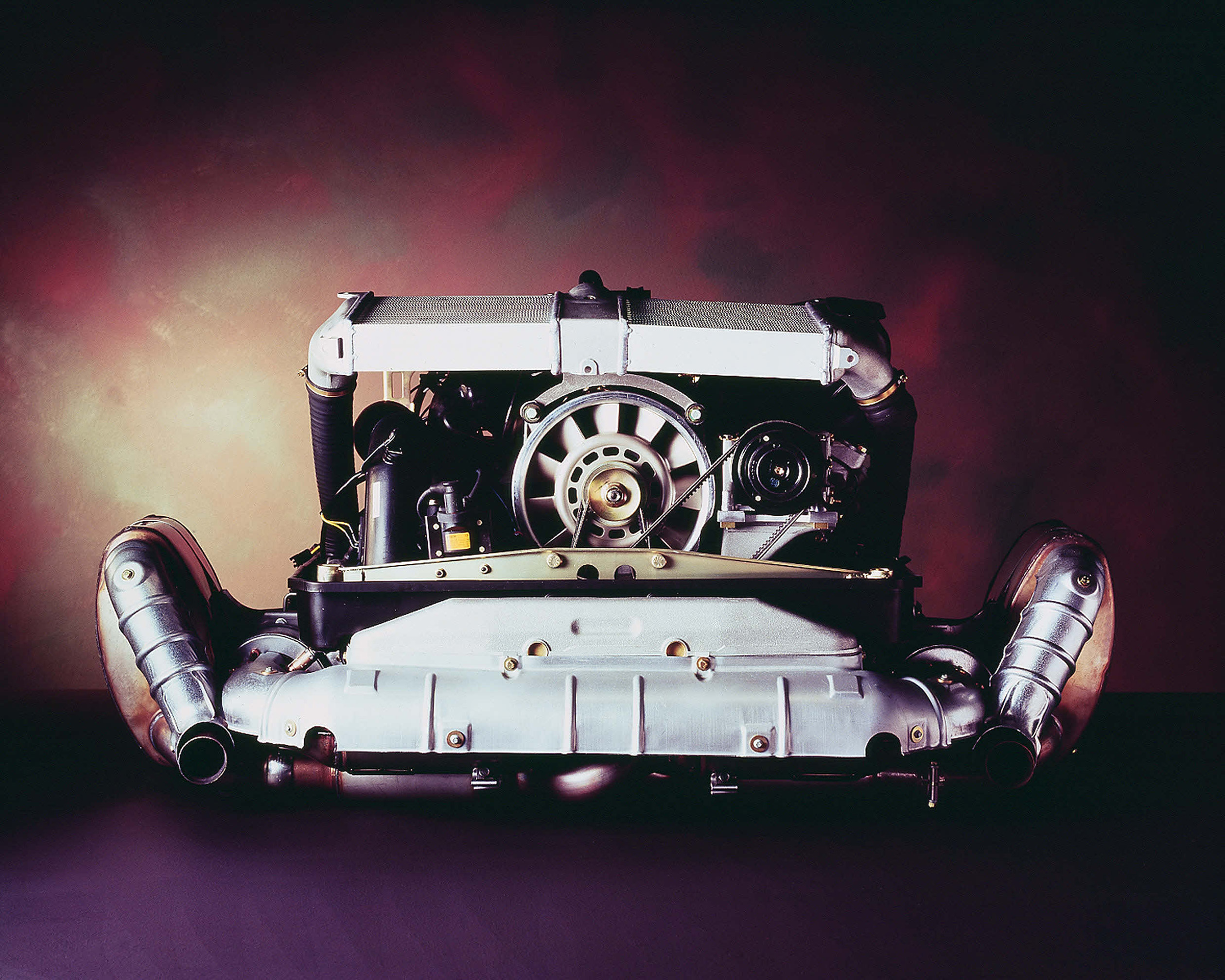
1995: Bi-turbocharging The 993 series 911 Turbo, presented in 1995, was given a 3.6-litre engine fitted with two small turbochargers. The engineâÂÂs performance curve was not dissimilar to a high-displacement naturally aspirated engine. From as low as 2,000 rpm, the engine generated plenty of thrust which changed into impressive, rousing velocity as of 3,500 rpm, pressing the occupants into their seats. (...)
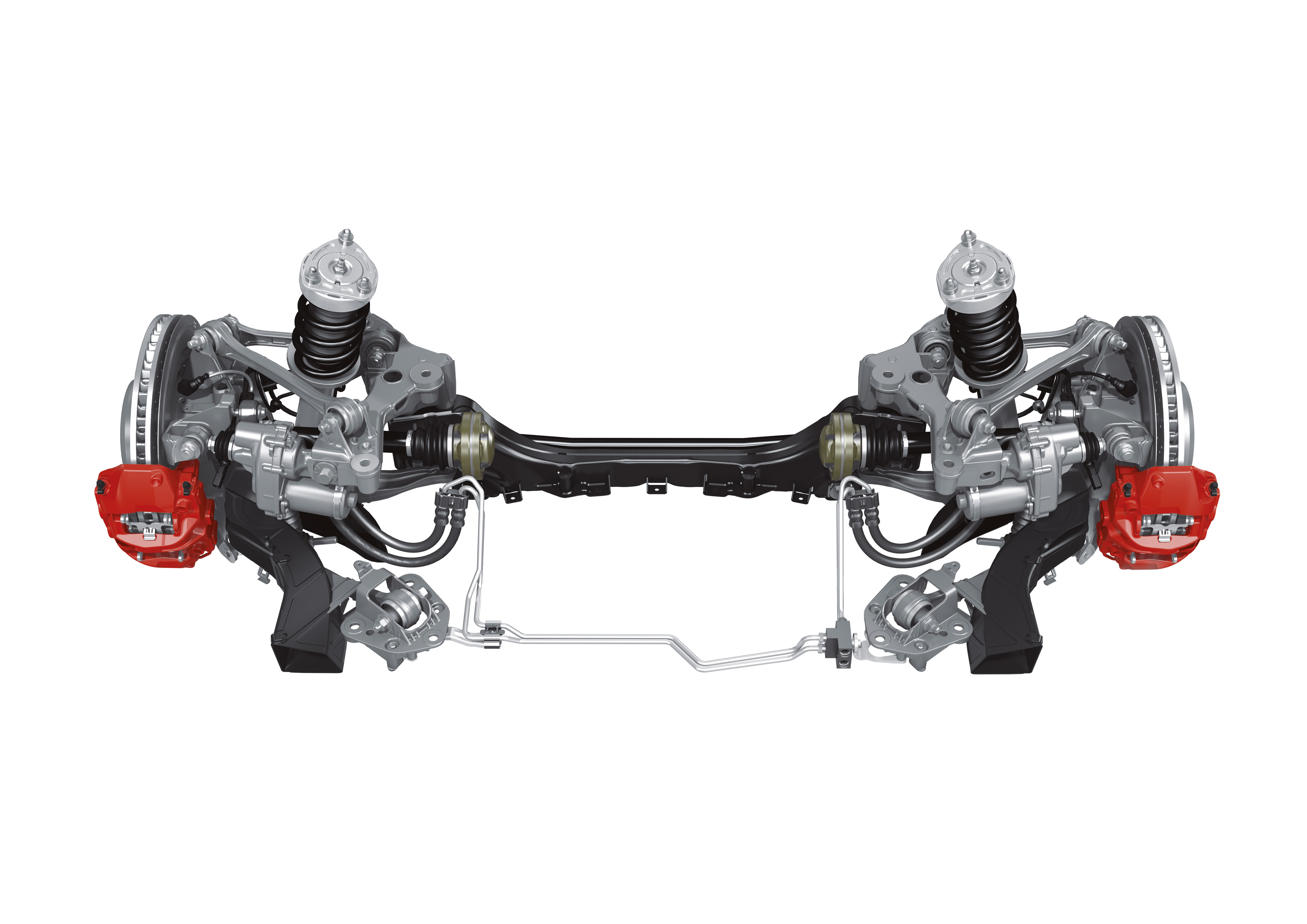
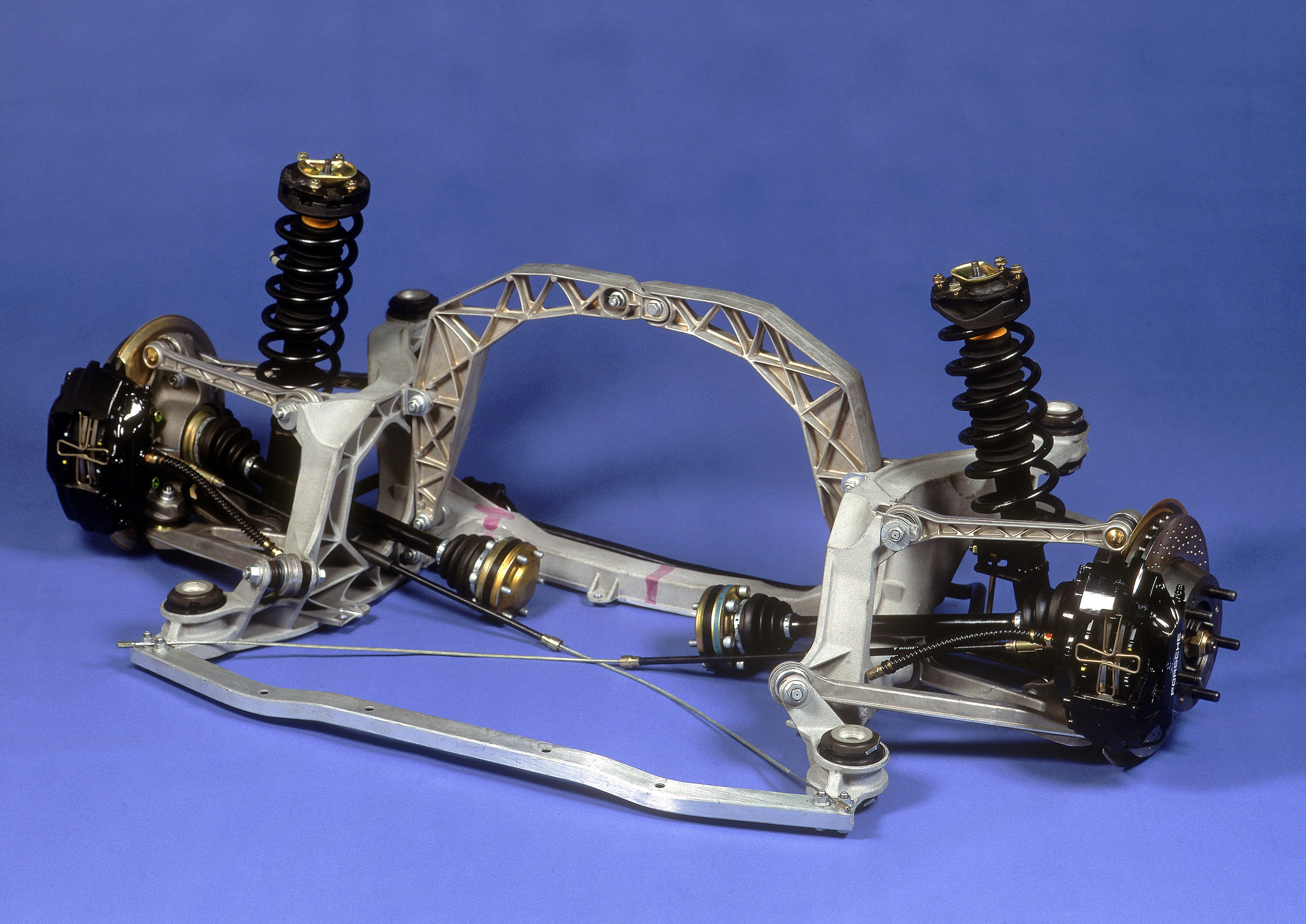
The new chassis designed in accordance with the âÂÂLSAâ concept (Light, Stable, Agile) in the 993 series finally put an end to the capriciousness of the rear engine-powered 911. It mainly affected the rear axle, which was based on a multi-link suspension tested in motor races and which facilitated excellent driving dynamics. The axle kinematics are designed to ensure that the vehicleâÂÂs suspension compresses significantly less when accelerating and driving round bends. This stabilises the overall handling. (...)
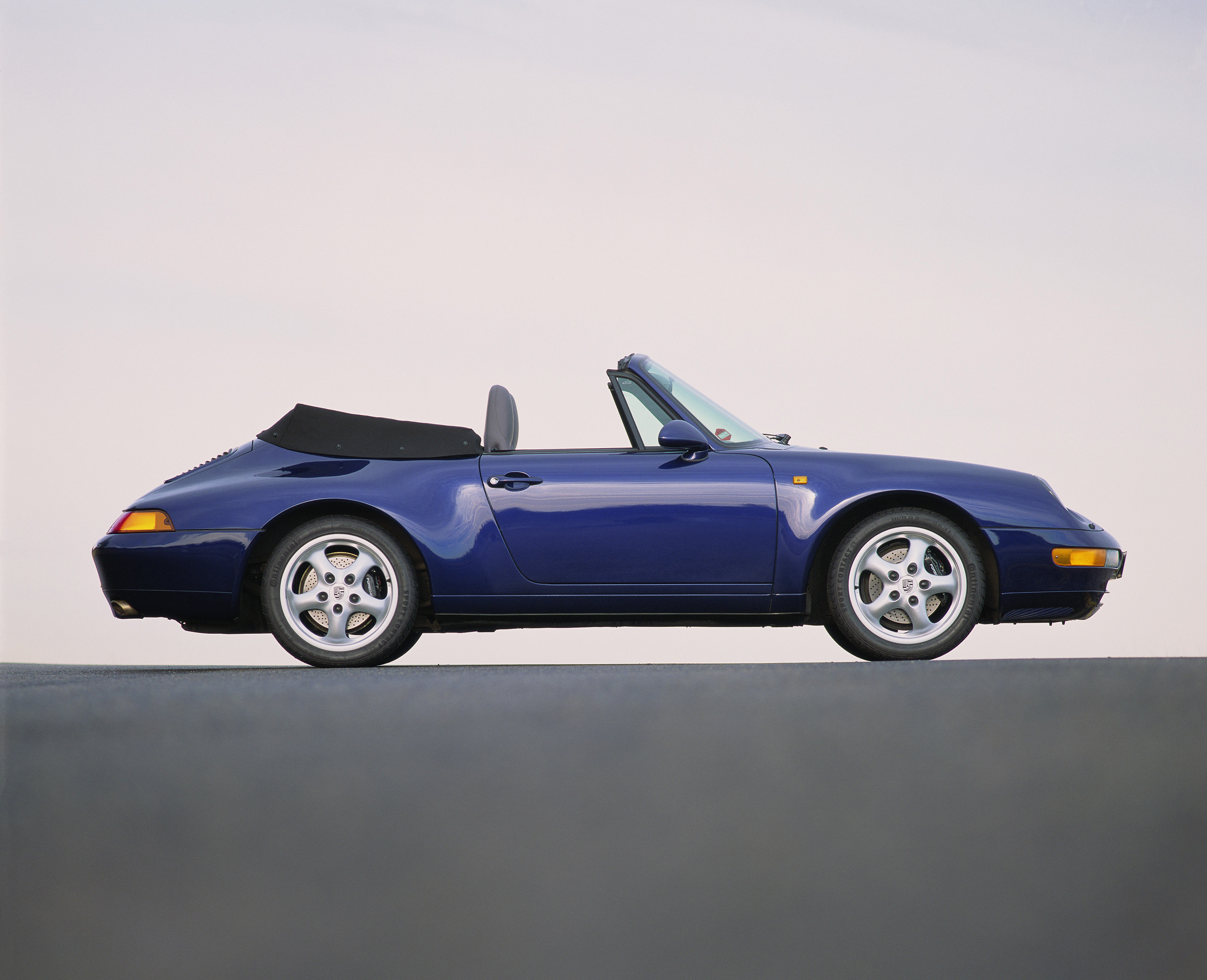
1994, 911 Carrera Cabriolet, Type 993, 3,6 Liter, Generations
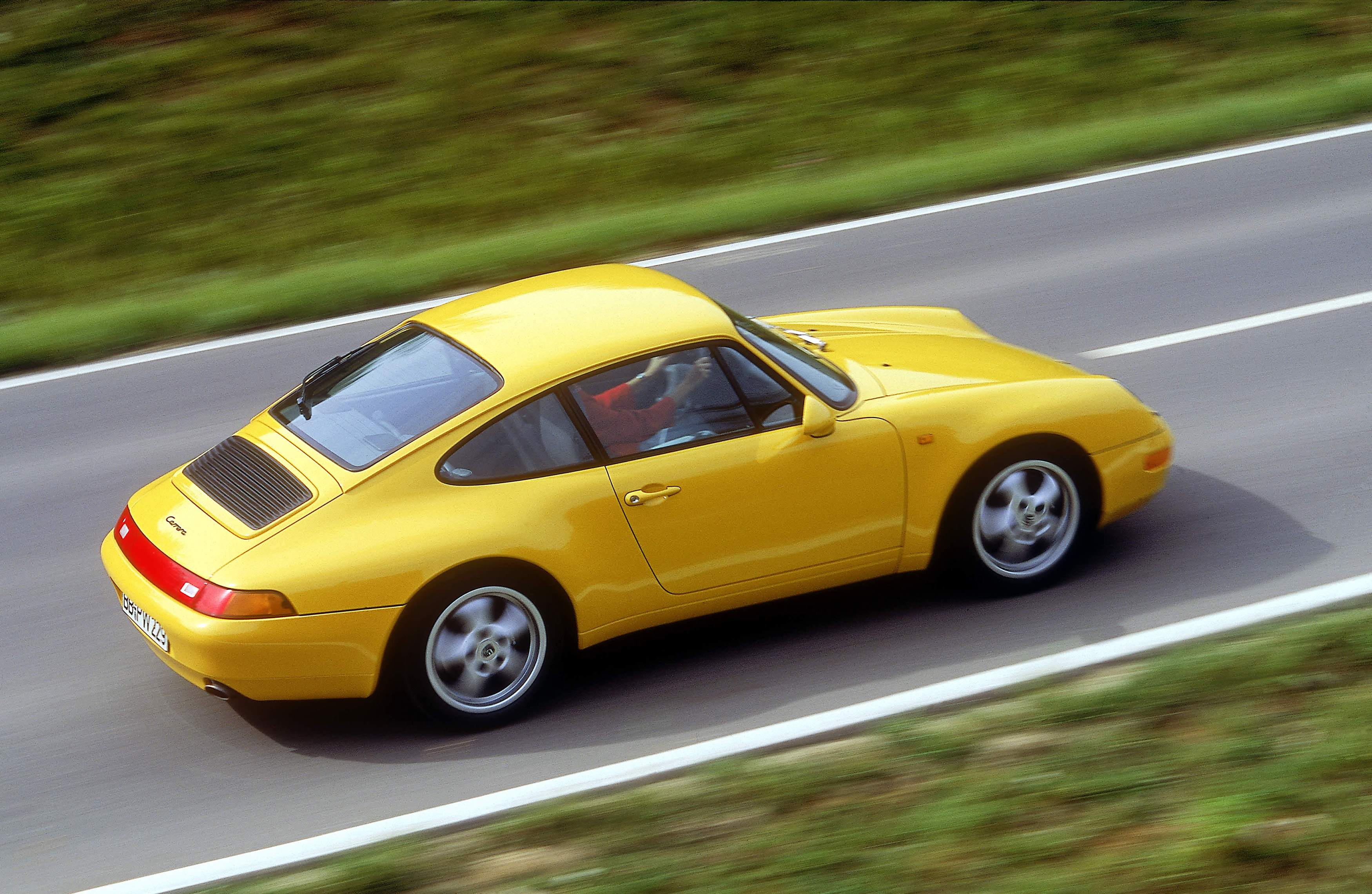
1994, 911 Carrera Coupé, Type 993, 3,6 Liter, Generations
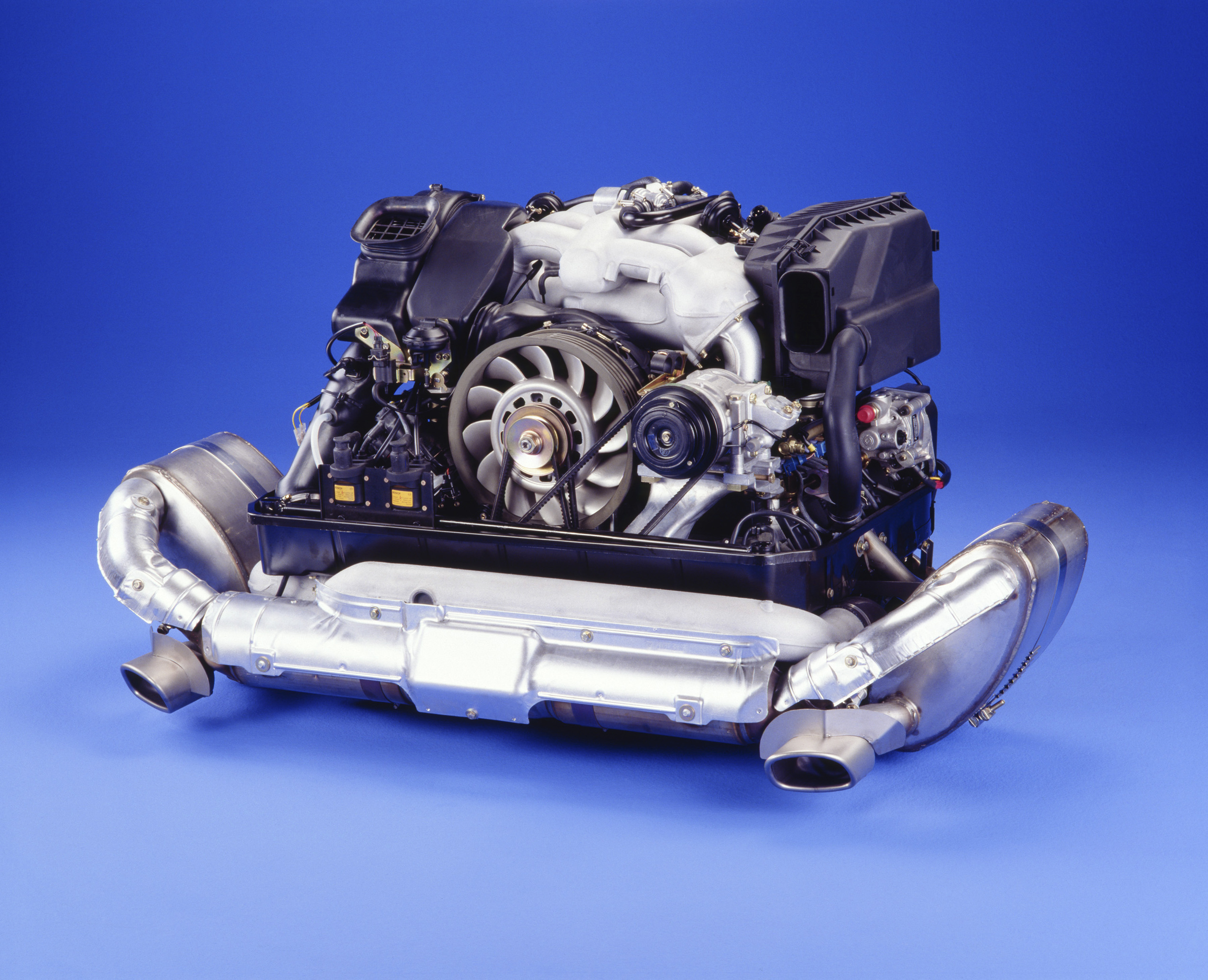
3.6-litre flat-six engine with Varioram system; Porsche 911 Carrera 3.6 (993); 1995
3.6-litre flat-six engine with turbocharger; Porsche 911 Turbo (993); 1996
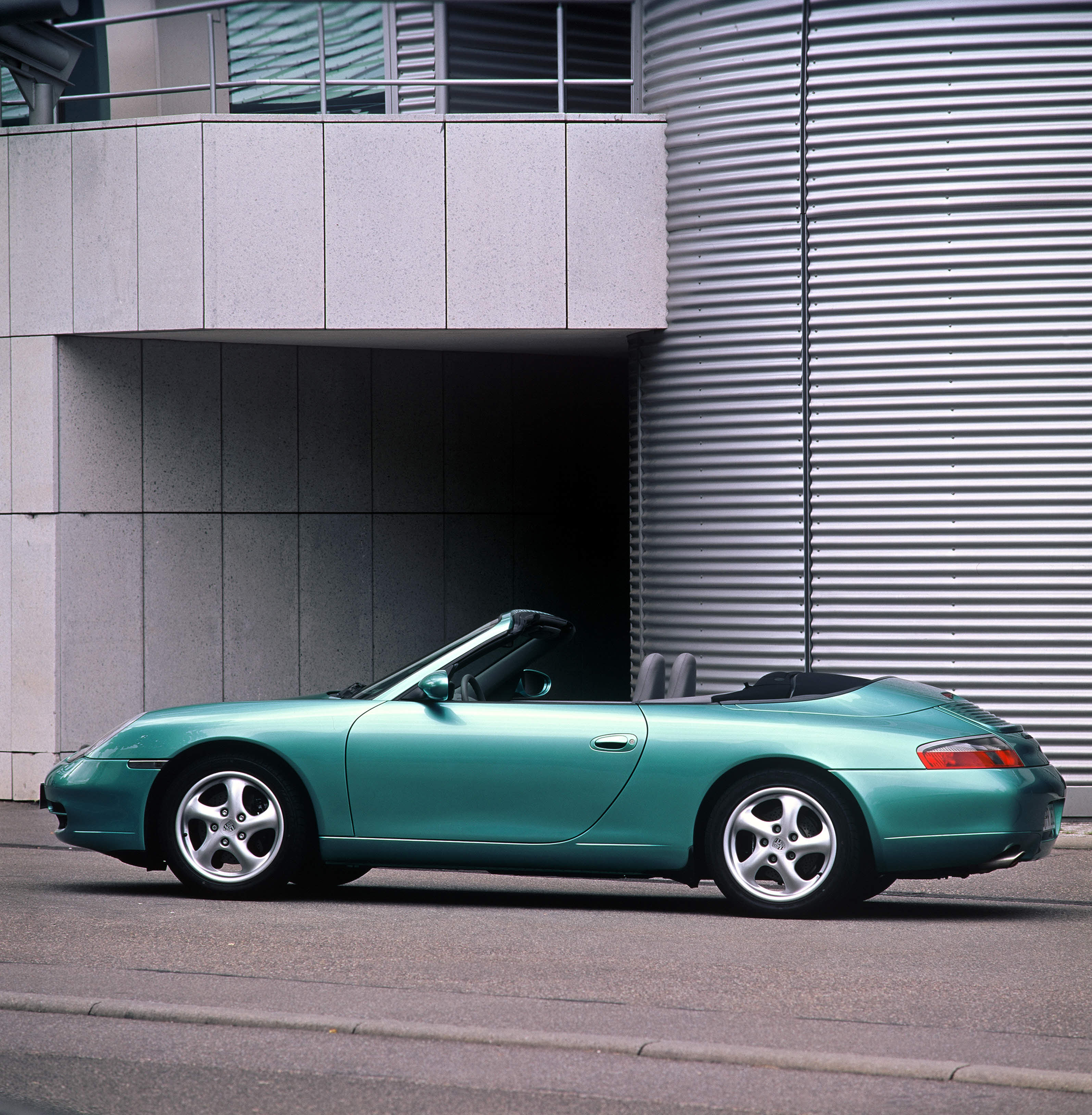
1999, 911 Carrera Cabriolet, Type 996, 3,4 Liter, Generations
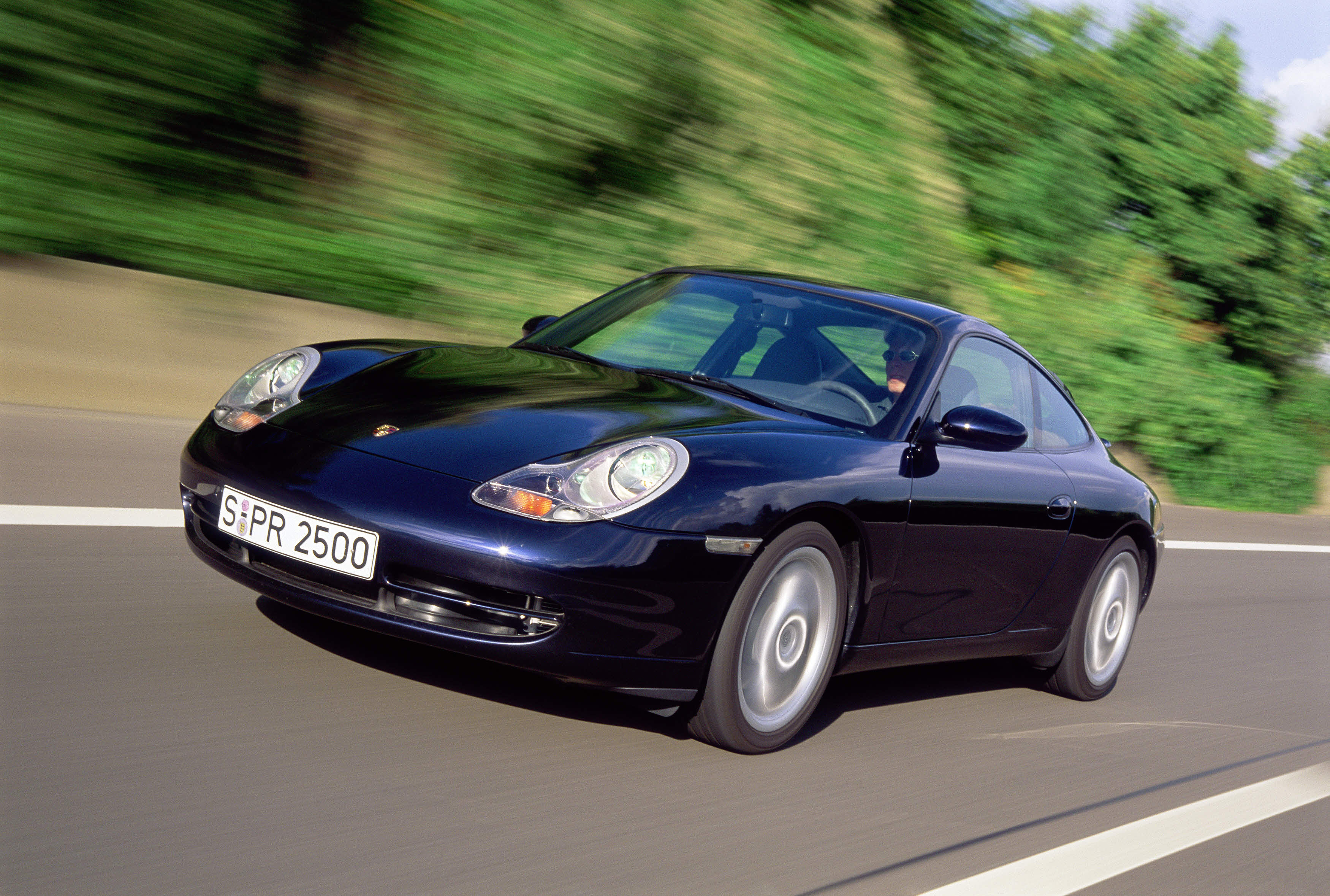
The type 996, Porsche 911 Carrera Coupé (1997 - 2005)
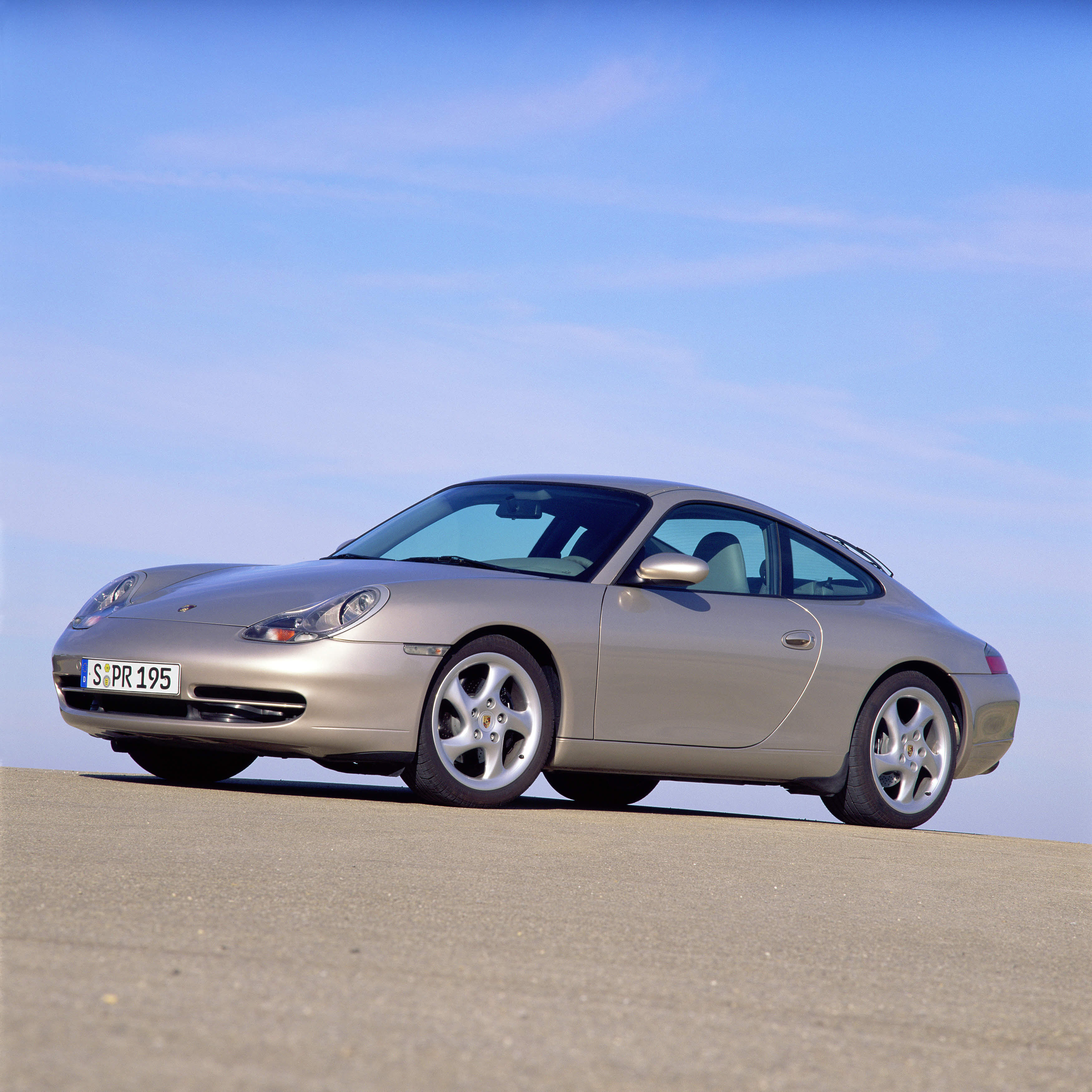
2001, 911 Carrera Coupé, Type 996, 3,4 Liter, Generations
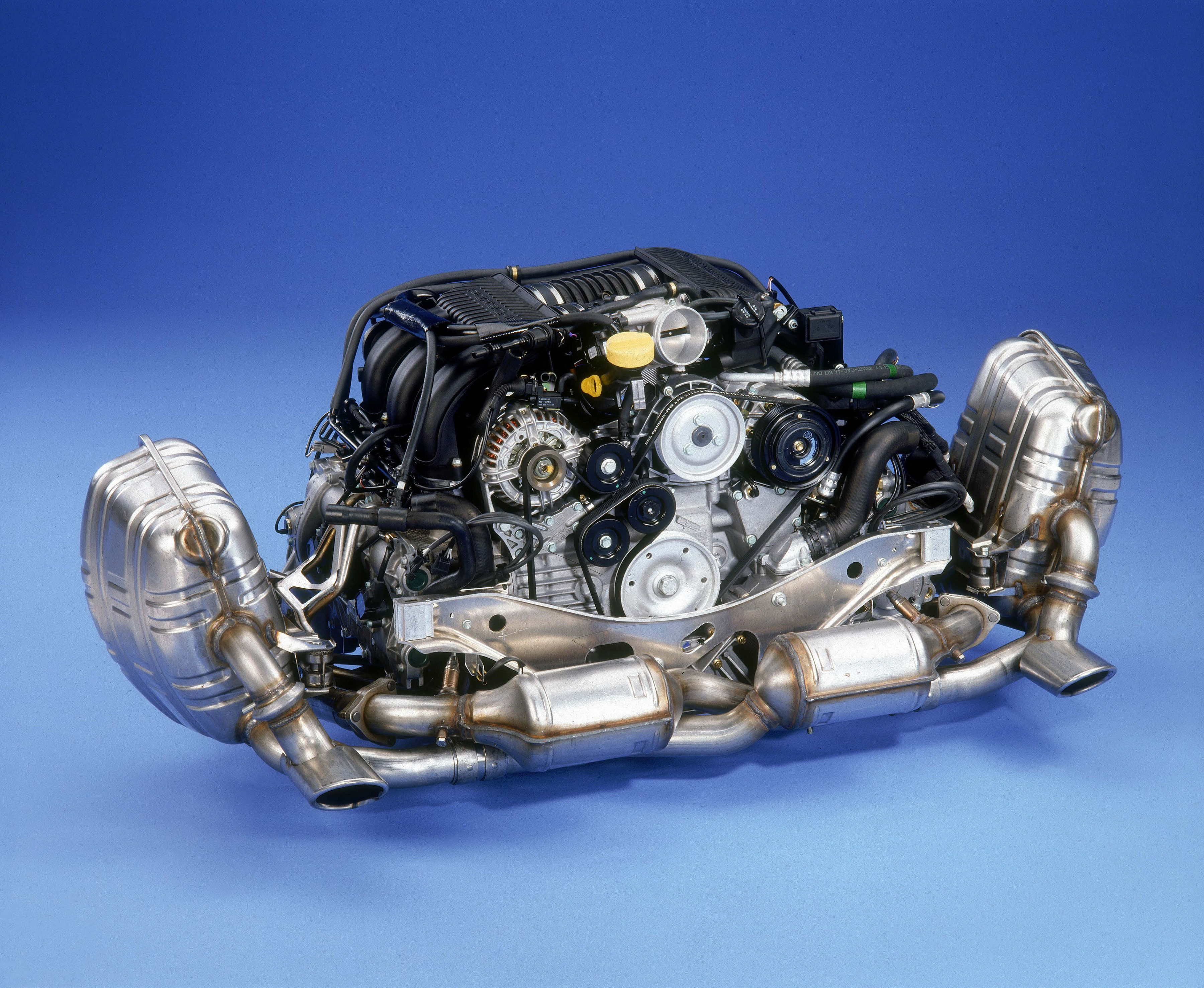
3.4-litre flat-six engine; Porsche 911 Carrera 3.4 (996); 1998