|
|
|
|
|
|
|
|
|
|
|
|
1
|
|
|
|
Text
|
|
|
|
|
|
|
2
|
|
|
|
Text
|
|
|
|
|
|
|
3
|
|
|
|
Image
|
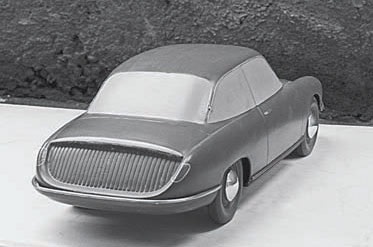
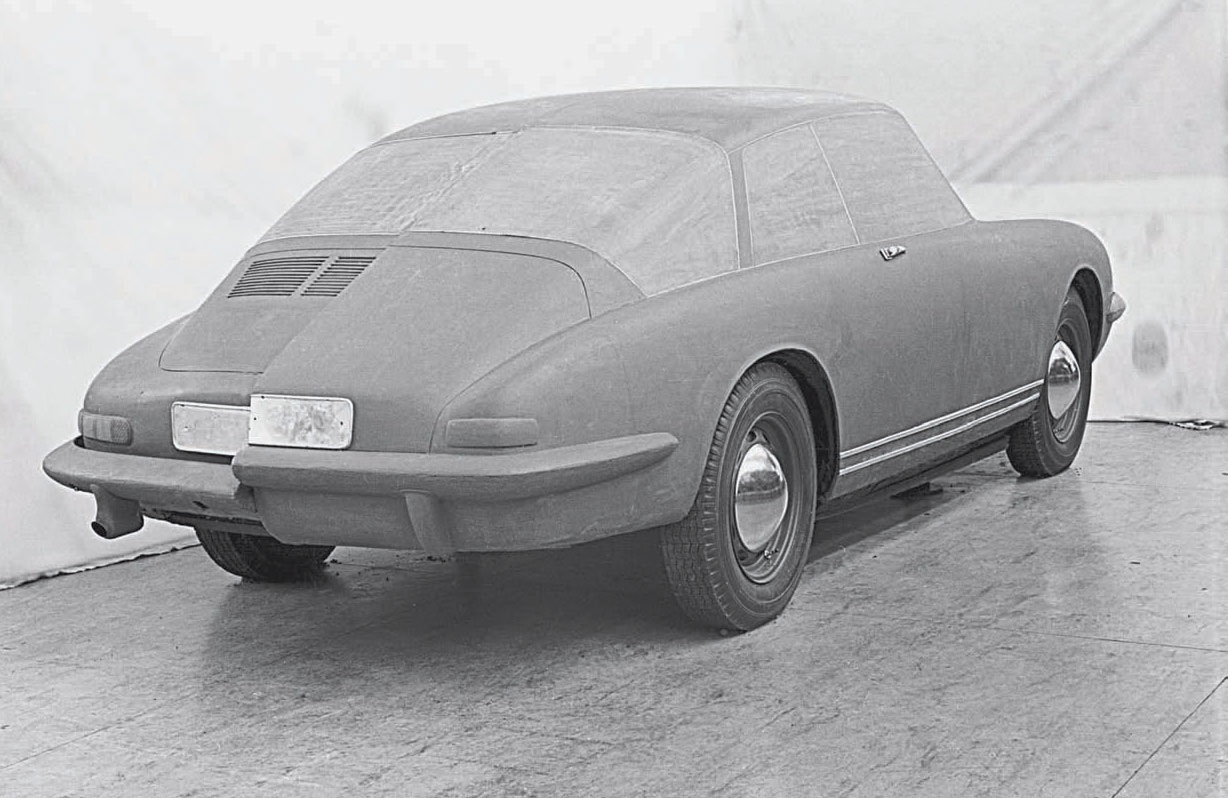
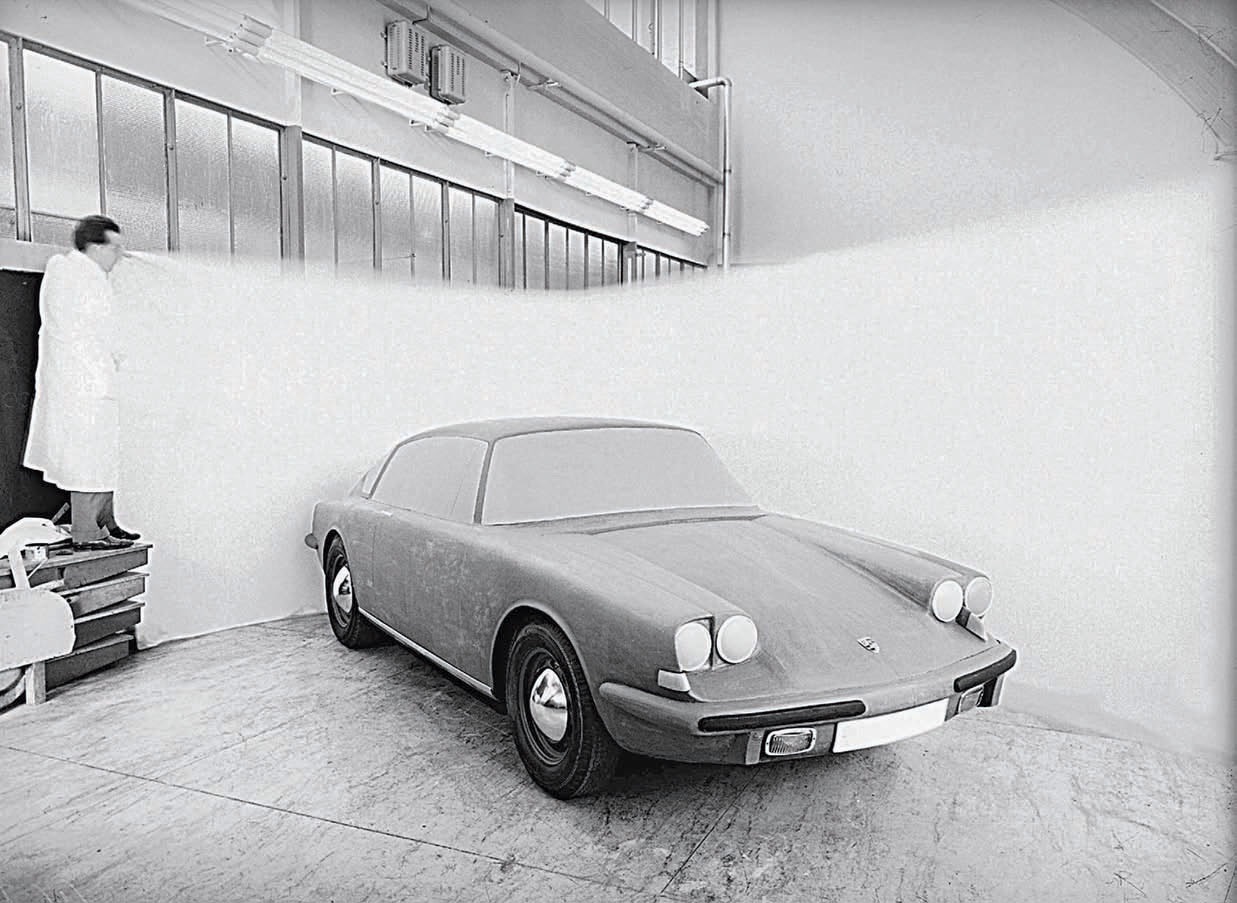
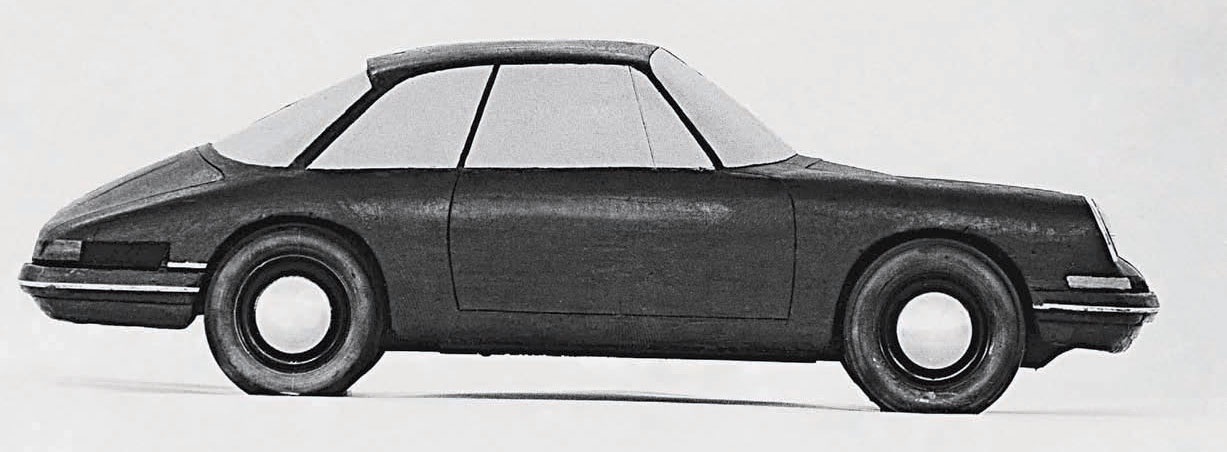
Body designer Gerhard Schröder offered this step down rear window variation on the Typ 695 on July 26, 1957. He completed the Plasticine model in 1:7.5 scale. Porsche Archiv
|
|
|
|
|
|
4
|
|
|
|
Image
|
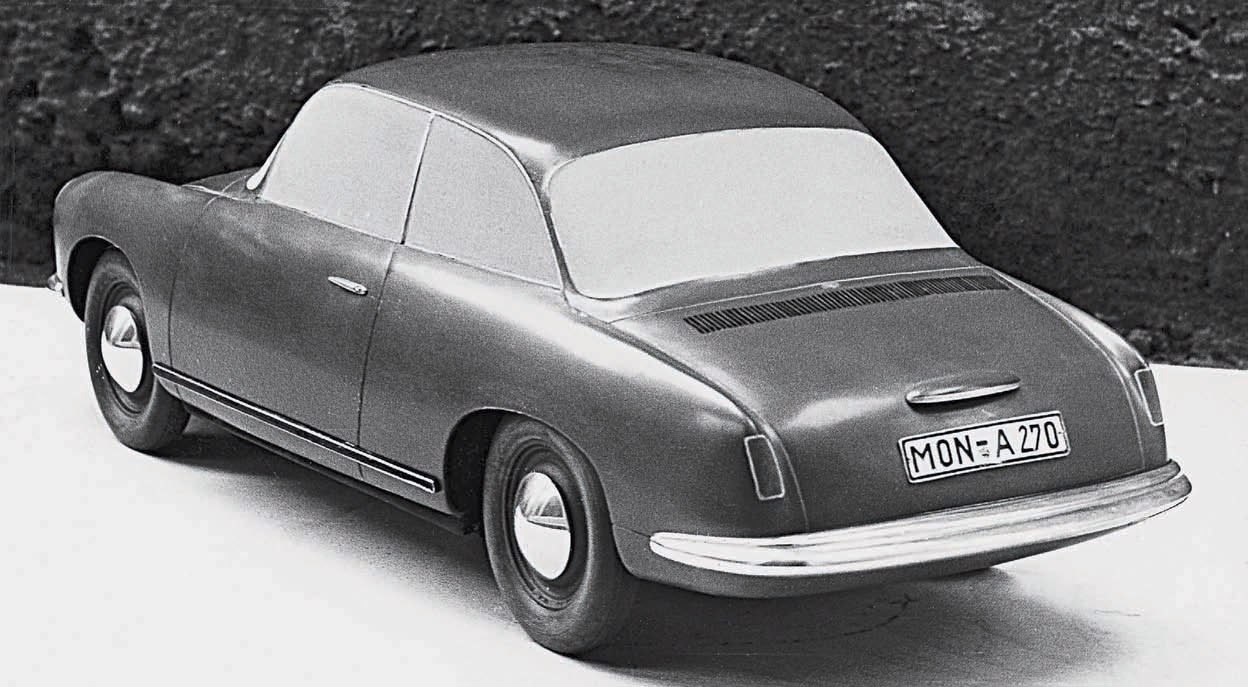
At the same time Klie worked alongside Goertz on the full-size A/B twins, he continued developing smaller scale concepts for consideration. This 1:7.5 clay model appeared on July 26, 1957, two days after he and Goertz had completed the full-size twins. Porsche Archiv
|
|
|
|
|
|
5
|
|
|
|
Text
|
|
|
|
|
|
|
6
|
|
|
|
Image
|
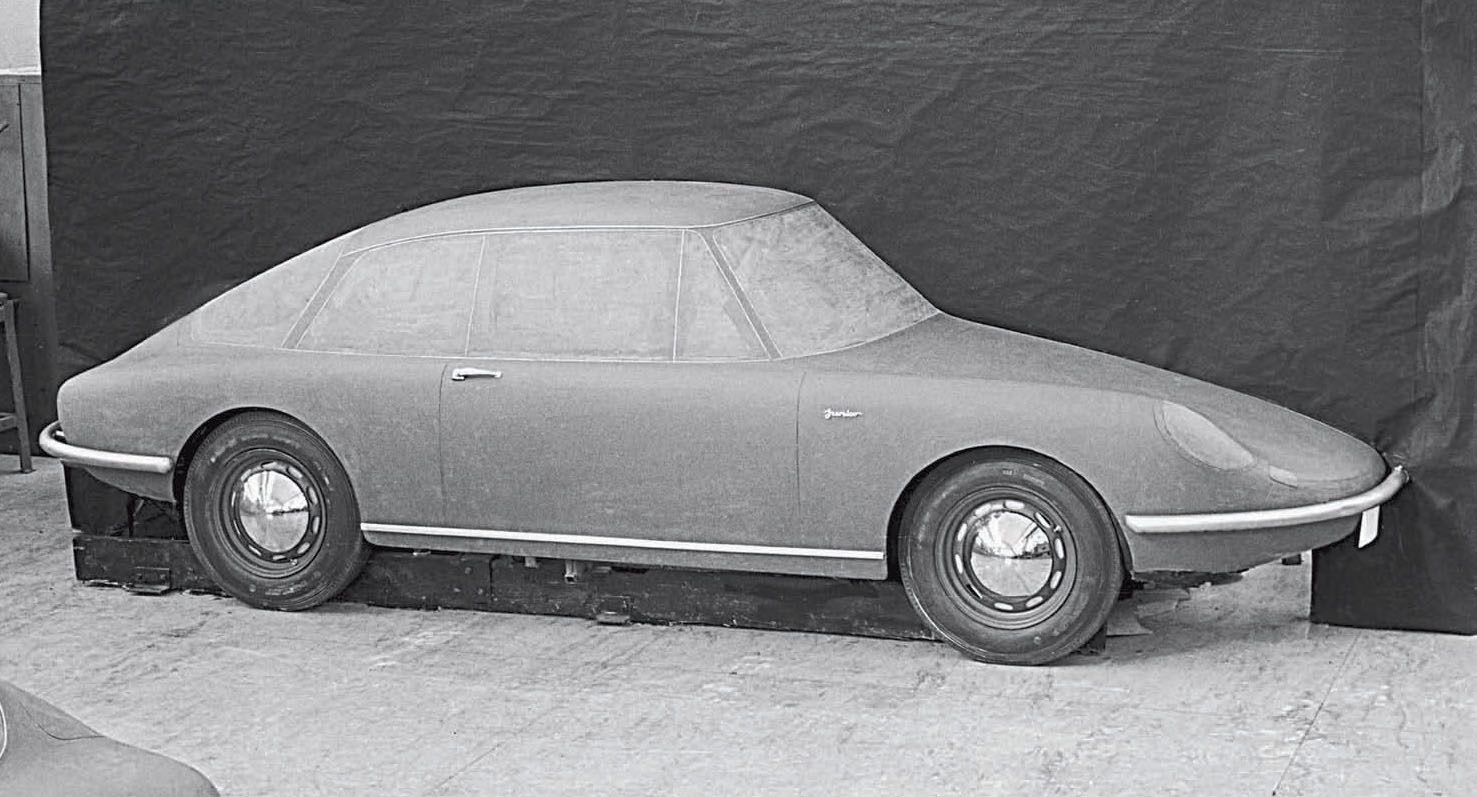
Heinrich Klie adopted design elements from Albrecht Goertz that Ferry Porsche admired, including the long sweeping arch from windshield to rear end. Perhaps acknowledging suggestions from F. A. Porsche before he left for school at Ulm, this model briefly bore a name, “Junior.” Porsche Archiv
|
|
|
|
|
|
7
|
|
|
|
Image
|
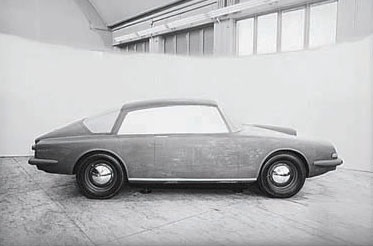
The Goertz concept provided abundant glass supported by thin pillars. Ferry saw his first hints of the long fastback roofline of the production 911 in this model. Porsche Archiv
|
|
|
|
|
|
8
|
|
|
|
Text
|
|
|
|
|
|
|
9
|
|
|
|
Image
|
The rear of Klie’s B side appeared to offer a bit more room for the engine with higher bumper height as well. Klie may have known of pending regulations, or he meant only to do something differently than Goertz. Porsche Archiv
|
|
|
|
|
|
10
|
|
|
|
Image
|
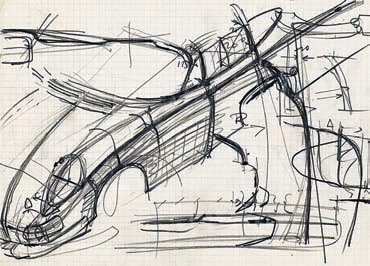
This unsigned 1957 sketch of ideas for the 695 appeared to overlay a perspective view of the driver’s front fender with the profile of the door. The covered headlight was a popular idea in those days, but the elliptical rear window suggests this may be a concept from F. A. Porsche. Porsche Archiv
|
|
|
|
|
|
11
|
|
|
|
Text
|
|
|
|
|
|
|
12
|
|
|
|
Image
|
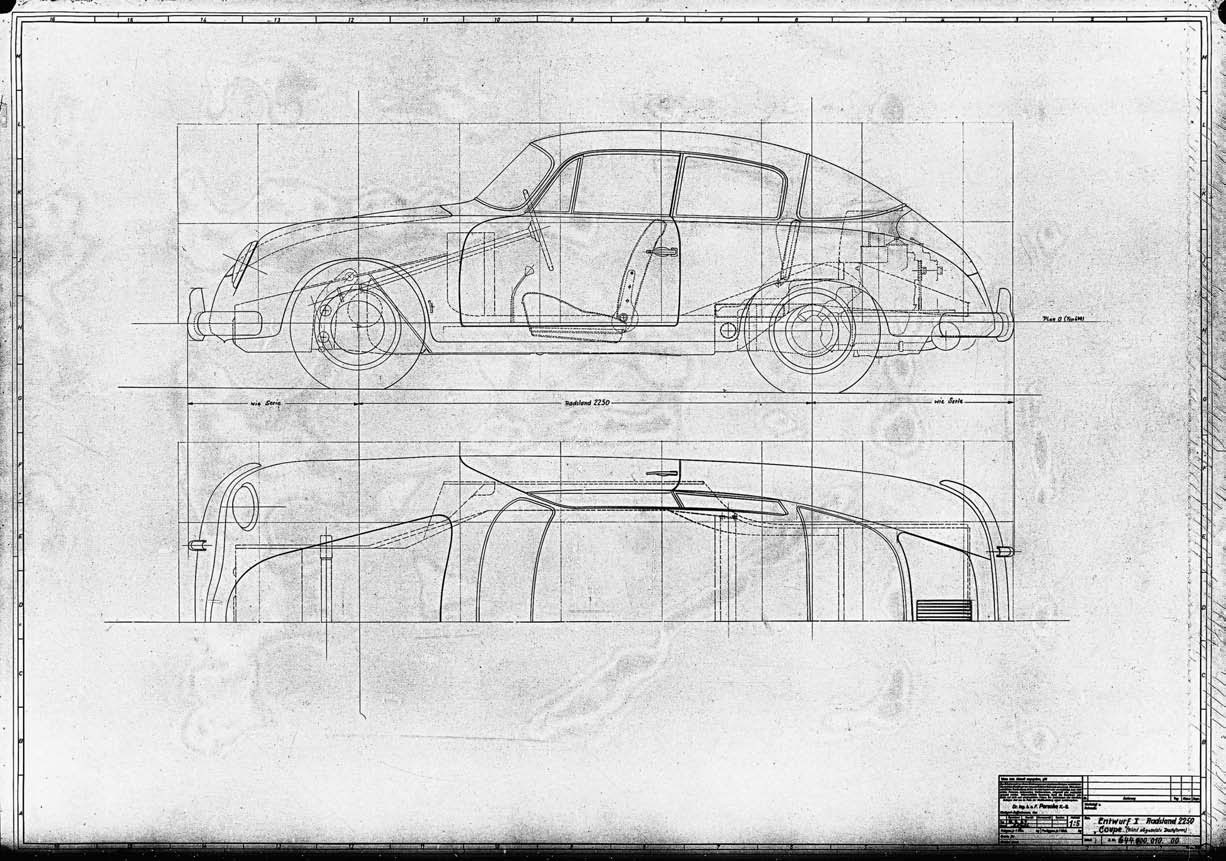
This Typ 644 coupe followed rooflines Komenda favored as they experimented with further Typ 356 forms. This full-four seater, drawn in 1:7.5-scale on August 6, 1957, used a 2,250-millimeter wheelbase. Porsche Archiv
|
|
|
|
|
|
13
|
|
|
|
Image
|
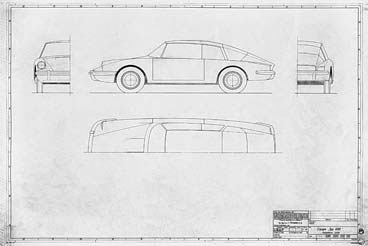
An Albrecht Goertz Typ 695 concept drawing placed the car on the 2,400-millimeter wheelbase. Drawn in 1:10 scale, it was completed on October 18, 1957. Porsche Archiv
|
|
|
|
|
|
14
|
|
|
|
Image
|
Goertz’s first full-size Plasticine model of the Typ 695 presented Ferry Porsche a radical departure from the rounded forms Erwin Komenda and his staff offered. Ferry had the model photographed in early March 1958. Porsche Archiv
|
|
|
|
|
|
15
|
|
|
|
Image
|
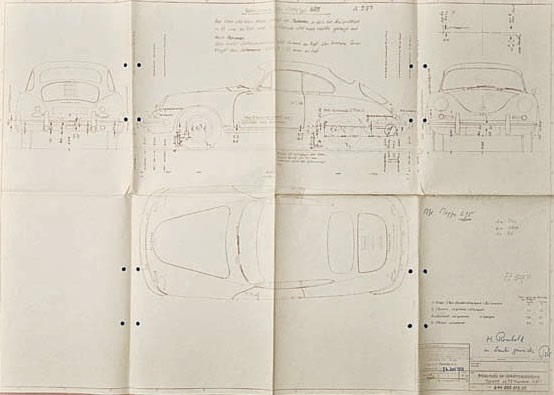
This technical drawing, completed July 14, 1959, did not identify wheelbase or overall dimensions. Instead, this plan, described as âBody measurements for Traffic equipment Typ 644 on T5 Program (695),â addressed in detail placement of lights and reflectors. Porsche Archiv
|
|
|
|
|
|
16
|
|
|
|
Image
|
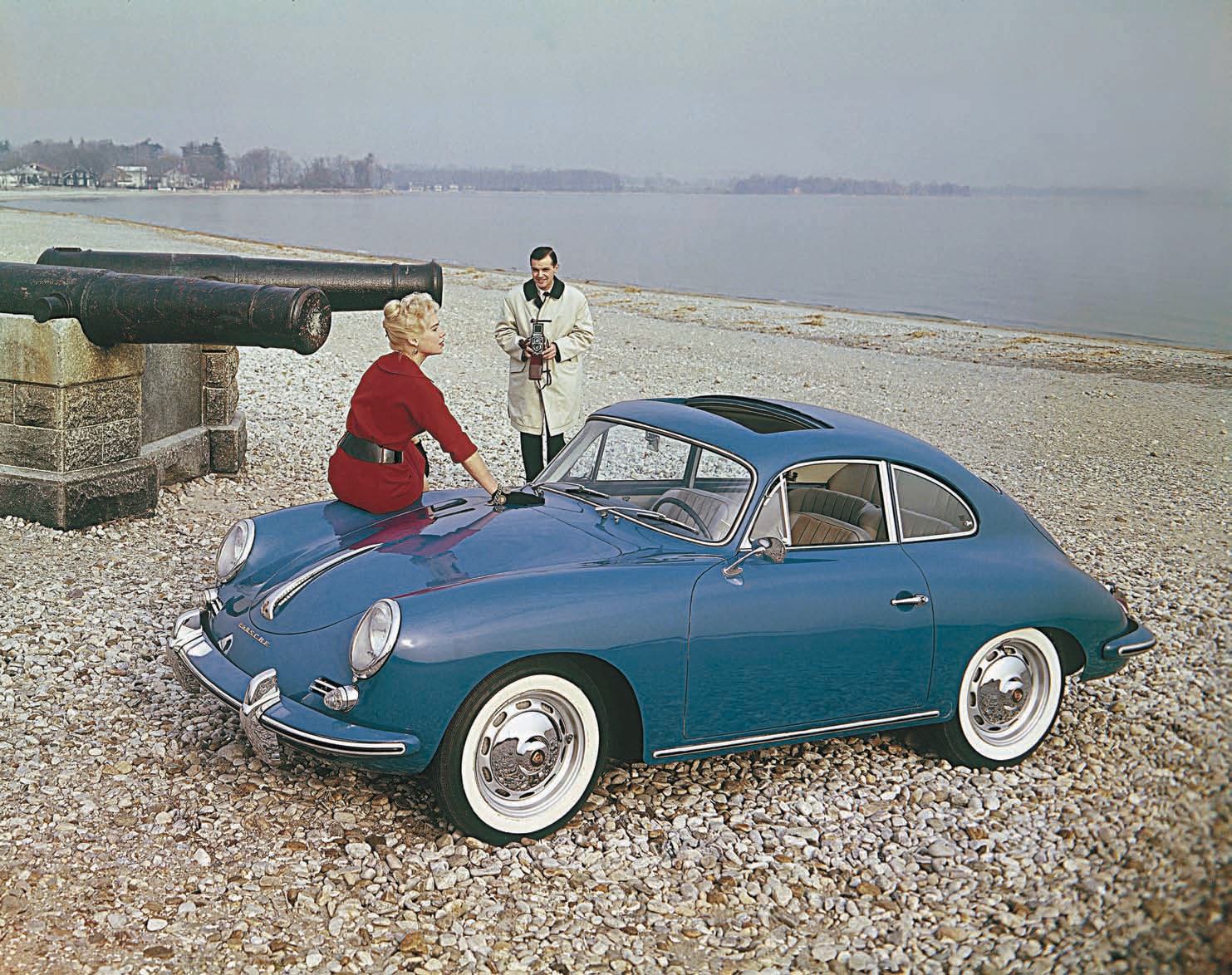
Porsche introduced the 356B in late 1959 as a 1960 model. Within Porsche it was known as Technical Program 5, or T5, and this was a chassis and platform that saw much use in developing the next and the new Porsche. Porsche Archiv
|
|
|
|
|
|
17
|
|
|
|
Image
|
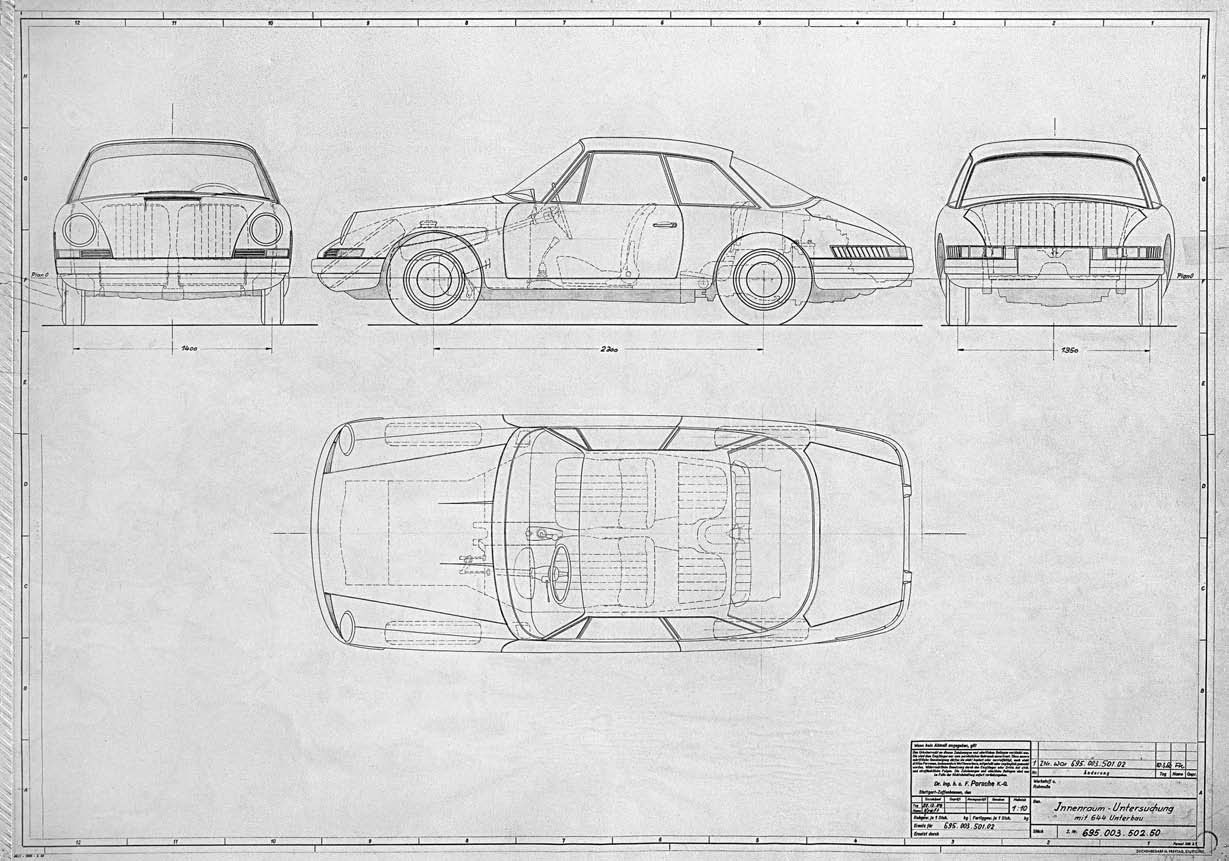
The notched roofline appeared in this Typ 695 drawing on the 644 undercarriage. Drawn December 22, 1959, this concept fit the car on the 2,300-millimeter wheelbase but with very short rear emergency seats. Porsche Archiv
|
|
|
|
|
|
18
|
|
|
|
Image
|
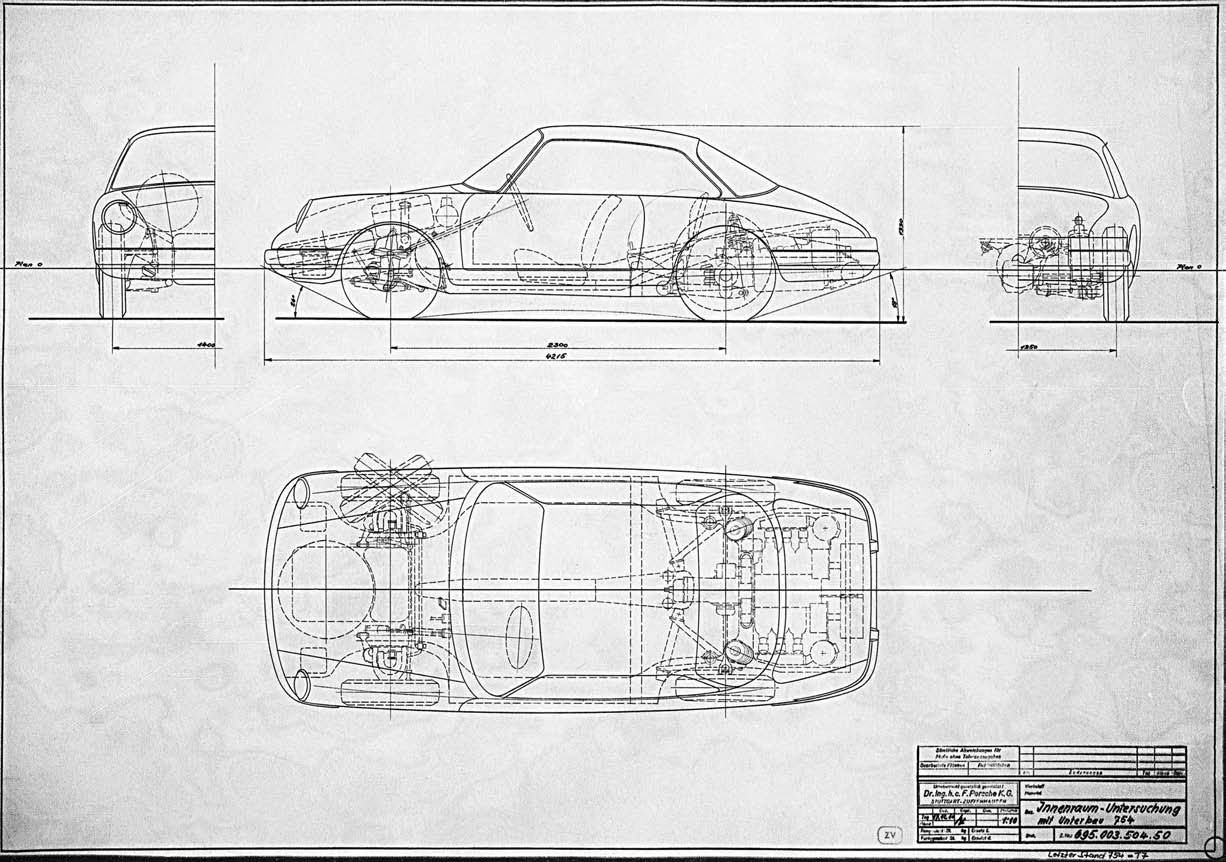
This drawing examined interior space and accommodations of the 695 body on the 754 undercarriage using a 2,300-millimeter wheelbase. Completed on December 17, 1960, it was labeled “final state 754 = T7.” Porsche Archiv
|
|
|
|
|
|
19
|
|
|
|
Image
|
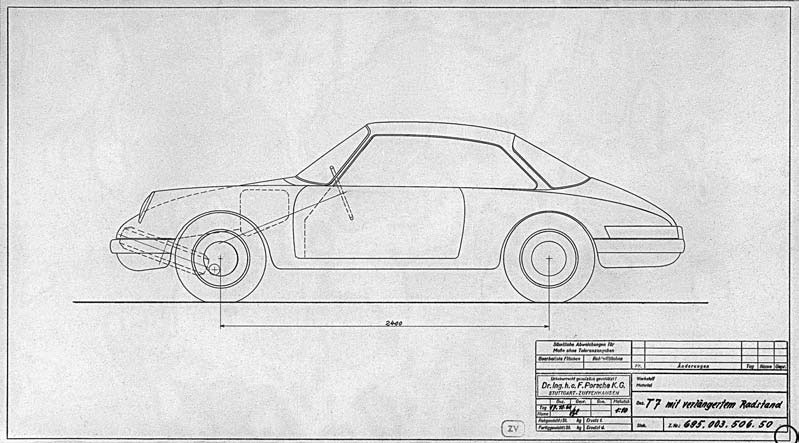
Another in a series of December 17, 1960, drawings analyzed the 2,400-millimeter wheelbase on the 695 T7 platform. Every change to wheelbase or overall length affected hundreds of other elements, most of which were ignored in this simplified illustration. Porsche Archiv
|
|
|
|
|
|
20
|
|
|
|
Image
|
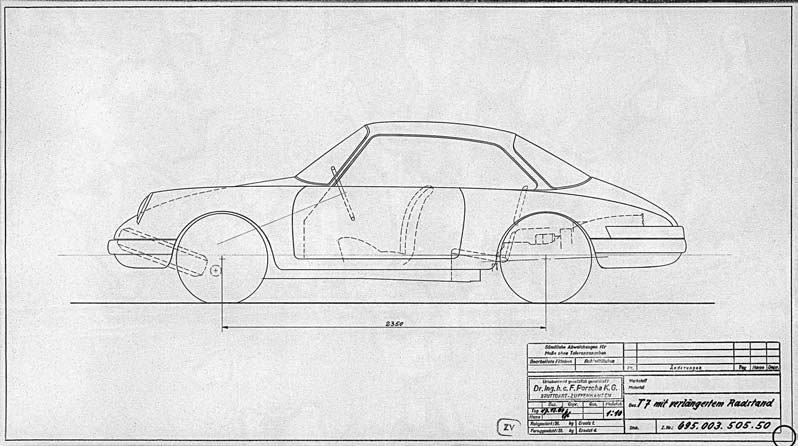
Still another December 17, 1960, drawing considered the 2,350-millimeter wheelbase as the engine, transmission, and seating areas fit into the altered package. Subtracting 50 millimeters, roughly two inches, without lengthening the body, changed suspension designs and handling and also affected interior space. Porsche Archiv
|
|
|
|
|
|
21
|
|
|
|
Image
|
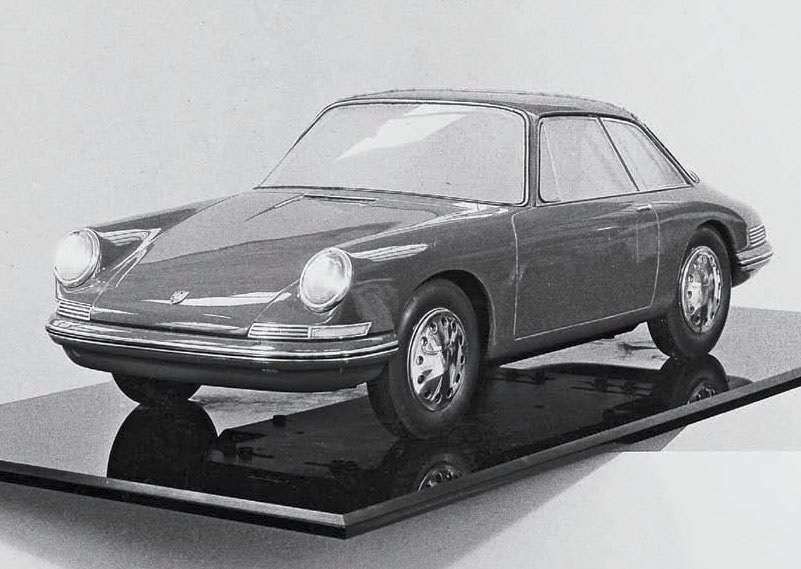
On May 5, 1961, Heinrich Klie had this 1:7.5-scale model cast in resin to present it to Ferry. It excited Porsche enough that he authorized moving ahead with a full-size version immediately. Porsche Archiv
|
|
|
|
|
|
22
|
|
|
|
Image
|
The 695 continued to take shape as this model from May 1961 suggests. Executed in 1:7.5 scale, it revealed the inset rear window for ventilation that F. A. Porsche proposed as a means to break up a large surface. Porsche Archiv
|
|
|
|
|
|
23
|
|
|
|
Image
|
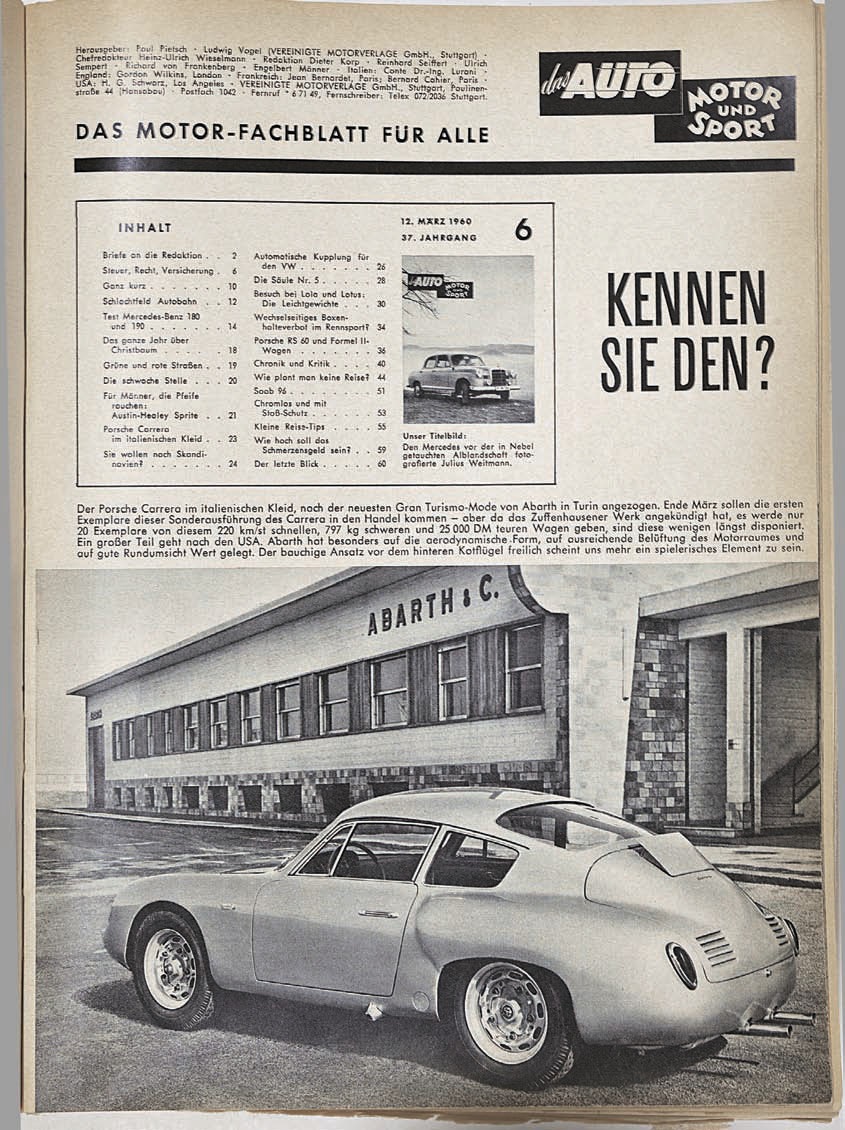
Many auto enthusiasts in Germany got their news through Auto Motor und Sport, and this was the first view many had of Porsche’s new GT racer, the 356B 1600 Abarth Carrera GTL. The March 12, 1960, issue teased its readers: “Recognize this?” Porsche Archiv
|
|
|
|
|
|
24
|
|
|
|
Image
|
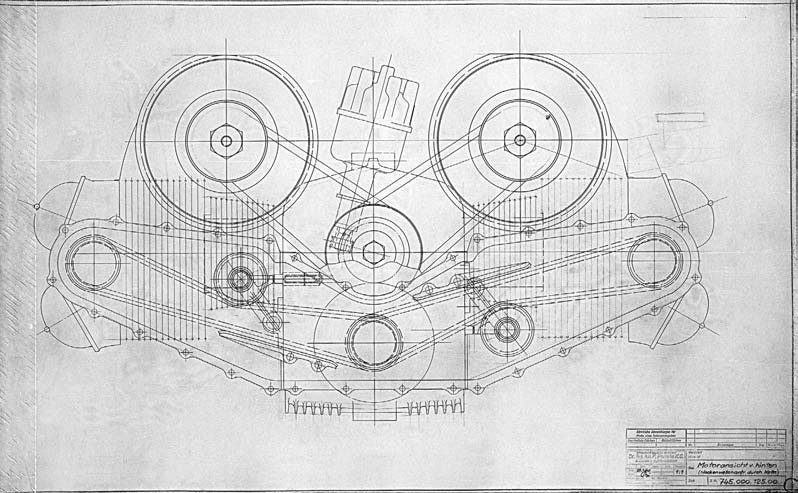
The 745 opposed six-cylinder engine was a clever solution to the challenge of fitting a high-performance engine into a compact space. Its chief designer, Leopold Jäntsche, had created a similar design for Tatra with a fan for each bank of cylinders. Porsche Archiv
|
|
|
|
|
|
25
|
|
|
|
Image
|
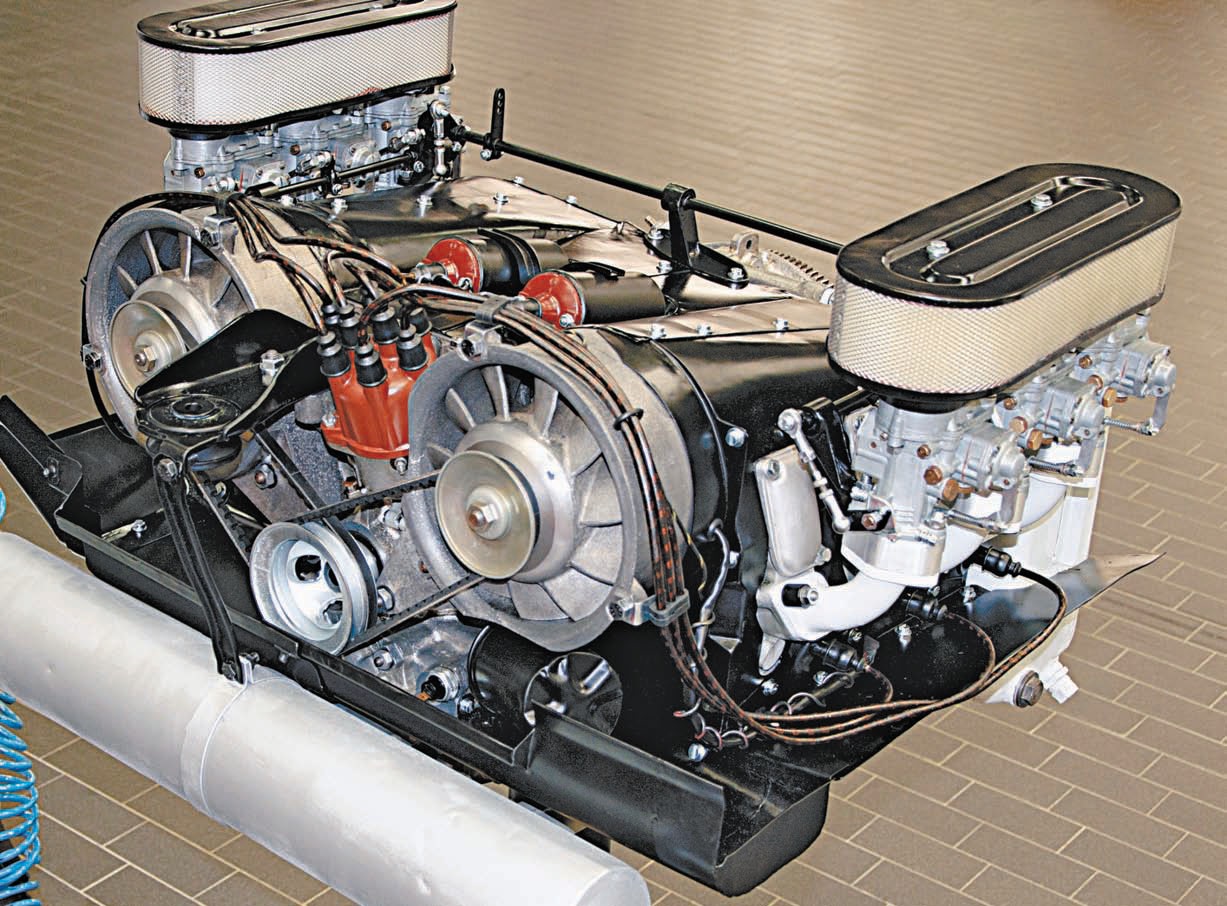
The two-liter flat-six developed 120 horsepower using pushrod-operated overhead valves. Between the valve system and the twin fans, the engine was too loud for anyone’s liking. Porsche Archiv–Photo by Jens Torner
|
|
|
|
|