|
|
|
|
|
|
|
|
|
|
|
|
1
|
|
|
|
Text
|
|
|
|
|
|
|
2
|
|
|
|
Text
|
|
|
|
|
|
|
3
|
|
|
|
Text
|
|
|
|
|
|
|
4
|
|
|
|
Text
|
|
|
|
|
|
|
5
|
|
|
|
Text
|
|
|
|
|
|
|
6
|
|
|
|
Text
|
|
|
|
|
|
|
7
|
|
|
|
Text
|
|
|
|
|
|
|
8
|
|
|
|
Text
|
|
|
|
|
|
|
9
|
|
|
|
Image
|
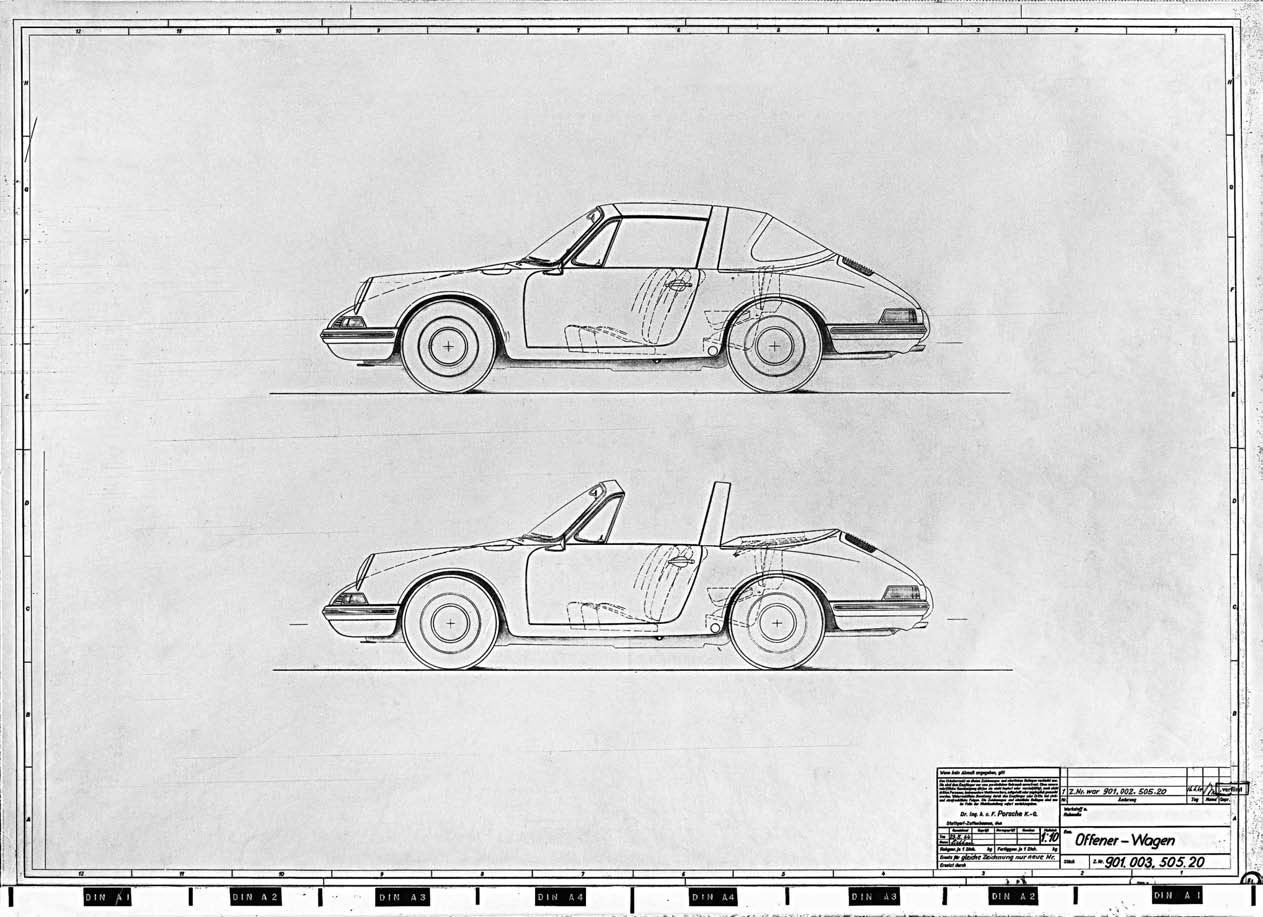
Called the Offener-Wagen, this drawing, completed May 23, 1964, showed Porsche’s thinking about its open 911. Barely two weeks later, Ploch and Trenkler had a full-size prototype to demonstrate. Porsche Archiv
|
|
|
|
|
|
10
|
|
|
|
Image
|
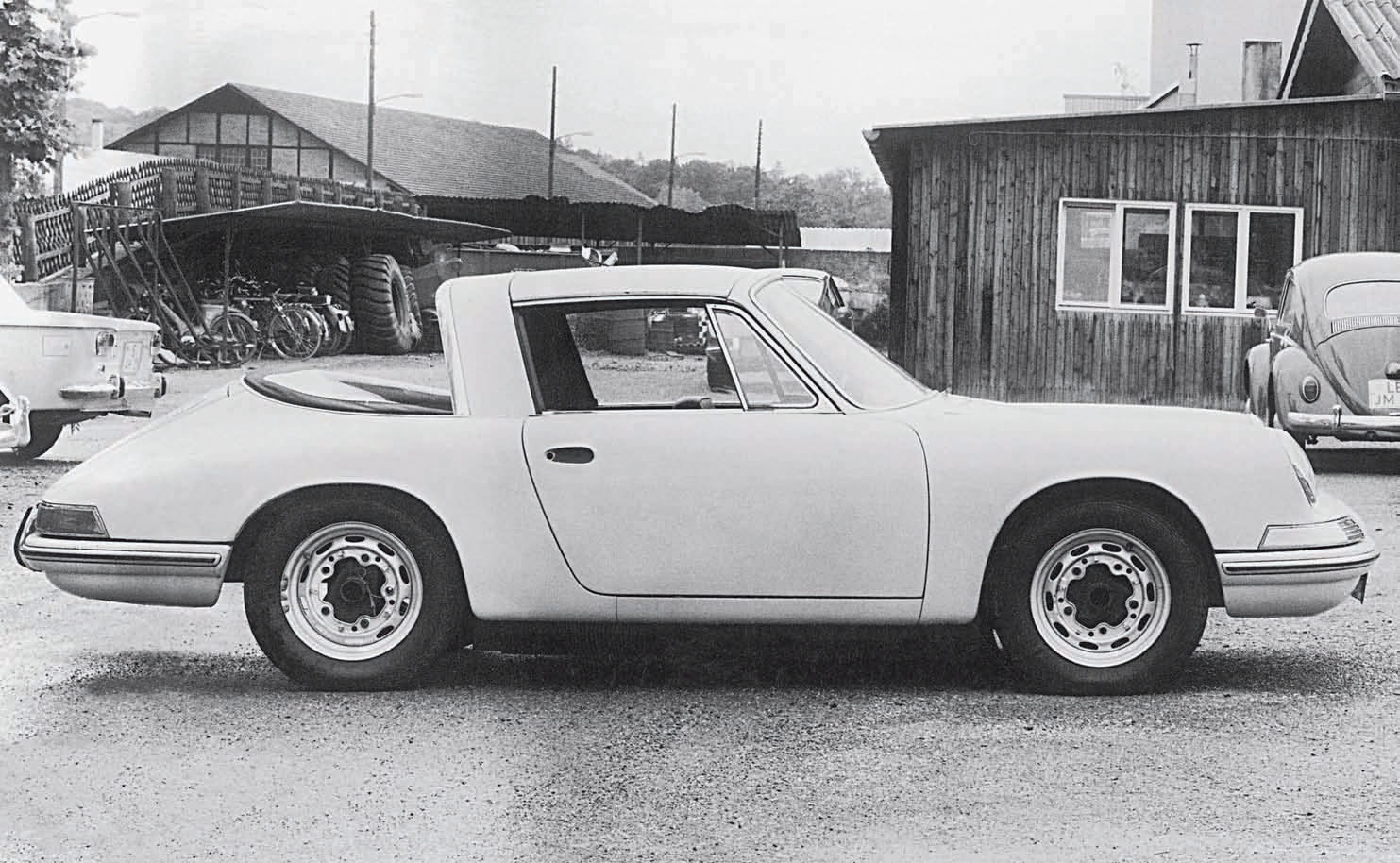
Chassis 13 360 appeared with a mockup rollover bar and removable roof panel on June 12, 1964. At this point concepts for the rollover bar remained in body color. Porsche Archiv
|
|
|
|
|
|
11
|
|
|
|
Image
|
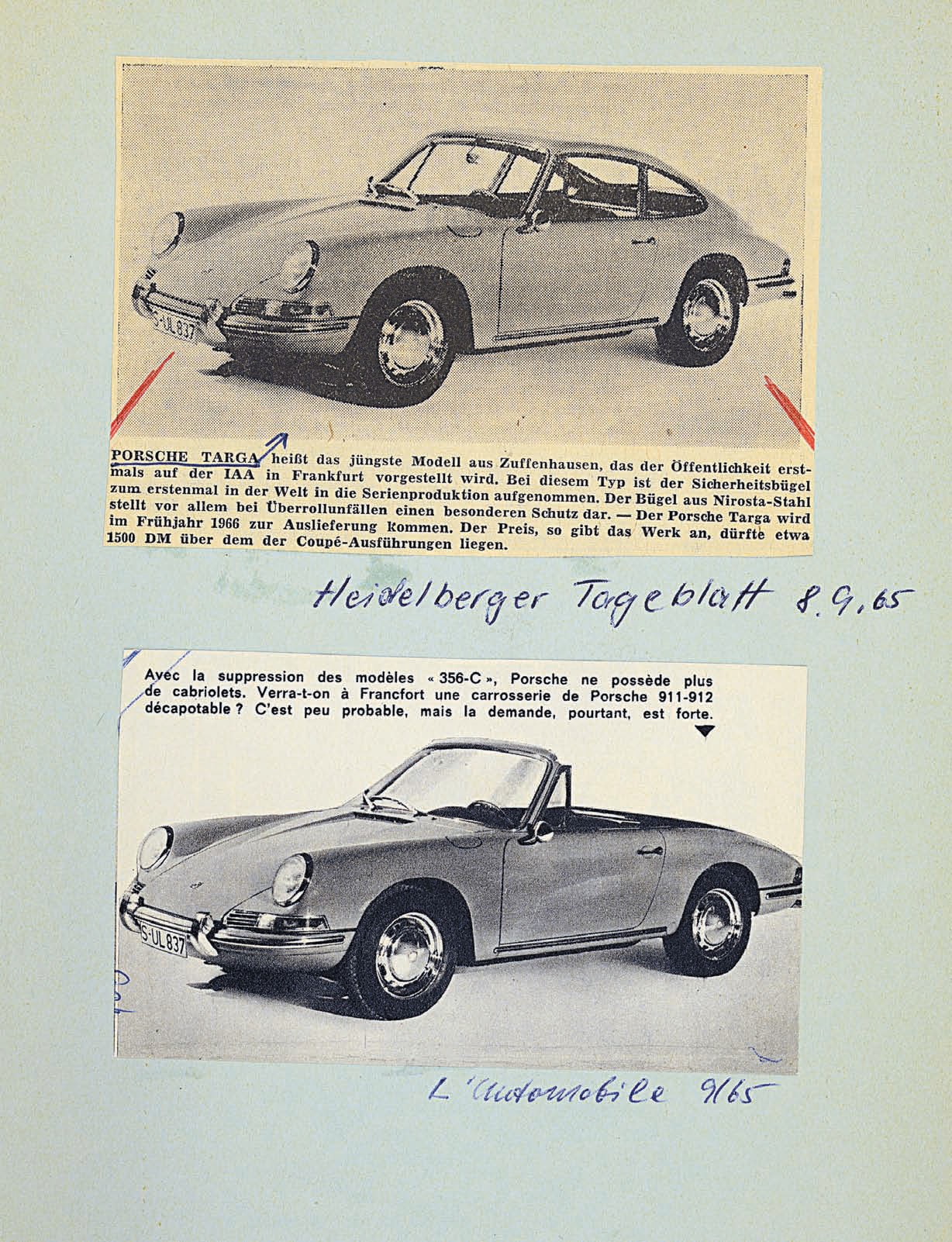
The September 1965 issue of L’Automobile published this single photo with a caption that read, “With the end of the 356C models, Porsche had no cabriolets. Will we see at Frankfurt a Porsche 911–912 convertible? It’s unlikely but the demand, however, is strong.” Porsche Archiv
|
|
|
|
|
|
12
|
|
|
|
Image
|
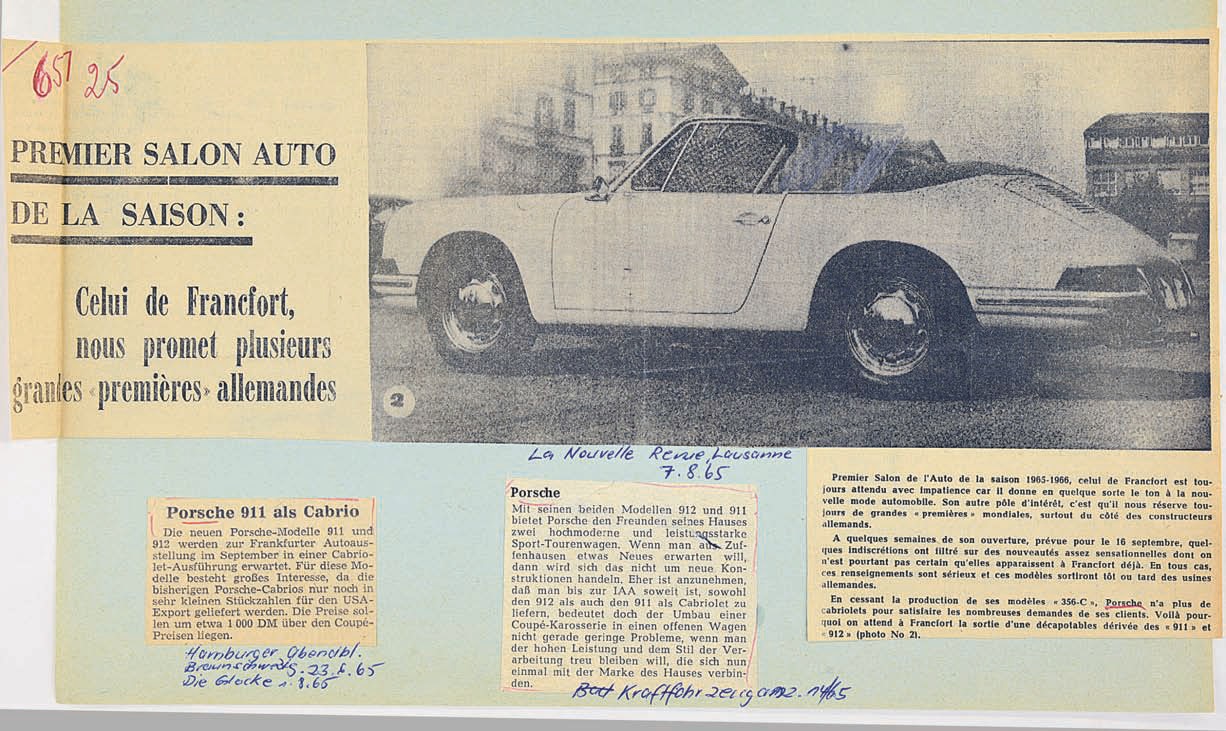
The August 7, 1965, issue of La Nouvelle Revue, from Lausanne, Switzerland, published this photo and brief story:
"...In ceasing production of the 356C models, Porsche has no more cabriolets to satisfy the numerous demands of its clients. That is why one waits at Frankfurt for the debut of convertibles derived from the 911 and the 912.” Porsche Archiv
|
|
|
|
|
|
13
|
|
|
|
Image
|
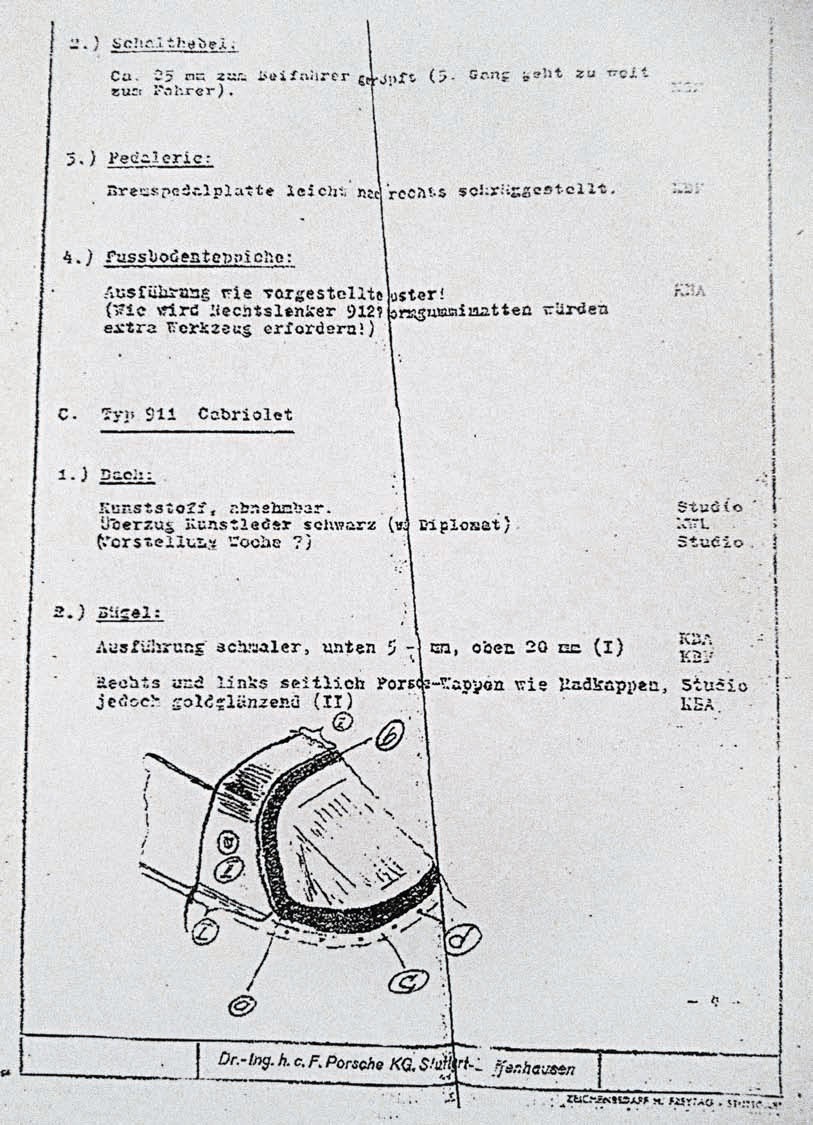
From this Aktennotiz from February 1, 1965, it is clear that Porsche’s decision for the Typ 911 Cabriolet open car was the Targa with a zipper-removable rear window, a rollover bar covered in stainless steel and fitted with a Porsche badge, and a removable roof panel over the driver’s head. Porsche Archiv
|
|
|
|
|
|
14
|
|
|
|
Image
|
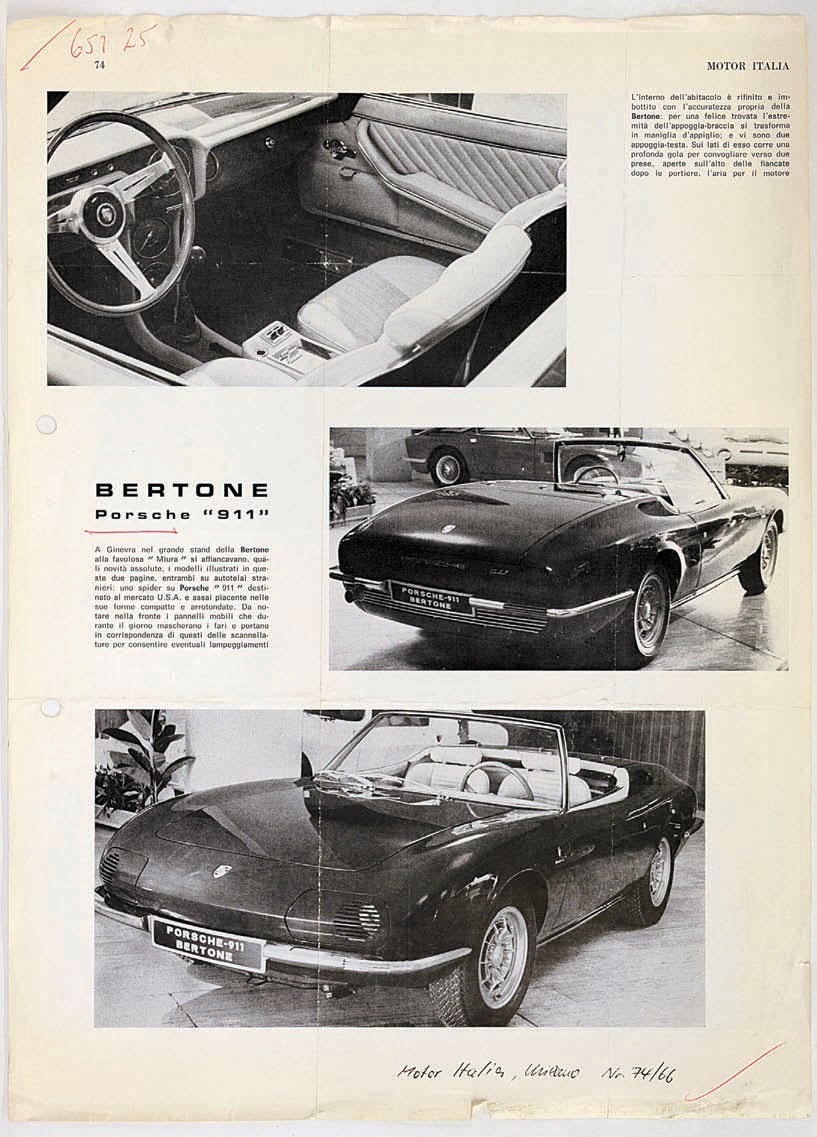
The April 7, 1966, issue of Motor Italia devoted a full page to the Bertone Porsche 911, writing, “At Geneva, on the large stand of Bertone . . . A spider of the Porsche 911, destined to be marketed in the U.S.A.” The caption called attention to the retractable headlight covers. Porsche Archiv
|
|
|
|
|
|
15
|
|
|
|
Image
|
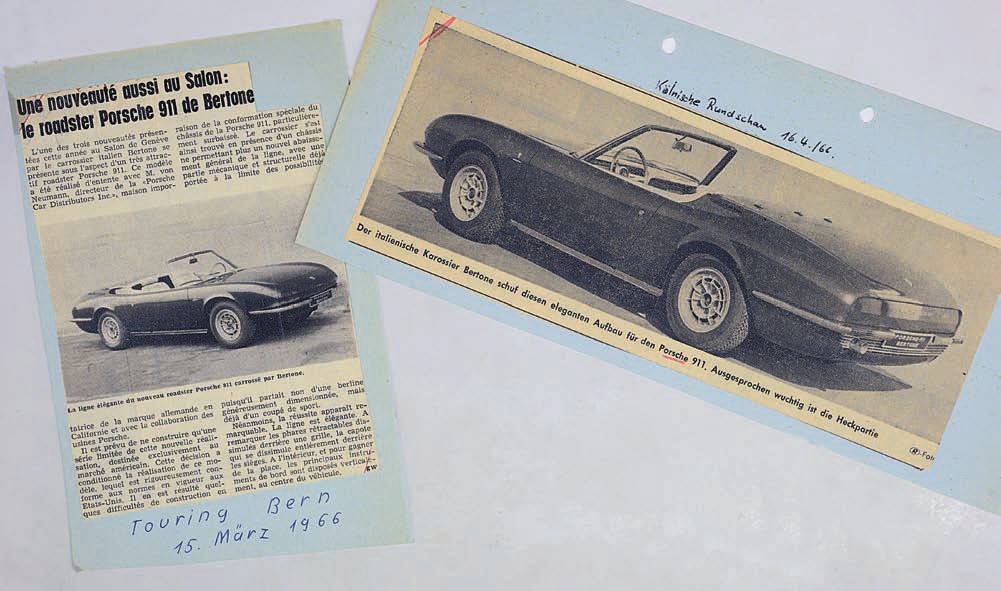
In Touring Bern, from March 15, 1966, a photo showed the Bertone roadster with a caption declaring it was “a limited series of this new body style, destined exclusively for the American market.” While the Kölnische Rundschau wrote on April 16, 1966: “The Italian bodymaker Bertone showed this elegant body for the Porsche 911. The rear end is very powerful.” Porsche Archiv
|
|
|
|
|
|
16
|
|
|
|
Image
|
For a single year, Porsche manufactured this two-liter 911L. It was the company’s highest line offering in the United States in 1968. Porsche Archiv
|
|
|
|
|
|
17
|
|
|
|
Image
|
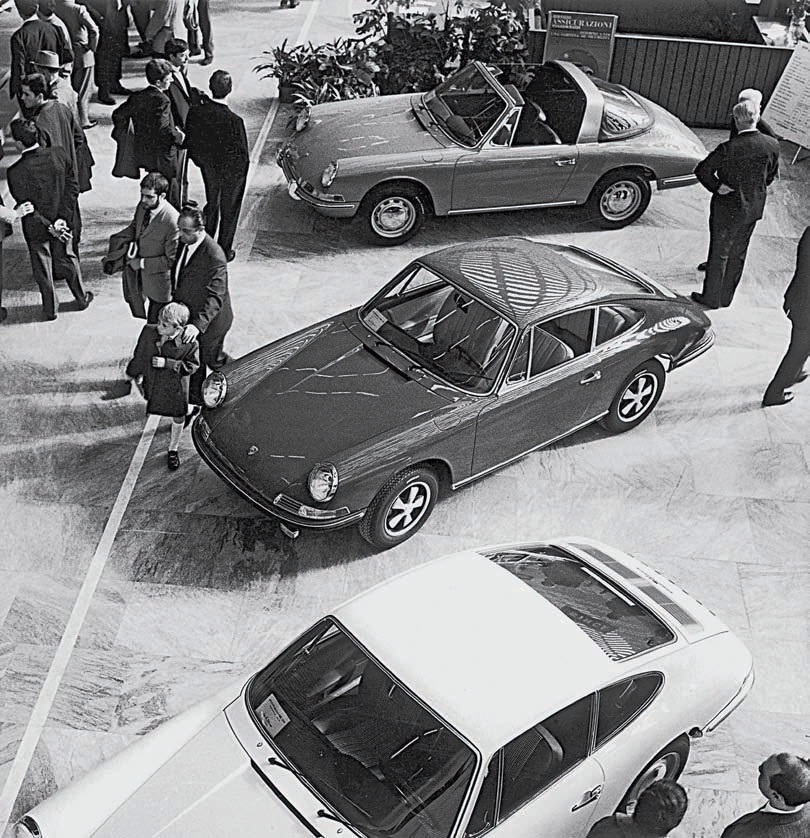
At the Turin Motor Show in November 1967, Porsche displayed a 912 Targa, a 911S coupe in the center, and a 911 coupe at the bottom of the photo. Porsche had used this largest Italian motor show for the world debut of its Cisitalia Grand Prix car in 1949. Porsche Archiv
|
|
|
|
|
|
18
|
|
|
|
Image
|
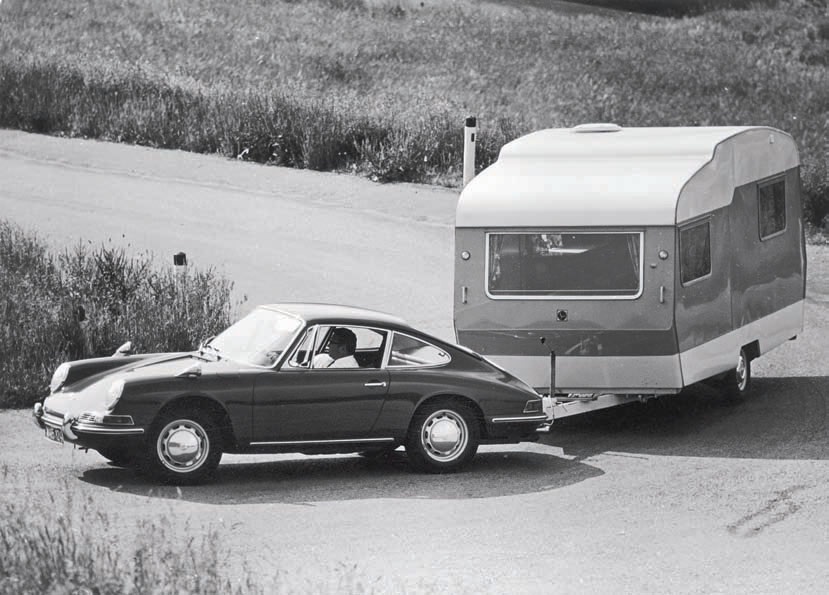
This 1967 base 911 model probably was one of very few ever used to tow a caravan mobile home. The fender mirrors were likely aftermarket accessories. Porsche Archiv
|
|
|
|
|
|
19
|
|
|
|
Image
|
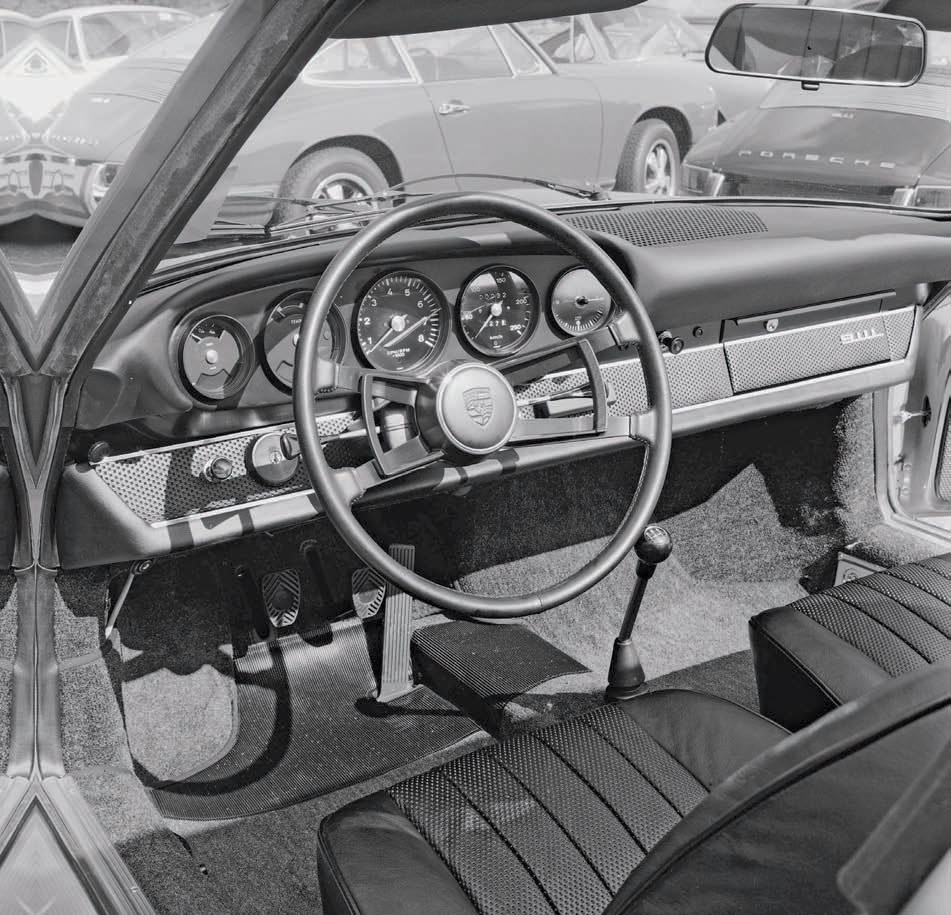
In the Zuffenhausen new-car delivery parking lot,this sunlit 1968 911L interior made it clear why Targa models appealed to many customers who relished open-air motoring. Porsche assembled only 444 of the L Targas. Porsche Archiv
|
|
|
|
|
|
20
|
|
|
|
Image
|
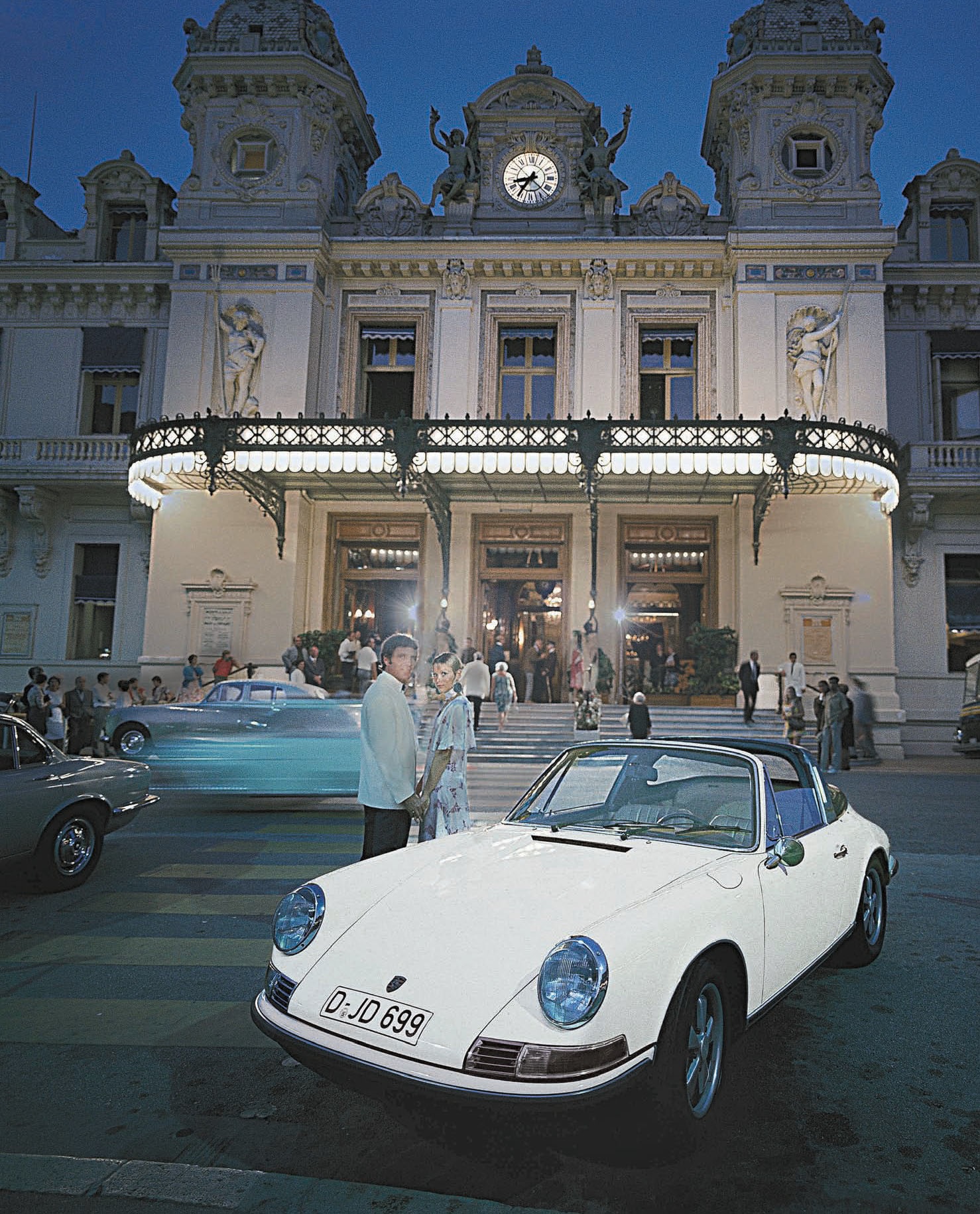
The new 911E was an elegant ride to an evening of opera or fine dining and dancing. Porsche introduced the fuel-injected E model and manufactured 1968 coupes and 858 Targas in 1969. Porsche Archiv
|
|
|
|
|
|
21
|
|
|
|
Image
|
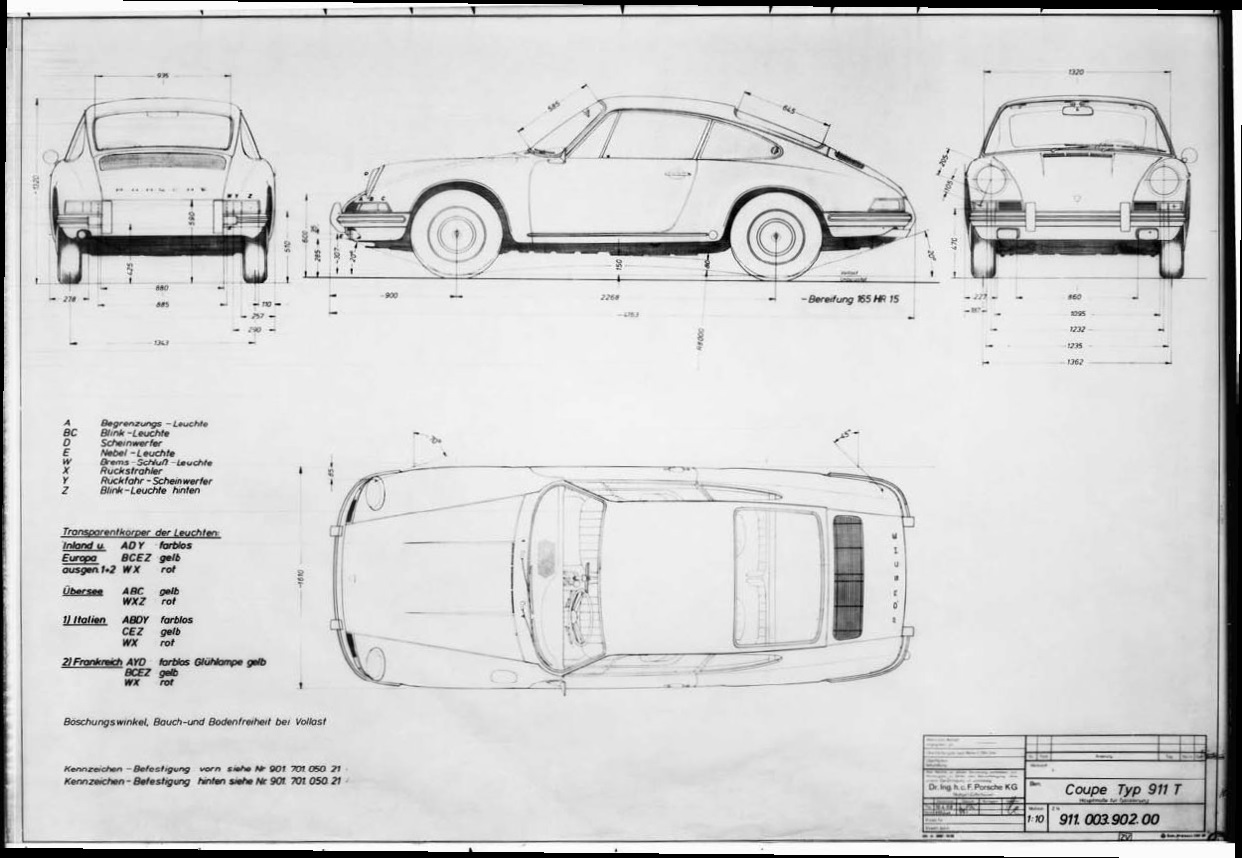
The German government required carefully measured drawings of each new car model from every manufacturer. The new 2,268-millimeter wheelbase was the significant difference for the 1969 models in this 911T document finished on April 16, 1969. Porsche Archiv
|
|
|
|
|
|
22
|
|
|
|
Image
|
Model year 1968 was the last for the 1,991cc Typ 901/02 engine. In the S, engineers pulled 160 horsepower out of it at 6,600 rpm using two of the three-barrel Weber 40 IDS carburetors. Dieter Landenberger/Porsche Archiv
|
|
|
|
|
|
23
|
|
|
|
Image
|
For 1970, 911E models such as this one, as well as T and S models, ran with a new 2,195cc engine. This E version developed 155 horsepower at 6,200 rpm. Porsche Archiv
|
|
|
|
|
|
24
|
|
|
|
Image
|
The four-seater idea continued to fascinate Porsche, and in October 1969, Pininfarina delivered its concept of a new four-seater 911. Assembled on chassis 320020, it used an S engine developing 180 horsepower. Porsche Archiv
|
|
|
|
|
|
25
|
|
|
|
Image
|
Following the Pininfarina four-seater concept, F. A. Porsche’s design staff created their own in 1970. Among other things this body tested was a passenger side location for the oil reservoir and its filler cap for production in 1972. Porsche Archiv
|
|
|
|
|
|
26
|
|
|
|
Image
|
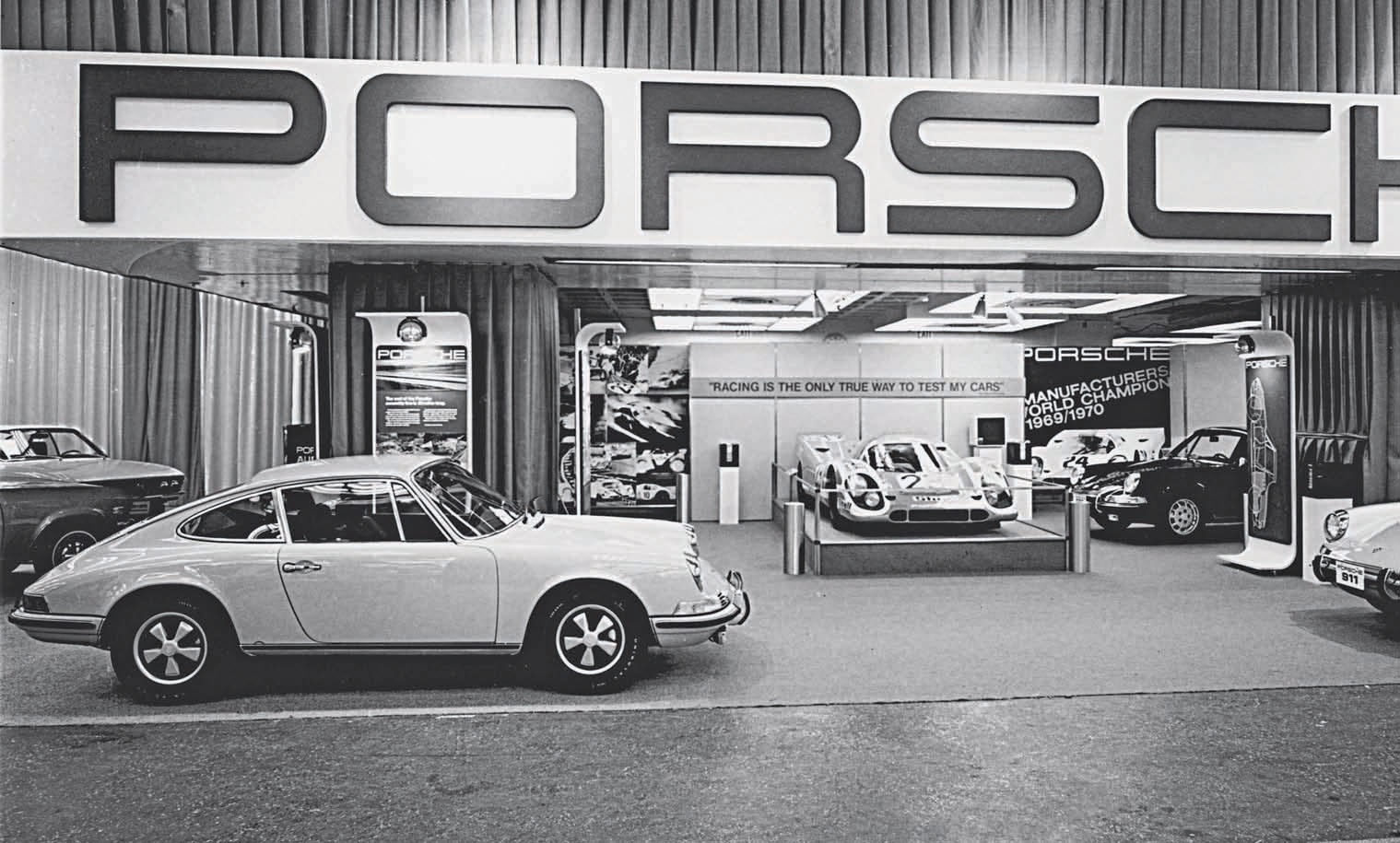
At the Coliseum in New York City, Porsche showed not only its 1971 production car lineup, but it also displayed the 1970 Le Mans–winning 917 K. The New York show ran April 3–11. Porsche Archiv
|
|
|
|
|
|
27
|
|
|
|
Image
|
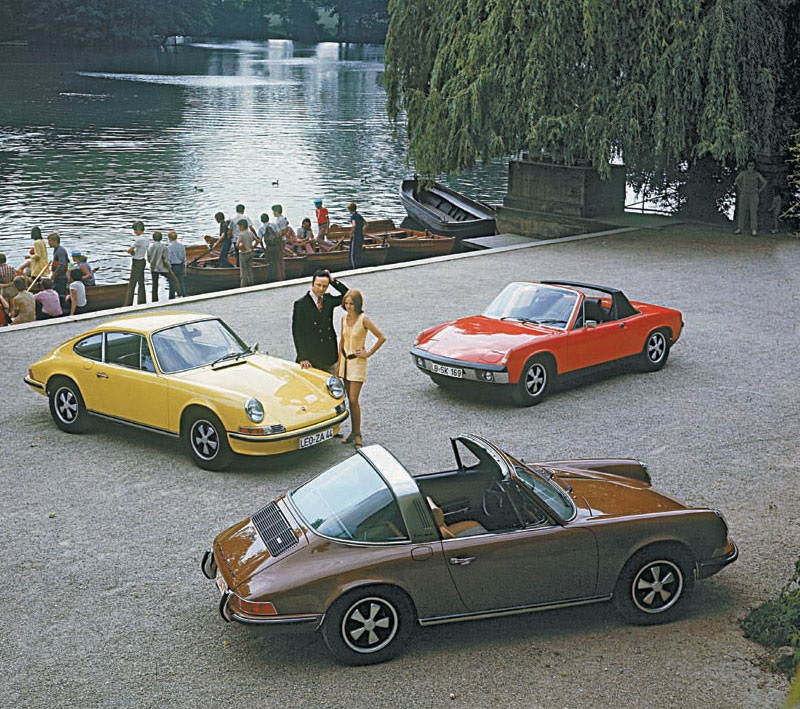
The only model missing from this 1972 lineup was a T. Models posed beside a new 2.4-liter S, with an E Targa in the foreground and a 914-6 in the rear. Porsche Archiv
|
|
|
|
|
|
28
|
|
|
|
Image
|
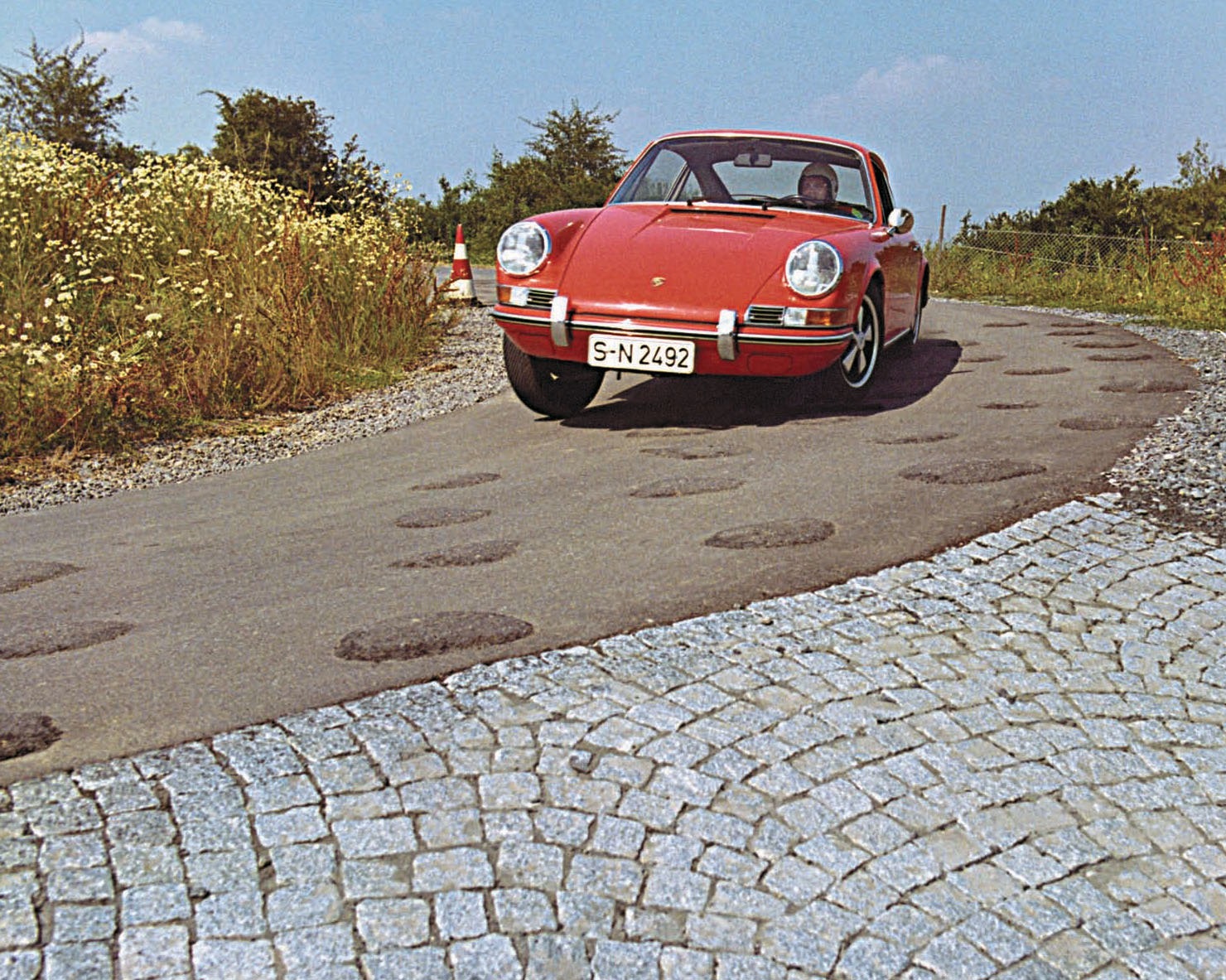
Porsche put prototypes such as this 1970 T through 8,000 kilometers of testing over these roads at Weissach. Test drivers ran 24 hours a day until they reached the distance requirement. Porsche Archiv
|
|
|
|
|