
THE SECOND GENERATION: THE G MODEL What emerged from Zuffenhausen and Weissach for the 1974 model year was, in some ways, a car the company never intended to make. Strict new regulations from American legislators dictated everything from bumper height to headrests integrated into seats for rear-end collision whiplash restraint; from automatic seatbelts to heavier padding on instrument panels, switches, and the steering wheel hub; from mandatory use of regular-grade unleaded gasoline to the addition of air-cleaning-but-performance-robbing belt-driven devices to the engine. Porsche had to redesign and reconfigure a car they expected instead to discontinue. This was the birth of the well-regarded G Series. Bumpers had perhaps the biggest potential to destroy those hard-fought shapes of the 911. American safety regulations required that those at the front of the car had to withstand a fivemile- per-hour impact with a fixed barrier and show no damage. Styling chief Tony Lapine, who had brought with him Wolfgang Möbius, Dick Soderberg, and chief modeler Peter Reisinger when he joined Porsche from Opel, set them and a variety of chassis engineers to solve the problem. Möbius’ bumpers, with the accordion-like rubber interfaces to the body, met the requirements and retained the car’s balanced proportions. Historian Karl Ludvigsen wrote, “After the G-Series cars had been on the market for about a year, they looked so right and were so familiar to the eye that they tended to make earlier Porsches look excessively light and fragile by comparison.”
Porsche offered the 150-horsepower base 911, the 175-horsepower 911S, and the 210- horsepower Carrera. Carrera buyers in the United States got the S engine in their cars. Displacement was the same—2.7 liters with Bosch electronic fuel injection on the base and S models (and U.S. Carrera), and mechanical injection feeding the European Carrera. Porsche had made history on the world’s endurance racetracks with its effective 917 series of coupes with their opposed 12-cylinder engines. Those cars, however, had strict regulations for engine displacement and other specifications. Elsewhere in Europe, the InterSerie and, across the Atlantic in the United States, the Canadian-American Challenge were racing series that enforced no limits on engine sizes and encouraged unlimited development. Porsche’s response to interest from a couple of its drivers was to turbocharge the flat 12 and mount it in an open Spyder body. In its wildest trim, this technology yielded as much as 1,400 horsepower, more than doubling the normally aspirated output. The InterSerie and Can-Am turbo technology seemed like a fantasy for road cars until Porsche delivered it with a leather interior and electric window lifts. “All my life, all my automobile life,” Ernst Fuhrmann recalled, “I was of the opinion that racing must have a connection to the normal automobile. And we were very successful with the InterSerie in turbocharged cars. And when this race car came, it was noiseless. And the next version was better. So we were far ahead. I said to my people, why don’t we put this success into our car? “They said, ‘Oh, this was tried already.’ “But not in a car that was done right. “‘And it was refused by management in that time! ‘It was impossible,’ they said. ‘There’s not enough room.’ This was my contribution: I looked in the engine and said, ‘There must be room!’” Porsche engineers always looked for ways to increase engine output from an air-cooled flat-six cylinder engine that already was approaching some limits. Engineering protests prior to Fuhrmann’s assignment were nothing compared to the problems they encountered as they struggled to make the systems work. “Herr Binder was the head of engine design department,” Herbert Ampferer recalled. “He came to me and said, ‘You, young guy, you are young, inexperienced. I need a layout designer for the new turbo engine.’” Ampferer was a young guy with a mechanical engineering degree from Steyr in Austria, concentrating mostly on engines. His first job at Porsche put him to work on the EA266 mid-engine project for VW. “It was horribly complicated, drives running around the corners, bent drives. Unbelievably complicated,” he said. Turbo technology in those days, 1970 and 1971, while he and racing colleague Valentin Schäffer worked on road and competition adaptations within Porsche, came mostly from commercial truck applications. These were unsophisticated systems, as can be expected from needs that weren’t centered on any kind of responsiveness. A German named Michael May was turbocharging Ford Capris. The car suffered lengthy turbo lag—the response time from throttle pedal input to engine reaction. Porsche acquired one to give the engineers a sense of the state of the art. Ampferer recalled one drive where by the time the turbo input reached the engine, he was headed at a huge concrete wall: “I made it. Nothing happened. So I had a good test on the lack of response of the turbos.” With that experience in hand, he questioned Binder about the considerations he had to design into Porsche’s turbo car. “Tell me, sir, do we need air conditioning for that car?” Ampferer asked. “‘No, we don’t need it,’ he said. Do we need a rear wiper for that car? ‘No, we don’t need it. This is only 200 cars or something. Forget it!’”
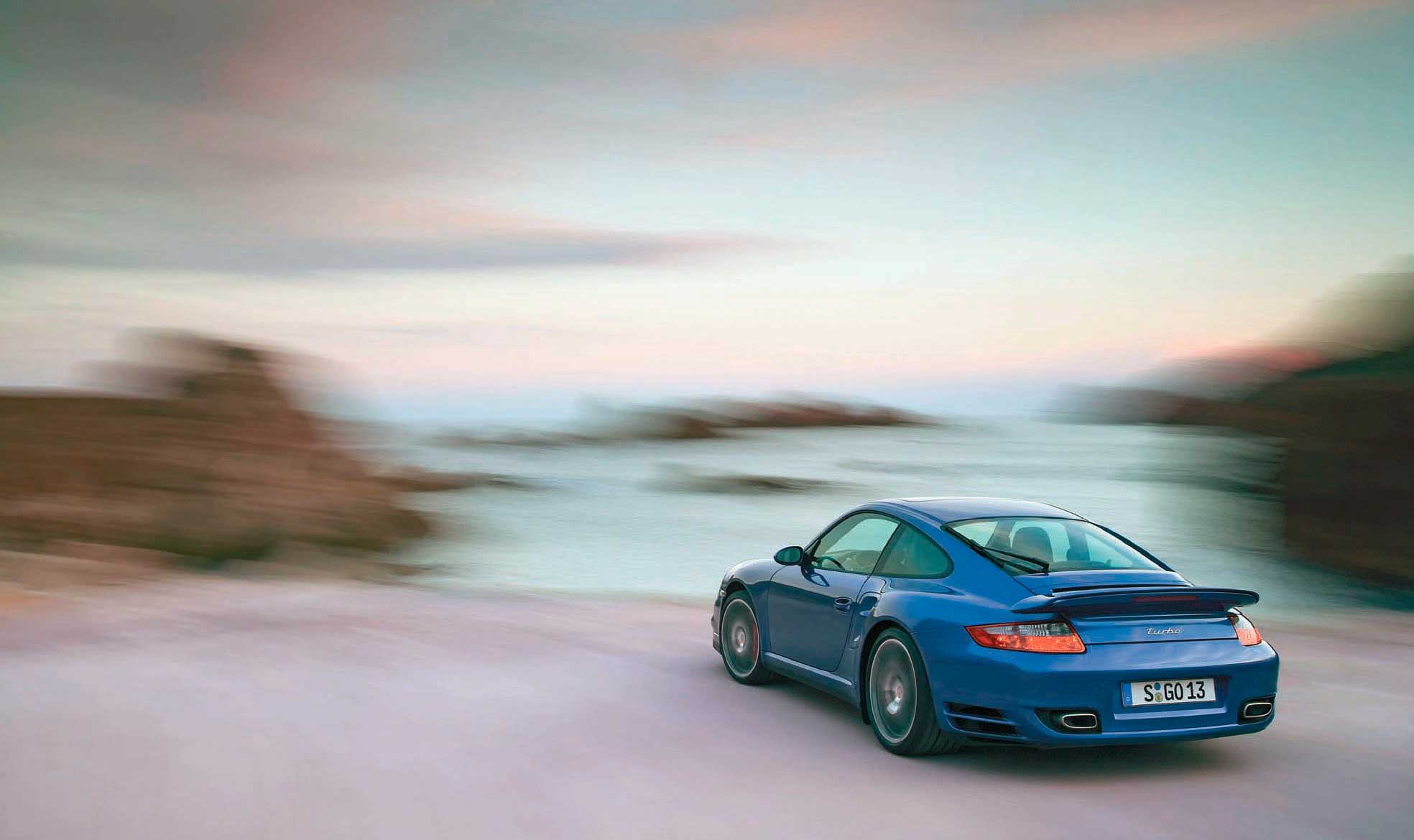
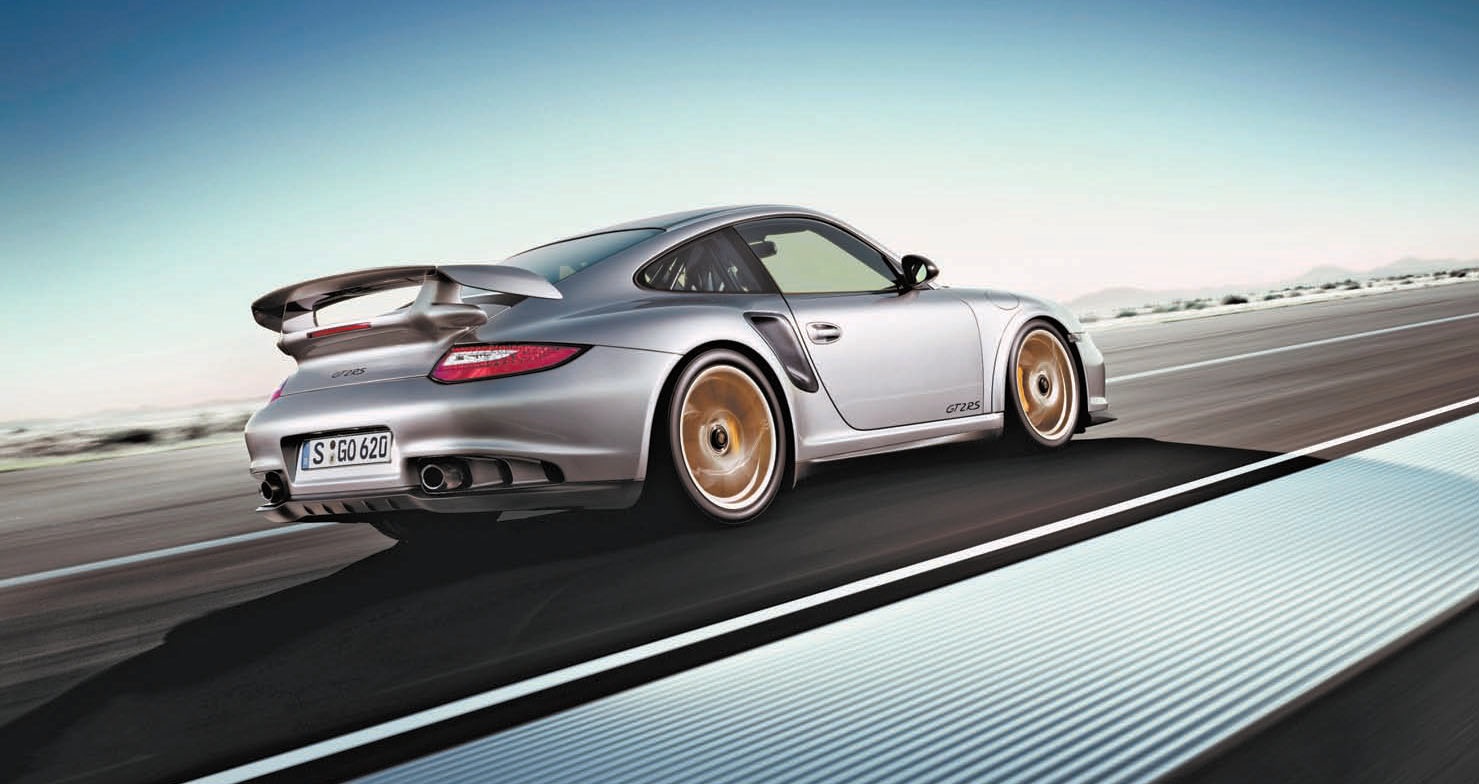
“Then sales and marketing announced that they could sell many more than only 200. And they needed air conditioning. So we started from scratch, completely. It was a case of not knowing what market was in front of us for this new car.” They experimented with prototypes. One used a 2.7-liter block. In 1969, Valentin Schäffer had mounted turbos on two-liter 901 engines. One turbo stuck out of the rear deck lid of a 911 coupe, while another, even though it protruded from the engine compartment of a 914-6, suffered critical cooling problems. To Binder and Ampferer, the three-liter engine developed from the 2.7 for the racing Carrera RS 3.0 seemed a good place to start. “I was involved with the 930,” Ampferer explained, using its internal Typ number, “but once you have designed the components needed for the prototypes, you are a little bit out of the business. Product procurement starts. Product components come in house. They get assembled, and the first tests bring the first calls. ‘We have a problem there, we have a problem here.’ And you redesign it, and it goes again. You are involved in that process just from time to time. You have time to start it along with another project.” For Ampferer, that other project was the front-engine water-cooled Typ 924, the final joint development with Volkswagen under the old contract. Both projects moved through their various phases, the 930 Turbo appearing in the spring of 1975 in Europe. Its 2,994cc engine incorporated a 95-millimeter bore within the aluminum alloy crankcase. With normally aspirated compression at just 6.5:1, when the Kühnle, Kopp & Kausch (KKK) turbocharger spooled up to its 90,000-rpm operating speed, it boosted air into the cylinders at 0.8 bar, 11.3 pounds per square inch (psi). As a result the engine developed 260 horsepower at 5,500 rpm, making the coupe with its prominent rear wing into the fastest German production car of its time. Acceleration from 0 to 100 kilometers per hour took 5.5 seconds, and the car reached a top speed of 155 miles per hour.
“ All my life, all my automobile life, I was of the opinion that racing must have a connection to the normal automobile. And we were very successful with the InterSerie in turbocharged cars. And when this race car came, it was noiseless. And the next version was better. So we were far ahead. I said to my people, why don’t we put this success into our car? They said, ‘Oh, this was tried already.’” — Ernst Fuhrmann
Porsche widened the bodywork by about five inches to accommodate much wider wheels and tires. For brakes, the engineers incorporated ventilated aluminum rotors with dual-piston calipers in front and ventilated cast iron rotors in back. Spacers widened front track by 0.83 inch and 1.1 inches in the rear. Not only were Ampferer’s dreaded air conditioning and rear wiper standard equipment, but sales and marketing also wanted full-leather upholstery, a four-speaker stereo system, electric window lifts, and automatic heat control. Porsche debuted the car at the 1973 Frankfurt show and deliveries began early in 1975. Despite the Turbo’s distinctive rear wing—some called it outrageous at the time—trim on all the 1975 models was otherwise subdued. Headlamp bezels and exterior mirrors matched the body color, and on the Targa, the bar went flat black. In addition to the high-performance Turbo, the company offered base 911, 911S, and 911 Carrera models as well as a special 25th anniversary edition that they painted silver with blue/black leatherette inside to commemorate a quarter century of manufacturing automobiles in Zuffenhausen. Carrera and Turbo coupes ran on Fuchs wheels, while base and S models introduced cast-aluminum wheels from ATS that quickly earned the nickname “cookie cutters.” For 1976, Porsche shuffled its model lineup, dropping one version, resurrecting another, and introducing a third. The base 911 carried over, but now it ran with 2.7 liters tuned to produce 165 horsepower. The 911S disappeared while the Carrera adopted the same 3.0-liter block that powered the Turbo. In its normally aspirated configuration, it provided buyers with 200 horsepower. Both 2.7- and 3.0-liter engines got new cooling fans, not quite one inch smaller in diameter, and with five blades instead of 11, but that turned faster. For a single year, the company reintroduced the 912 strictly for the American market. Full compliance with emissions and safety regulations for the new 924 was a year away. Porsche launched the new coupe in late 1975 as a 1976 model in Europe. In the interim, the 912E used the 2.0-liter flat four of the recently discontinued 914/4. The fuel-injected engine produced 86 horsepower. Porsche manufactured 2,099 for the States in coupe and Targa versions.
Weissach engineers added thermal reactors, a kind of first-generation catalytic converter, and secondary air injectors to the engines of its 1977 model year cars destined for Japan, Canada, and the United States. Vacuum brake boosters appeared on Carrera 3.0 and Turbo models as well as base 911s fitted with the Sportomatic transmission. While the Carrera shifted to ATS wheels as standard equipment, the Turbo became Porsche’s first model to run on 16-inch wheels and tires. Ahead of the rear wheels on the wider body, Porsche added a matte black material to protect the paintwork from rock chips. Inside all the cars, buyers were pleased to find two new air vents in the center of the instrument panel and rotary knobs set into the door panels that locked and unlocked the doors, eliminating the pop-up buttons that a skillful thief could open with a coat hangar.
Porsche’s model lineup raised eyebrows in 1978 with the addition of its startling new 928. Outside observers saw a product range leaning toward front engines and water-cooling. The 911 became the new SC model, but in some eyes this was just the next Porsche where the 924 and 928 were the new ones, illustrating the company’s direction. Only two variations of the 911 remained, the SC, standing for Super Carrera, and the Turbo, each with newer, larger displacement engines. The SC took over and improved the 3.0-liter version from the previous Carrera, while the Turbo grew to 3.3 liters. The base 911 and Carrera were discontinued. In its earliest iterations, trim on the SC returned to bright work, with door handles, window frames, and headlight frames all chrome plated. Fifteen-inch ATS aluminum wheels came standard while 16-inch Fuchs were optional. For the SC, Weissach reworked its three-liter engine to provide drivers with greater torque at nearly all engine speeds. As a result—and combined with the effects of mandatory use of regularoctane gasoline—the engine developed 180 horsepower, down 20 from the previous Carrera even as urban drivability improved. Cooling duties called for reinstating the 11-blade fan, but it retained the smaller diameter. For the new Turbo, engineers increased bore to 97 millimeters and stroke to 74.4 millimeters with a new crankshaft. With compression set at 7.0:1, horsepower output rose to 300, though emissions requirements and the need to operate on unleaded fuel in Japan, the United States, and Canada reduced engine output for those countries to 265. Still, it remained Porsche’s most potent offering compared to the 125-horsepower 924 and the newly introduced 240-horsepower 928. Wisely, Porsche’s product planners and marketing and sales staffs still believed that nothing should eclipse the output of the Turbo as company flagship. After three years of chrome, Porsche returned to body colors on the headlight surrounds, while door handles and window frames went flat black for 1979. The compromises in engine timing that had given the 1978 SC good performance at the expense of fuel economy were adjusted for 1979. Horsepower remained unchanged at 200 for the SC, 265 for U.S., Canadian, and Japanese Turbo models, and 300 for rest-of-the-world buyers. Production for the year was 9,475 coupes, Targas, and Turbos. The car was safe for another year.
PLENTY TO DO NOW But the addition of two new cars provoked comment. Throughout 1977 and 1978, Fuhrmann, as not only chief of engineering but company spokesman, answered or avoided questions about this apparent evolution. In early 1978, with 928 models on the road, he quantified the future of the 911. At that time, Porsche manufactured around 45 of the 911s each day. The inquisitors, of course, did not have Fuhrmann’s understanding of engineering, of the challenges to cleaning the emissions from air-cooled engines, of reinforcing the 911 platform to withstand even more demanding impact tests. By 1978, the 911 was close to the same age—13 years at that point—at which Ferry launched the 356 replacement. And how were Fuhrmann’s engineers and designers expected to make something this old seem fresh and new? “The car was still selling,” he explained in 1991. “We still made money from this car. So I set a low limit at which we no longer make money. I told journalists if we ever go below 25 cars, some number each day, 6,000 a year, we stop.” In some sense, though, Fuhrmann already had stopped. He had halted any further engineering, other than what the United States required to continue shipping cars there. Sales in America still accounted for half of 911 production, so, depending on exchange rates, half or more of Porsche’s profits came from American customers. Fuhrmann couldn’t ignore them; he only hoped to entice them into 924s and 928s.
Loyalist groups developed in Zuffenhausen and Weissach. The 911 faithful became outspoken that engineering development and design updates were perpetually shelved. While design chief Tony Lapine drove a new 928, Wolfgang Möbius stayed with his 911 as his company car. Modest engineering changes gave the SC engine an eight-horsepower increase for rest-of-world models, and the Turbo fitted a new exhaust with twin pipes. U.S.-destined cars received catalytic converters and oxygen sensors that sapped away the eight-horsepower gain, and adding insult to injury, new speedometers read only to 85 miles per hour as the States enforced the widely ignored 55 mile-perhour national limit. Porsche stopped distributing Turbos to Japanese, Canadian, and U.S. buyers.