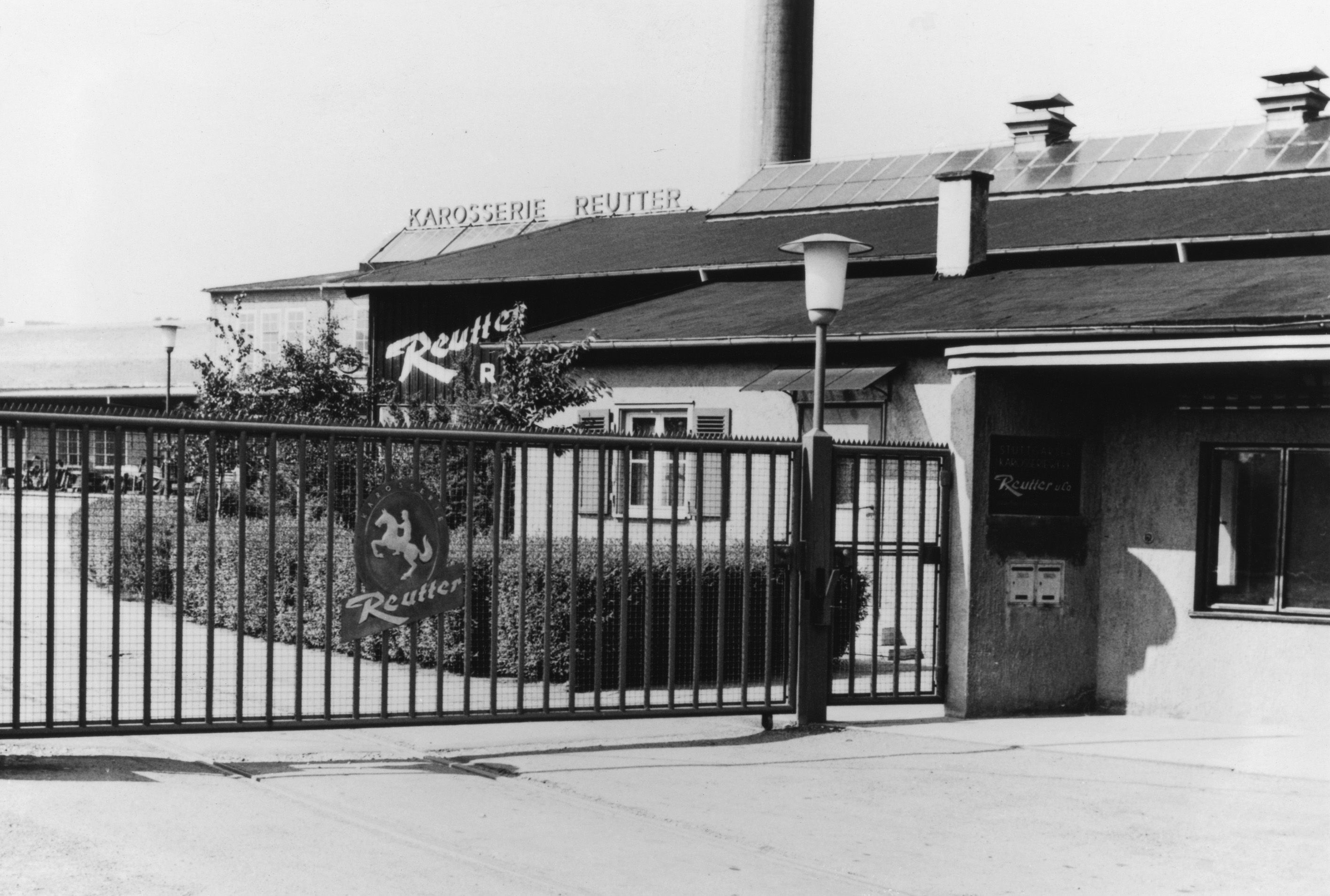
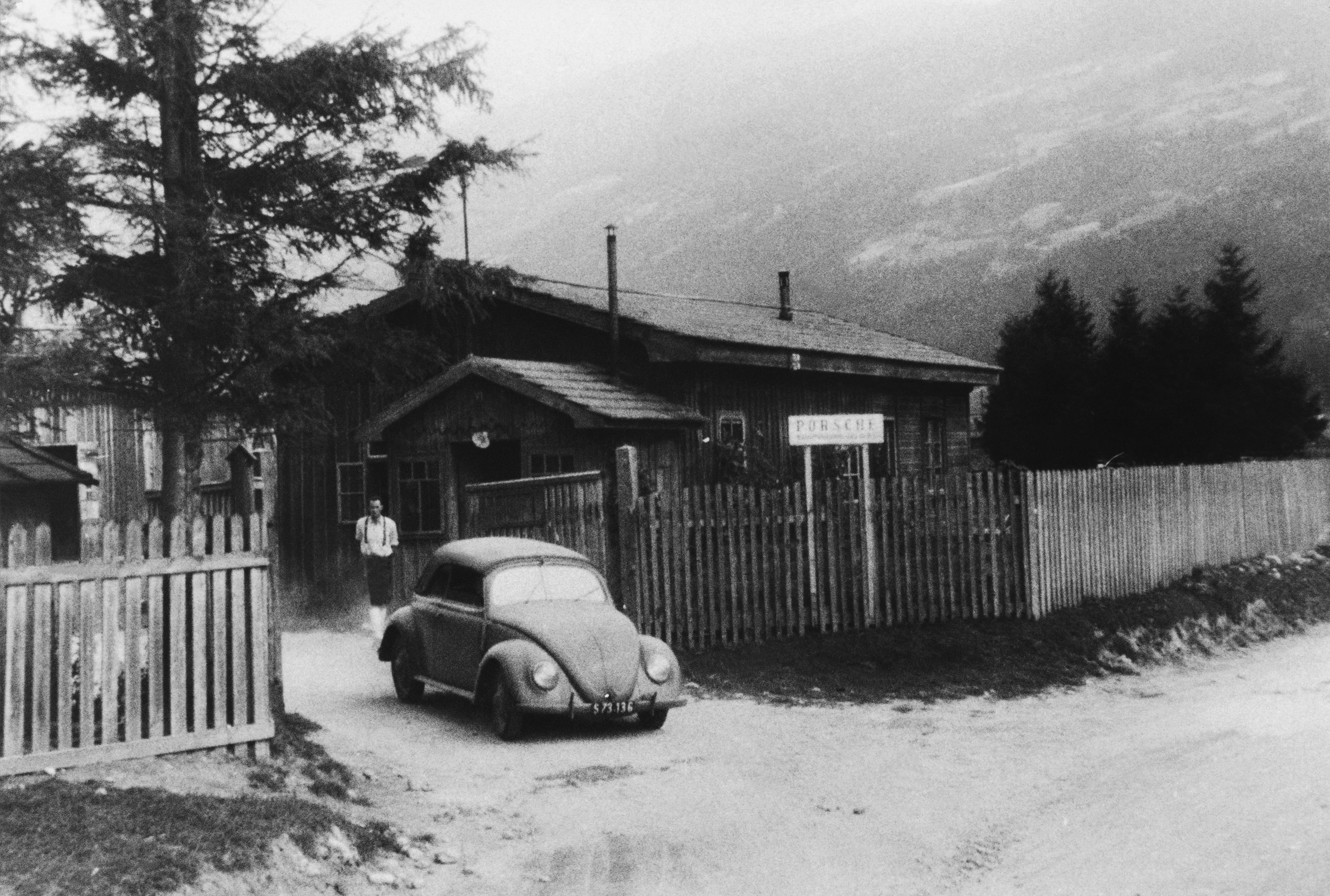
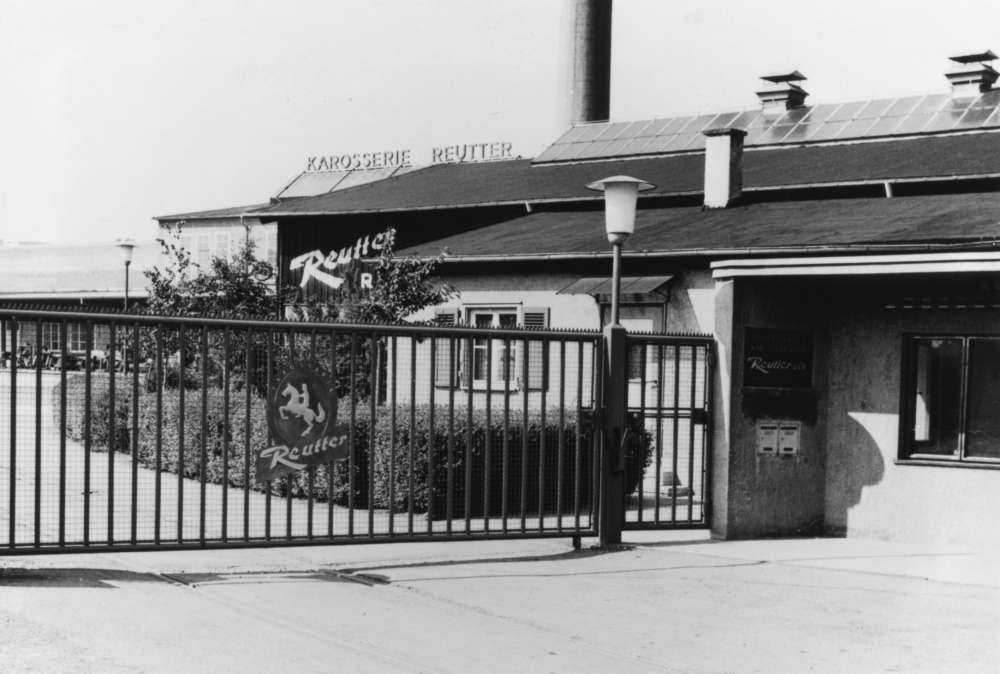
 The gate of the vehicle body manufacturing firm Reutter in Zuffenhausen, Stuttgart. Today it is Porsche's main gate at "Porscheplatz 1"
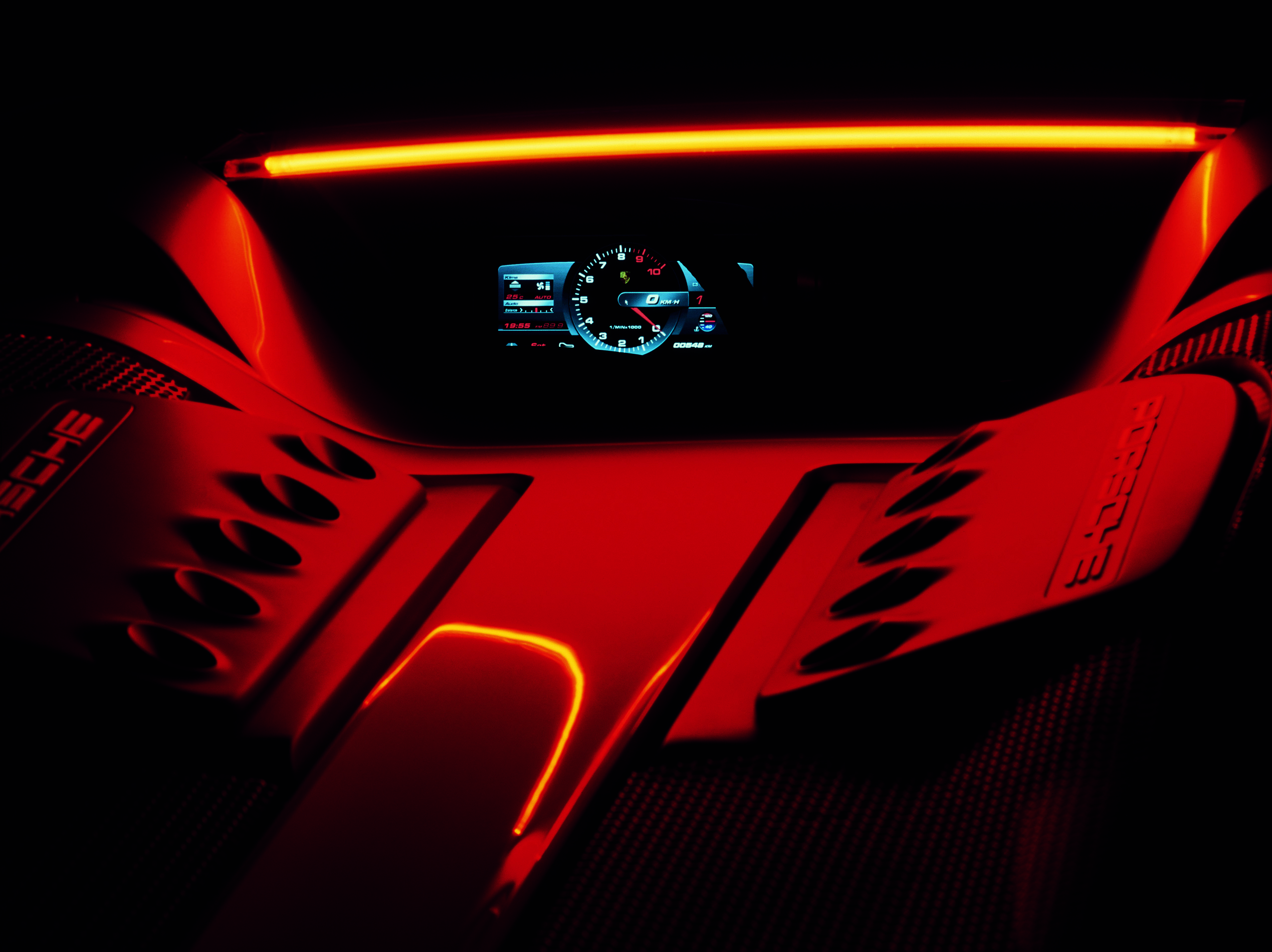
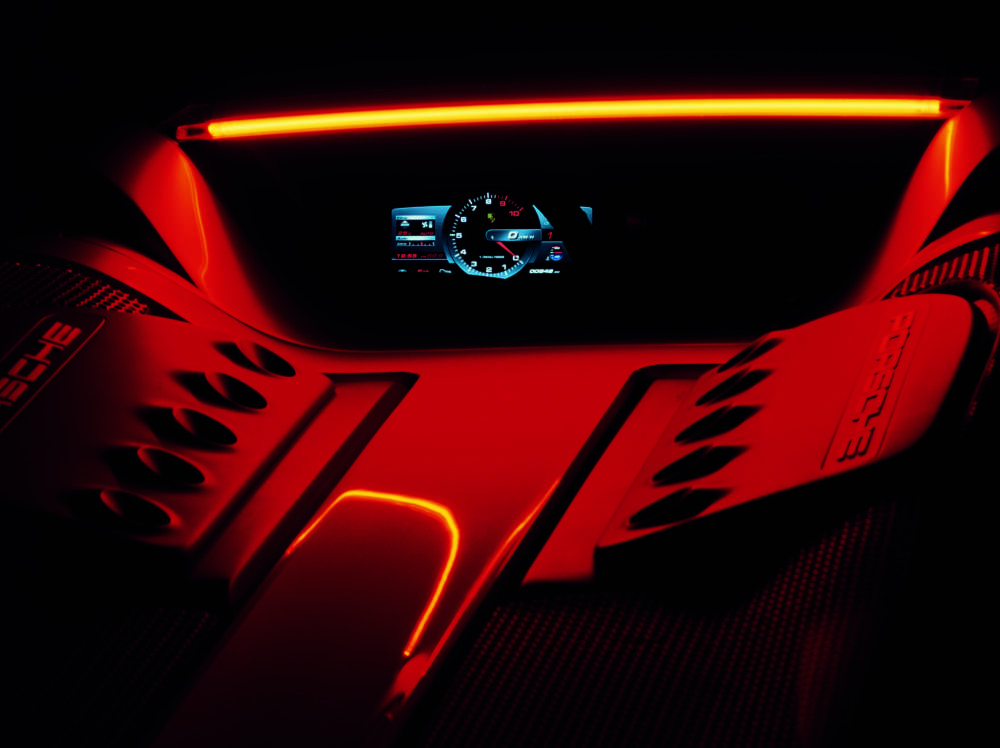 The high-rise brake light between the rollbars, looking at the instrument display
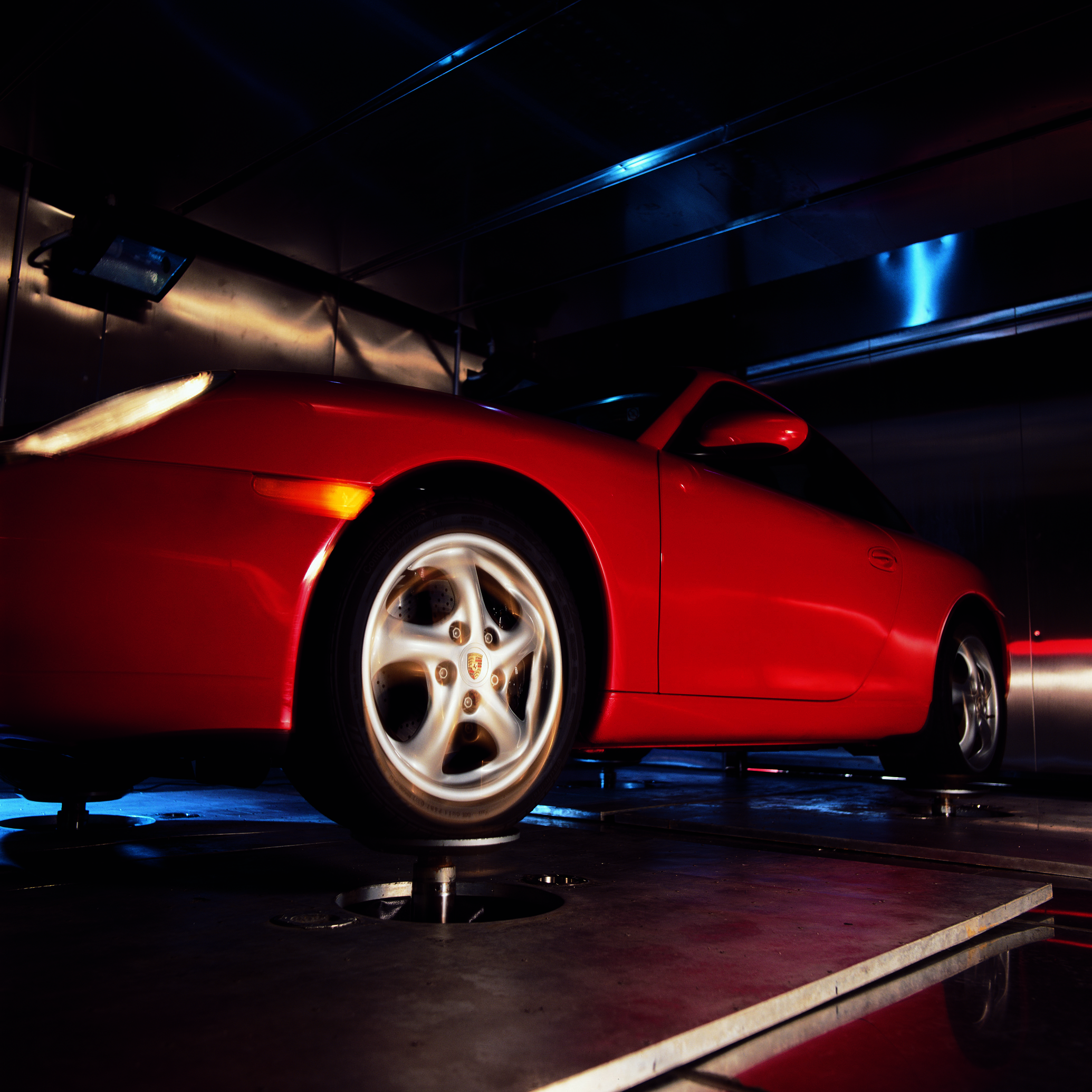
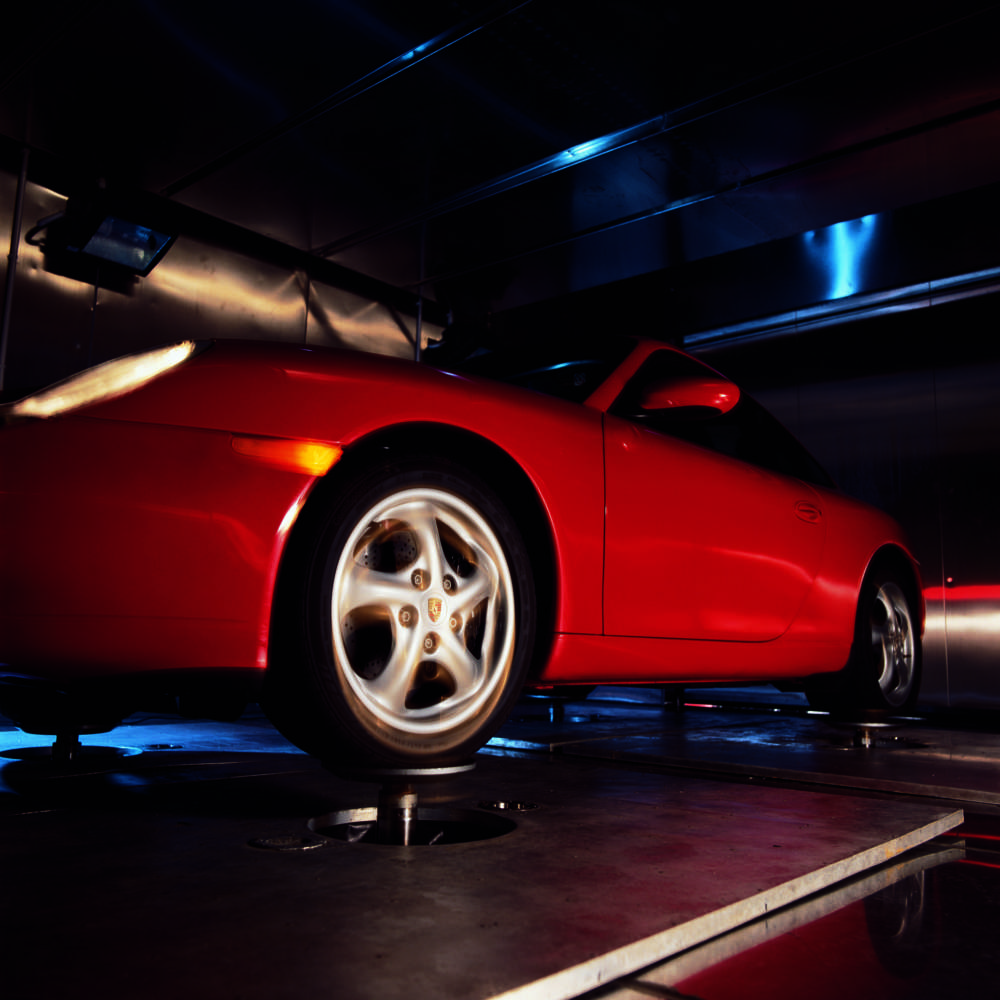 The hydraulic ram can simulate virtually any road surface with four hydraulic tappets
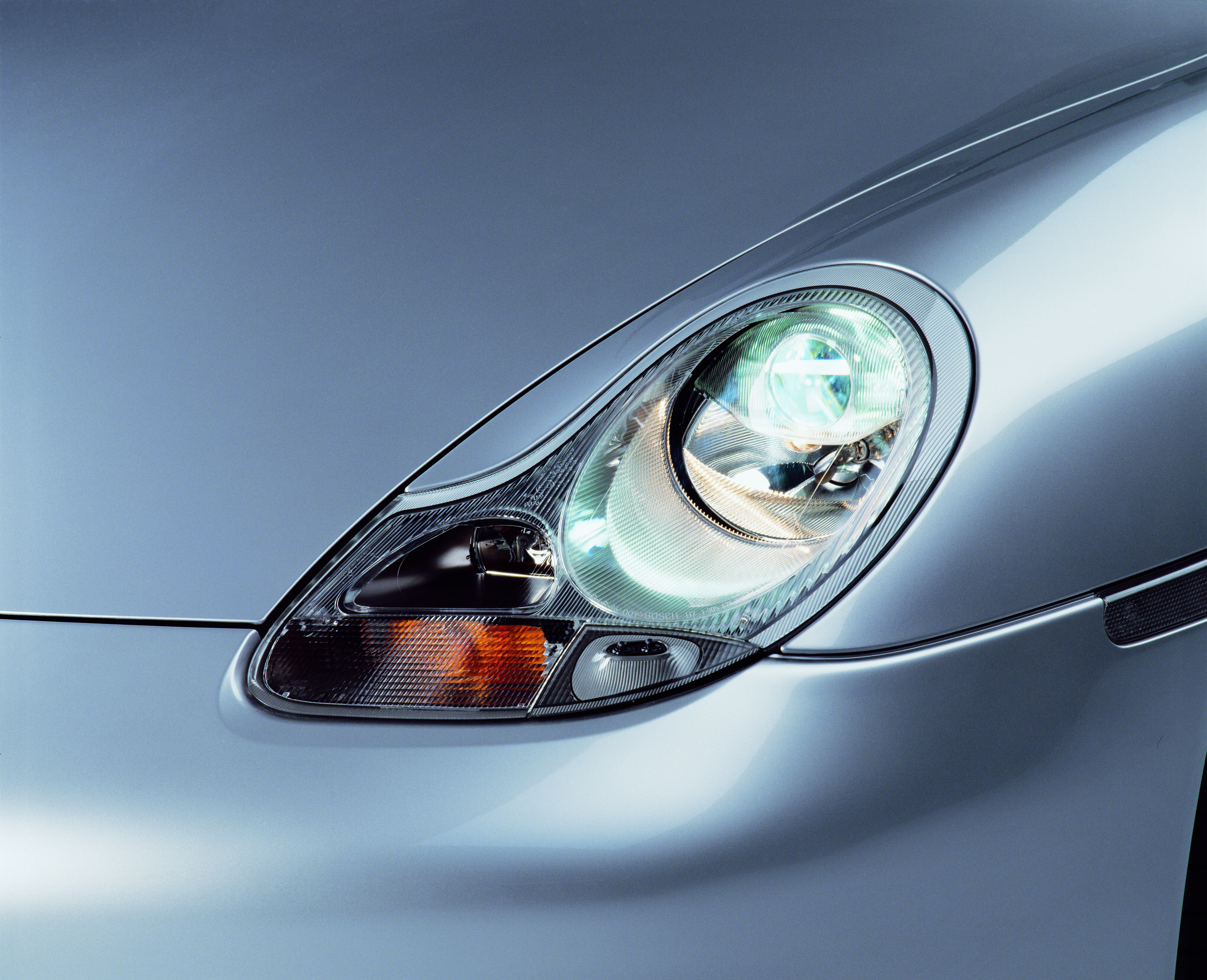
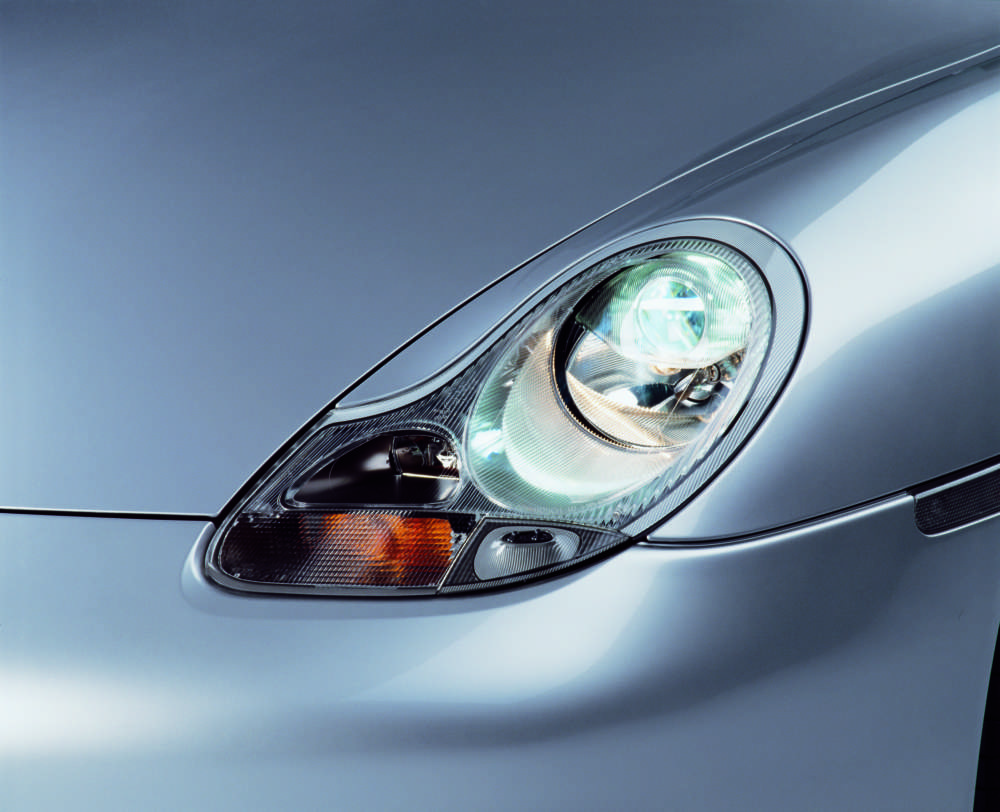 The Litronic-headlight system provides automatic headlight beam adjustment
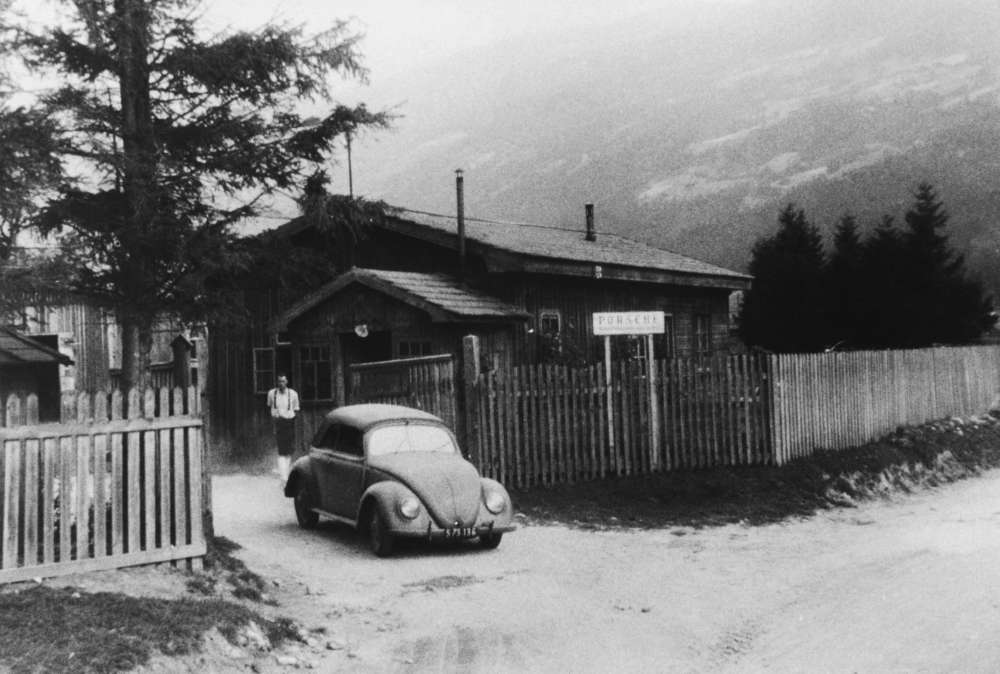 The office of Ferdinand Porsche (1875-1951) in Gmünd/Kärnten
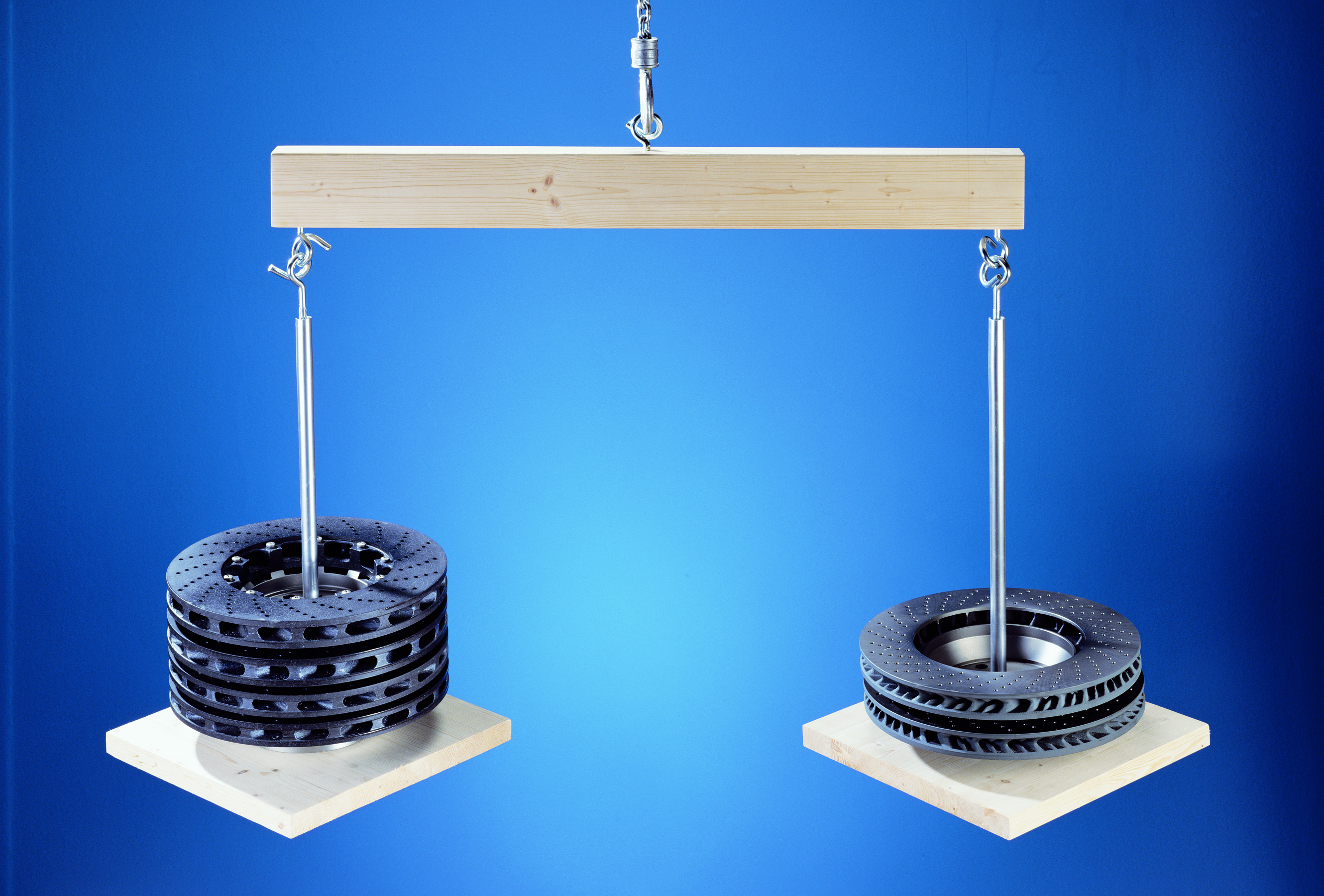
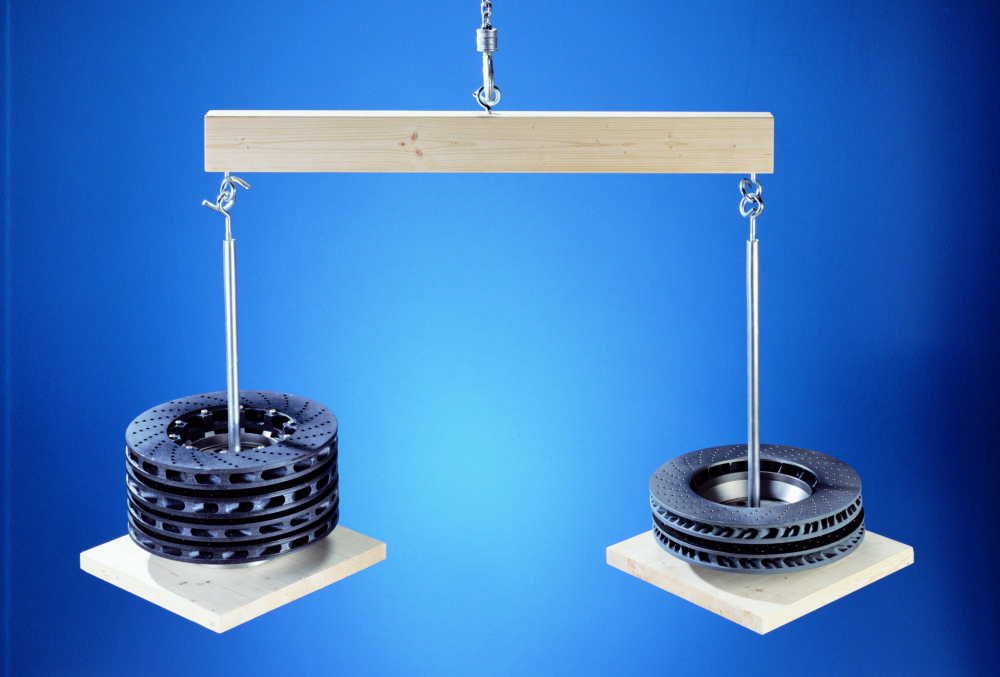 The PCCB brake disc (left) weighs approximately 50 percent less than a grey cast-iron brake disc
 The PCCB system is equipped with a six-piston brake caliper on the front axle and a four-piston brake caliper on the rear axle
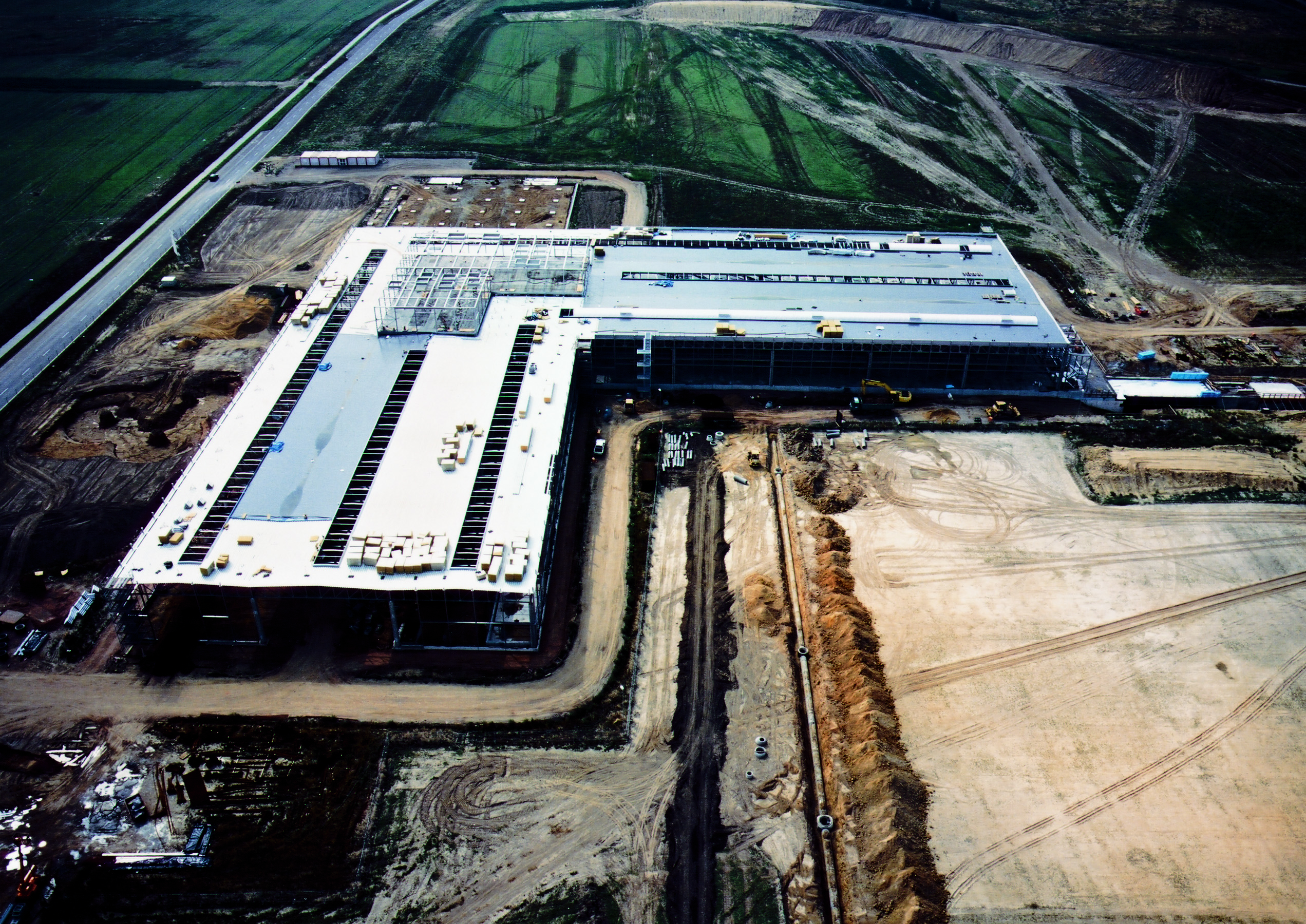
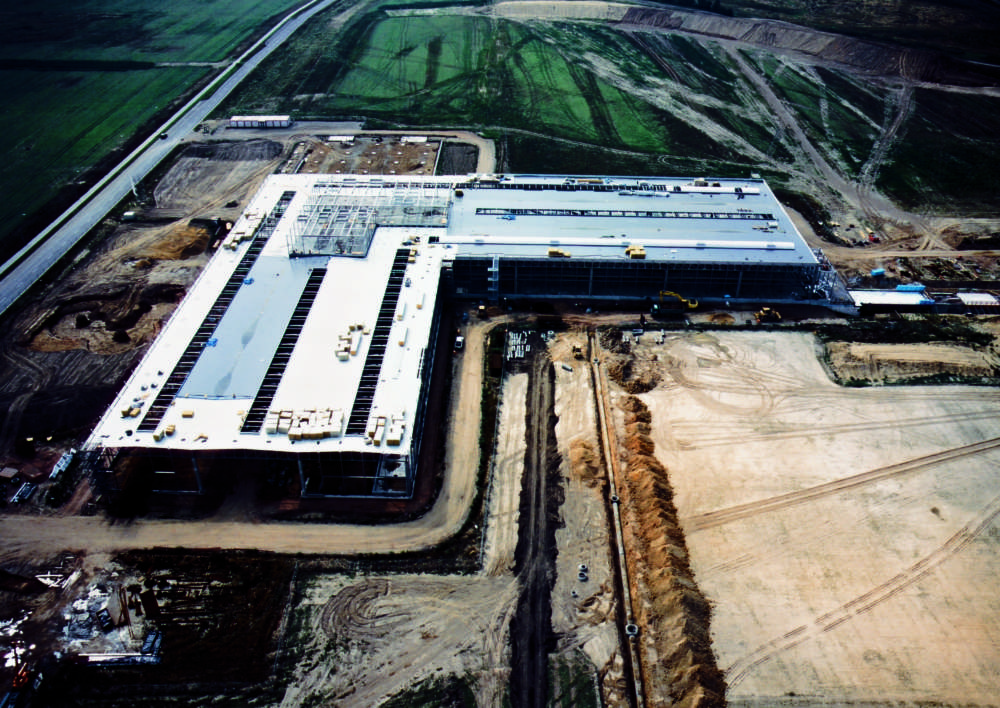 The Porsche plant in Leipzig is built on 90 hectares of land (photo taken on 12th August 2000)
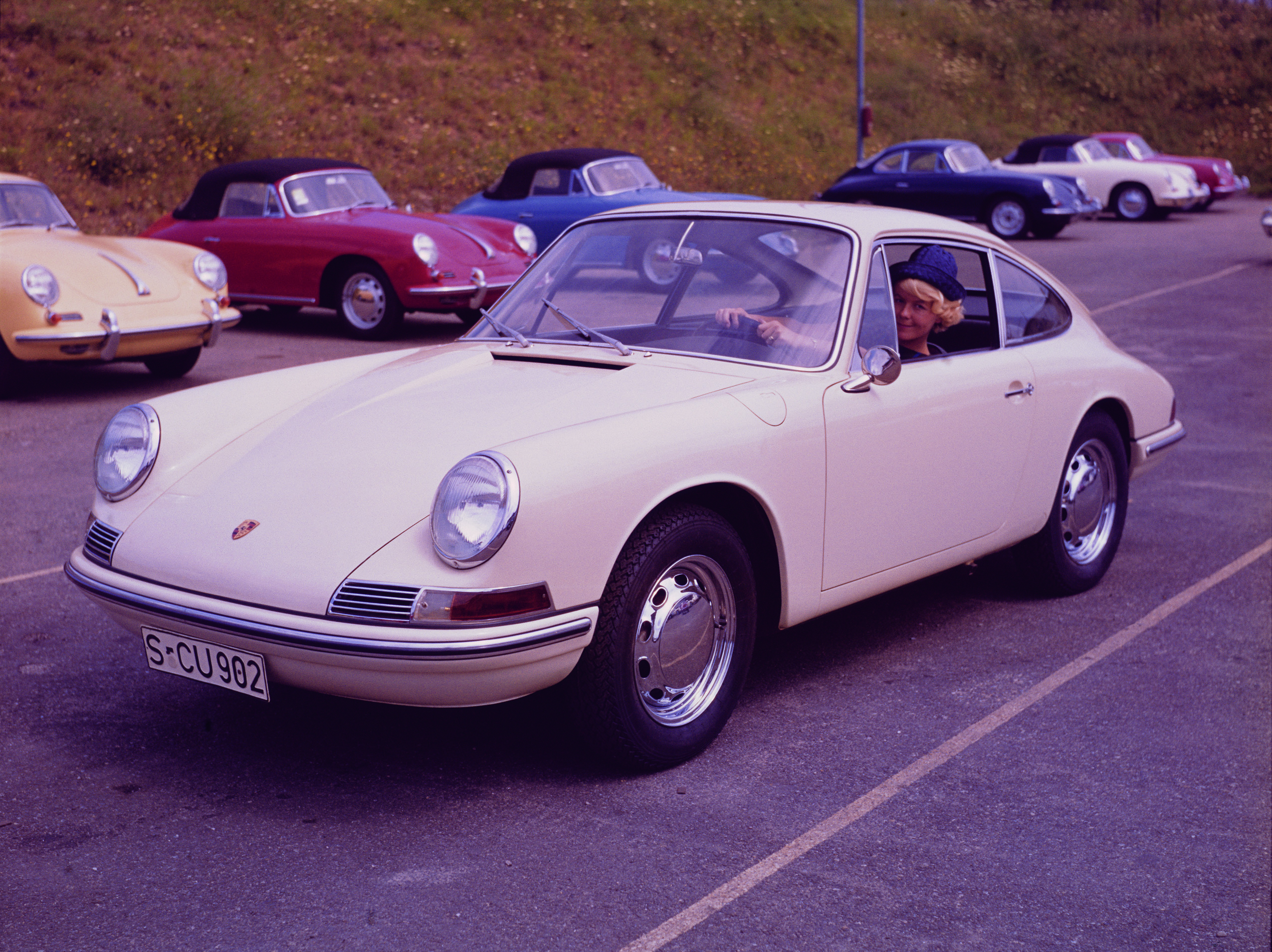
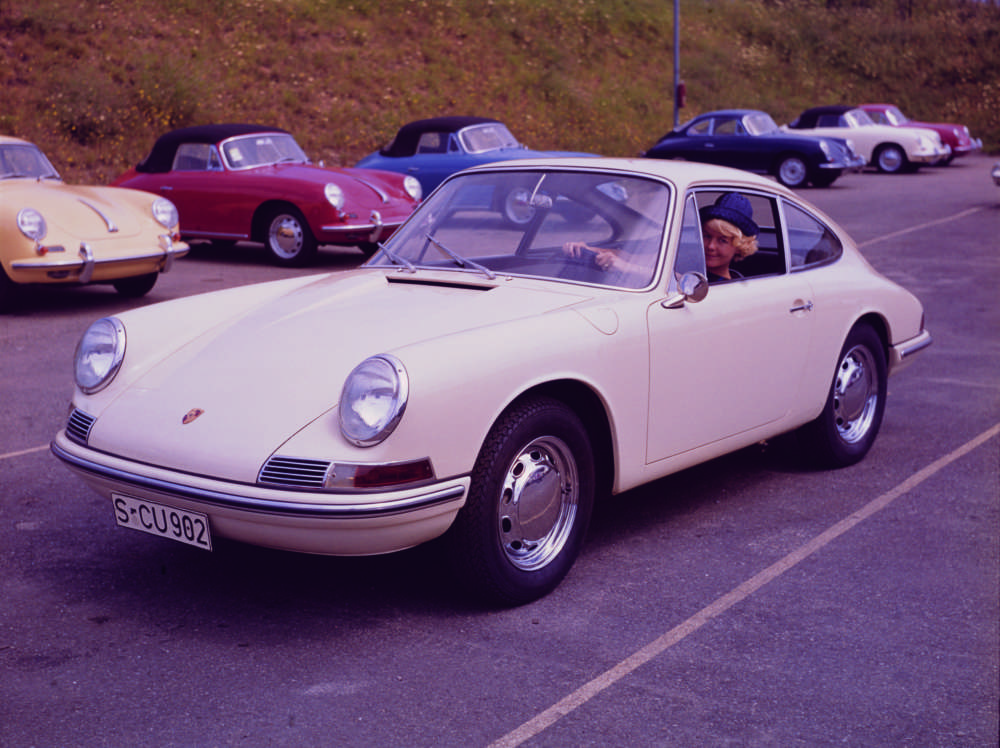 The Porsche 911 2.0 Coupé went into production in 1964. The 356 C models (in the background) continued to be produced until 1965.
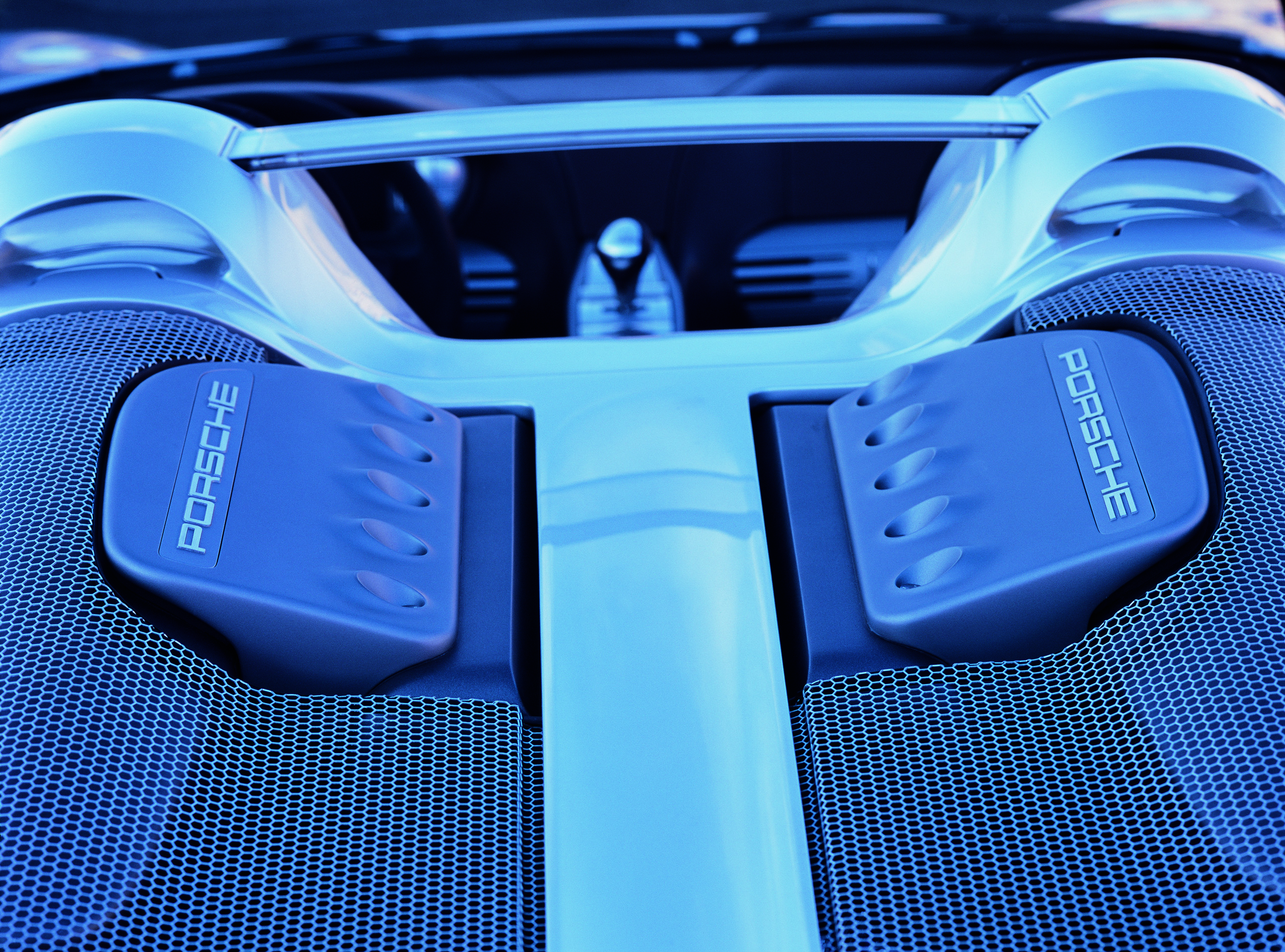
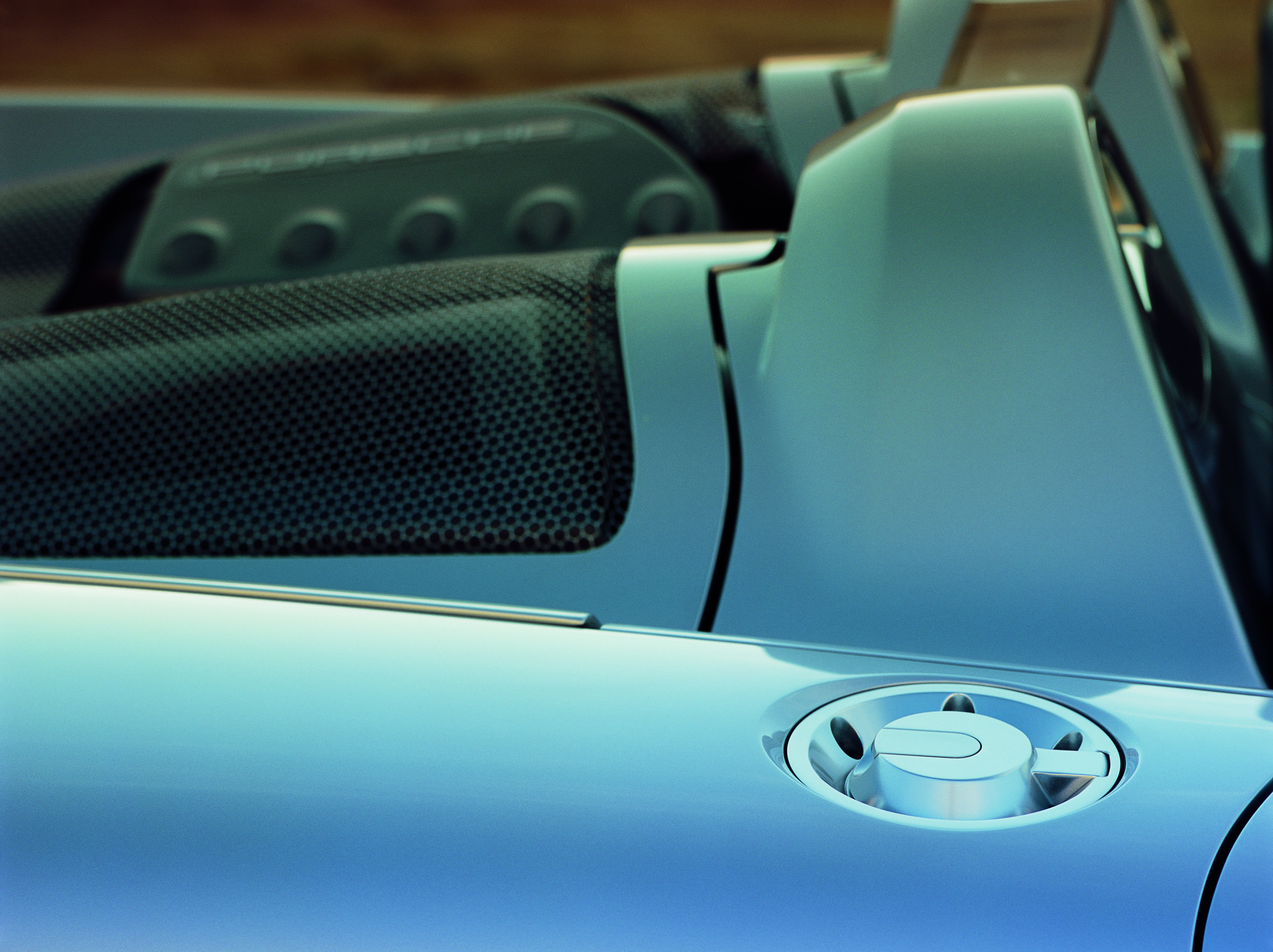
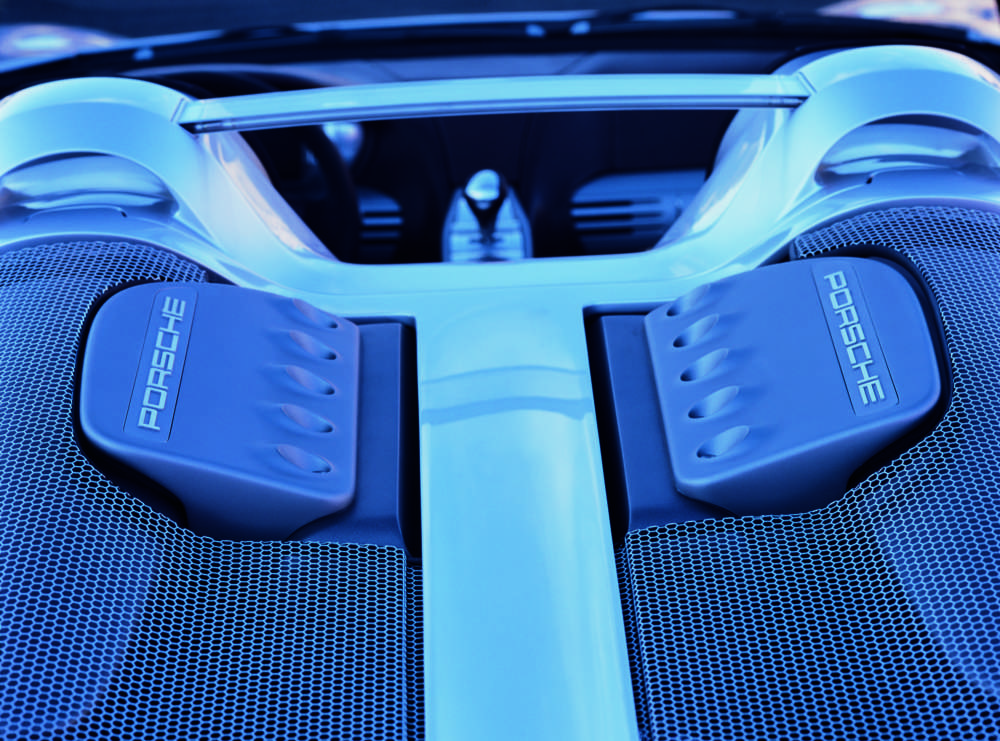 The power domes above the V10 normal-aspiration engine are made of cross-drilled light alloy
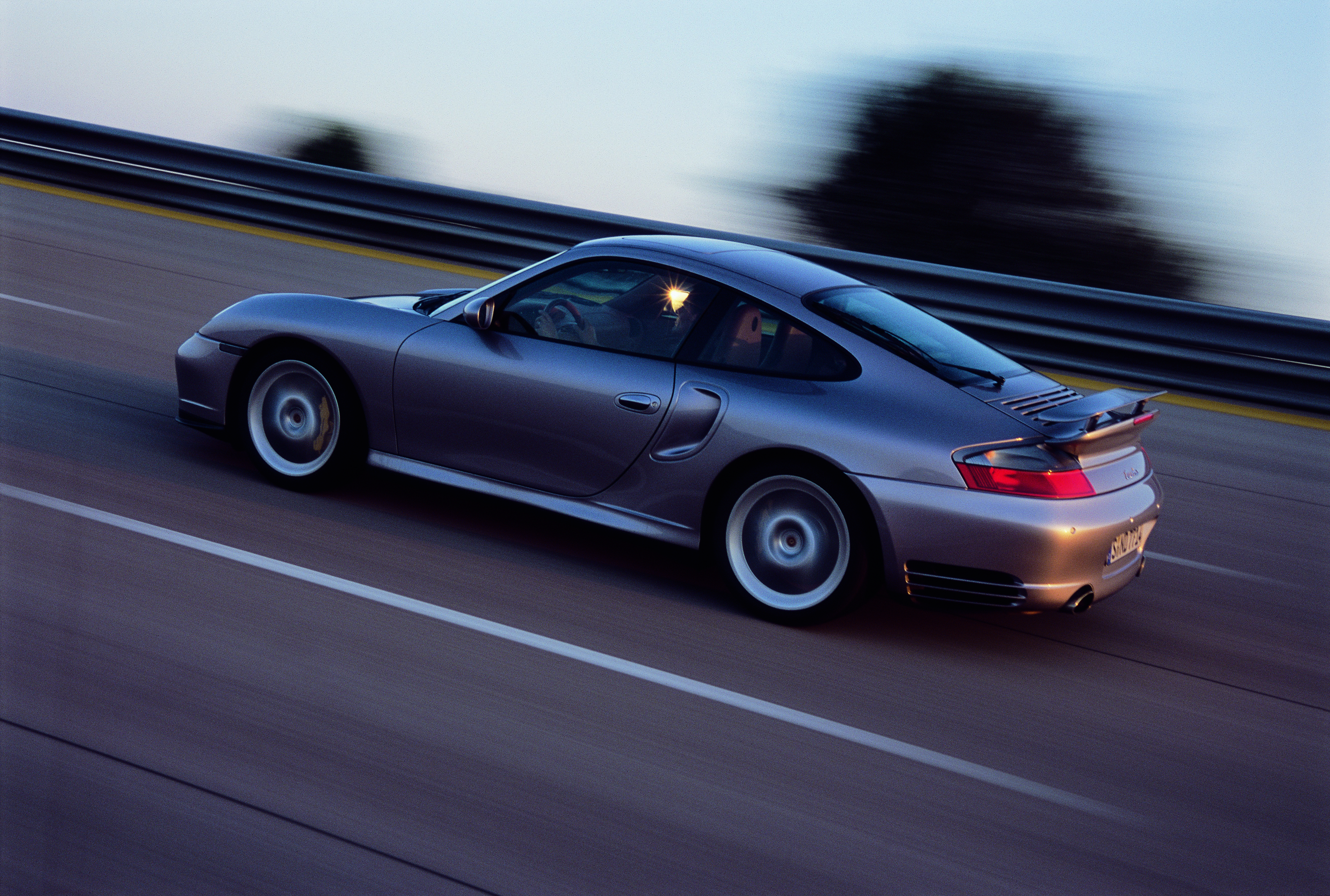
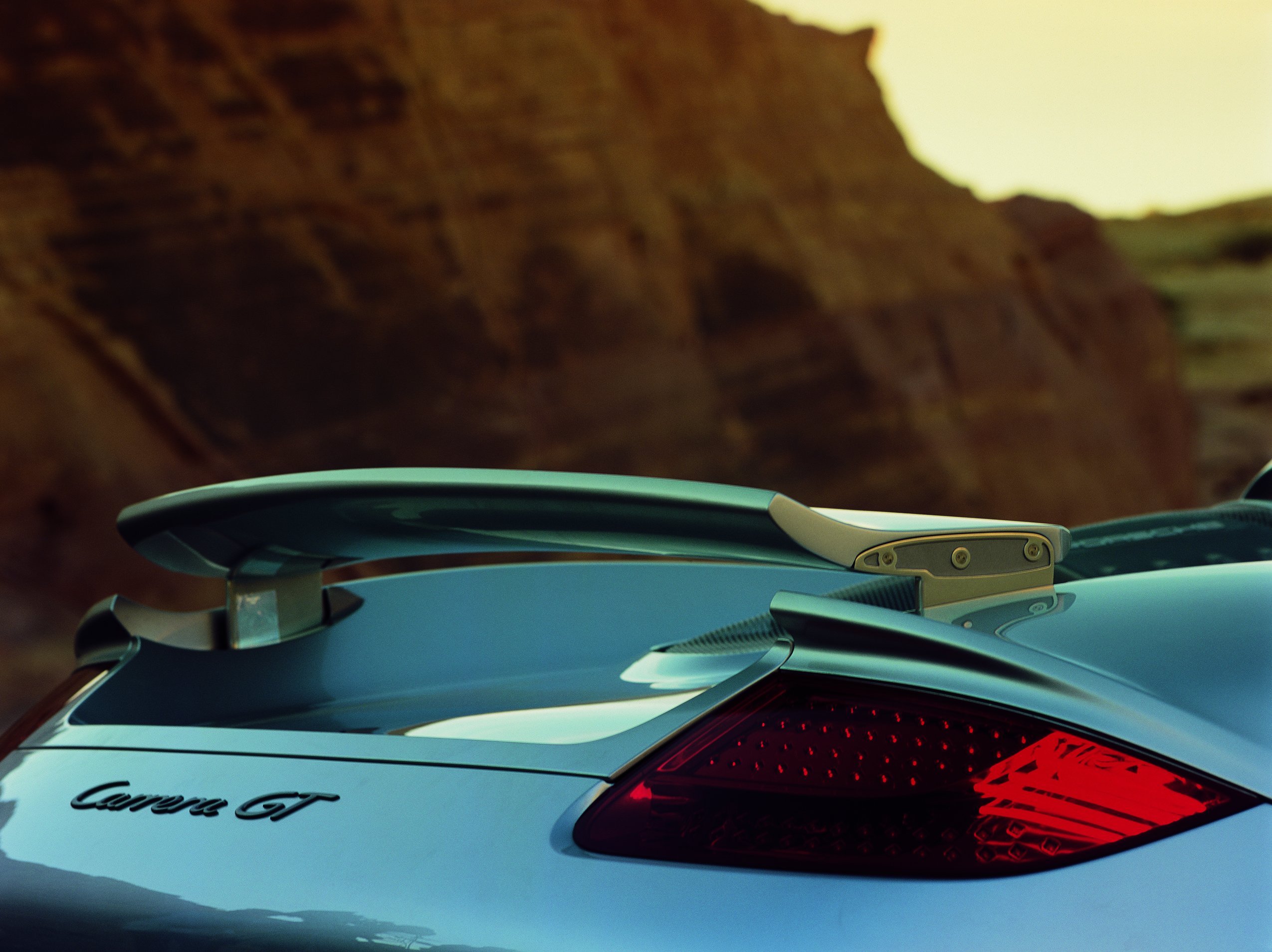
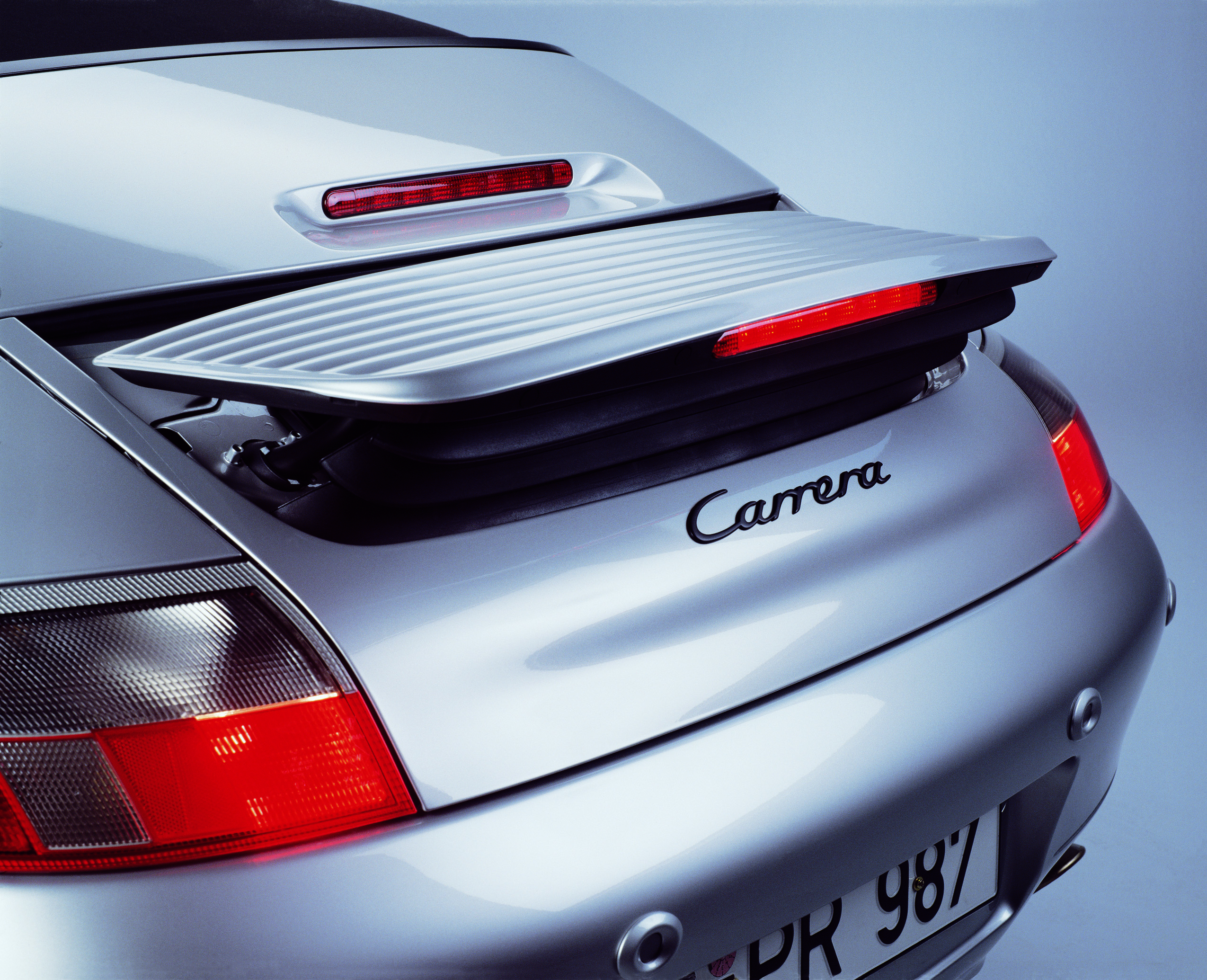
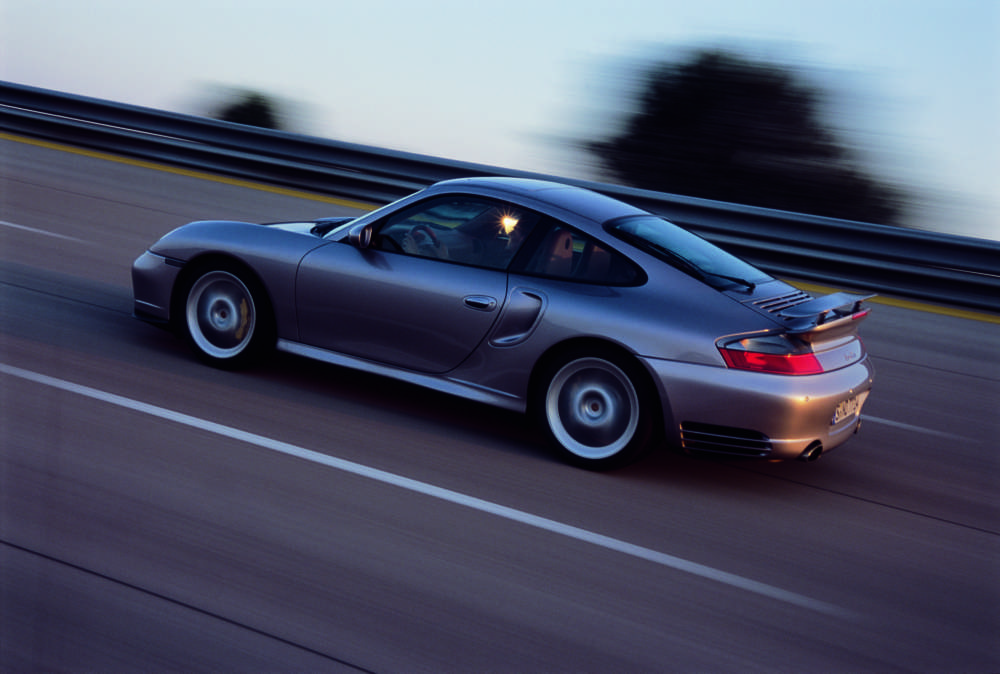
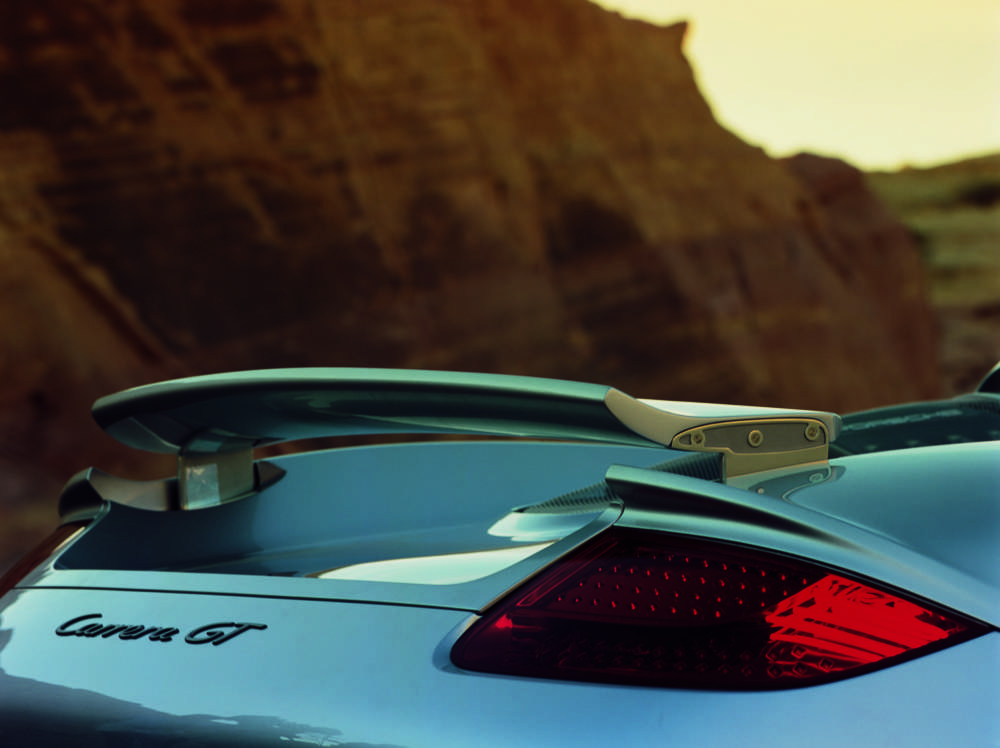 The rear spoiler extends automatically at a speed of 120 km/h (75 mph)
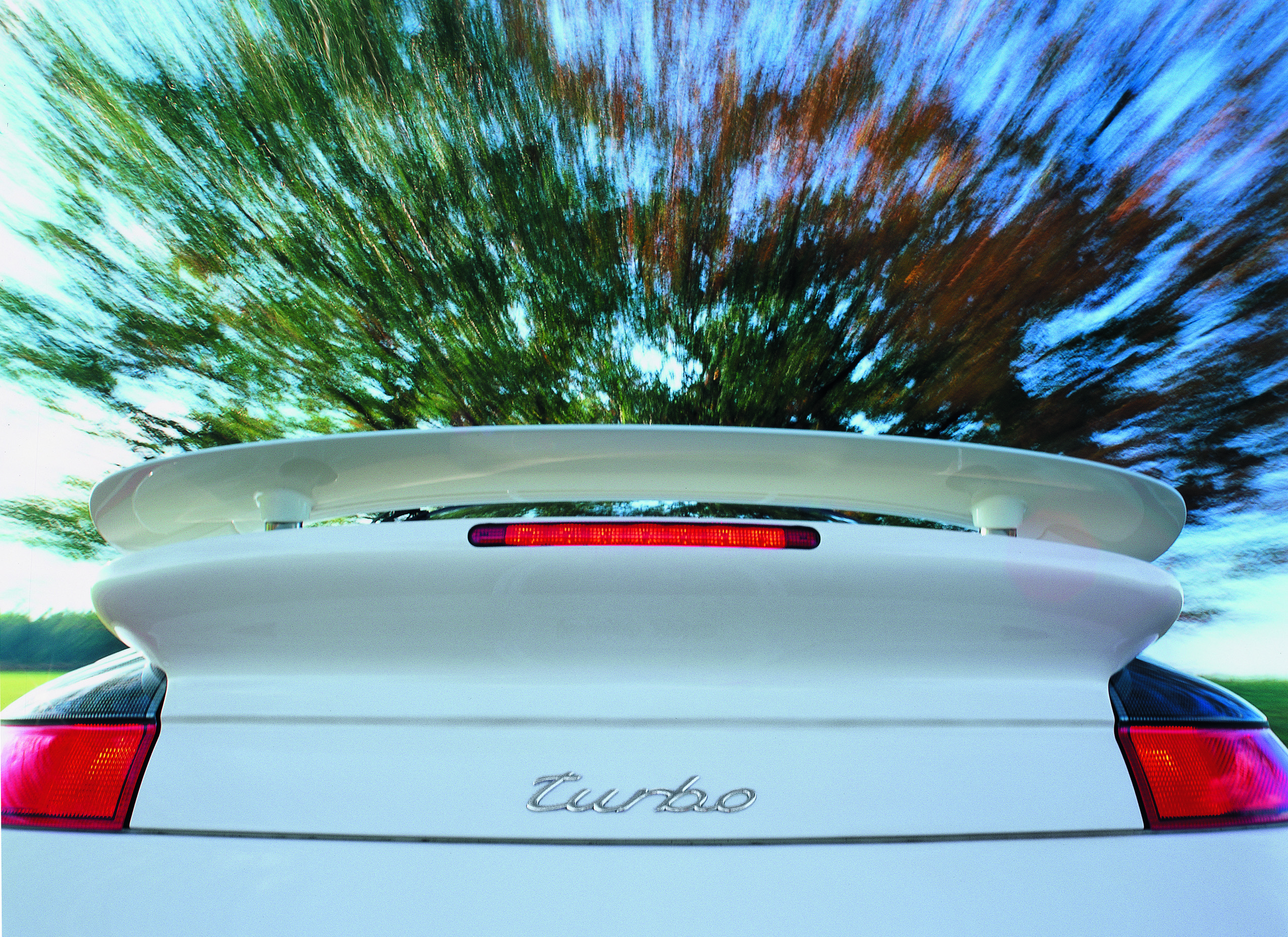
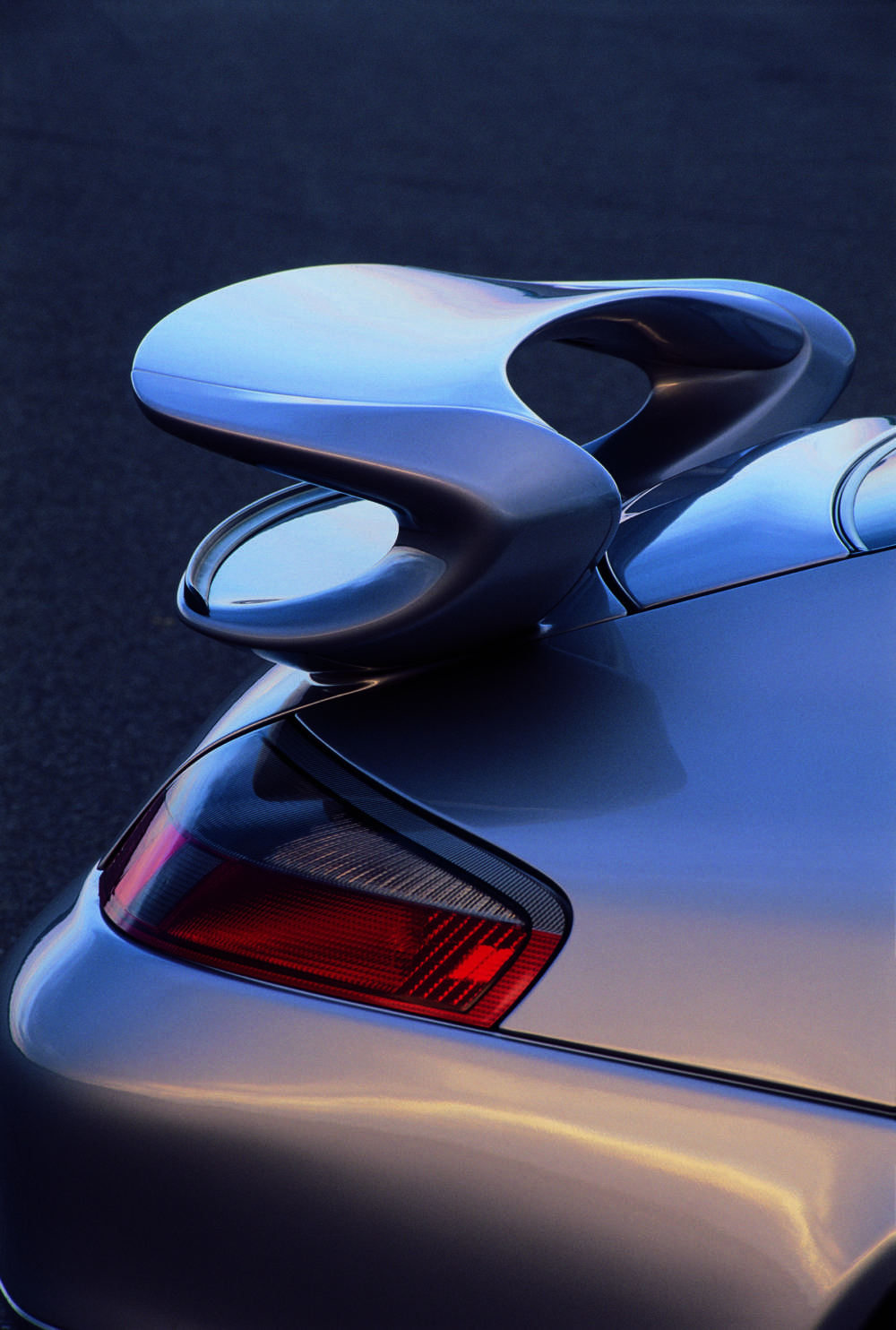 The rear wing-type spoiler increases the aerodynamic forces acting on the rear axle
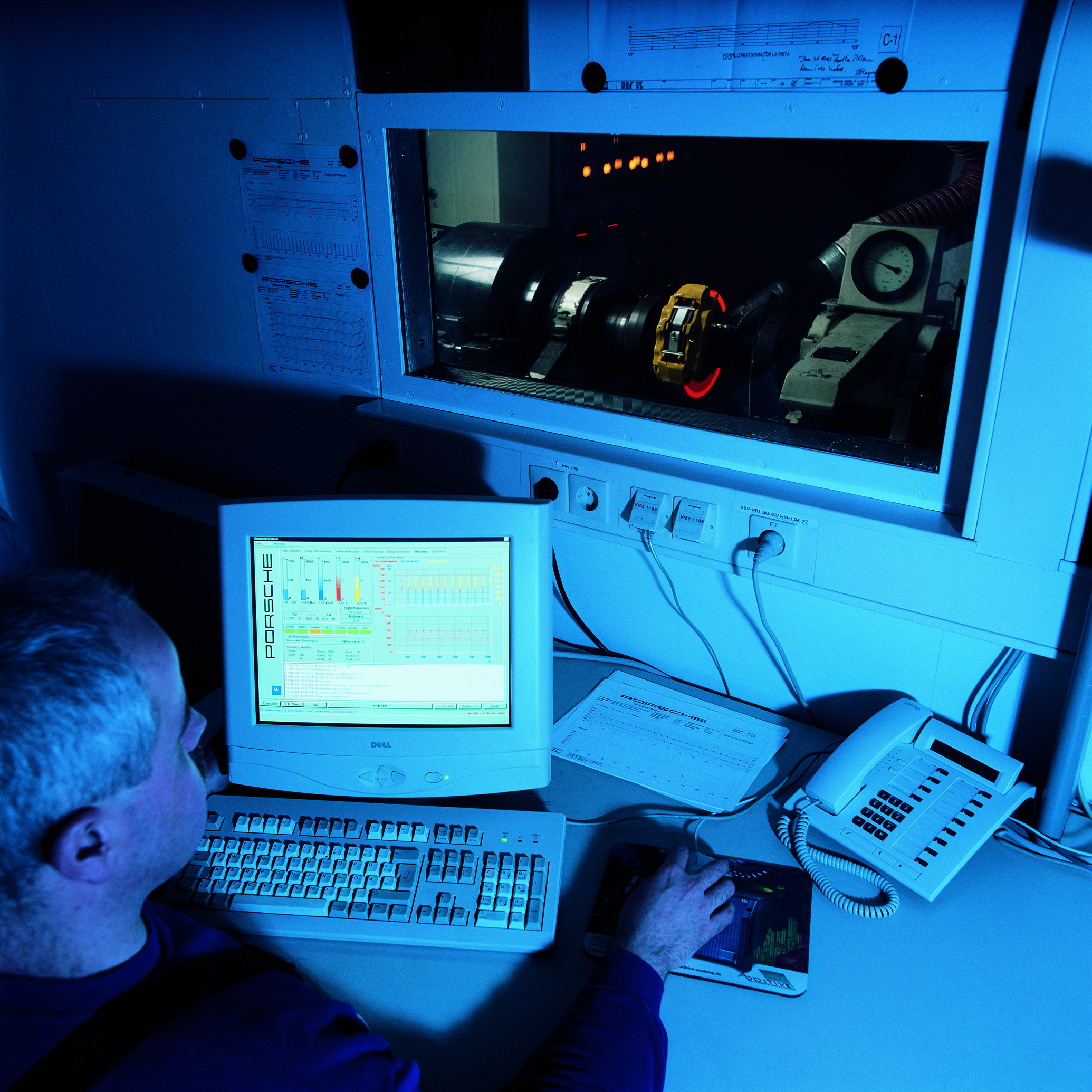
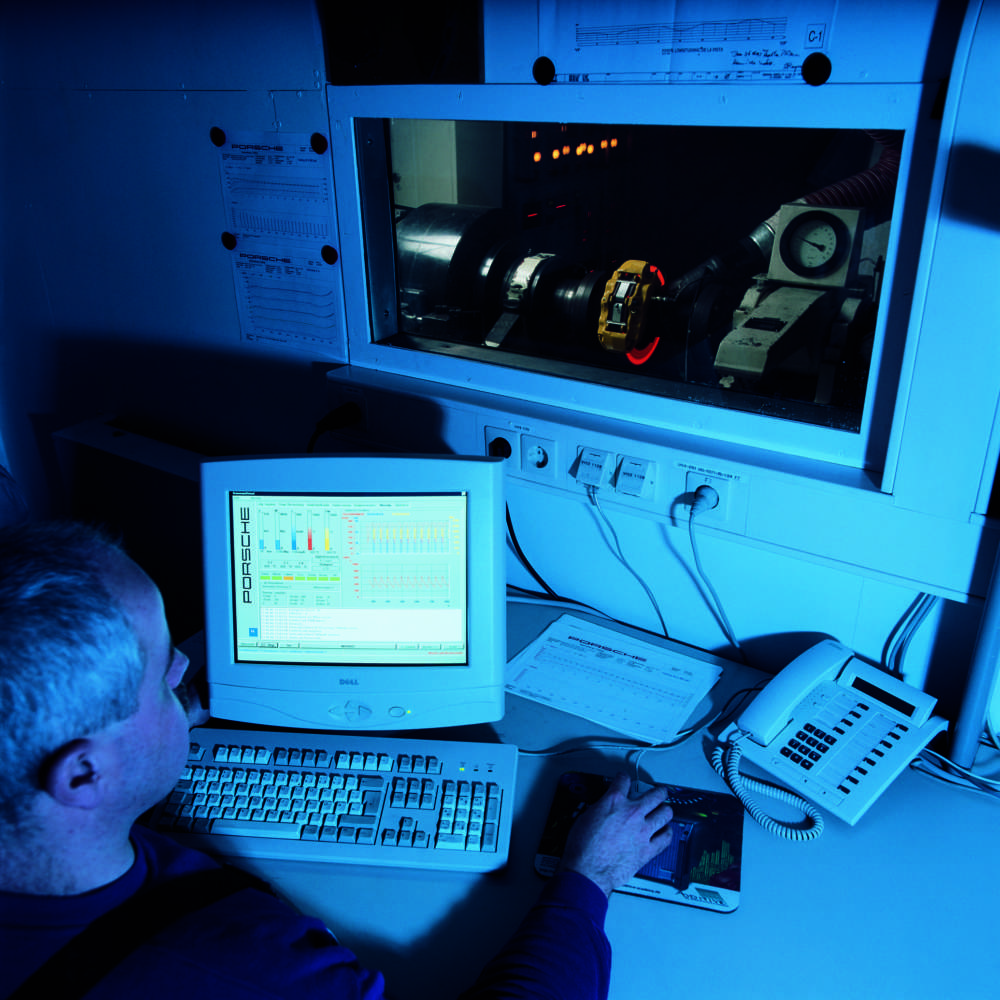 The response and fading characteristics as well as wear to the brake pads are the focal concern on the brakes test stand
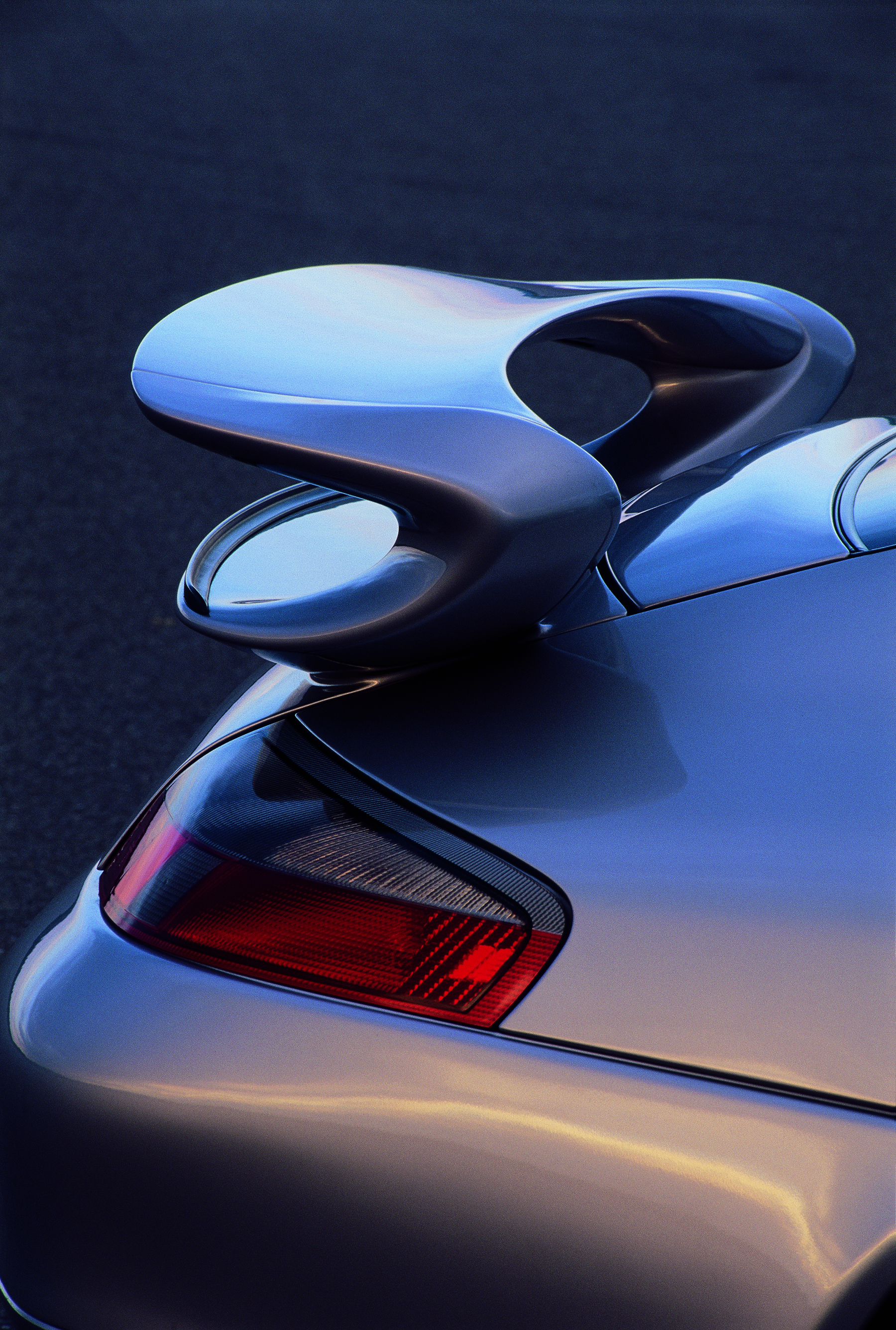
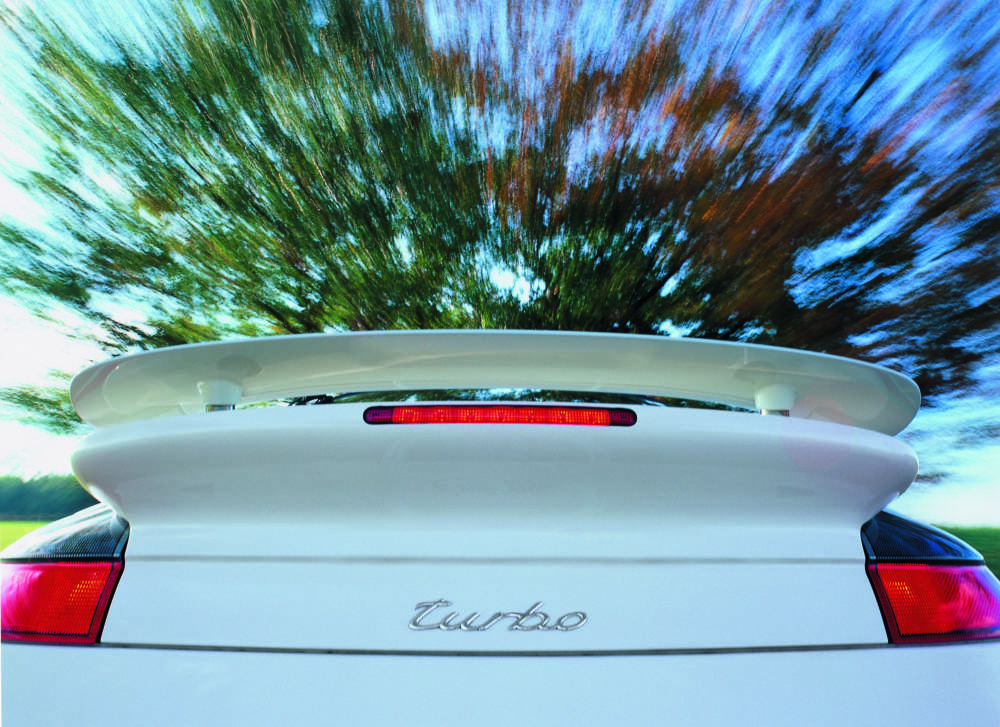 The retractable rear spoiler is a characteristic design feature of the 911 Turbo
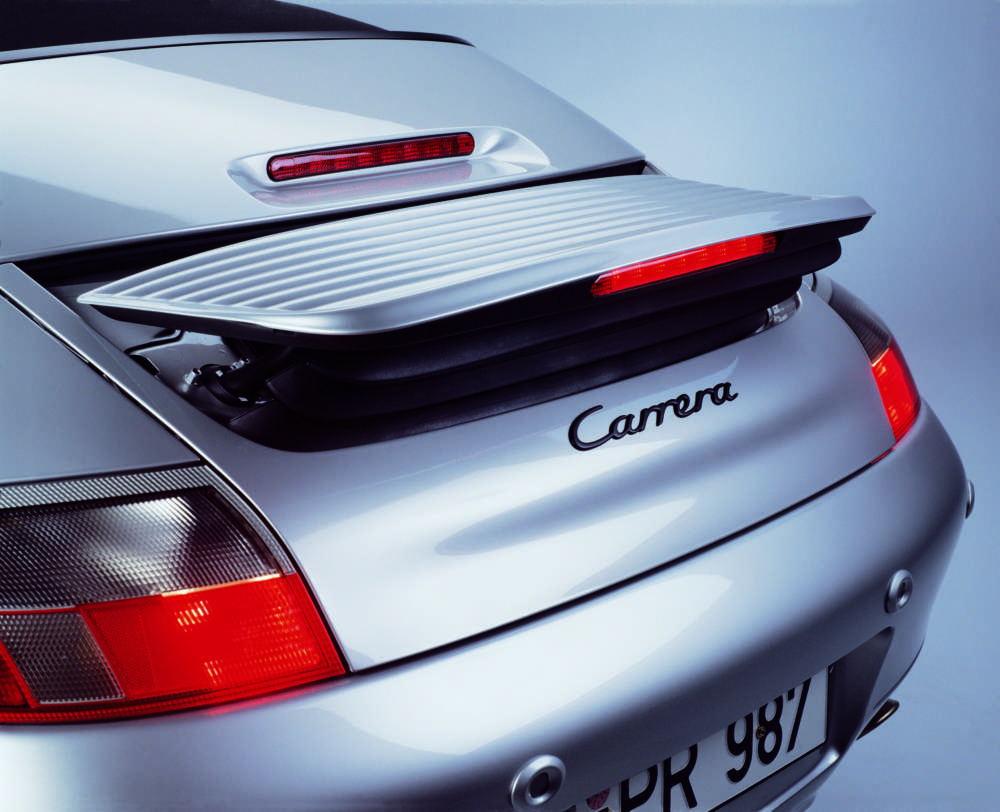 The retractable rear spoiler reduces the lift on the rear axle
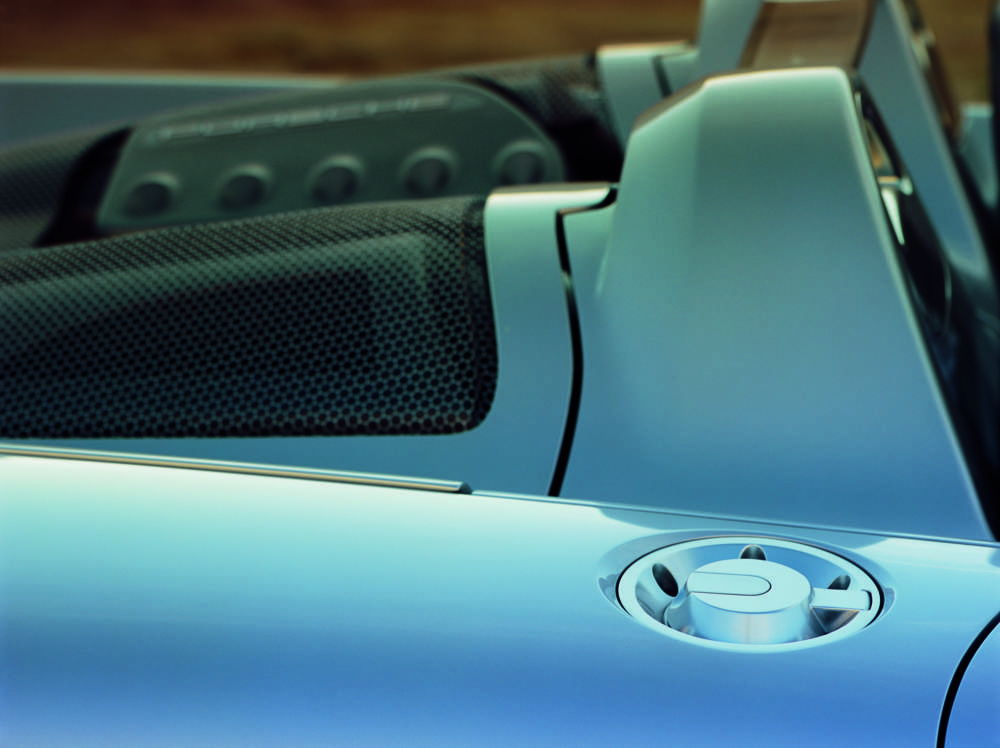 The rollbars and power domes made of cross-drilled light alloy
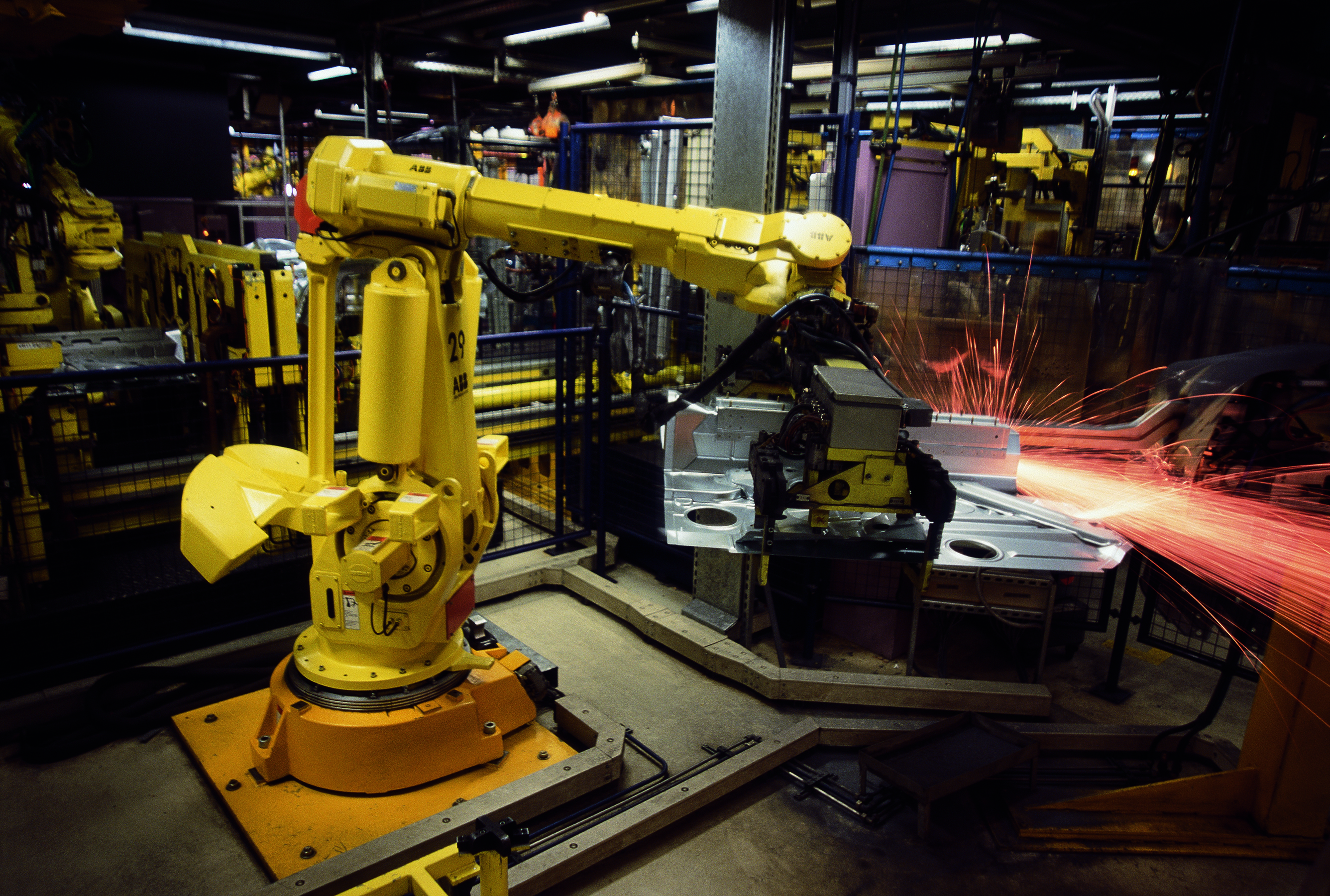
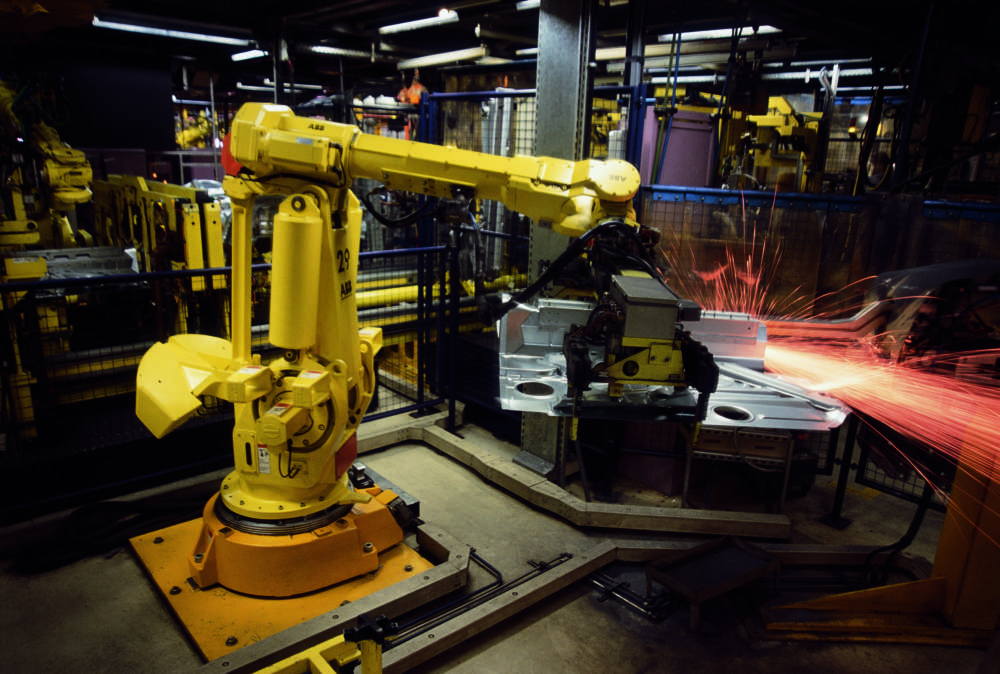 The seat carriers are connected to the vehicle floor by spot-welding
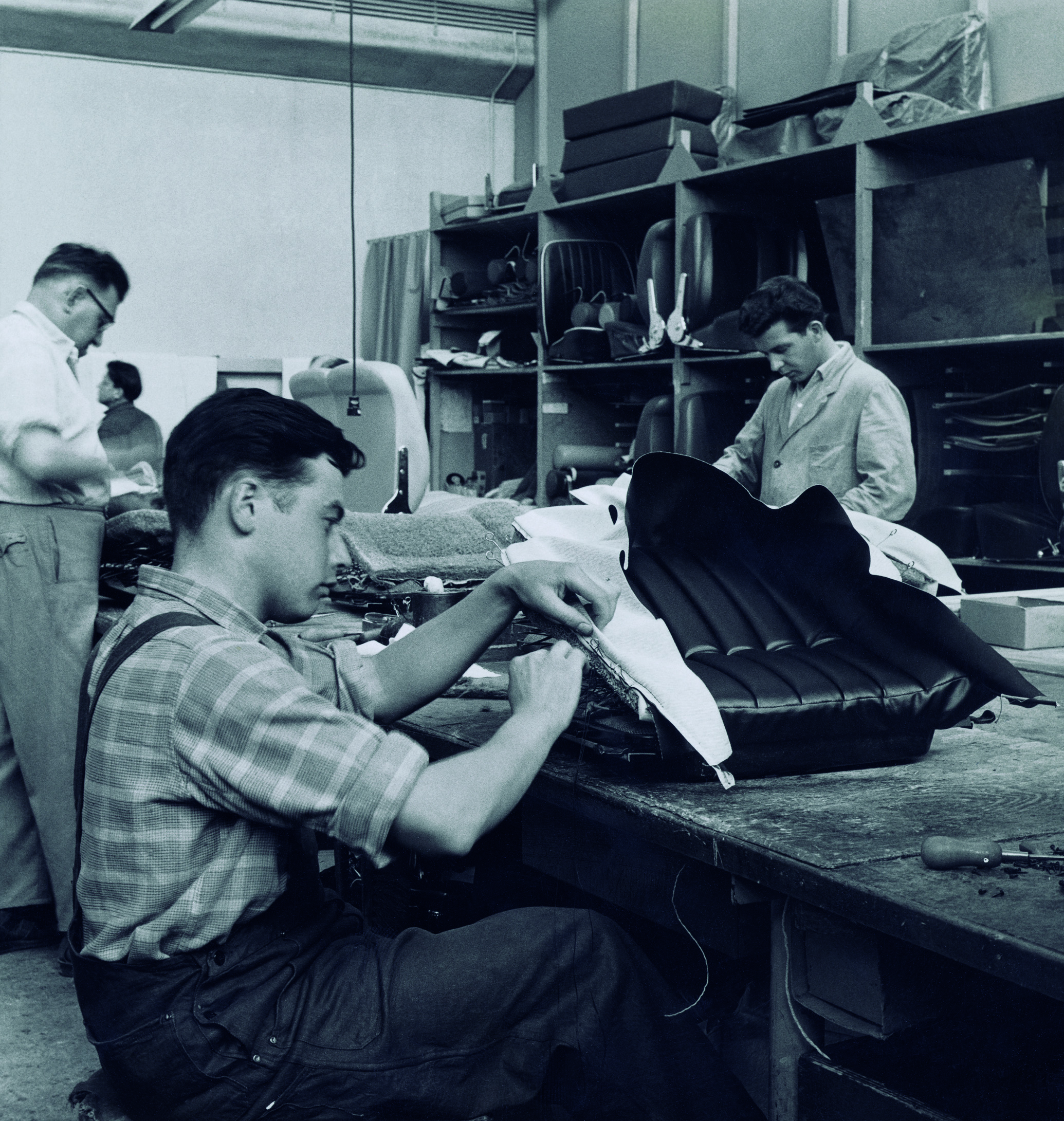
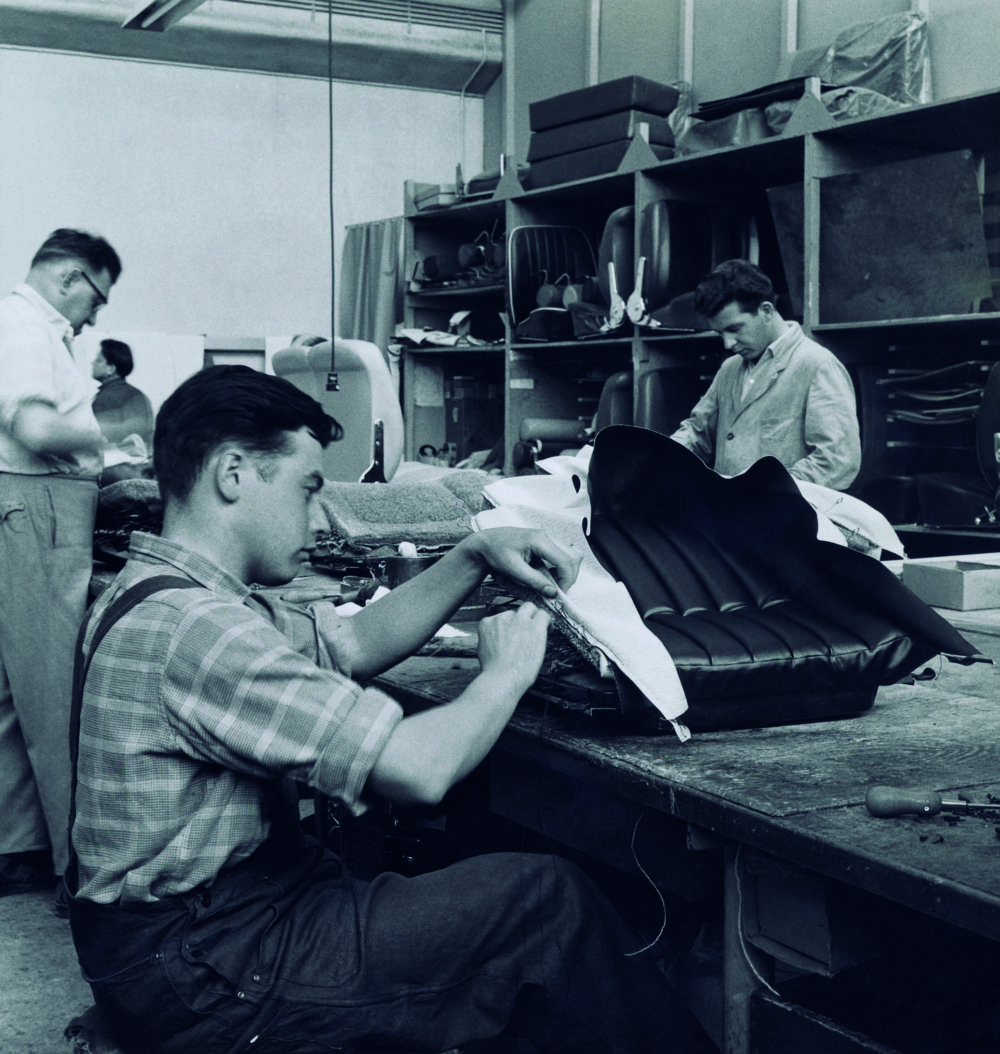 The seat cover is fitted on the spring core.
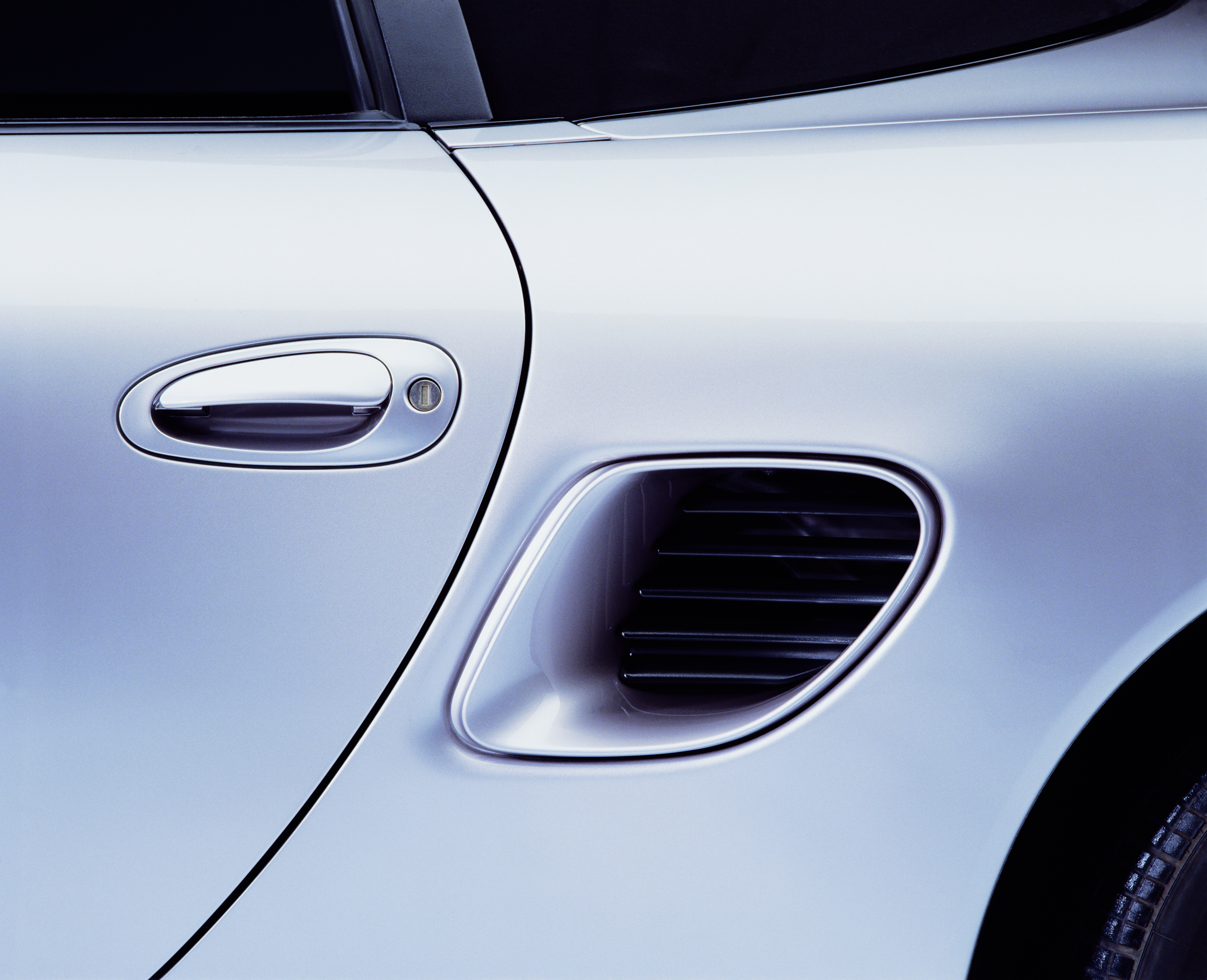
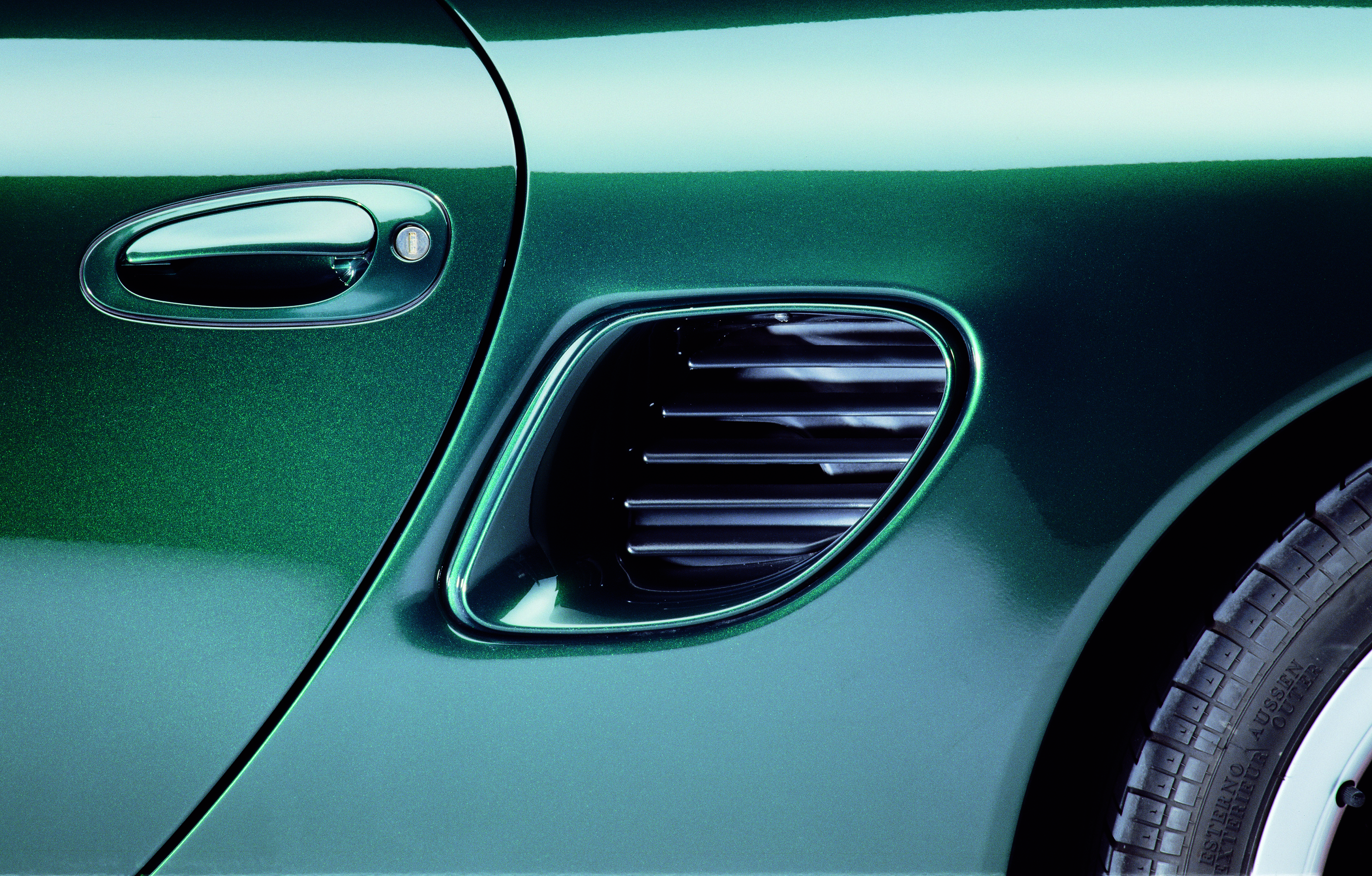
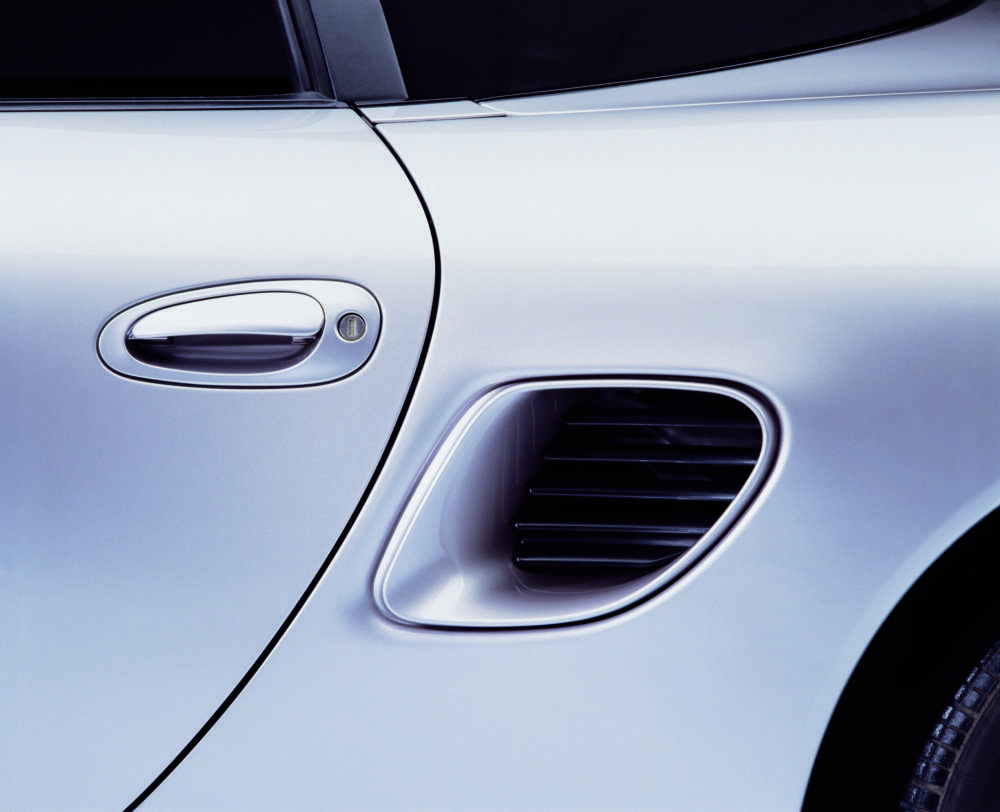 The side air inlets provide the air suction of the 2.7 litre engine and the ventilation of the engine compartment
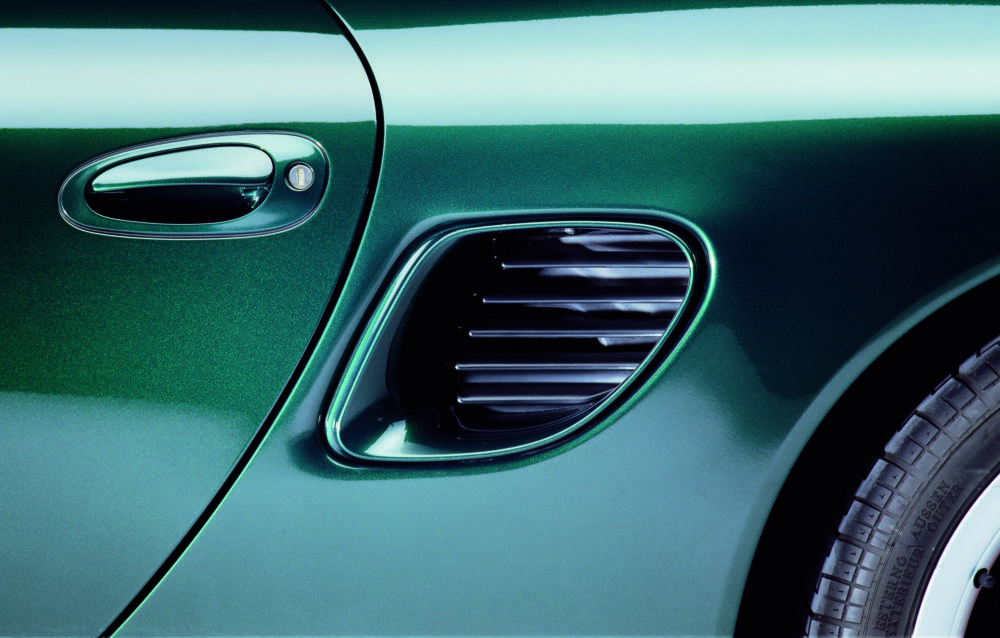 The side air inlets provide the air suction of the 3.2 litre engine and the ventilation of the engine compartment