Formula I world championship victories in 1984, 1985 and 1986
Description
Formula I world championship victories in 1984, 1985 and 1986
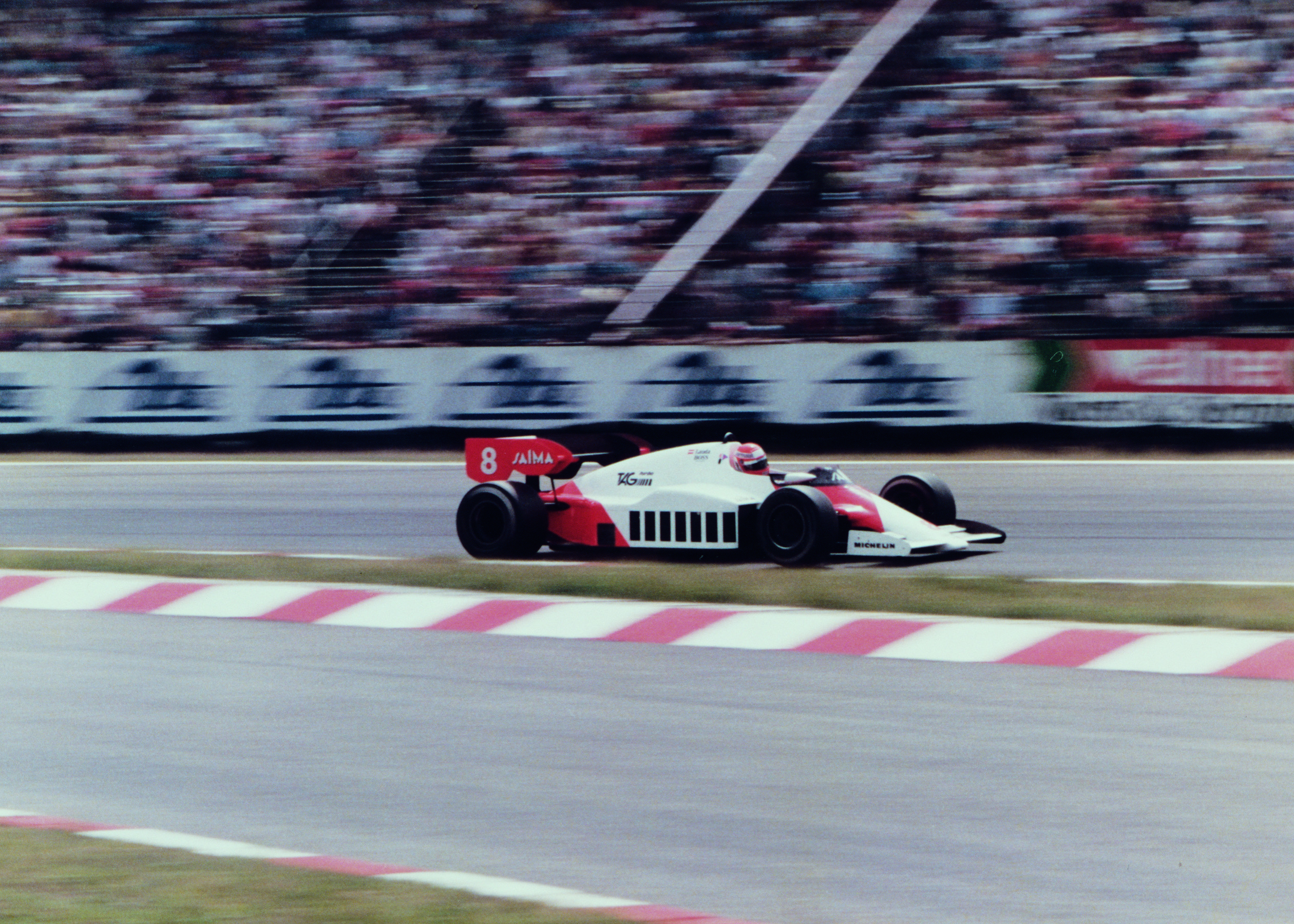
With the TAG turbo engines designed and maintained by Porsche, the McLaren TAG team won the formula I world championship in 1984, 1985 and 1986. In 1984, Niki Lauda took the world championship title and his team colleague Alain Prost was runner-up. The photograph shows Niki Lauda in Hockenheim coming to the finishing line in second place behind Alain Prost.
Porsche-TAG turbo engine (1984): water-cooled V 6 bi-turbo boxer engine, 1499 cm3, 850 HP
1984: Paris-Dakar Rally
Description
1984 Paris-Dakar Rally
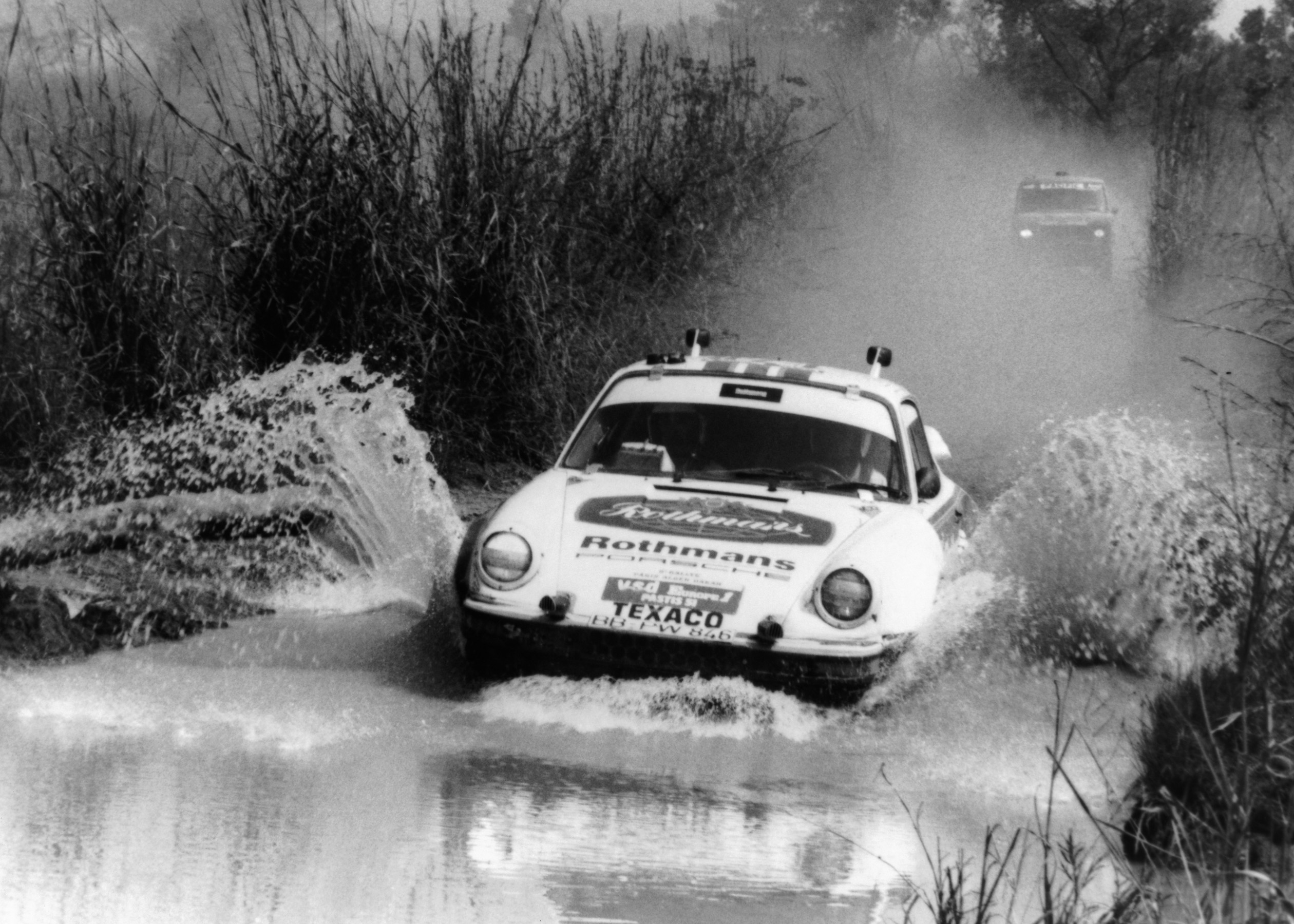
When René Metge and Dominique Lemoyne won the Paris-Dakar desert rally held from 1st to 20th January 1984 in the 911 Carrera 3.2 4x4, it was the first time a Porsche was entered in the race. This was also the first ever win for a sports car in the desert.
911 Carrera 3.2 4x4 "Paris-Dakar": Air-cooled 6-cyl. boxer engine 3164 cm³, 225 HP, 1215 kg
1985: Pharaoh Rally
Description
1985 Pharaoh Rally
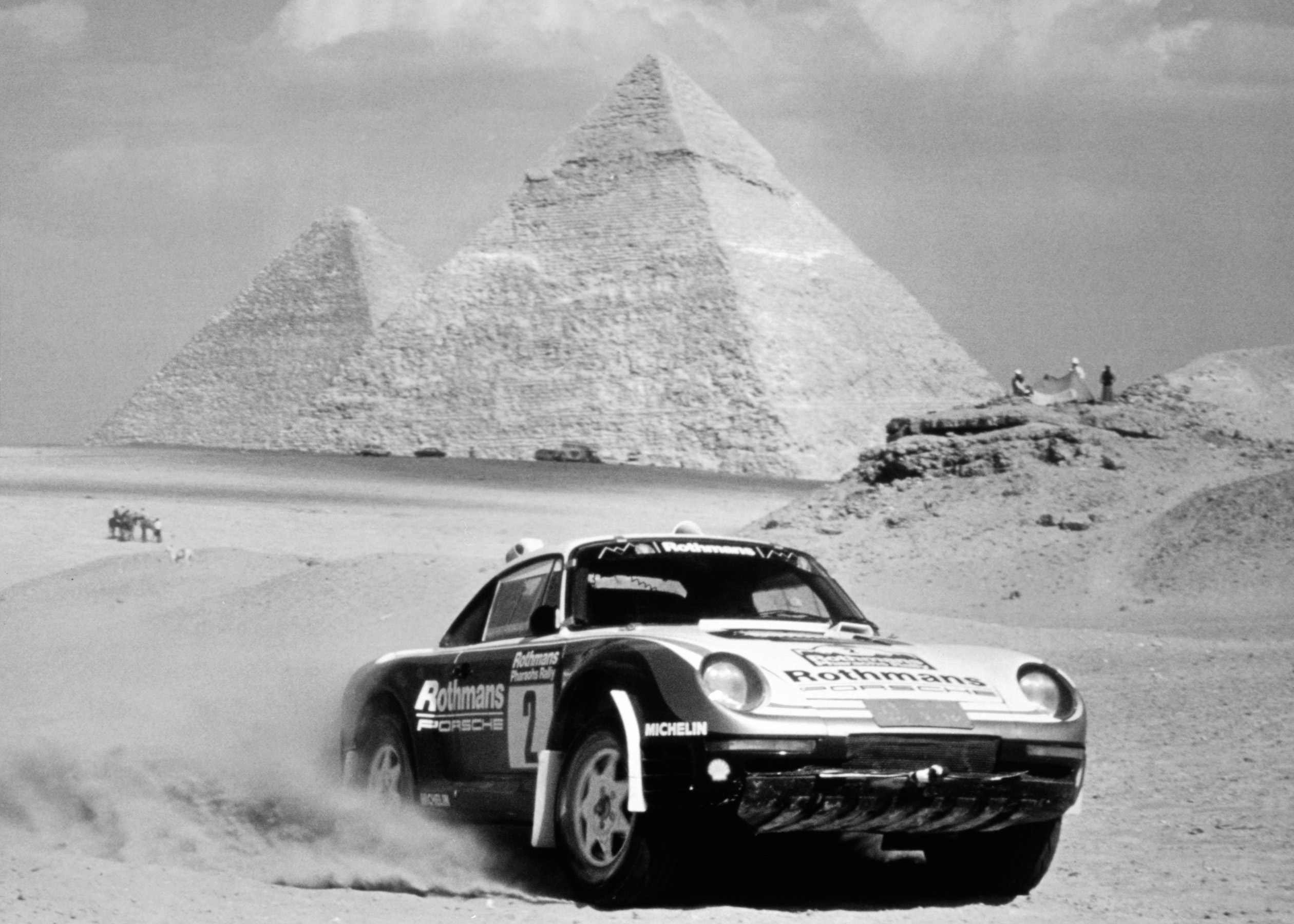
In the Pharaoh Rally, held from 10th to 19th October 1985 in Egypt, Porsche used the intended bi-turbo engine for the first time; the 911 aspiration engine was still installed in the 959 for the Paris-Dakar Rally in January 1985. Saeed Al Hajri and John Spiller won the Pharaoh Rally with this car.
959 "Pharaoh Rally" (1985): air-water-cooled 6-cyl. bi-turbo boxer engine , 2849 cm3, 390 HP, 1185 kg
1986: Paris-Dakar Rally
Description
1986 Paris-Dakar Rally
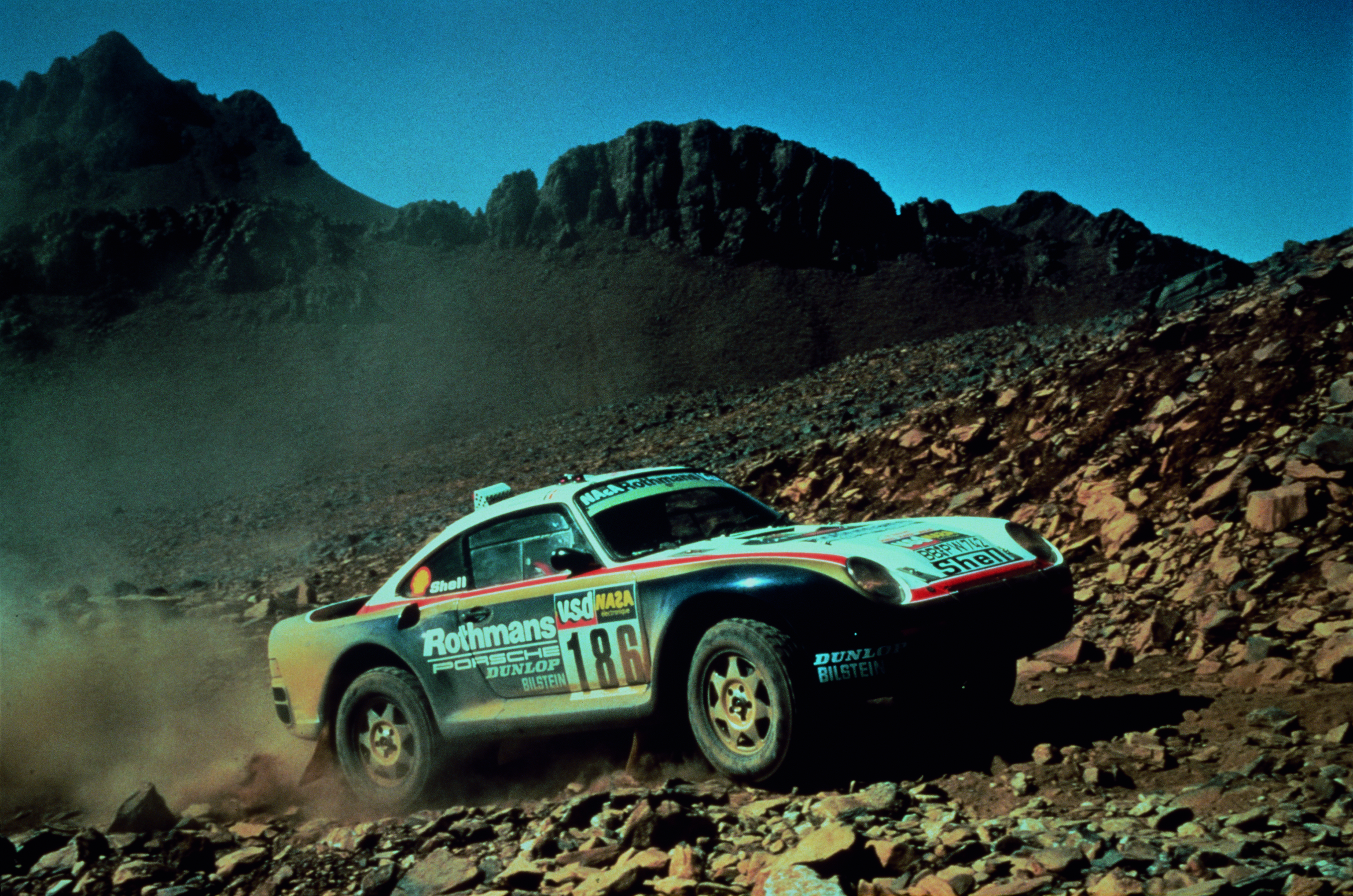
In 1986 Porsche repeated its 1984 Paris-Dakar victory with René Metge and Dominique Lemoyne. They drove the 959 with a 2.8 l turbo engine from 1st to 22nd January. Owing to the lower petrol quality, its performance was reduced to 400 HP.
959 "Paris-Dakar" (1986): air/water-cooled 6-cyl. bi-turbo boxer engine 2849 cm3, 400 HP, 1260 kg
1989: CART Race in Mid Ohio
Description
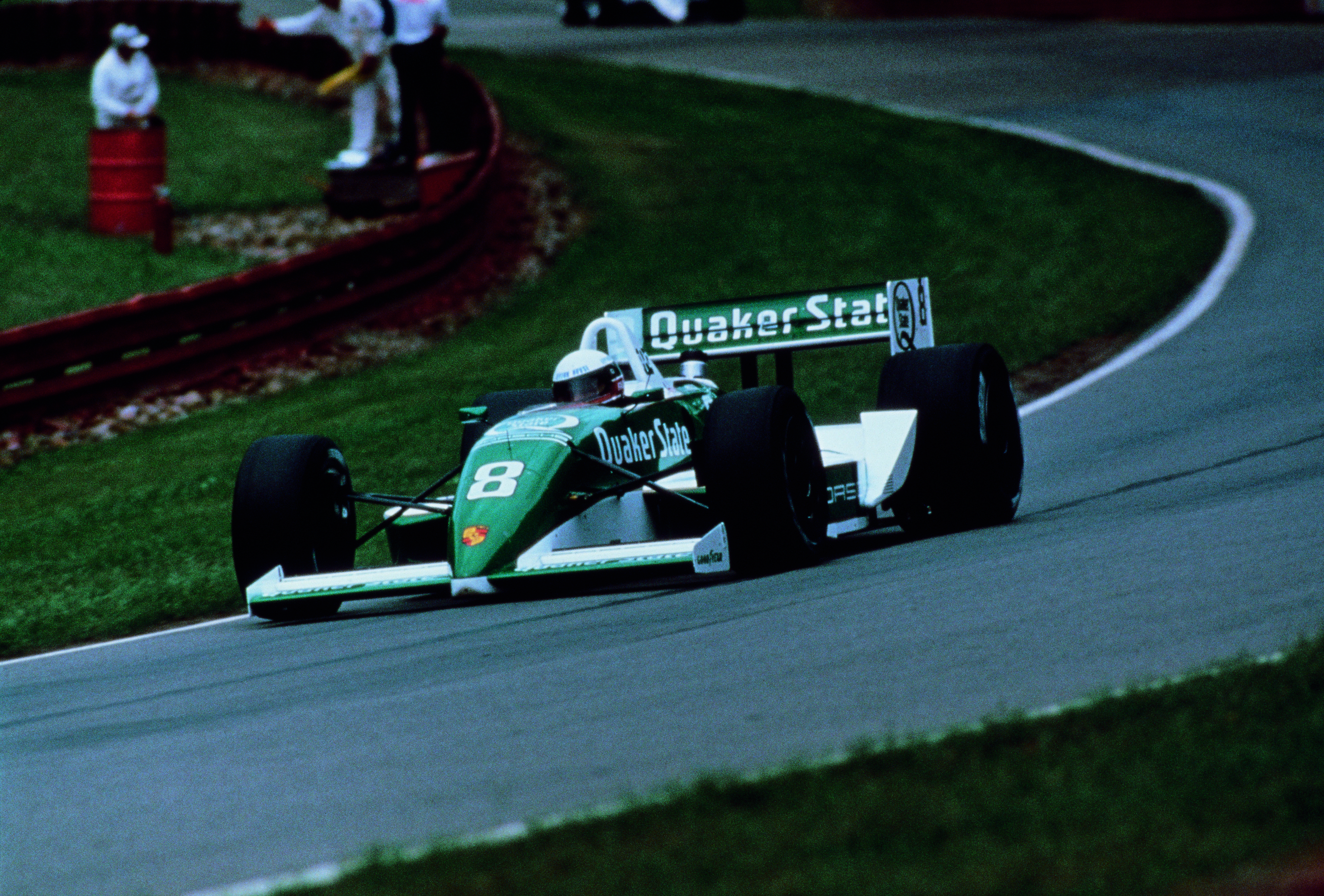
1989 CART Race in Mid Ohio
Against the US elite, Teo Fabi drove the Indy Porsche to victory in the CART series in Mid Ohio/USA on 3rd September 1989.
Porsche-March 89C: water-cooled V 8 turbo-charged engine, 2649.2 cm3, 720 HP, 703 kg
1994: Le Mans 24-hour race
Description
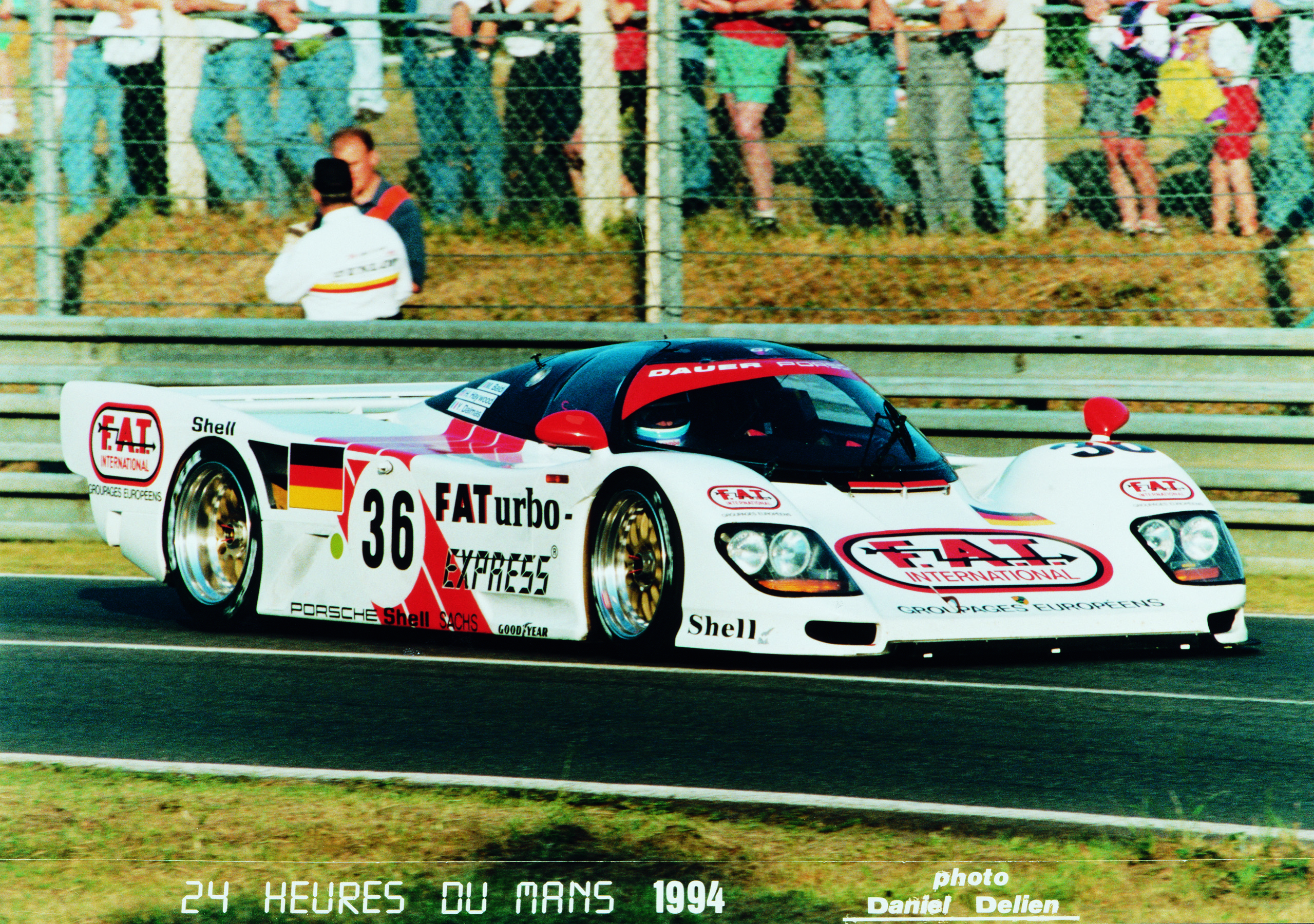
1994 Le Mans 24-hour race
With a Porsche 962 modified in line with the GT rules, Mauro Baldi, Yannick Dalmas and Hurley Haywood won the Le Mans 24-hour race on 18th/19th June 1984. The overall victory also meant 1st place in the GT1 category, and a win by the Carrera RSR 3.8 in the GT2 category crowned Porsche's triple success.
Dauer Porsche 962 LM: water-cooled 6-cyl. bi-turbo boxer engine, 2994 cm3, 600 HP, 1000 kg
1996: Le Mans 24-hour race
Description
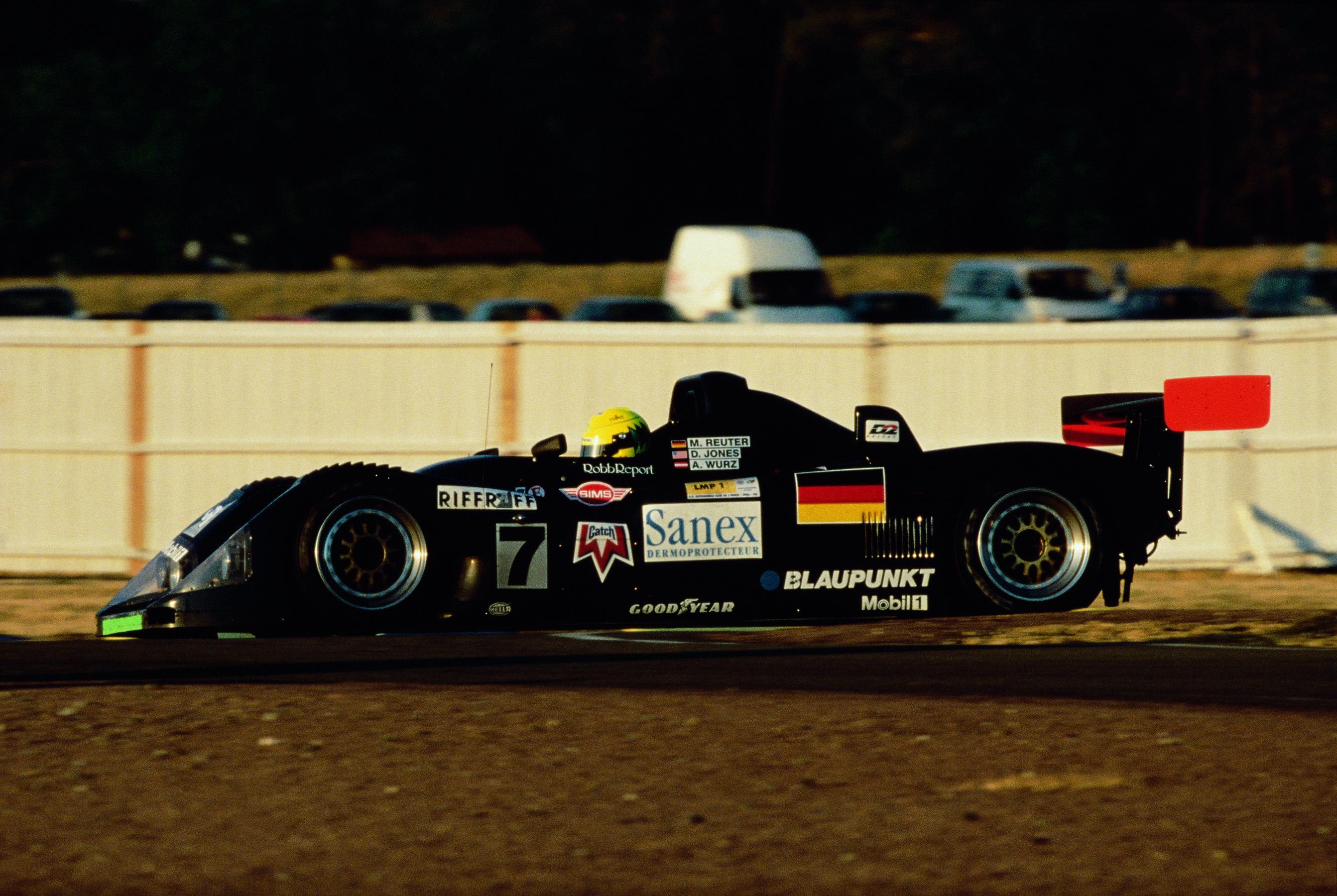
1996 Le Mans 24-hour race
With a WSC Porsche entered by the Joest team, once more, overall victory went to a Porsche sports car on 15th/16th June 1996. In the open?? sport prototype, Davy Jones, Manuel Reuter and Alexander Wurz crossed the finishing line before the two 911 GT1 Porsche team cars and the chequered flag waved a 911 GT2 to victory in the GT2 class, making it a win for Porsche in every class.
Joest-TWR-Porsche: water-cooled 6-cyl. bi-turbo boxer engine, 3000 cm3, 540 HP, 886 kg
1997: Le Mans 24-hour race
Description
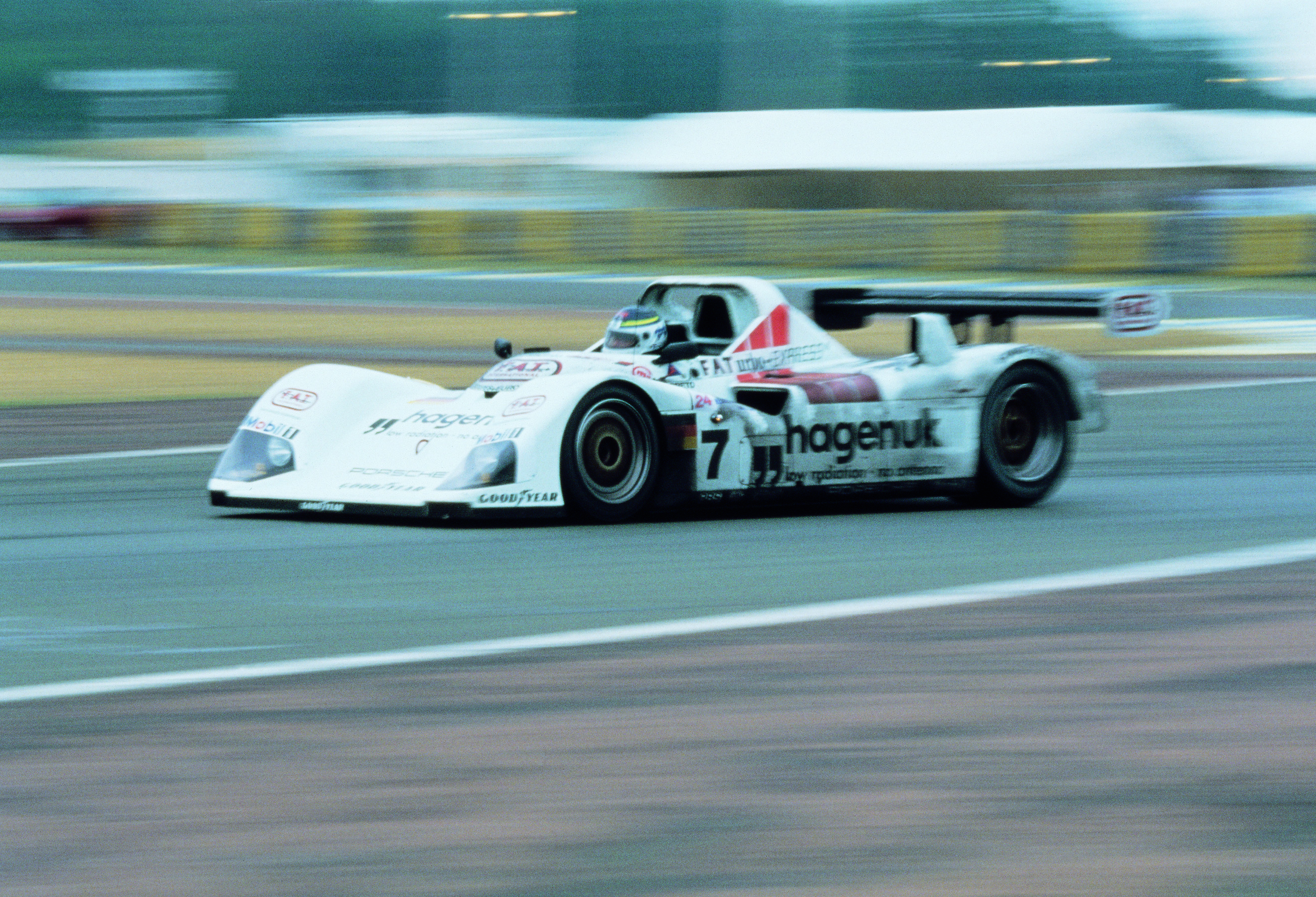
1997 Le Mans 24-hour race
On 14th/15th June 1997, the Joest-Porsche team repeated its success of the previous year with the Joest-TWR-Porsche. This time it was Michele Alboreto, Stefan Johansson and Tom Kristensen who won the overall victory.
Joest-TWR-Porsche. Water-cooled 6-cyl. bi-turbo boxer engine, 3000 cm3, 540 HP, 886 kg
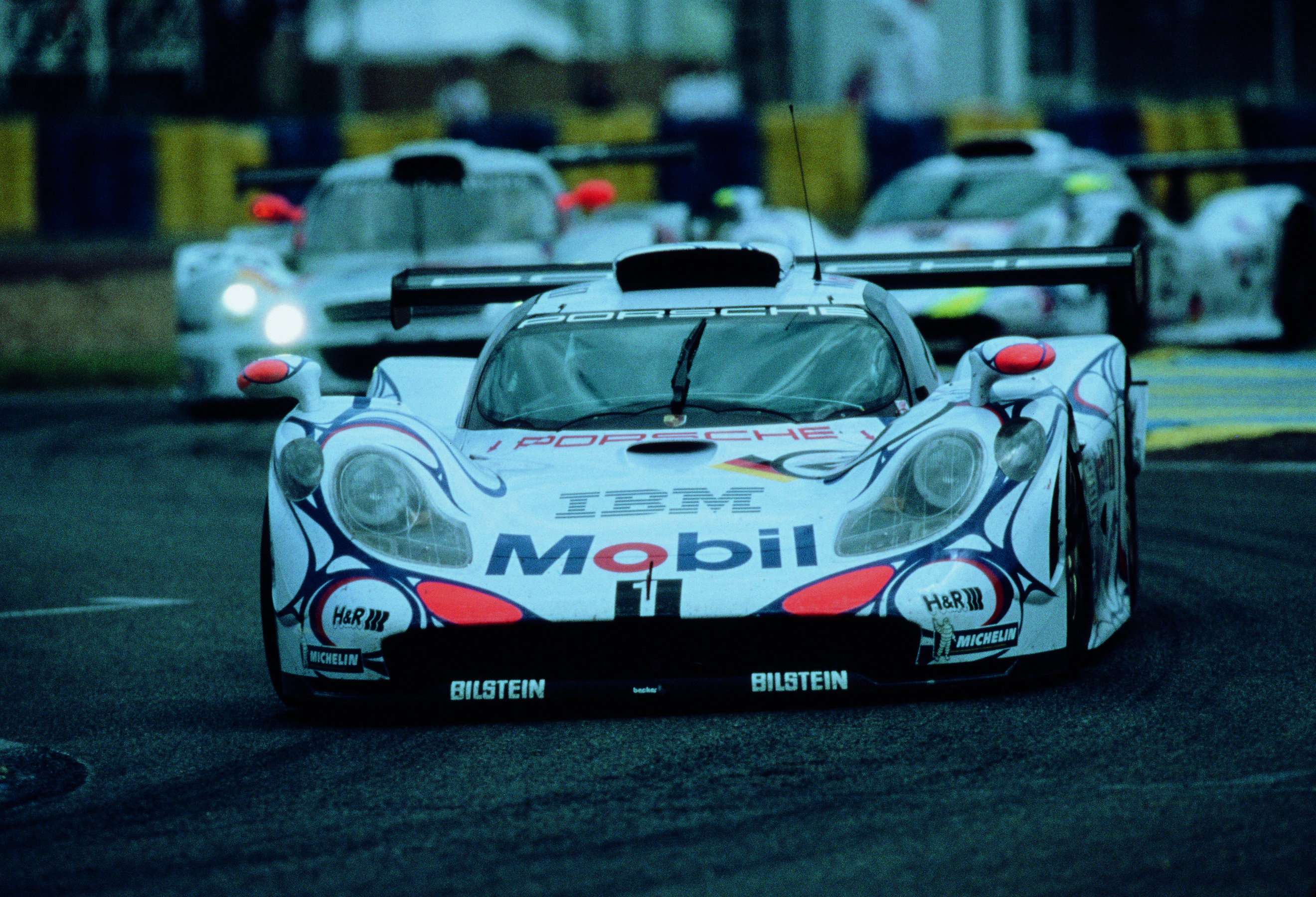
911 GT1 98. In 1998, Porsche achieved with this type a double victory at the 24 hour race in Le Mans.
Description
1998 Le Mans 24-hour race
In the 1998 jubilee year, the Porsche team celebrated its 16th overall victory in Le Mans with a double win for the 911 GT1 98. On 6th/7th June, the winning car was driven by Laurent Aiello, Allan McNish and Stéphane Ortelli. It was almost 50 years to the day on which the first Porsche sports car saw the light of day.
911 GT1 98: water-cooled 6-cyl. bi-turbo boxer engine, 3200 cm3, approx. 550 HP, approx. 950 kg
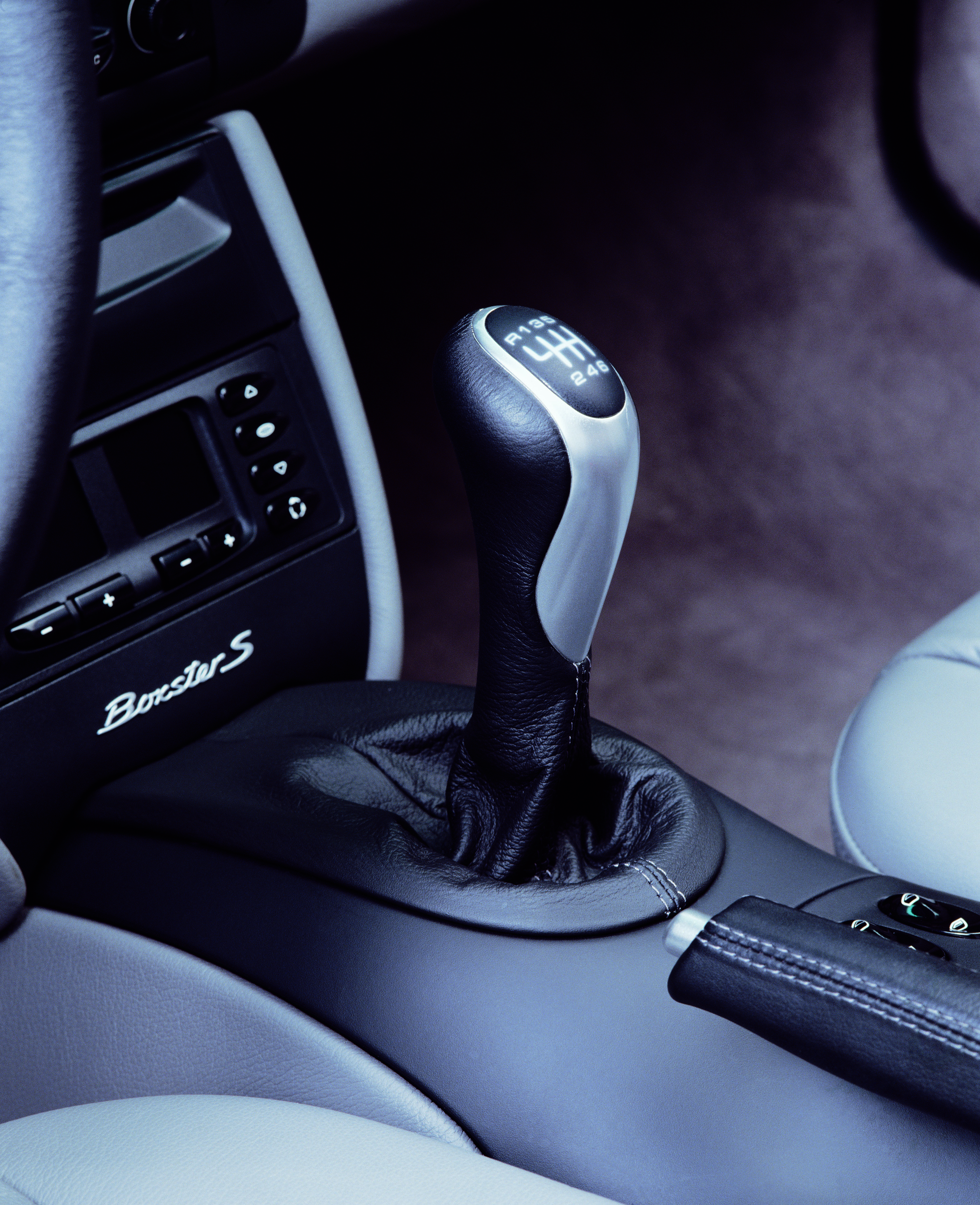
Gearshift for the standard five-speed manual transmission
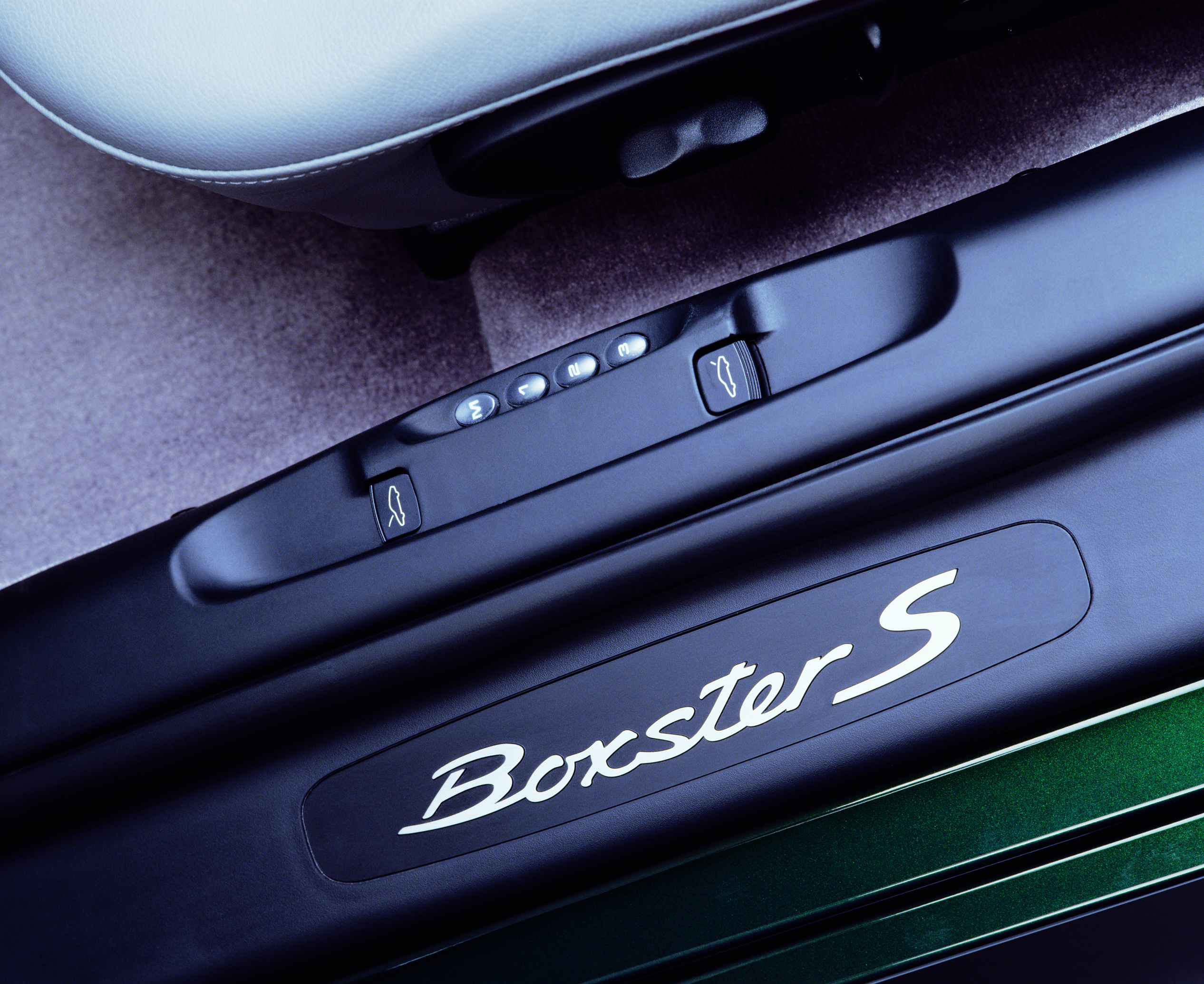
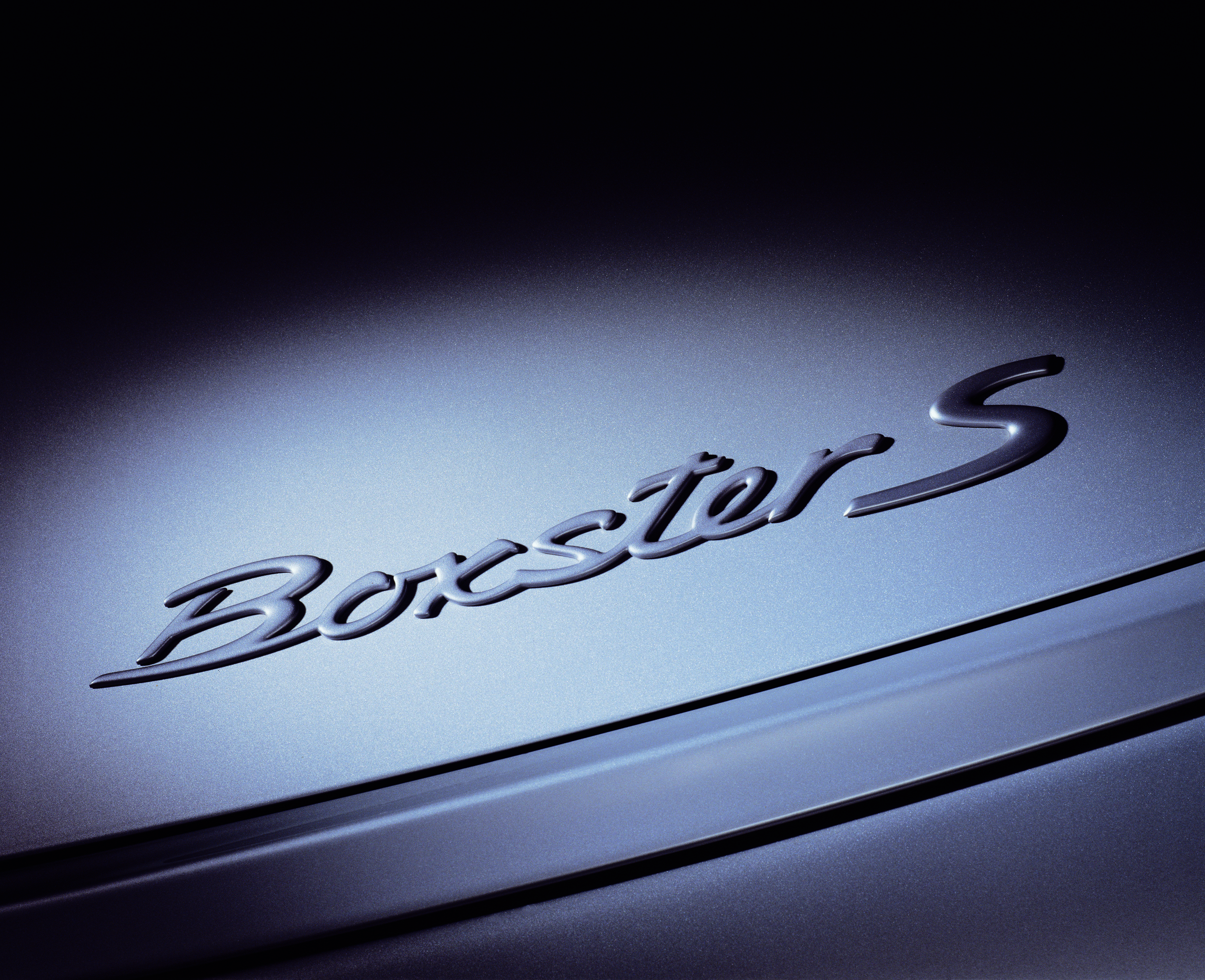
Boxster S-logo on the entrance strip
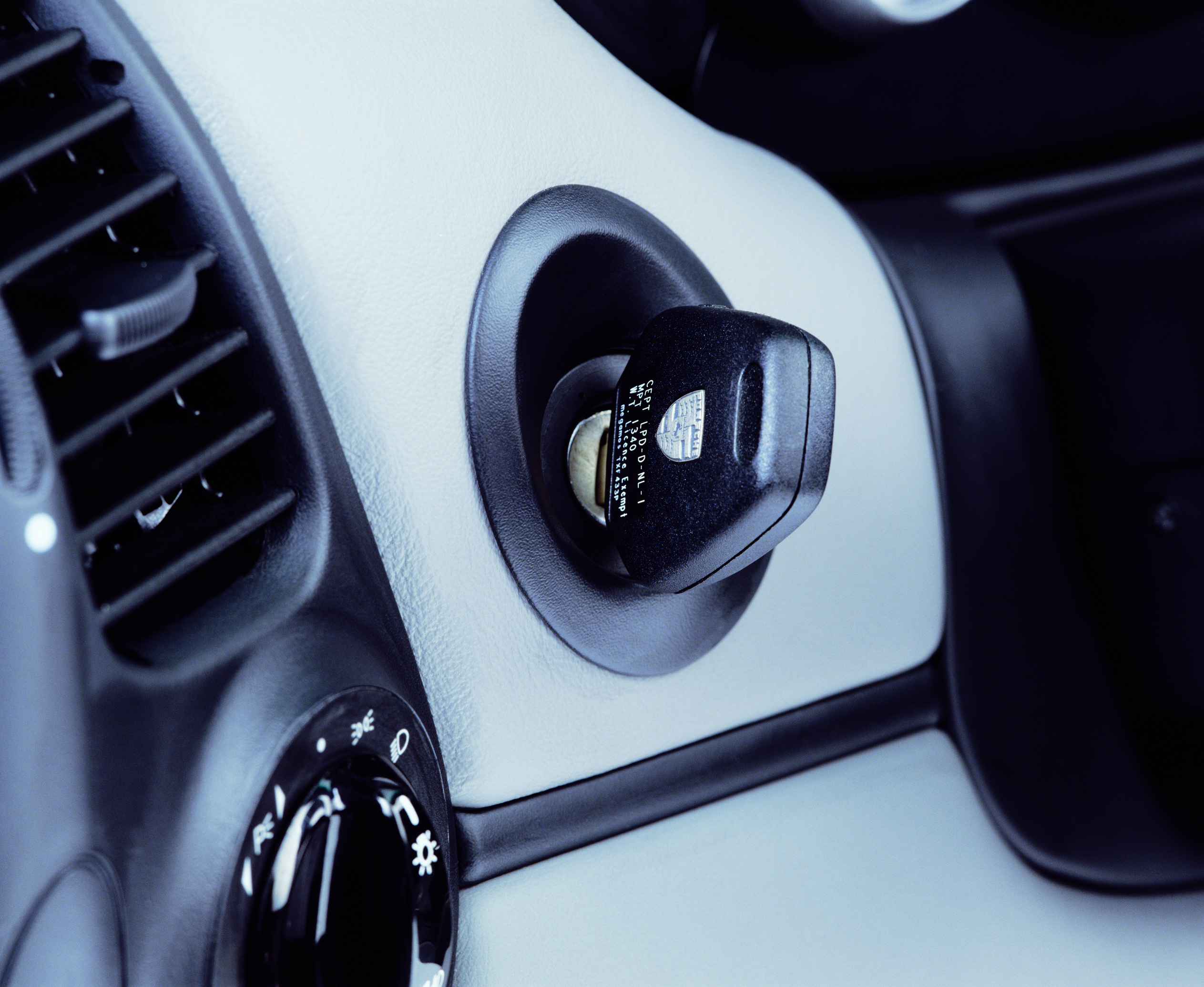
Typical Porsche: the ignition lock left of the steering wheel
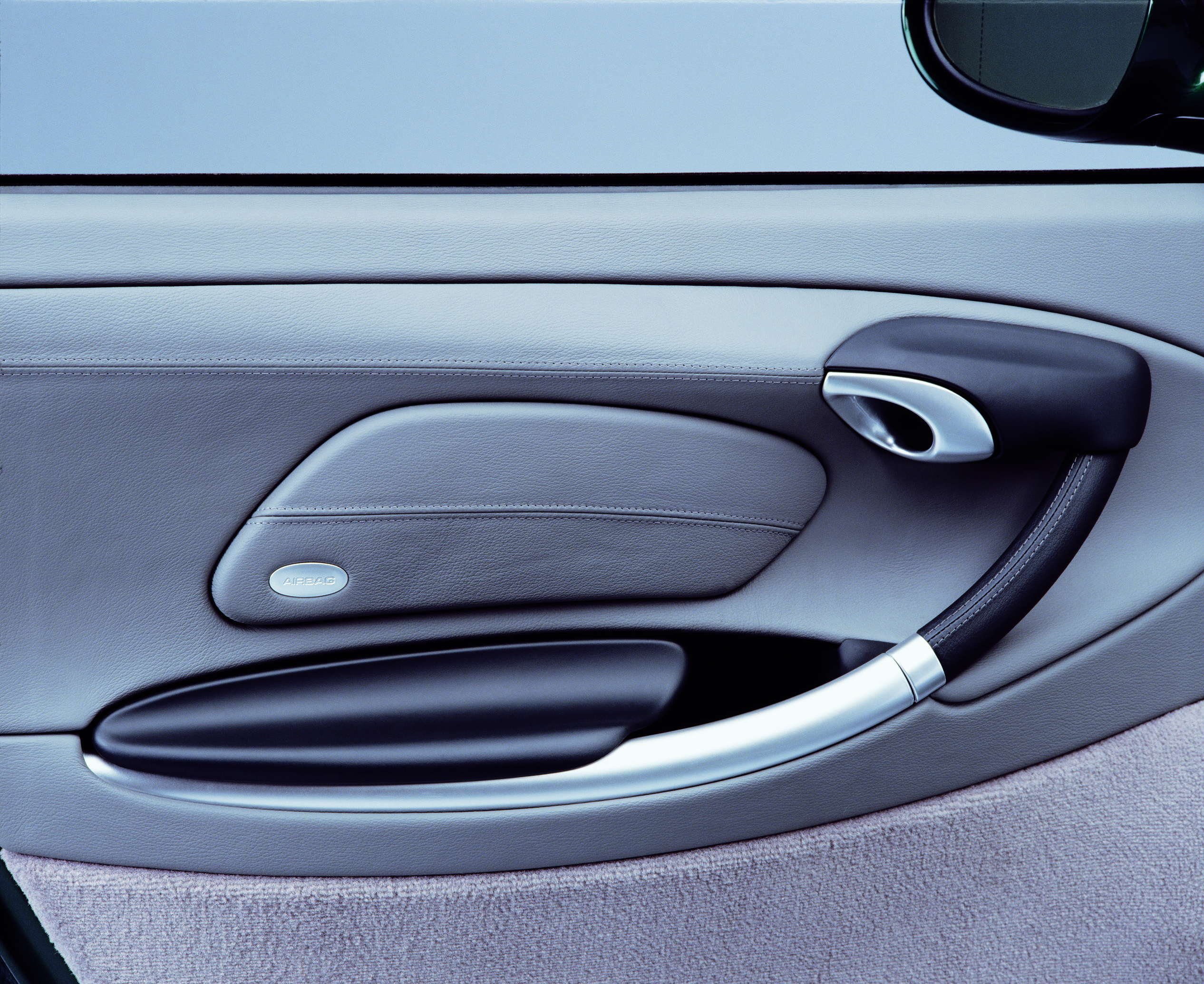
Side airbags are fitted in all Porsche-modells as standard
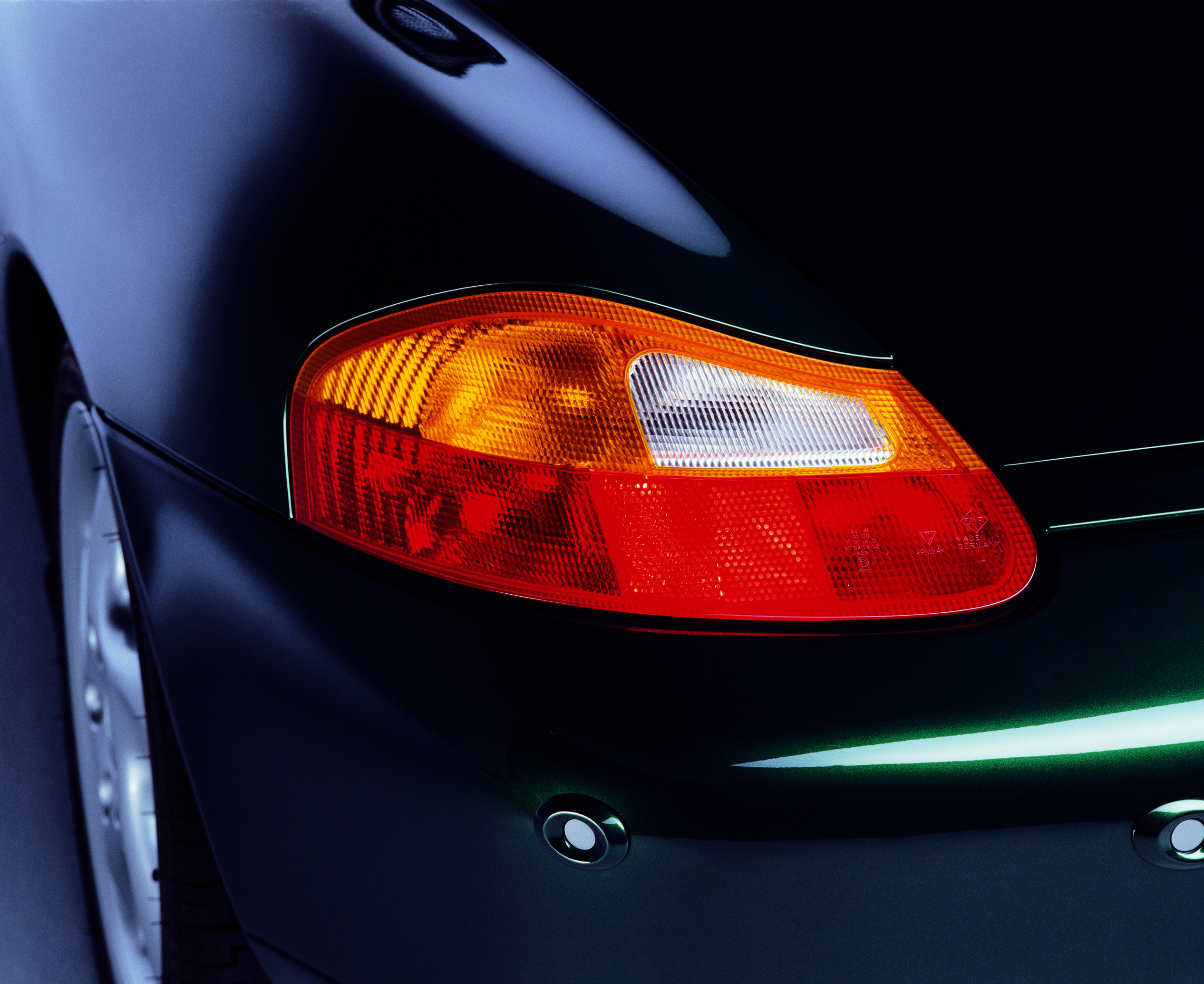
Tail light, with a sensor for the ParkAssistant underneath
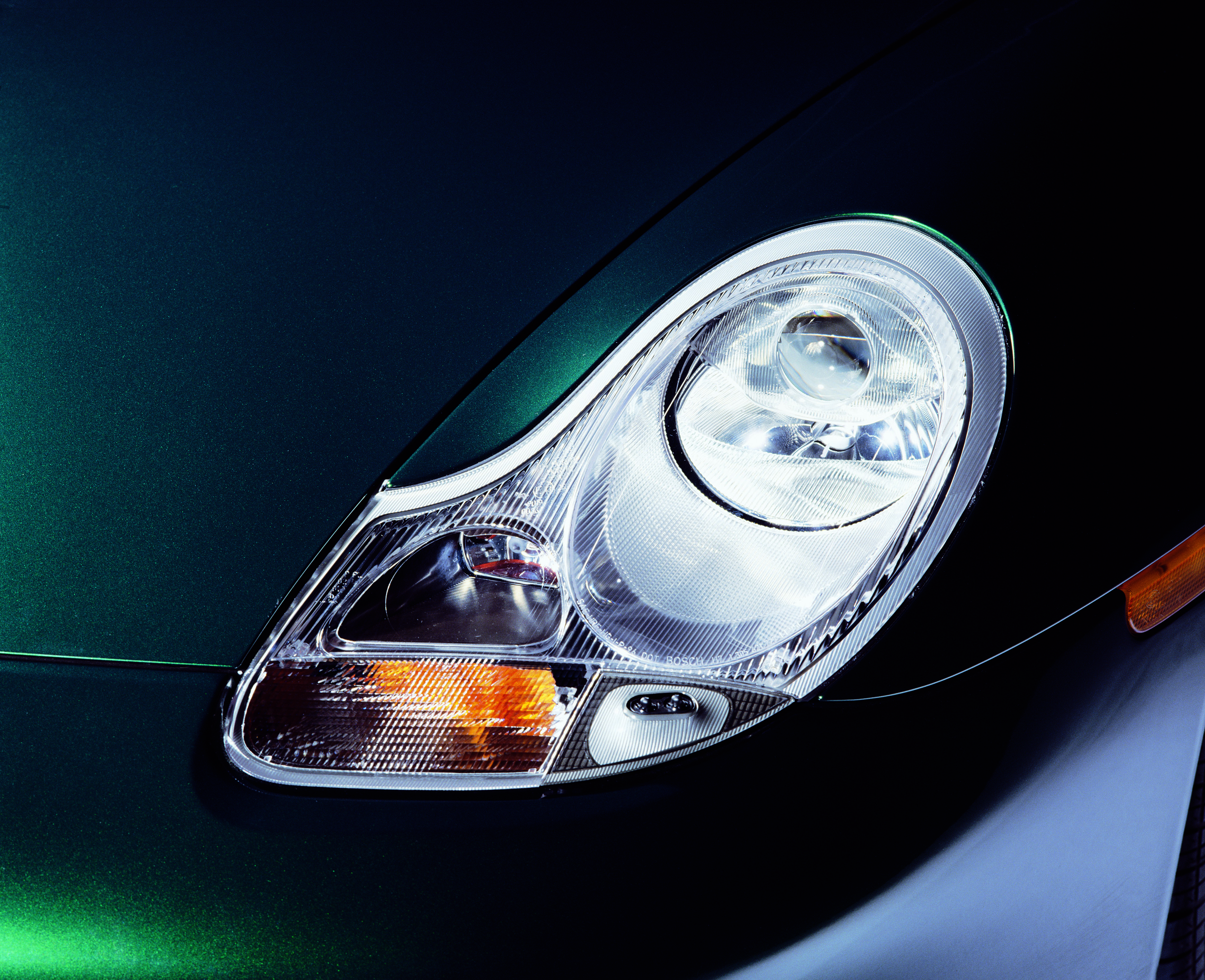
Headlights with cleaning system
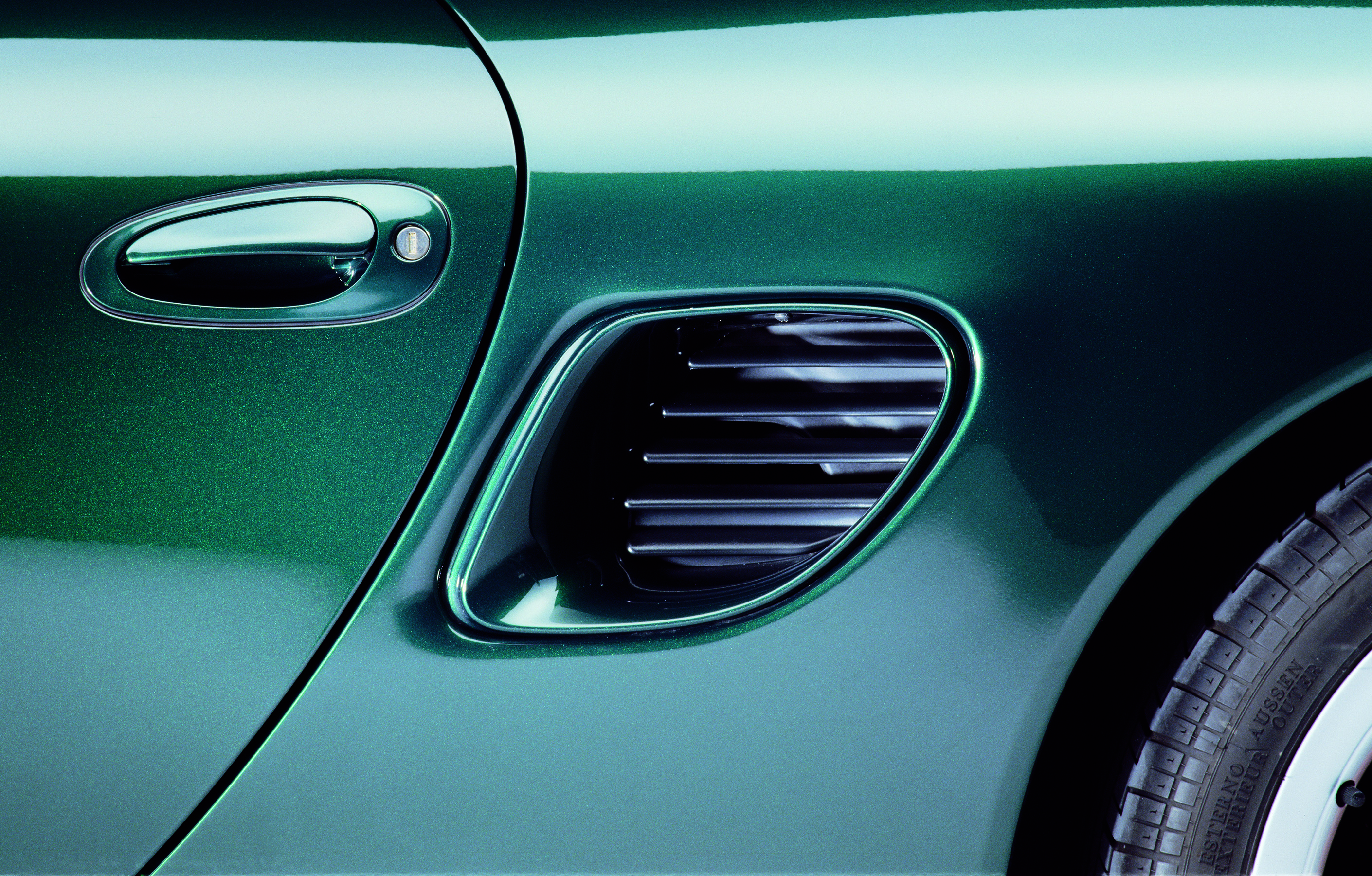
The side air inlets provide the air suction of the 3.2 litre engine and the ventilation of the engine compartment
Titanium-coloured logo on the back baggage-compartment lid
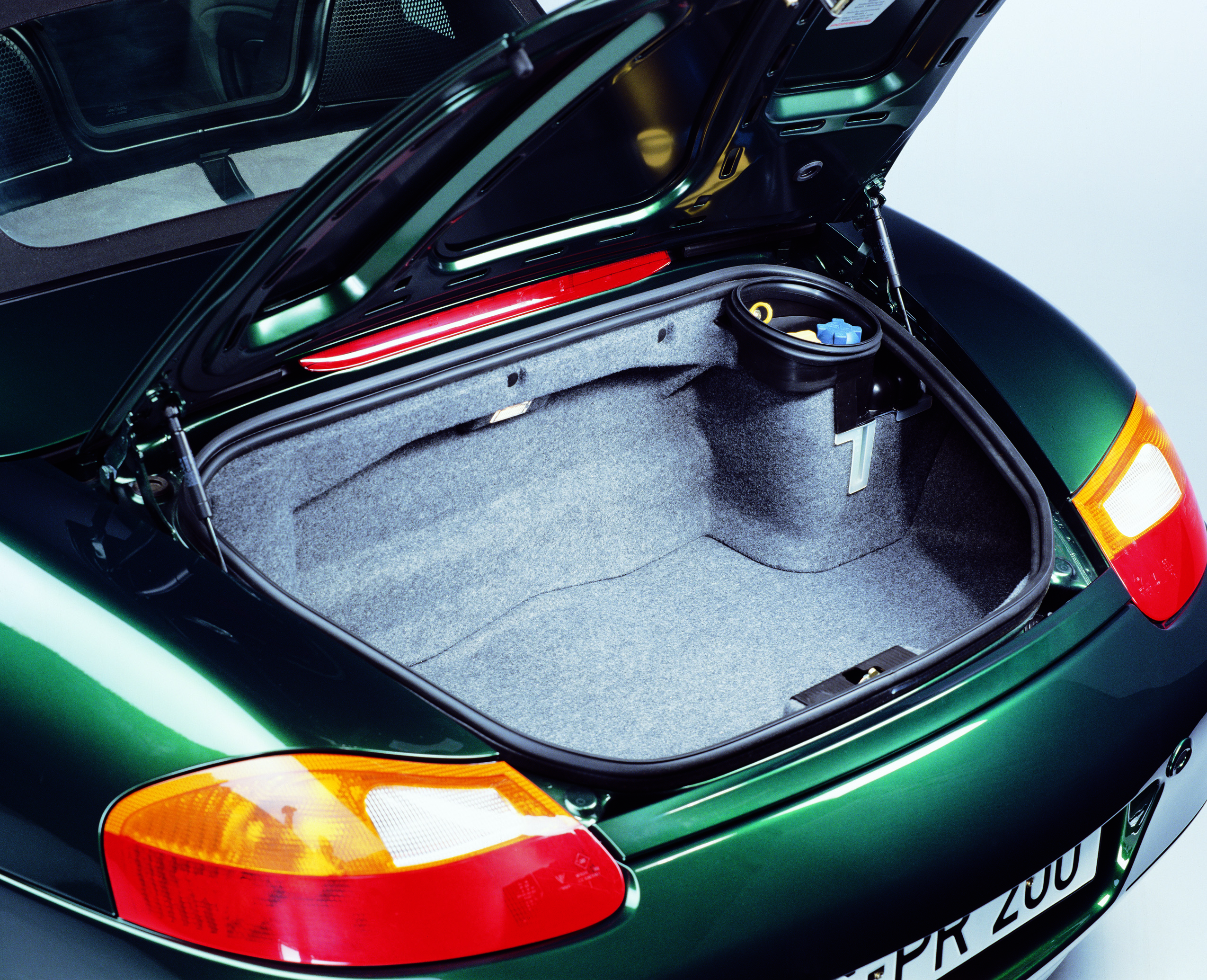
The volume of the rear luggage compartment is 130 litres
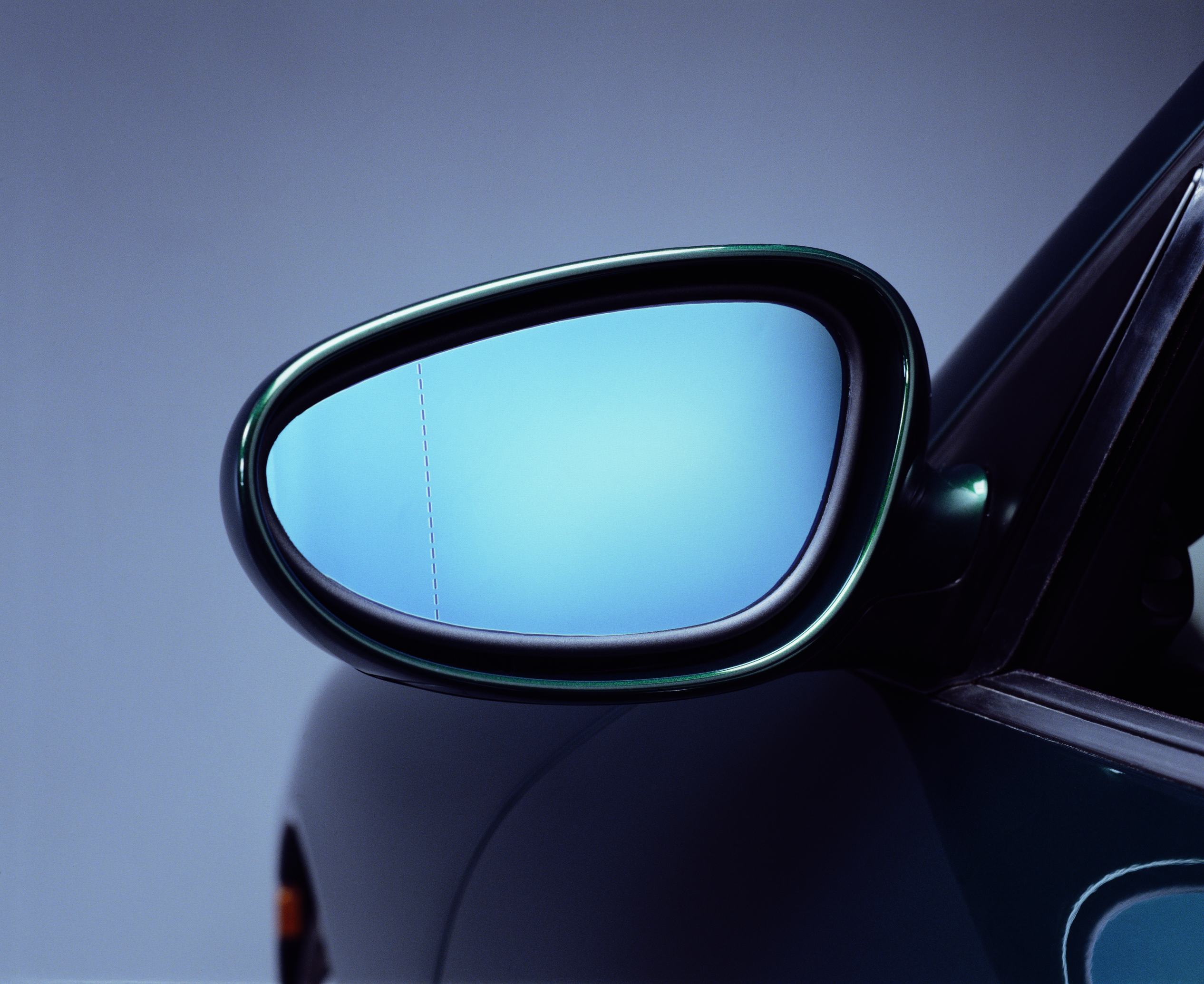
Electrically adjustable and heated door mirror
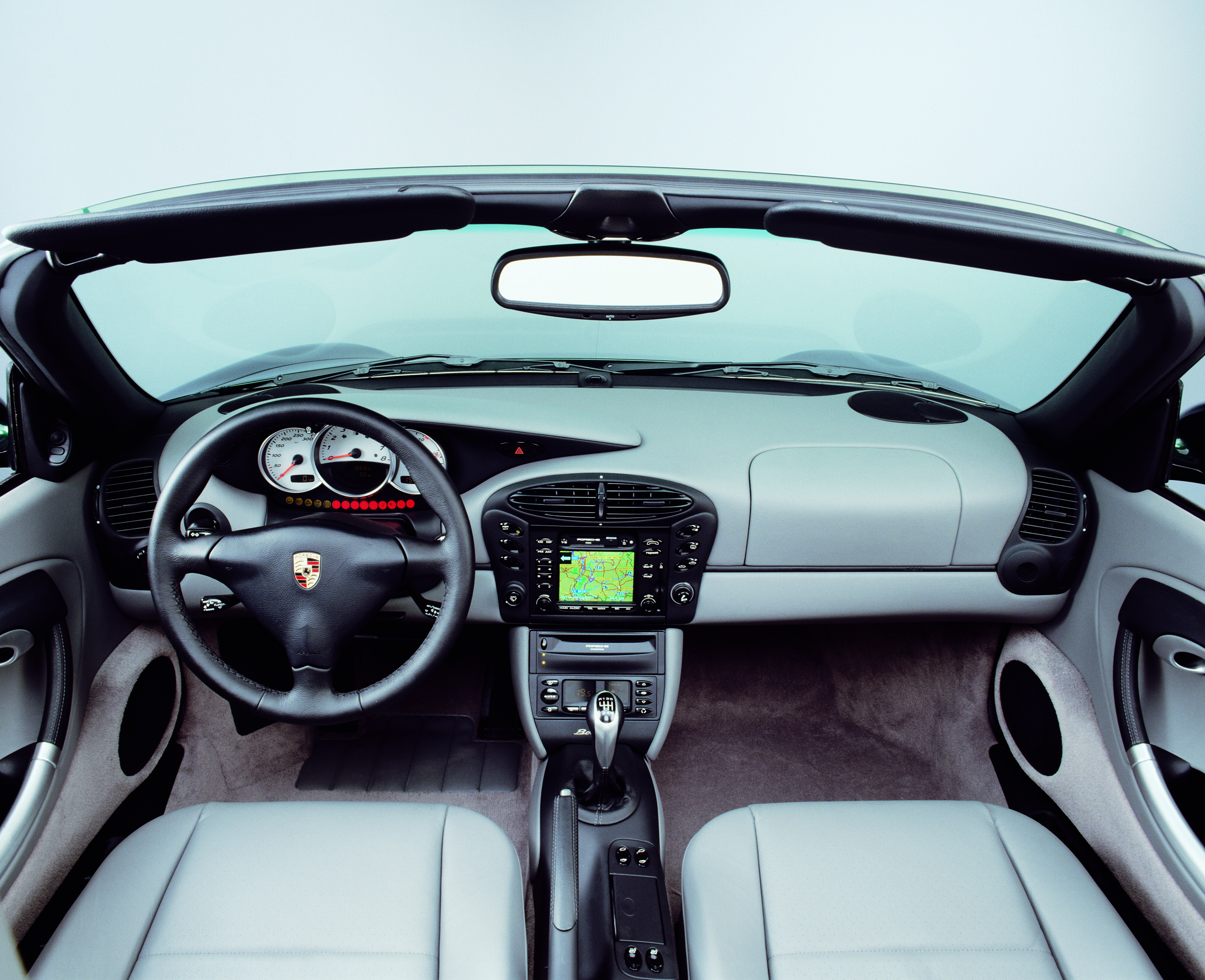
Interior equipment of the Boxster S with Porsche Communication Management (PCM) and gearshift for the standard six-speed manual transmission