Associated albums


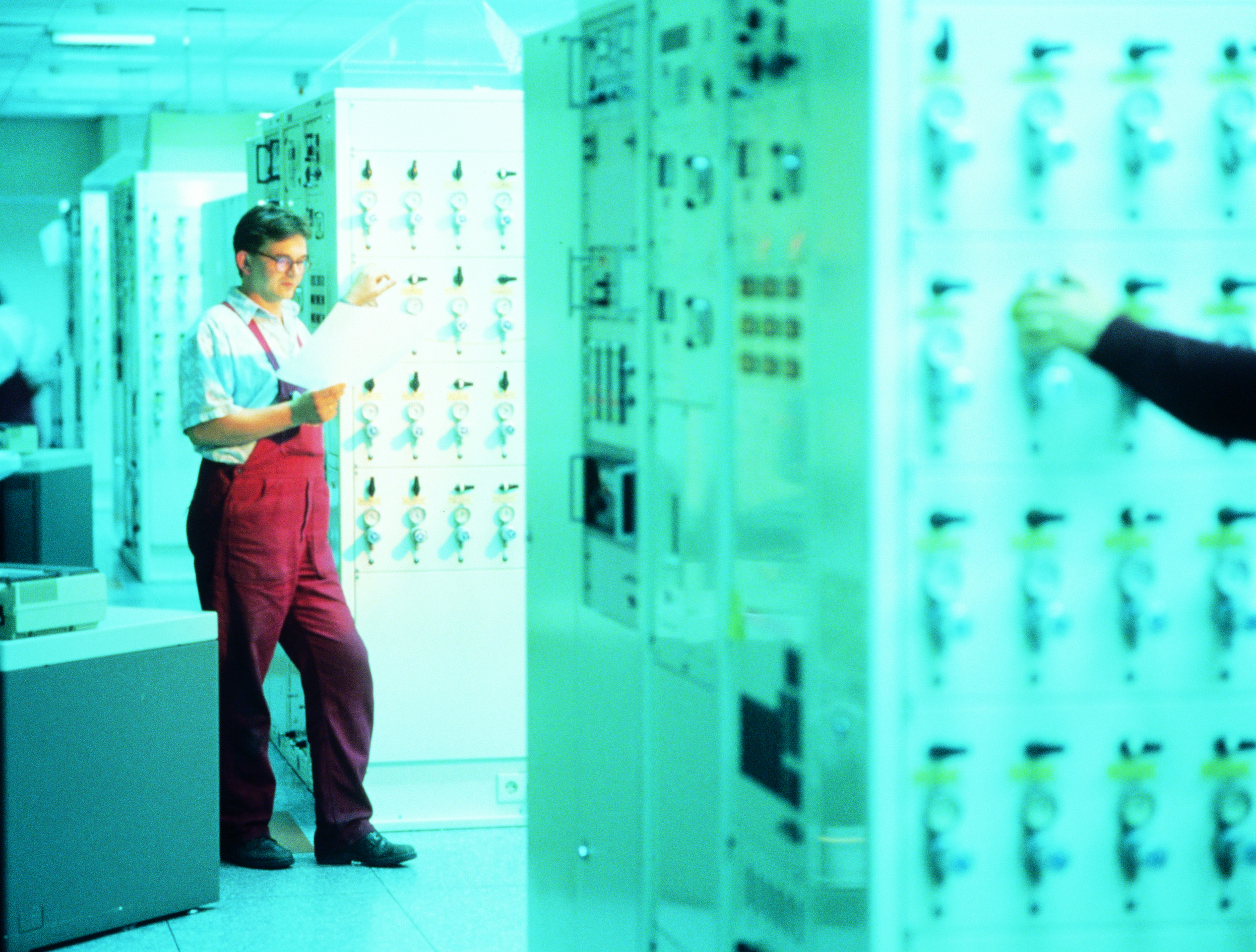
“A car is designed for 20 years, for 200,000 kilometers, under very rough conditions. So we simulated that,” Bäuerle continued. “First was with the rear-wheel drive and then with the fourwheel- drive 964. We did this in the mid-1980s. It was so good that in the beginning of the 1990s, Porsche bought its own test bench for Weissach. We saved a lot of money. You need no driver; weather conditions don’t affect the test. No tires or fuel. You need no test track. “The other advantage is we can test very early. As soon as we have the first body-in-white, hand made, we can put a dummy engine and gearbox in, two dummies in the interior for weight, a dummy tank, some axles, and start the test. Before this, you had to wait until there was a car that could run on a track. We know two years earlier now if we need to change something important. So only a handful of cars actually go on the test track today. Just for final tuning.” Despite Bott’s departure, his signature and influence were all over the 964 when it appeared as a 1989 model in late 1988. At the start of its development in 1984, with a healthy cash reserve, a new wind tunnel installed, and a new paint shop and body shop under construction (Werk V, with a sky bridge flying over Schweiberdinger Strasse to conveyor-belt car bodies from assembly to paint), Bott settled on three possible ways to take the 911 into the 1990s. One expanded the lineup by keeping the G model but adding the 964 all-wheel drive as a second model. Another option gave the G model a substantial facelift, mounting it on the new all-wheel- and rear-wheel-drive running gear. Lastly, he brainstormed with Friedrich Bezner and Manfred Bantle the benefits of designing and engineering a unitized body in which the body served as chassis on two- and four-wheel-drive running gear. The supervisory board, enamored of both its fiscal health and Dick Soderberg’s concepts for the 959, approved Bott’s third idea, but it allowed Tony Lapine’s stylists only to update the body. Fenders and headlights—essential elements that Ferry Porsche defined during the testy discussions between Komenda and his son—remained holy ground, as did the roof panel. Möbius and Soderberg collaborated on an appearance that meant to satisfy the loyalists who claimed they embraced change but never indicated how much was acceptable. The drag coefficient of the G models—0.395—embarrassed Porsche engineers and designers who knew the 959 was worlds better. They fitted a belly pan beneath the 964’s front end (shielding its front differential and driveshaft tunnel from drag), flush-mounted the bumpers, and delicately adjusted front valences to improve airflow. In back, they devised an electrically operated/speed activated rear spoiler that rose from the rear deck lid at speeds above 80 kilometers per hour. Bott and Bezner did their calculations and they established front and rear balance of the new four-wheel-drive car at 59 percent of the weight and 69 percent of the engine power on the rear wheels while the front carried 41 percent of the weight and operated with 31 percent of drive power. The driver had a manual override to electronically lock up front and rear drive. To meet the tightening nitrogen-oxide emissions standards for the state of California, engine chief Paul Hensler’s staff developed twin spark plug heads, whose better combustion through higher heat left less unburned fuel for the catalyst to consume, and it increased horsepower. But two spark plug holes compromised the space available for cooling fins. Engineers eliminated the cylinder head gasket to better transfer cylinder head heat inward to the heavily finned cylinders. It proved to be a less-than-ideal compromise and leaks occurred. Displacement settled at exactly 3,600cc by using a 100-millimeter bore and 76.4-millimeter stroke, and this new flat six produced 250 horsepower at 6,800 rpm. Its performance beat the 3.2 Carrera despite the addition of nearly 500 pounds of new electronics, computers, their wiring, front drive mechanisms, and other features to the new car.

With the new car, Porsche still had three distinct product lines, the 928, the 944 Turbo/968 models, and the 964, still with precious few shared parts. During 964 development, a brash, ambitious young production engineer named Wendelin Wiedeking accused Helmuth Bott of destroying the company through fiscal mismanagement. His comments came while exchange rates still profited Porsche, so Wiedeking’s charges fell on deaf ears among supervisory board members. Convinced no one cared, Wiedeking quit. The all-wheel-drive Carrera 4 or C4 reached dealers midway through the 1989 model year, making a bold strategy and marketing statement in the process: Four-wheel drive came first. Its sibling rear-drive C2 debuted months later. MacPherson struts attached to aluminum transverse links suspended the front end. Anti-lock brakes were standard equipment as was a high-pressure hydraulic brake booster on the C4 or a vacuum booster system for the C2. Power-assisted steering eased maneuverability. A new four-speed Tiptronic transmission operated as a full automatic or a clutchless manual gearshift. Top speed of the C4 and C2 with five-speed manual transmission was 162 miles per hour and 0-to-100-kilometer acceleration took 5.7 seconds. THE HEINRICH BRANITZKI ERA These new cars accompanied the ascent of the frugal business manager Heinrich Branitzki to take Peter Schutz’s former job. Branitzki held a degree in marketing and an interest in finances, and he had joined Porsche in 1965 just in time to see the earliest 911s head toward customers’ hands. A cautious, sensible man, he understood the company product history. The 356 lasted 17 years. The current 911 had stayed, barely changed in his view, for twenty-four years. There was no reason to expect anything less from whatever followed. At the 964 C4 introductions, he hailed the new car as “the 911 for the next 25 years.” Engineers, designers, and enthusiasts gasped. It was not that these were inferior cars, but as Bott had taught them, look only ten years down the road because with technology changes, you get there in two.

Sensibly, though, Branitzki killed several projects. With 928 sales at a level where even Ernst Fuhrmann may have considered euthanasia, proposals for a 928 cabriolet and a four-seater disappeared. Incredibly, a sharp-looking 964 Turbo held on. Designated the 965, the car that stylist Tony Hatter fashioned had strong visual ties to the 959 including its basket-handle rear wing. Bott and Bezner, as they labored to develop a turbo 965 engine, experienced similar cooling and horsepower shortcomings to those of the early 964. As alternatives, they contemplated a V-6 version of Porsche’s latest water-cooled V-8 Indy race car engine using four valves per cylinder and dual overhead cams. It was exciting technology for an exciting-looking car. By late summer 1988, water cooling the flat six appeared the best solution. “ When we went ahead to design the 964 we took all that we had learned from the G model and we applied it. You could say that the G model was the test object for the 964. — Hans-Peter Bäuerle It retained that status even through the personnel upheavals that ended 1988: Schutz and Bott, gone. Lapine, in a dispute with management while recuperating from heart troubles, was asked to stay home. Harm Lagaay, who had designed the 924 under Lapine’s direction, left Porsche, gained experience at Ford and BMW, and returned as Lapine’s successor. Ulrich Bez, another Porsche ex-pat from a previous decade, had served his time and developed cars elsewhere before coming back and replacing Bott. Bez saw two issues with the water-cooling approach: First, it was increasingly necessary. Second, it needed years, not months, to perfect it. However, it was the economy of exchange rates and the rates of exchange of personnel and ideas that shoved all such ideas off the table. Porsche needed a Turbo; even Branitzki recognized that. Bezner and Bez accepted that their sole alternative was to bring the existing 3,299cc engine into a 964 C2 body for production start in May 1990 as a 1991 model. Incorporating bits and pieces of the Sonderwunsch optional Sport kit gave them 320 horsepower output at 5,750 rpm. Federalization for American markets took another year.

The 964 left-hand-drive models manufactured beginning in February 1991 were equipped with driver and front passenger airbags. Along with the ABS, this was another of the reasons the 964 had to come to production. Porsche had introduced these two passive restraints on the 944 Turbo in 1987, becoming the first car in the world to offer both front occupants this protection as standard equipment. The 964 beat the U.S. deadline for standard driver and passenger passive protection by seven years and this generated considerable research and development business for Weissach as other manufacturers sought to meet the 1998 compliance date. For 1992, Porsche offered new 964 variations, including a Carrera RS coupe and a Turbo Look Carrera 2 Cabriolet, marketed in the United States as an America Roadster. The RS, inspired by the 2.7-liter version 20 years earlier, reduced weight wherever possible, stiffened the suspension, increased engine output by about 10 horsepower to 260 at 6,100 rpm, and essentially gutted the interior after the style of the 2.7 Lightweights. As with the predecessor, Porsche assembled three versions, a no-compromises base version, a “touring” version with sport seats and electric windows, and an even-fewer compromises road-legal N/GT configuration that filled the gutted interior with a full roll cage. Lacking catalytic converters, the Carrera RS models were not offered to American buyers, though some exist in the States now in private collections. While the Turbo Look C2 Cabrio may have been named for the 1952 America Roadster in U.S. markets, this new car was the luxury-edition update, which incorporated features yanked from the RS, plus a few duplicated from the Turbo coupes. The Turbo S topped the 964 roster, using new camshafts, improved ignition and fuel injection profiles, and slightly higher boost to achieve 381 horsepower at 4,800 rpm, compared to the normal Turbo at 355. Body engineers introduced composite and lightweight plastics for door panels and the front deck lid. As with the RS, side and rear glass was thinner gauge. For the first time, Porsche delivered a road car on three-piece composite wheels, 8x18-inch Speedlines at the front and deep 10x18s at the rear. Massive fourpiston red-painted brake calipers seized hold of cross-drilled ventilated rotors. Porsche quoted the car’s top speed at 180 miles per hour with 0-to-100-kilometer speed coming in 4.6 seconds. The factory assembled just 86 of the Turbo S models. For 1993, the final year of the 964, Porsche updated the Turbo with a new 3.6 version. The company had improved its 3.6-liter engine in its 964 series and, with substantial internal upgrades, turbocharged the engine to achieve 360 horsepower at 4,200 rpm. To stop the 174-mile-per-hour car, Weissach engineers carried over the brakes system from the 1992 Turbo S.

As it had done in the final year of the long-lived G model, Porsche added a Speedster to the lineup. Unlike the 1989 model, Porsche assembled this new 964 version for 1993 in narrow-body form although Porsche Exclusive, the successor to Sonderwunsch, converted some 15 to wide Turbo Look bodies. Assembled on the C2 platform, engine output remained 250 horsepower. Porsche delivered the cars with five-speed manual gearboxes but offered the Tiptronic in the spring of 1993. The low windshield concerned Weissach body engineers who feared air-bag activation might shatter the glass, so very few were equipped with the not-yet mandatory protection. Zuffenhausen also introduced an RS America variation. With limited color choices and fewer options, the C2-derived RS America offered U.S. customers the flat rear wing of the 1974/1975 Carrera 3.0 models together with a decontented interior. At price point some $10,000 U.S. dollars below the fully equipped 964 C2 coupes, it was instantly desirable to a strong enthusiast base in the States. American EPA and DOT regulations prohibited any engine modifications, but the slightly lighter cars—about 110 pounds less—inspired their owners with deep loyalty. Porsche capped the model year with a 30th Anniversary 964 C4 commemorating the three decades passed since the Frankfurt show introduction of the 901 in 1963. Porsche assembled these models on a turbo body that used the normally aspirated car’s electric rear spoiler. Marketing may have launched this vehicle to help consume Turbo bodies; very clearly, however, it and the C2 Turbo Look cabriolet inspired a subsequent popular and successful product line that Porsche developed and discovered through these C2S and C4S predecessors.

In a final burst of creativity, Porsche Exclusive produced a run of slant nose Turbo 3.6 cars. Popup headlights came from the front-engine 968. With its larger turbocharger, modified camshaft and intake manifold, auxiliary oil cooler, and four-pipe exhaust the final slant nose offered its buyers 385 horsepower. Zuffenhausen assembled just 76 of these cars. Through the four years of its life, the 964 had sold steadily. Zuffenhausen assembled 63,570 of the C2 and C4 models. During this time, the economy reeled and retched, barely providing the company revenues to develop the next 911 generation. It made them reexamine their front-engine cars. By the end of model year 1995, both the 968 and 928 models had served their purpose, introducing new customers to the company’s products. With output of only 1,188 of the 968 coupes and cabriolets and just 119 of the 928 models in their final year, everything demanded more rational product development and production management. “ A car is designed for 20 years, for 200,000 kilometers, under very rough conditions. So we simulated that.” — Hans-Peter Bäuerle
At the last-ever Targa, run on May 13, 1973, Porsche’s thoroughly developed Carrera RSR2.8 proved strongest of the day taking 1st overall with Gijs van Lennep and Herbert Müller sharing driving duties. The car wore a prototype “Mary Stuart collar” rear wing that widened the aerodynamic aid to full-body width. Porsche Archiv
Working from his close relationship with Porsche racing and its 917/30 Can-Am cars, team owner Roger Penske helped devise a match race series using new Carrera RSRs. Mark Donohue won the four-event contest, called the International Race of Champions, starting with victory here at Daytona. Porsche Archiv
At the Nurburgring 1,000-kilometer race two weeks after the Targa, van Lennep and Müller served notice on the Sports Racing community. In their RSR 2.8, fitted with a 3.0-liter prototype engine they finished fifth overall behind a pair of Ferraris, a Chevron and a Porsche 908. Porsche Archiv
The 1974 version of the RSR used a 2.14-liter turbocharged engine to develop 500 horsepower. Installed in a race car weighing 1,764 pounds, performance was impressive. Porsche Archiv
Porsche was first on the track with FIA rules–compliant Group 5 cars. Derived from the production 930, this first-generation 935 weighed 2,138 pounds and its 2,856cc turbocharged engine developed 590 horsepower. Porsche Archiv
Porsche unveiled its new Group 5 contender at the 1,000-kilometer race at Nurburgring at the end of May 1976. While Rolf Stommelen and Manfred Schurti qualified on the pole, the car did not finish after a distributor rotor broke nine laps into the race. Porsche Archiv
At Österreichring on June 27, 1976, Dieter Schmidt and Karl Oppitzhauser shared driving duties in Egon Evertz’s Jagermeister 934. Fellow driver Edgar Dören warned them the 934 behaved “like a wild animal.” Porsche Archiv
At its Le Mans debut in June 1976, Porsche’s 935-002 #41 won Group 5 category with Manfred Schurti and Rolf Stommelen sharing driving duties. They finished fourth overall, covering 2,814 miles. Porsche Archiv
At Le Mans in June 1977, Bob Wollek and co-drivers J. P. Weilemans and Philippe Gurdjian drove the Kremer brothers 934 to seventh overall and first in Grand Touring class. Shown here during the 2011 Rennsport Reunion at Laguna Seca, Kees Nierop led Steve Lawrence’s 934.5 and Dennis Singleton’s Carrera RSR through the tight turn 2 hairpin. Randy Leffingwell
Peter Gregg ordered this RSR in 1975 and Weissach fitted it with a number of parts from the new 934 Turbo. Because Gregg was occupied racing a BMW CLS through 1976, Jim Busby drove the car for him, taking first overall in four races. Randy Leffingwell
At the 2011 Porsche Rennsport Reunion owner Jeff Lewis drove his 1977 ex–Vasek Polak Interscope 934. In March 1977, original owner and driver Ted Field and co-drivers Danny Ongais and Hurley Haywood finished fifth overall in IMSA GT category. Randy Leffingwell
W. H. MacEachern’s Deep Steam Cleaning sponsored Ludwig Heimrath in the 1977 Trans-Am in this car that started life as a 934. A season later MacEachern added the 935 rear bodywork behind the 934 front end that characterized the 934/5 designations. Randy Leffingwell
Ernst Fuhrmann conceived the 1977 Typ 935 “Baby” to gather publicity in a televised under 2.0-liter GT racing series. The car weighed just 1,650 pounds and its 1.4-liter turbocharged flat six developed 370 horsepower. Porsche Archiv
In his widest interpretation of FIA rules, Norbert Singer felt he could extend the widened rear fenders across the door openings as he created the 935/78 that, due to its size and color, resembled a great white whale. Neither Singer’s covered doors nor the low full-width rear wing passed the inspection. Porsche Archiv
Singer invented the car and Eugen Kolb designed it specifically for Le Mans. With Ickx, Barth, and Bob Wollek sharing duties it finished second overall but it went on to inspire dozens of look-alikes from Kremer and Jöst racing shops. Porsche Archiv
Previous Page Page 15 Next Page