The Austro-Daimler "Sascha" constructed by Ferdinand Porsche (5 from right) won the 1.1 liter class at the Targa Florio in 1922.
The autobiography "Urban Outlaw" of Magnus Walker
The automotive retrospective of the special exhibition is rounded off by documents from the company archive that have never previously been on public display.
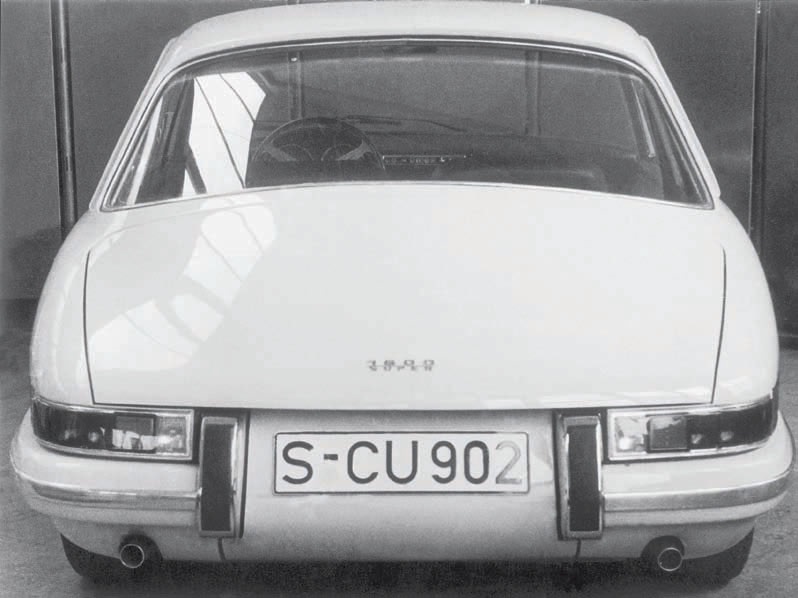
The back end of the F. A. Porsche team 754 T7 had a bit further to go to reach the configuration that went into production. Air intake and cooling came through the side of the rear quarter panels, which proved insufficient. Porsche Archiv
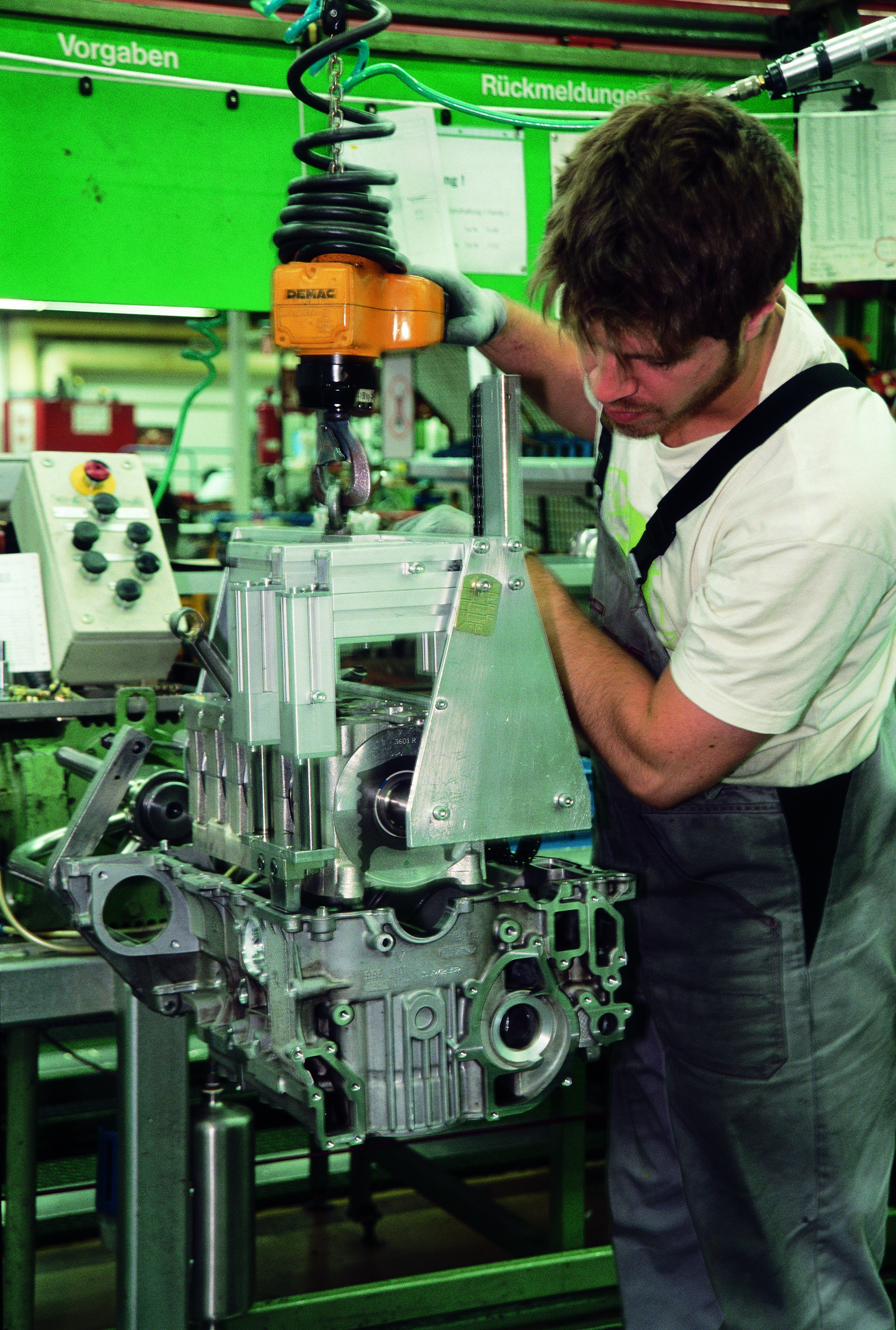
The bearing housing is inserted into the crankcase of the Boxster engine
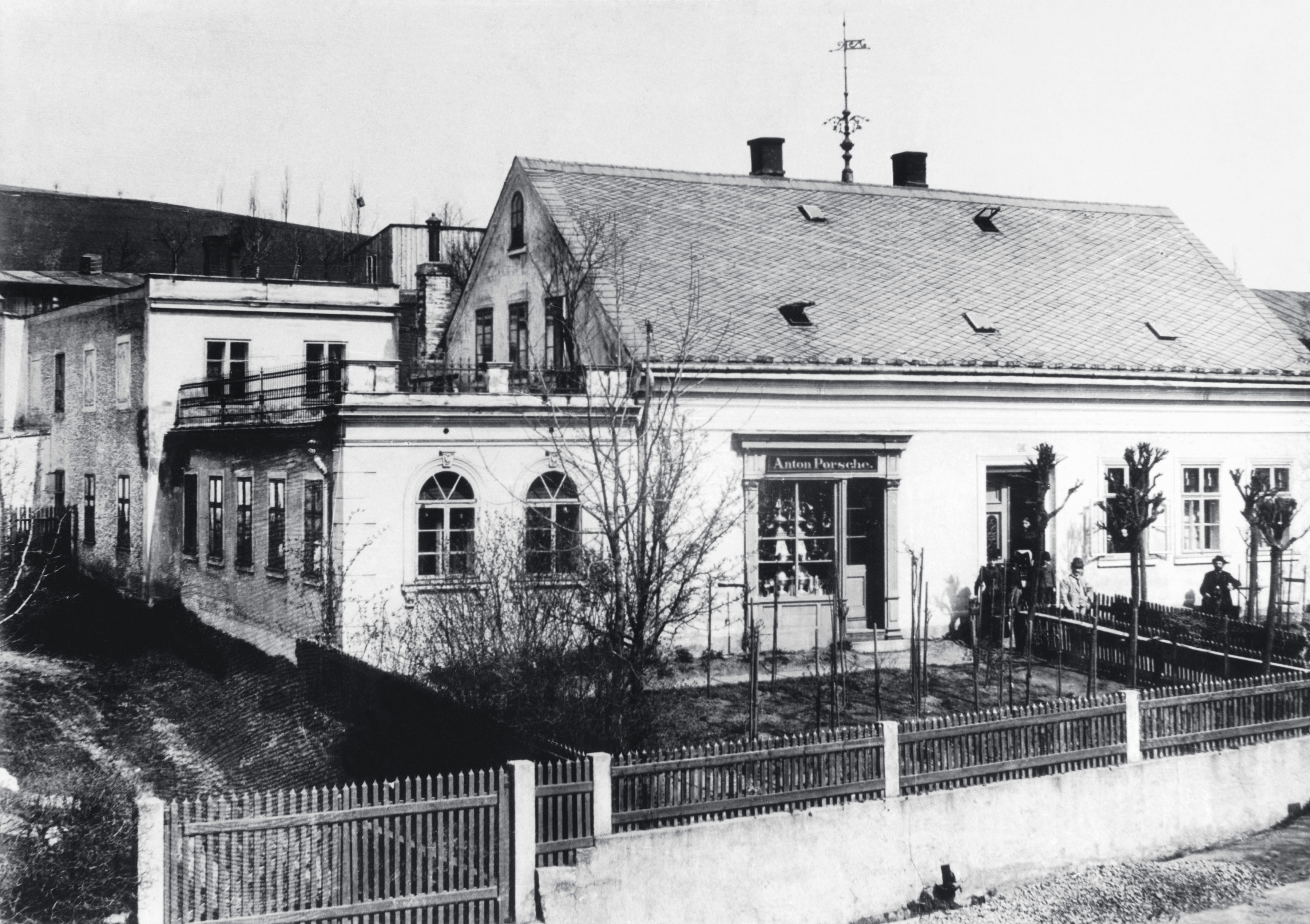
The birthplace of Ferdinand Porsche
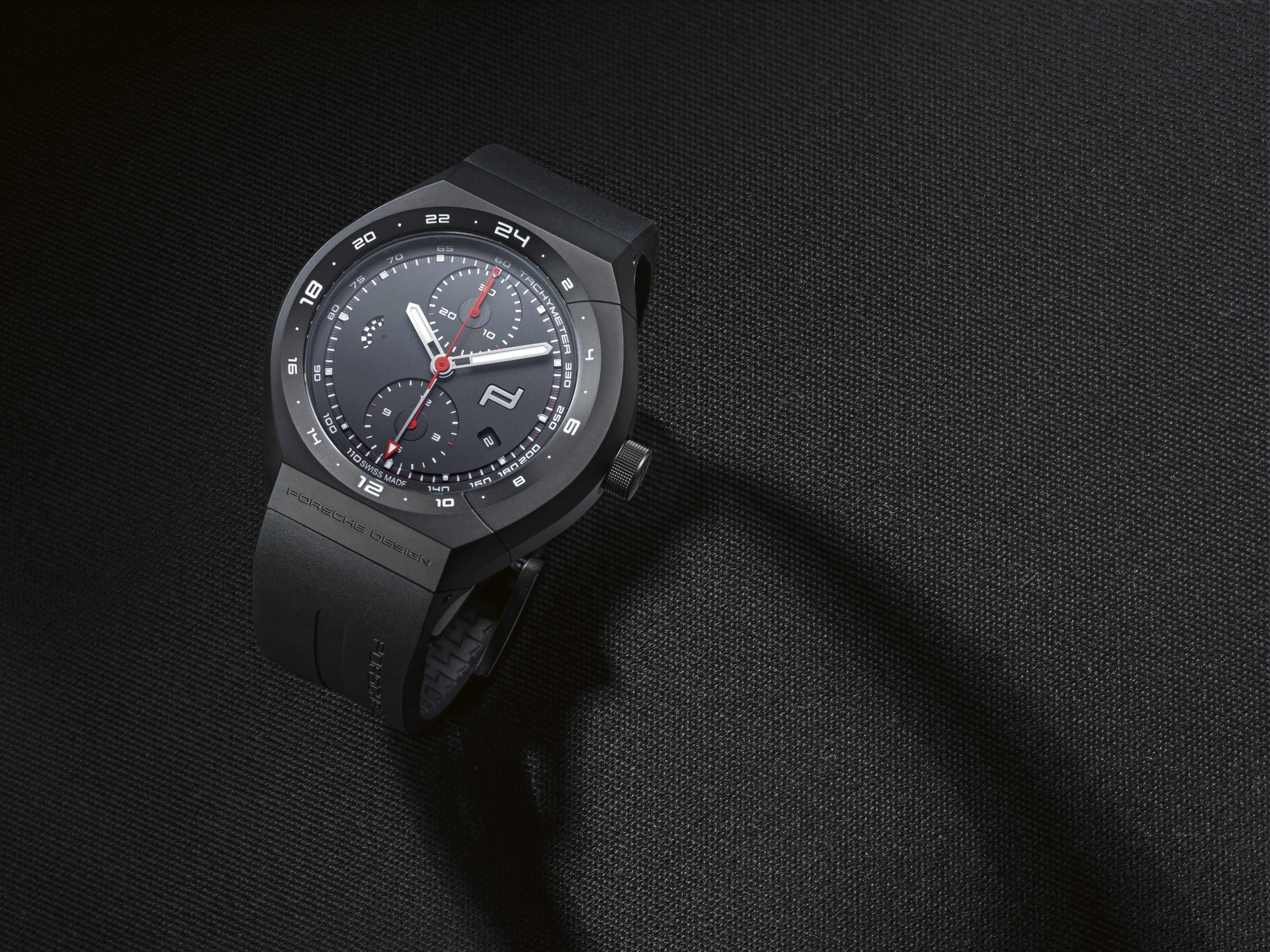
The âBlack & Rubberâ of Porsche Design Timepieces
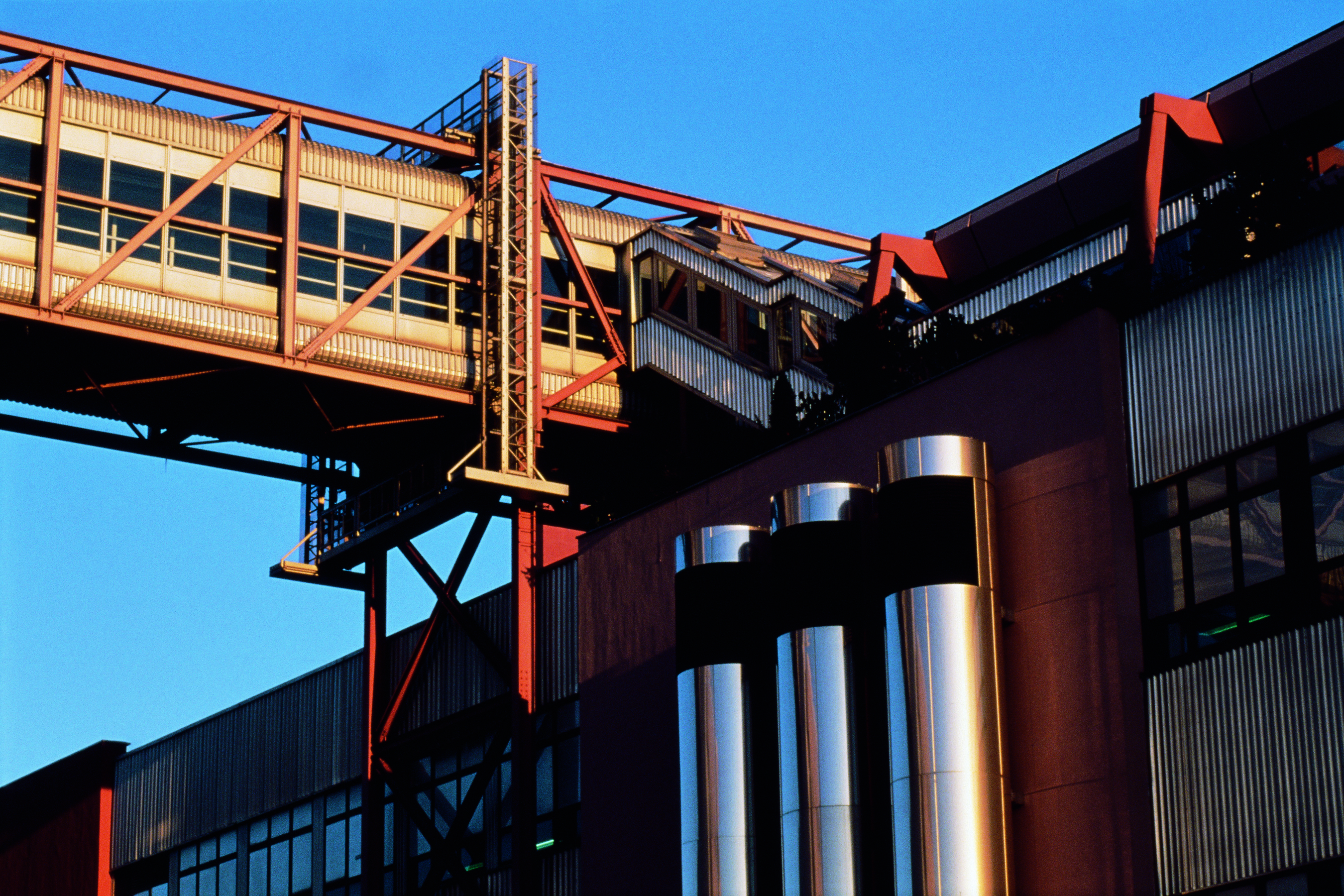
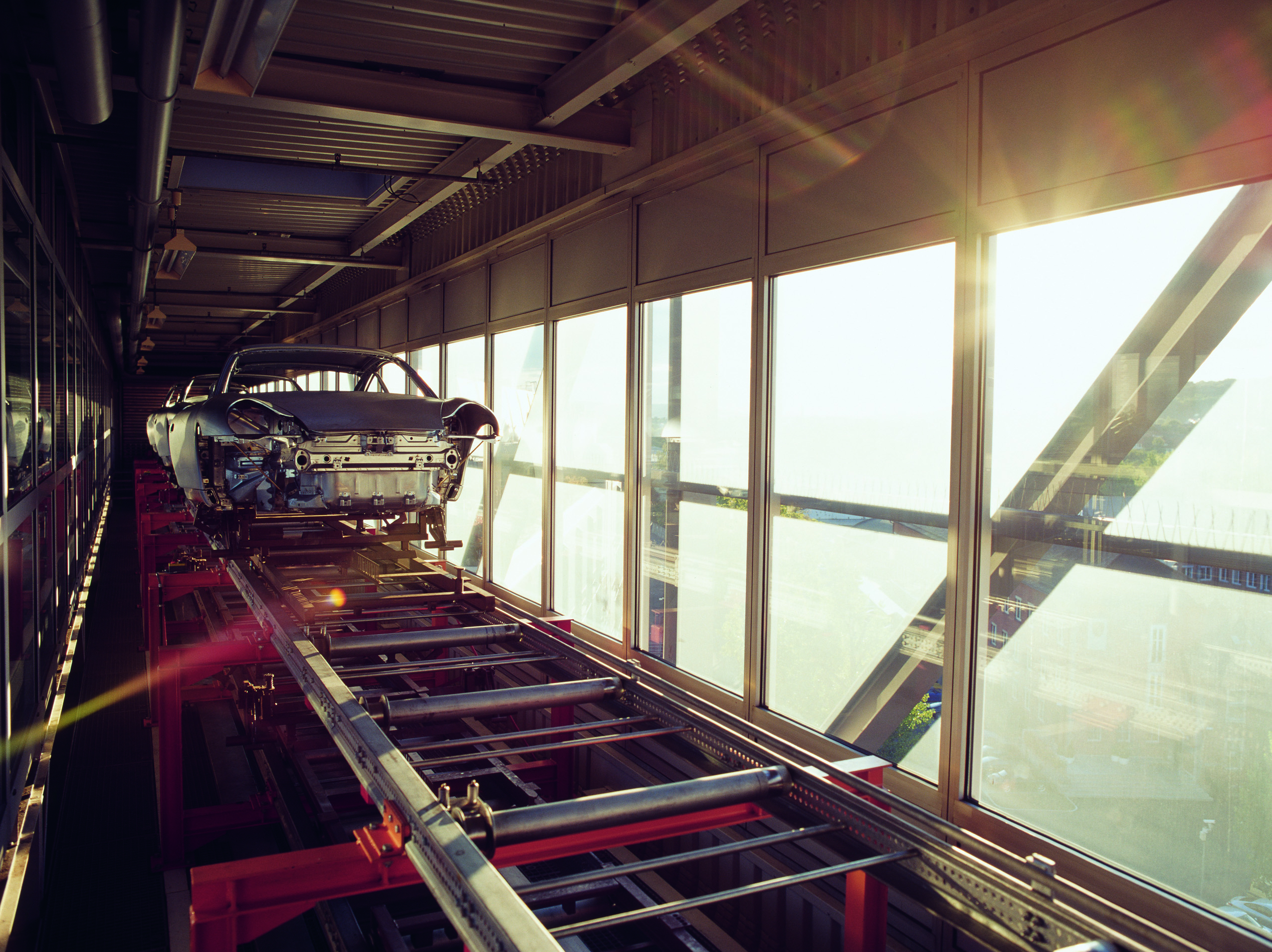
The bodies-in-white are transported to the paint shop by means of a conveyor bridge which links Plant 5 with Plant 2
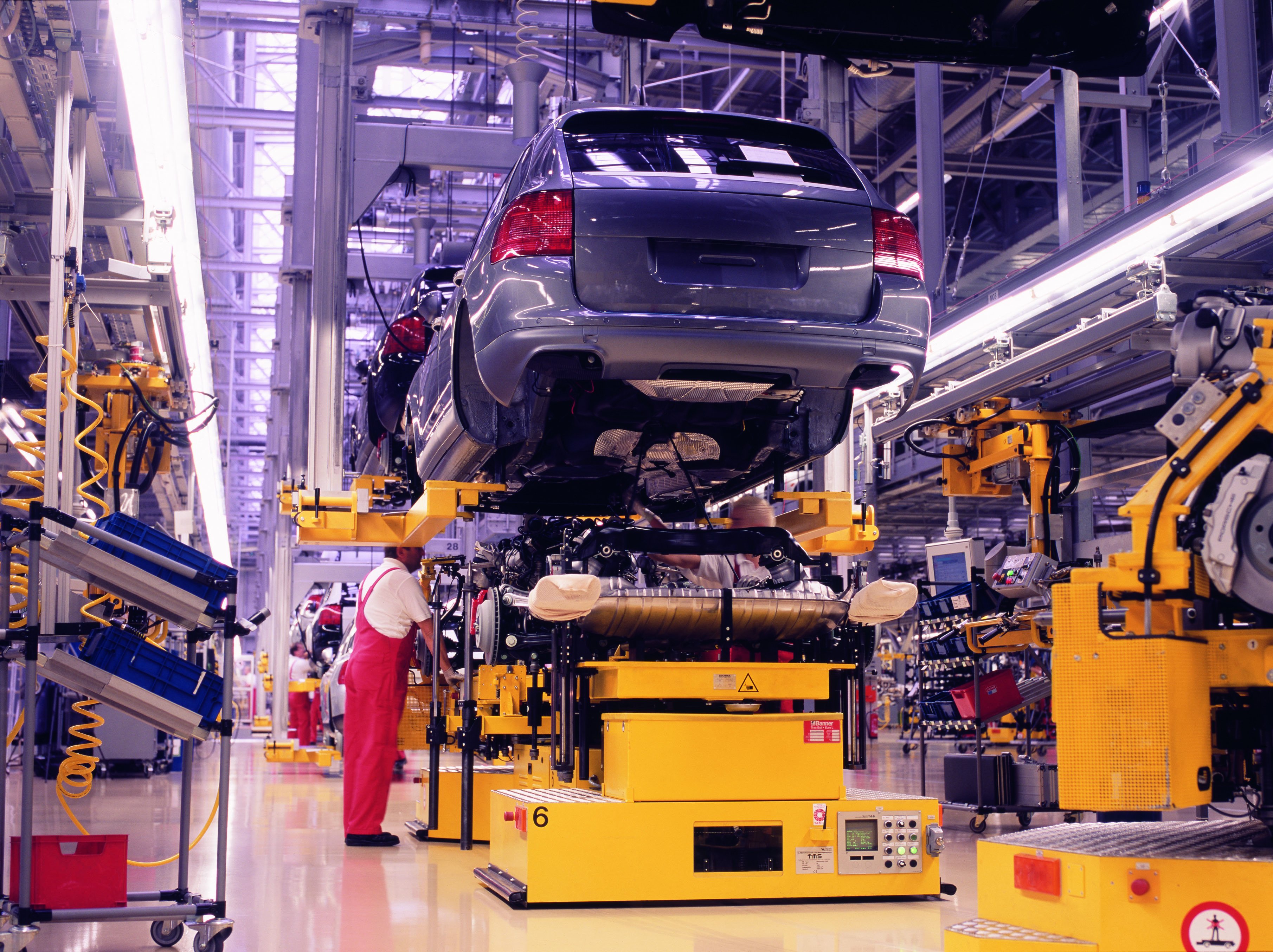
The body and drive line are joined together for the marriage.
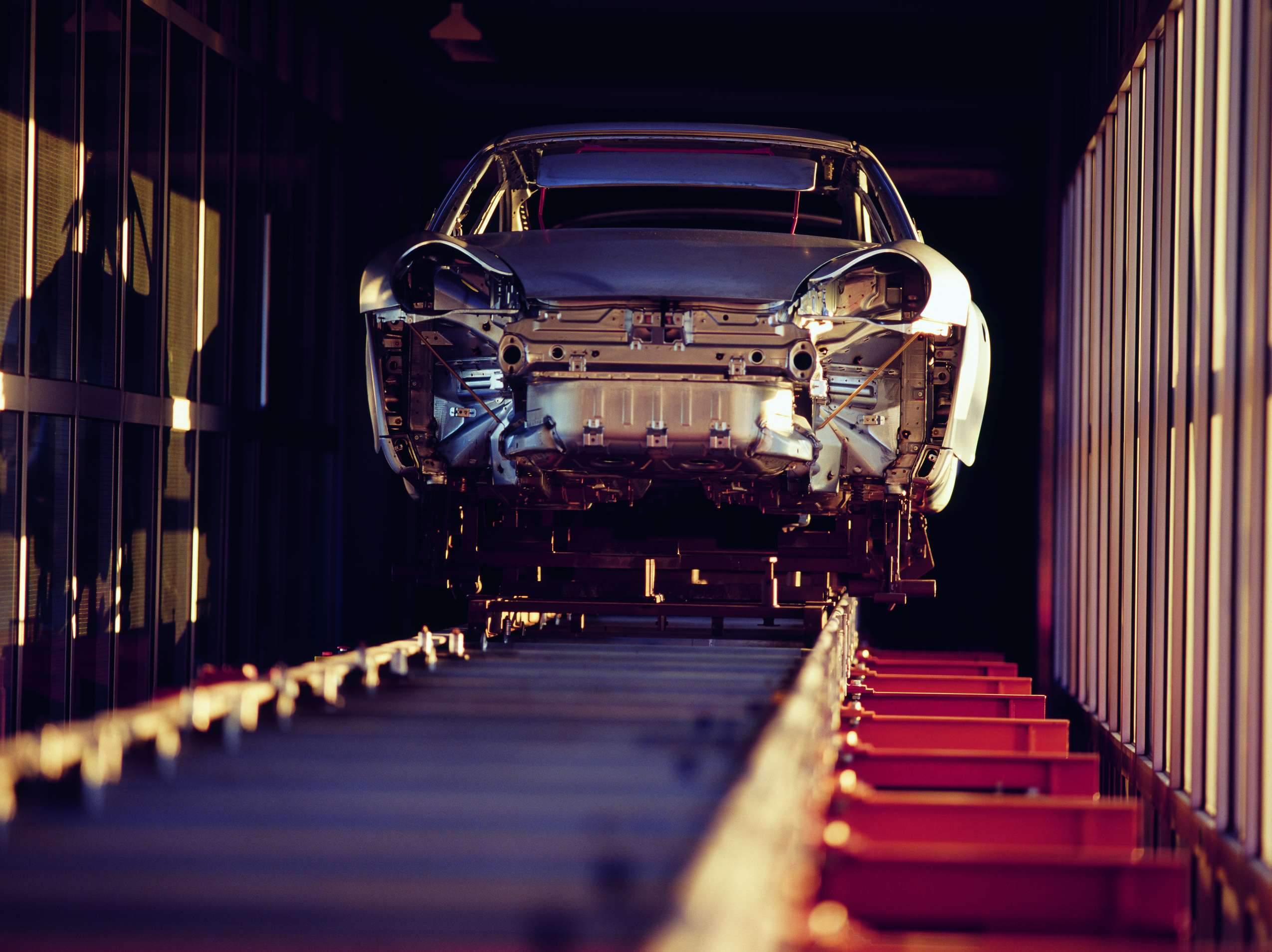
The body shells are transported from the body construction area to the paintshop via a conveyor-belt bridge
The body shells are transported from the body construction area to the paintshop via a conveyor-belt bridge
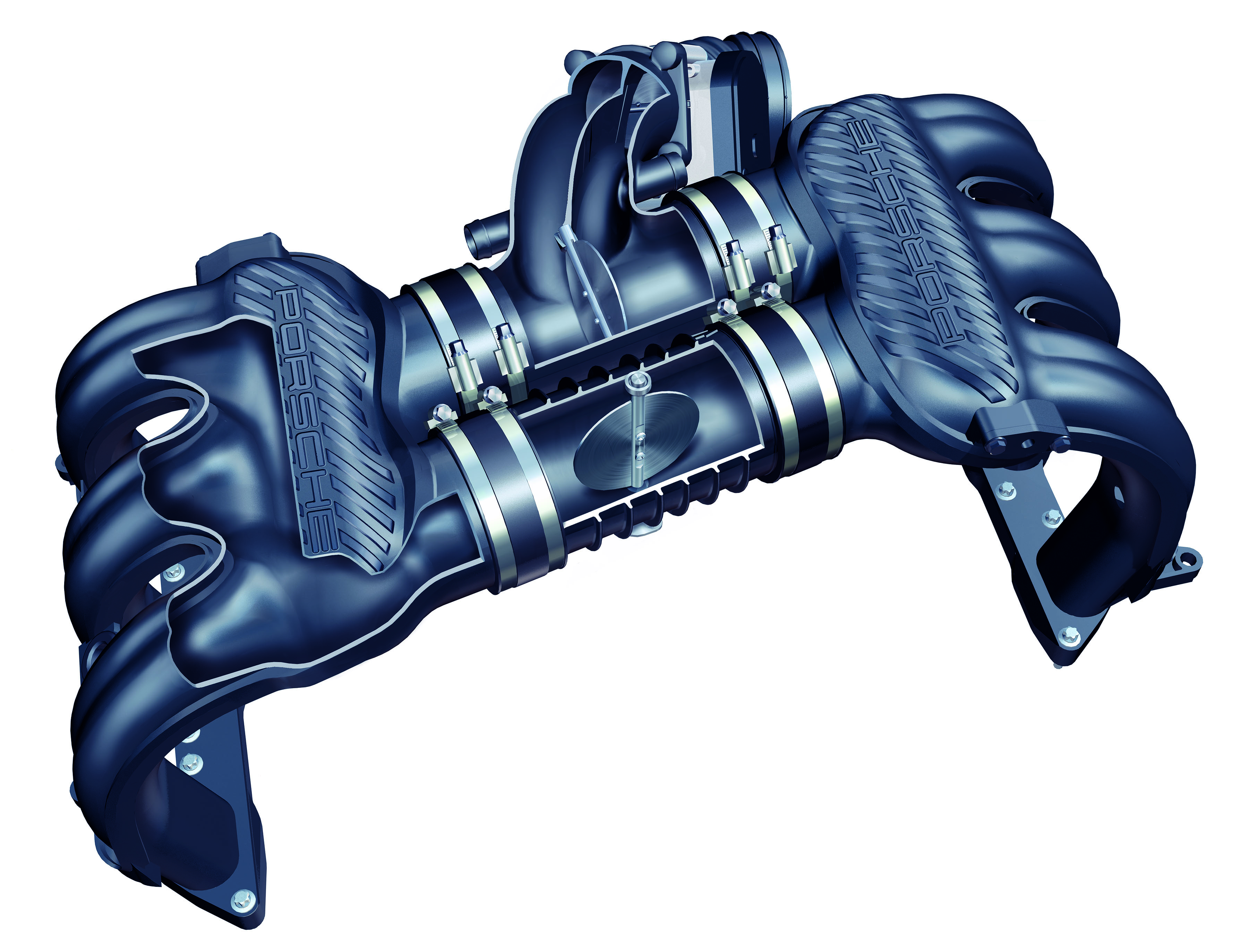
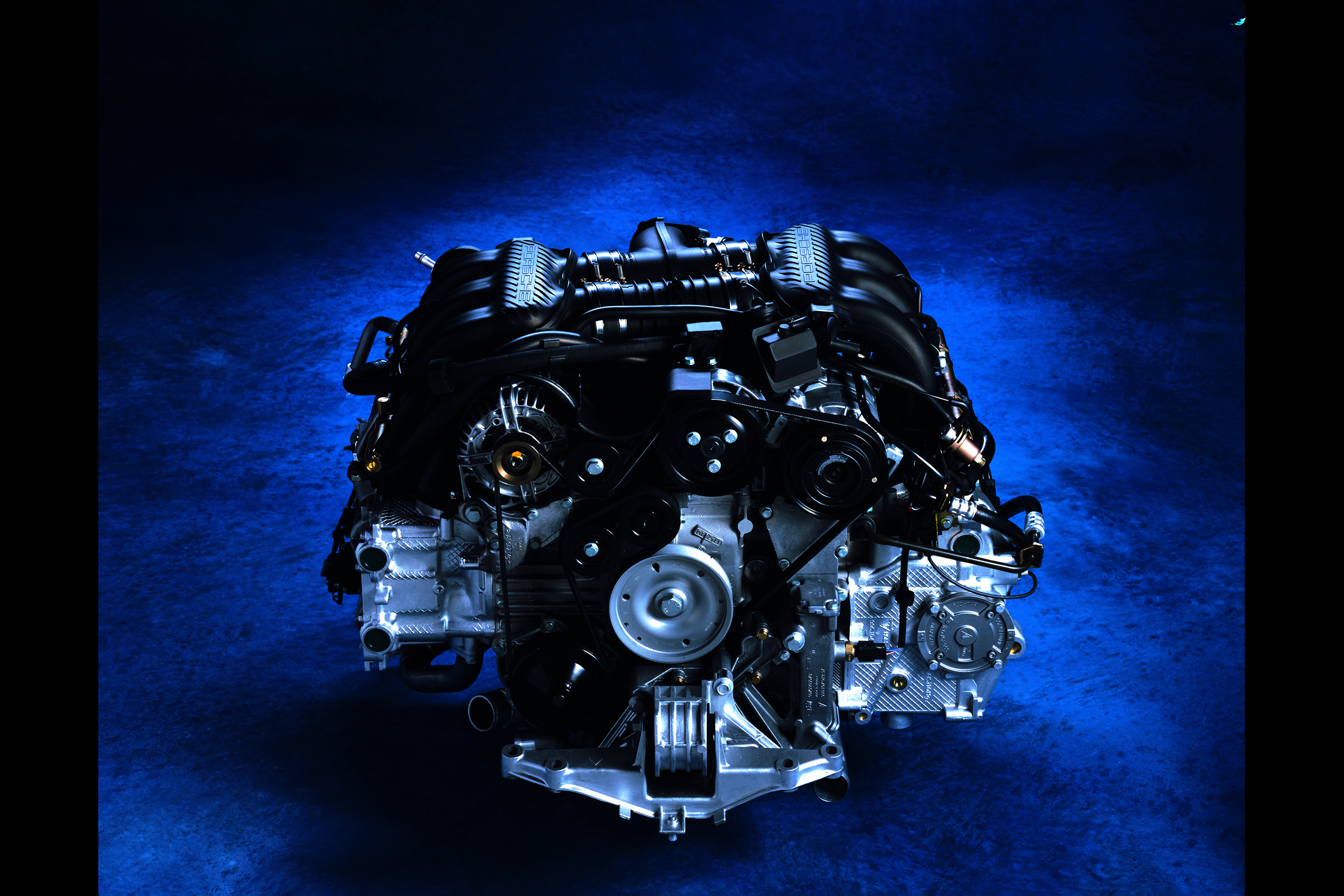
The Boxster engine is equipped with a variable dual-chamber resonance intake system.
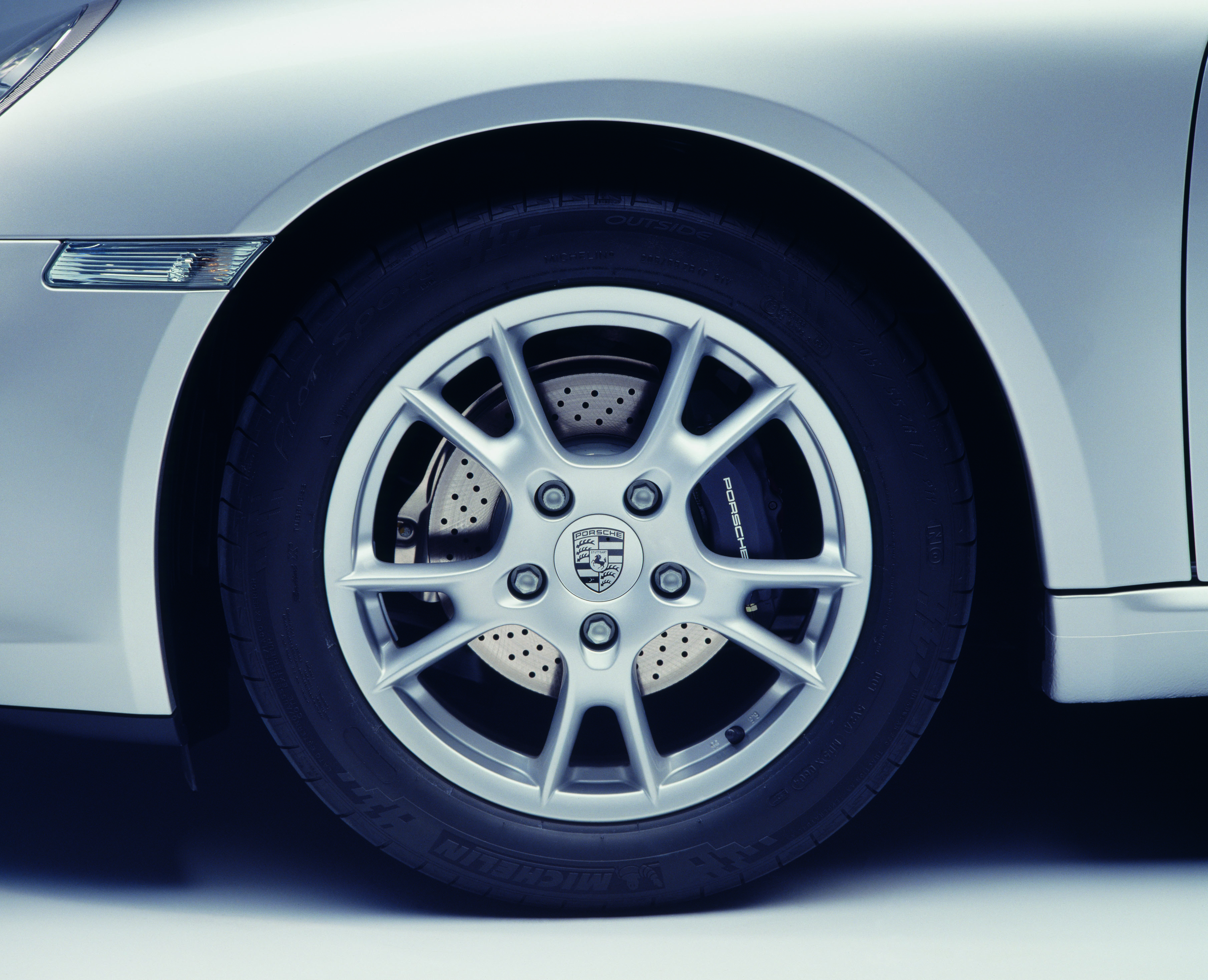
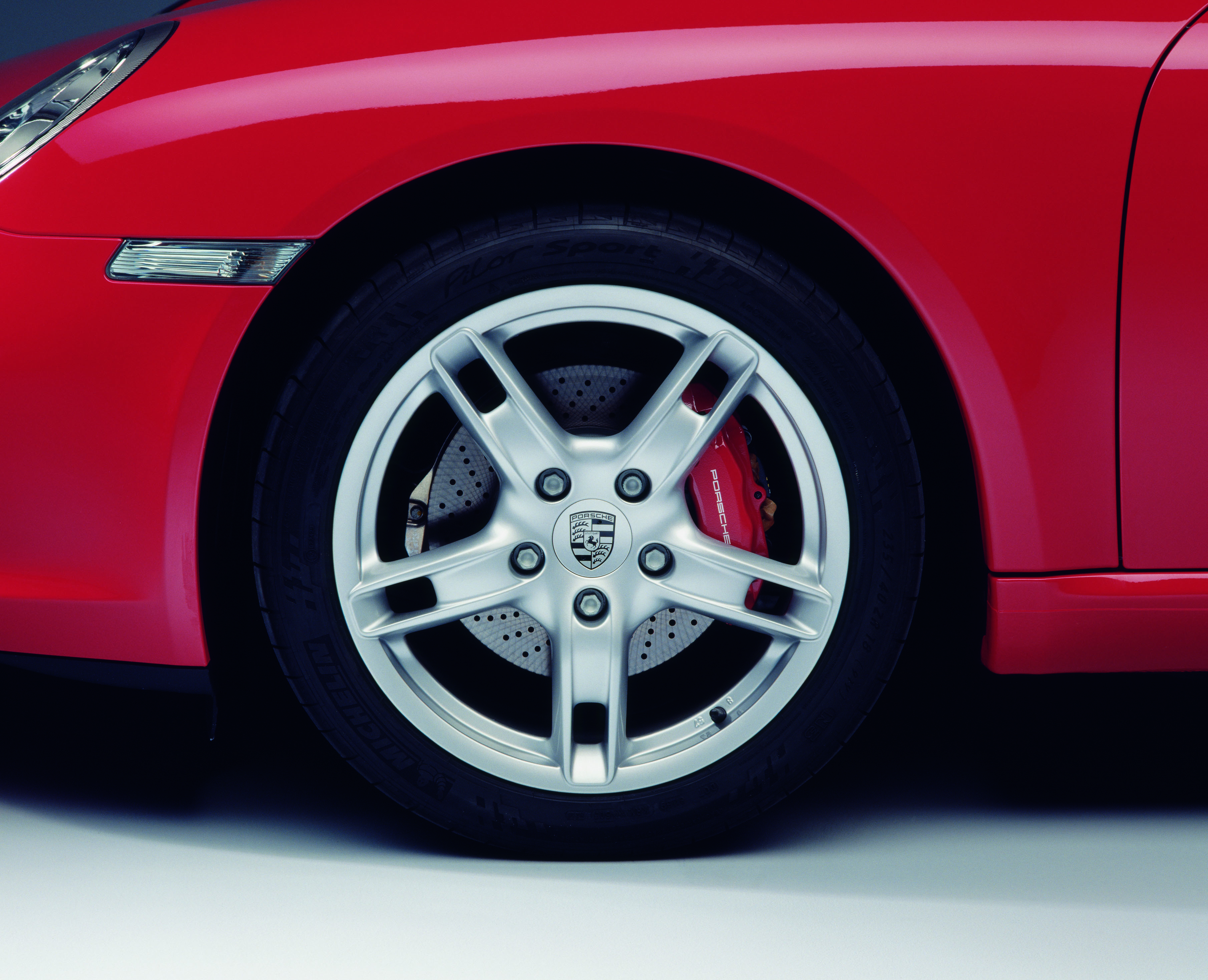
The Boxster has 17-inch wheels as standard.
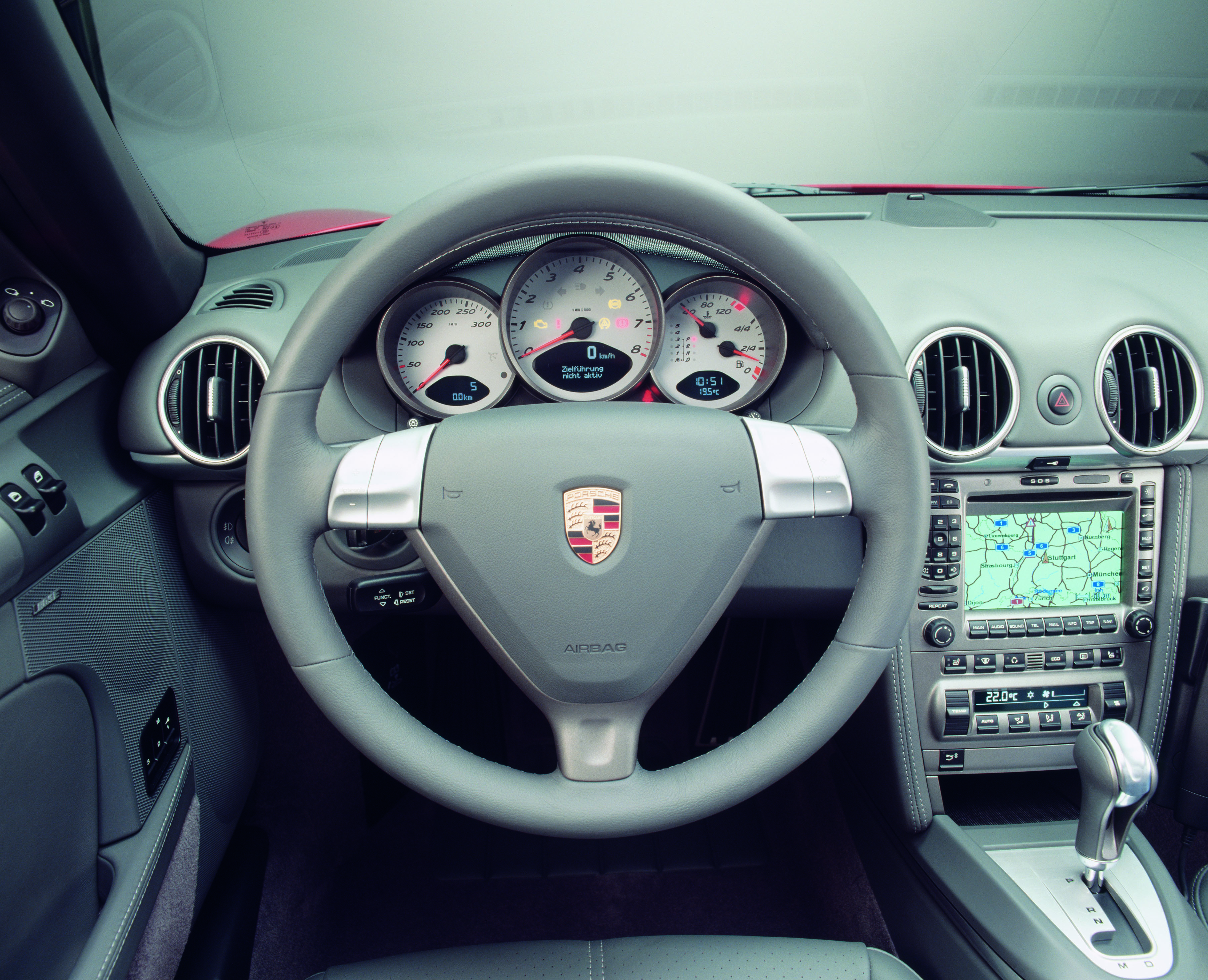
The Boxster S interior with âPorsche Communication Managementâ (PCM).
The Boxster S is equipped with 18-inch wheels as standard.
The Boxster S motor does 185 kW (252 HP)
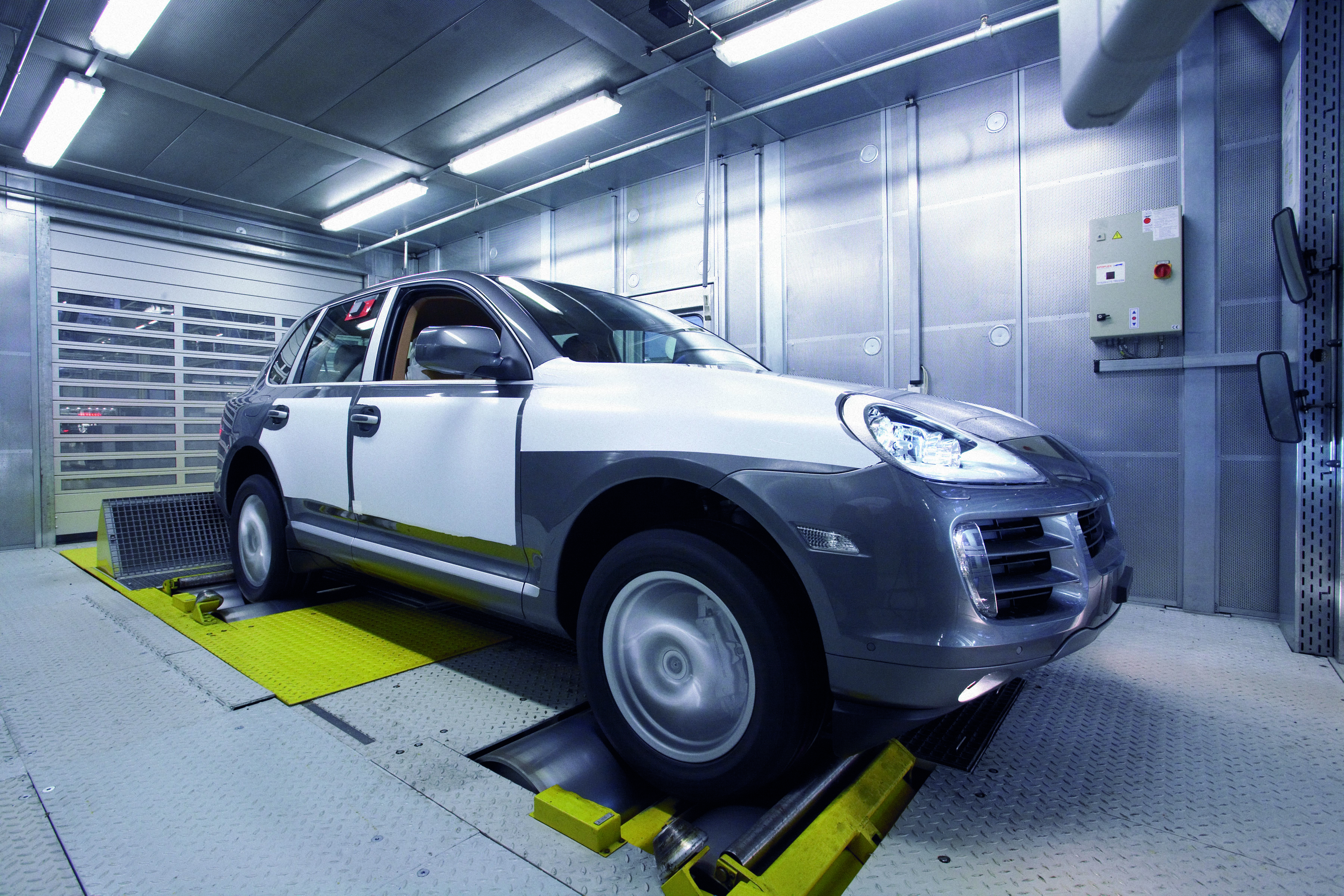
The brake and on-board diagnosis system being tested on the roller test bench.
The building built at the beginning of the 50s provided office space for administration as well as production
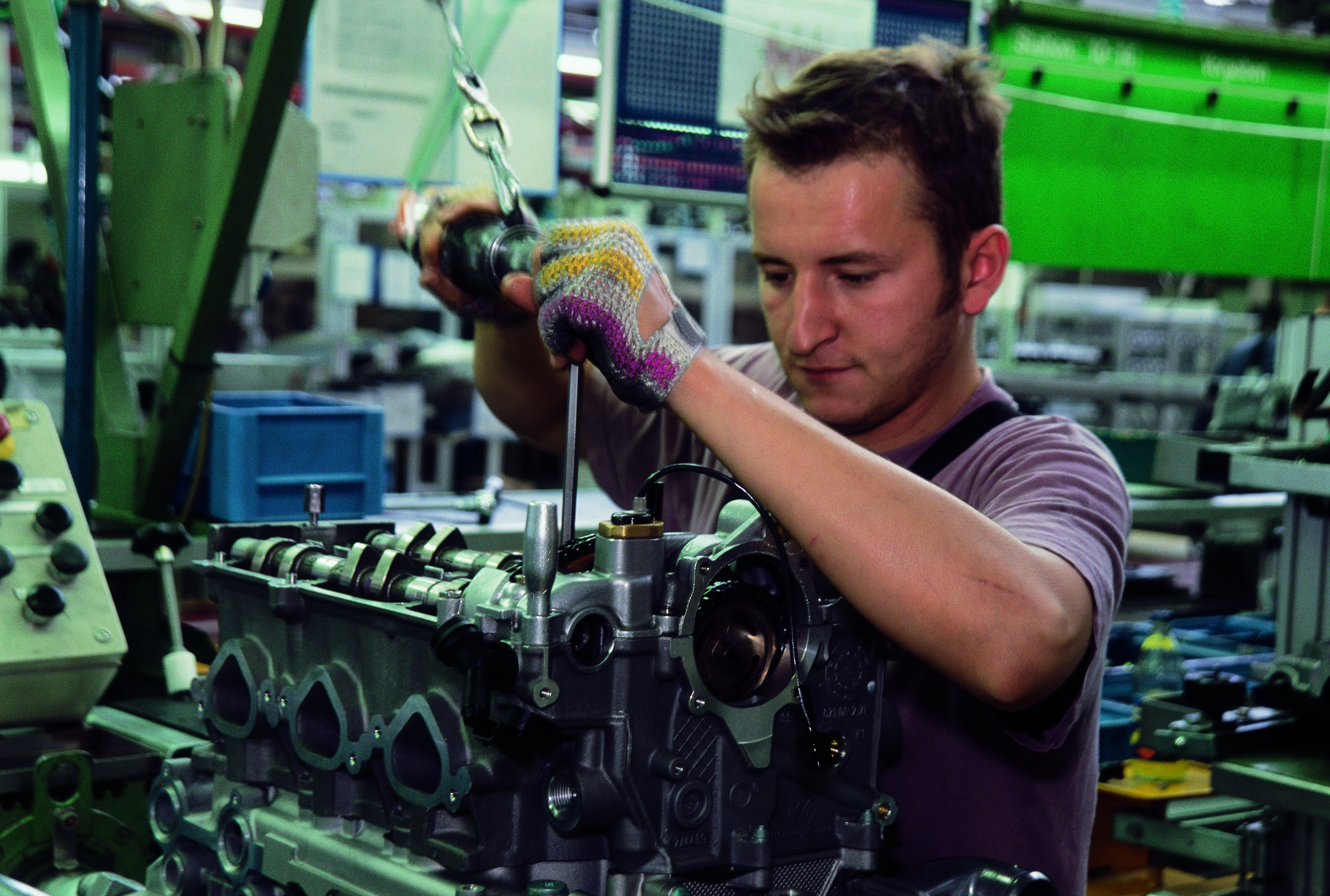
The camshaft of the Boxster engine is screwed into place