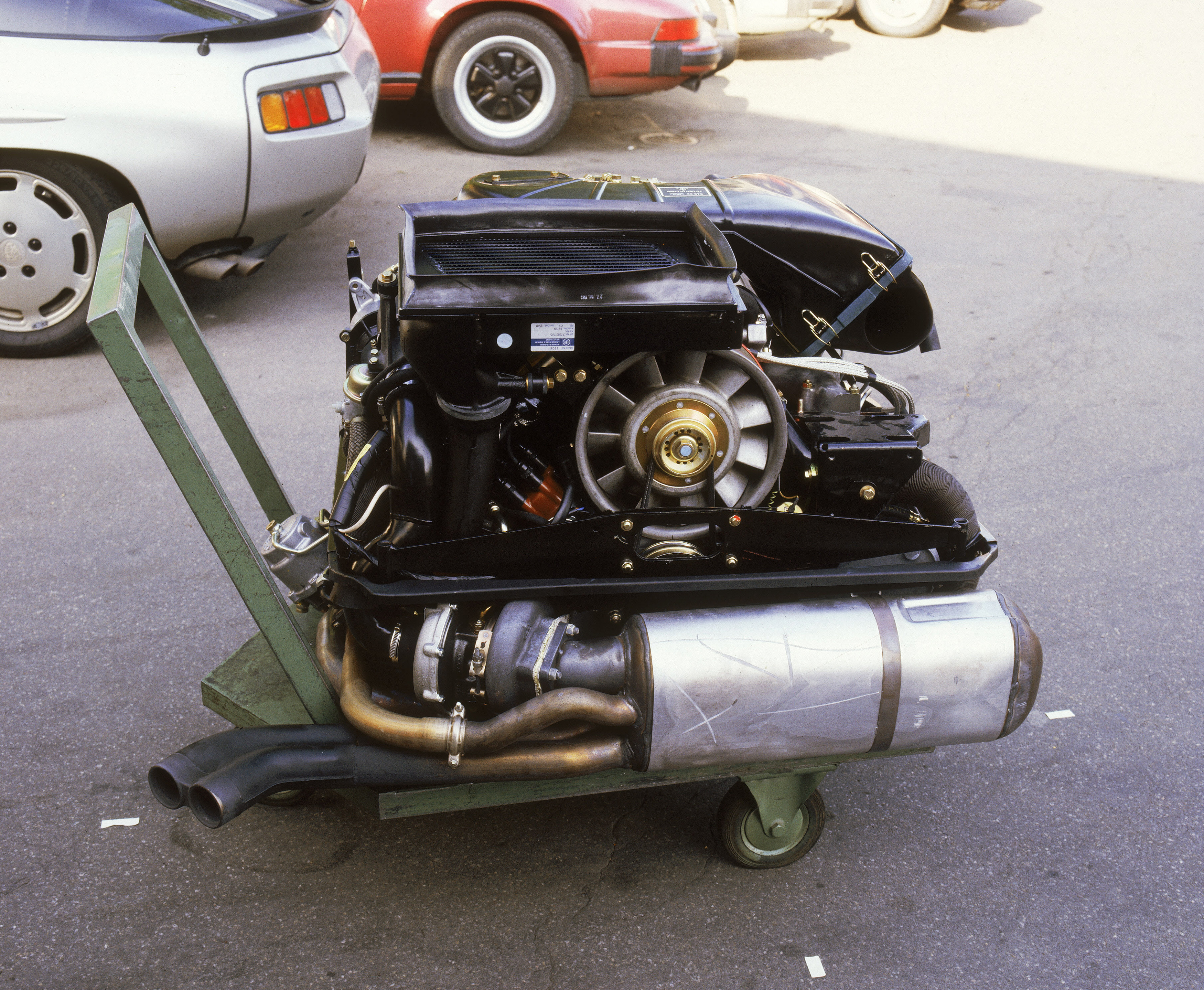
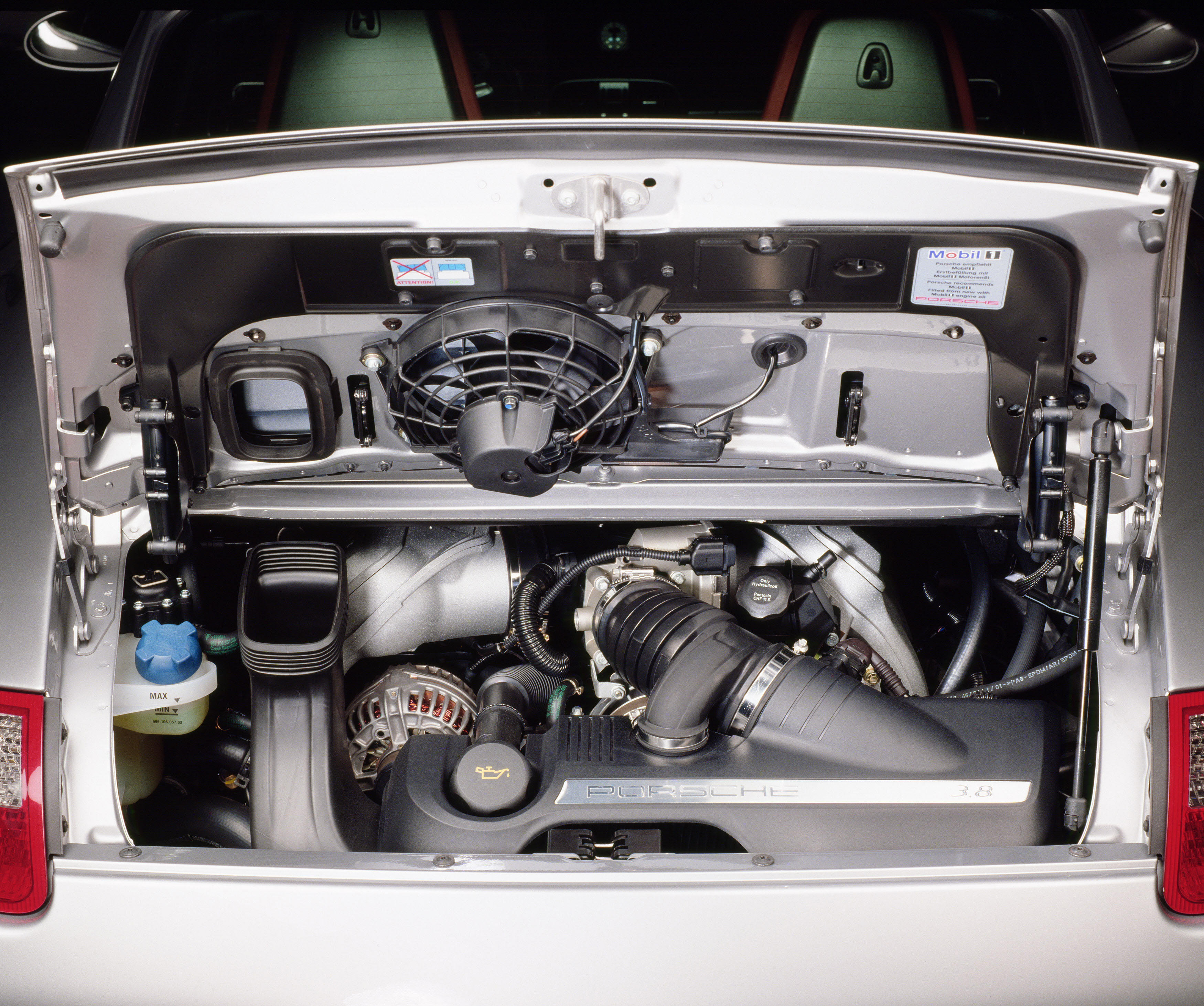
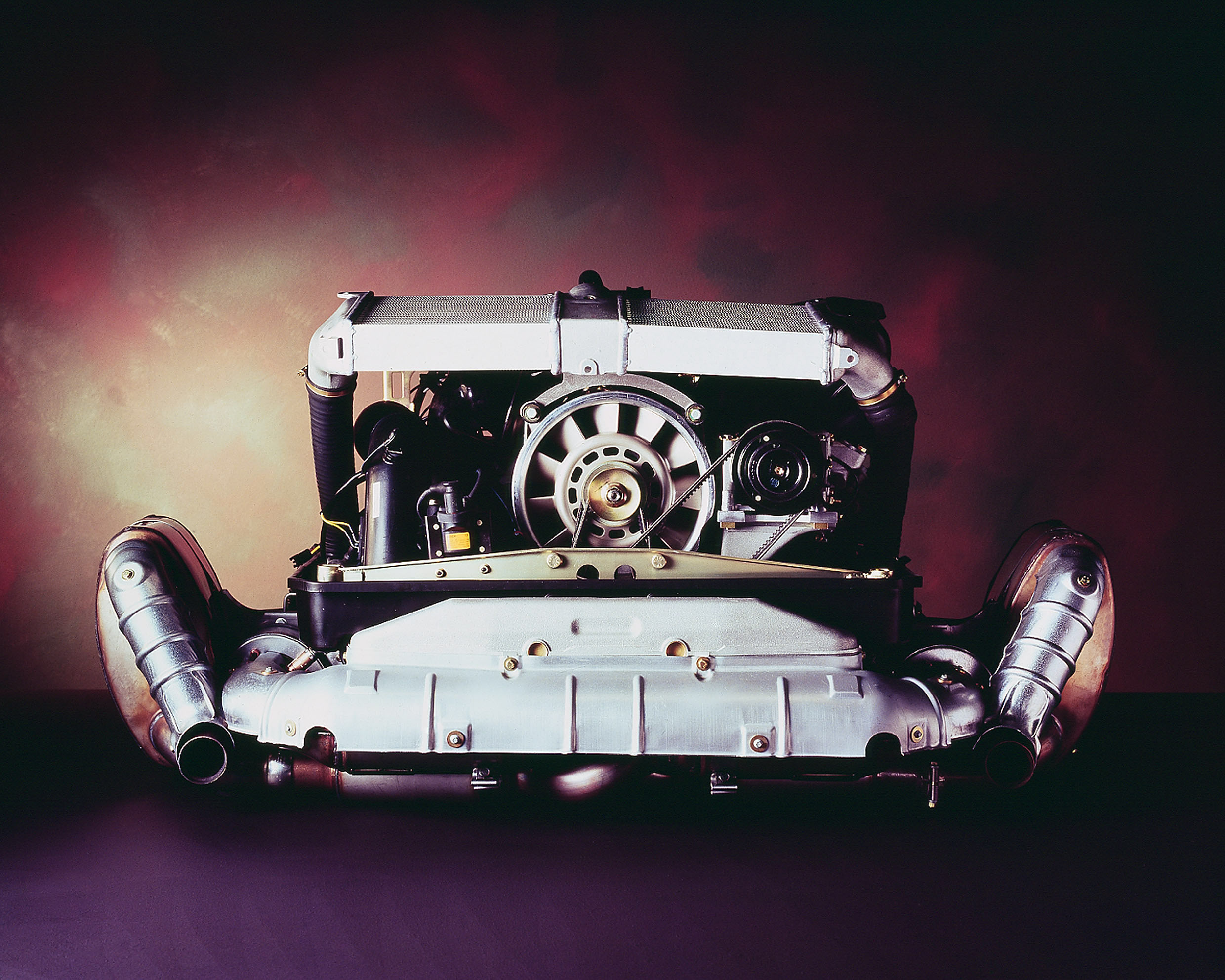
1983: Digital engine electronics Digital engine electronics (DEE) celebrated its debut in 1983 with the new naturally aspirated engine with 3.2-litre displacement. Its most important advantages were better fuel consumption, cleaner combustion and therefore maximum power output. The system worked with a shared control unit into which all the engineâÂÂs operating states were programmed. The correct injection quantity and the exact ignition point were assigned to each engine speed, each accelerator pedal position and temperature. (...)
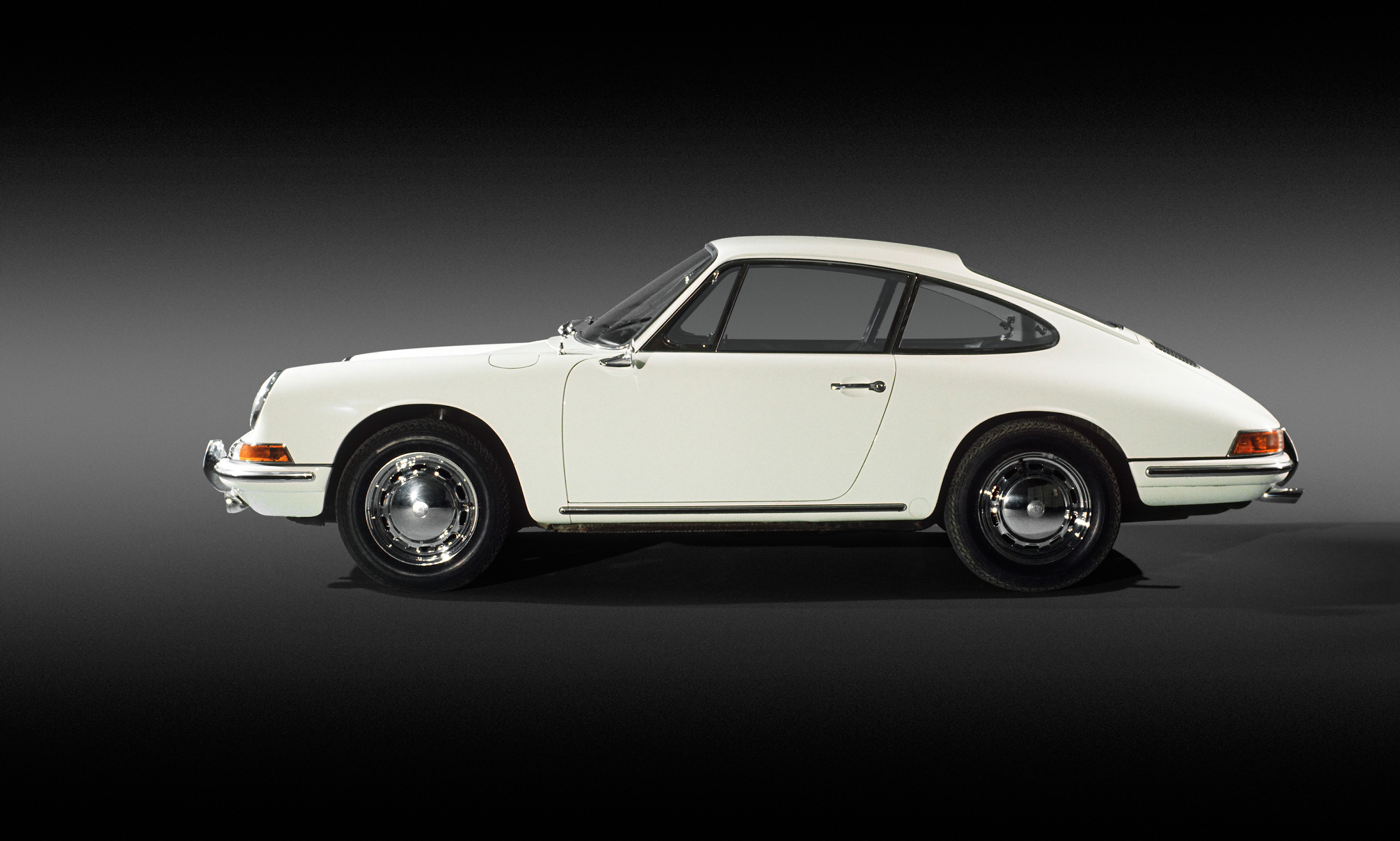
Original 911 (1963 - 1973)
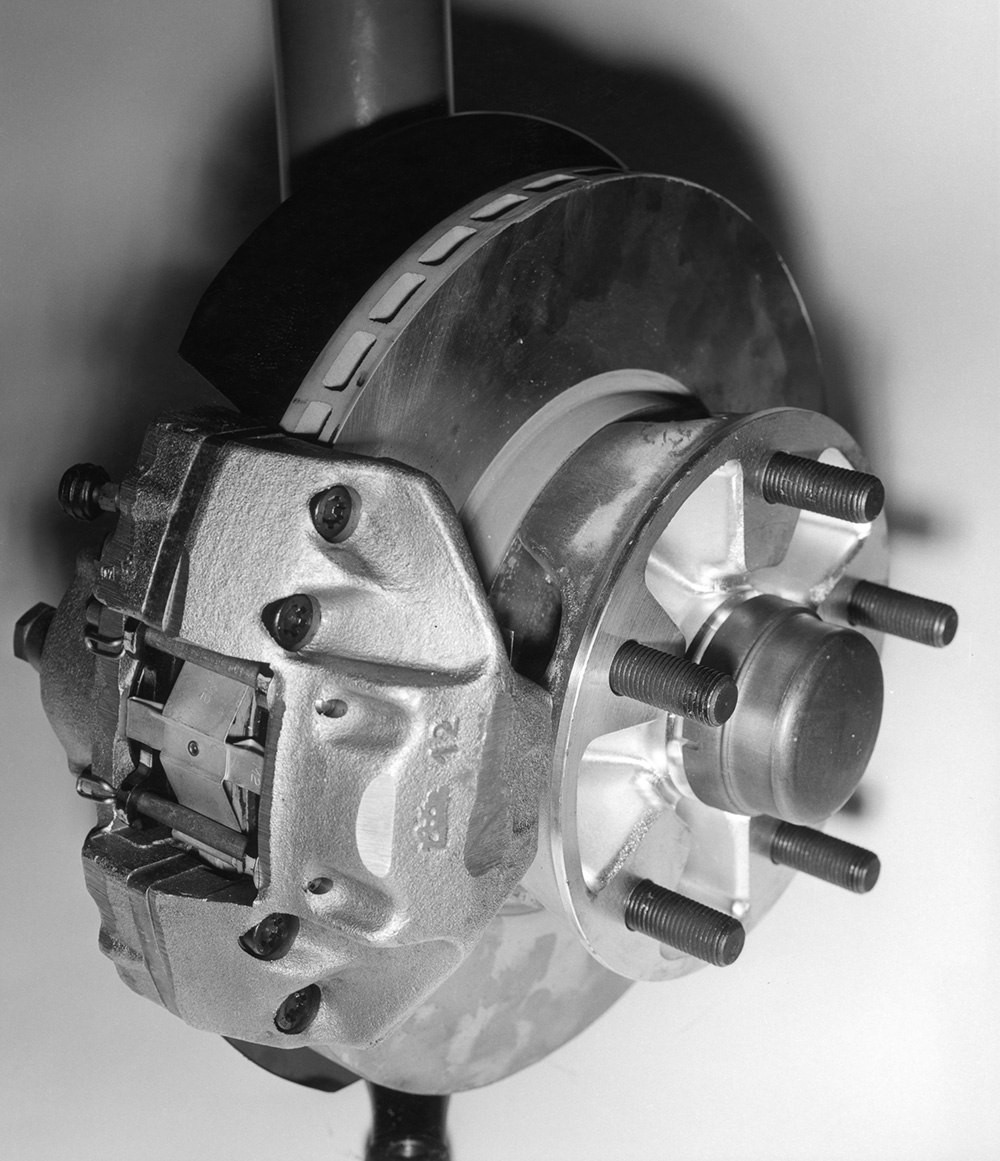
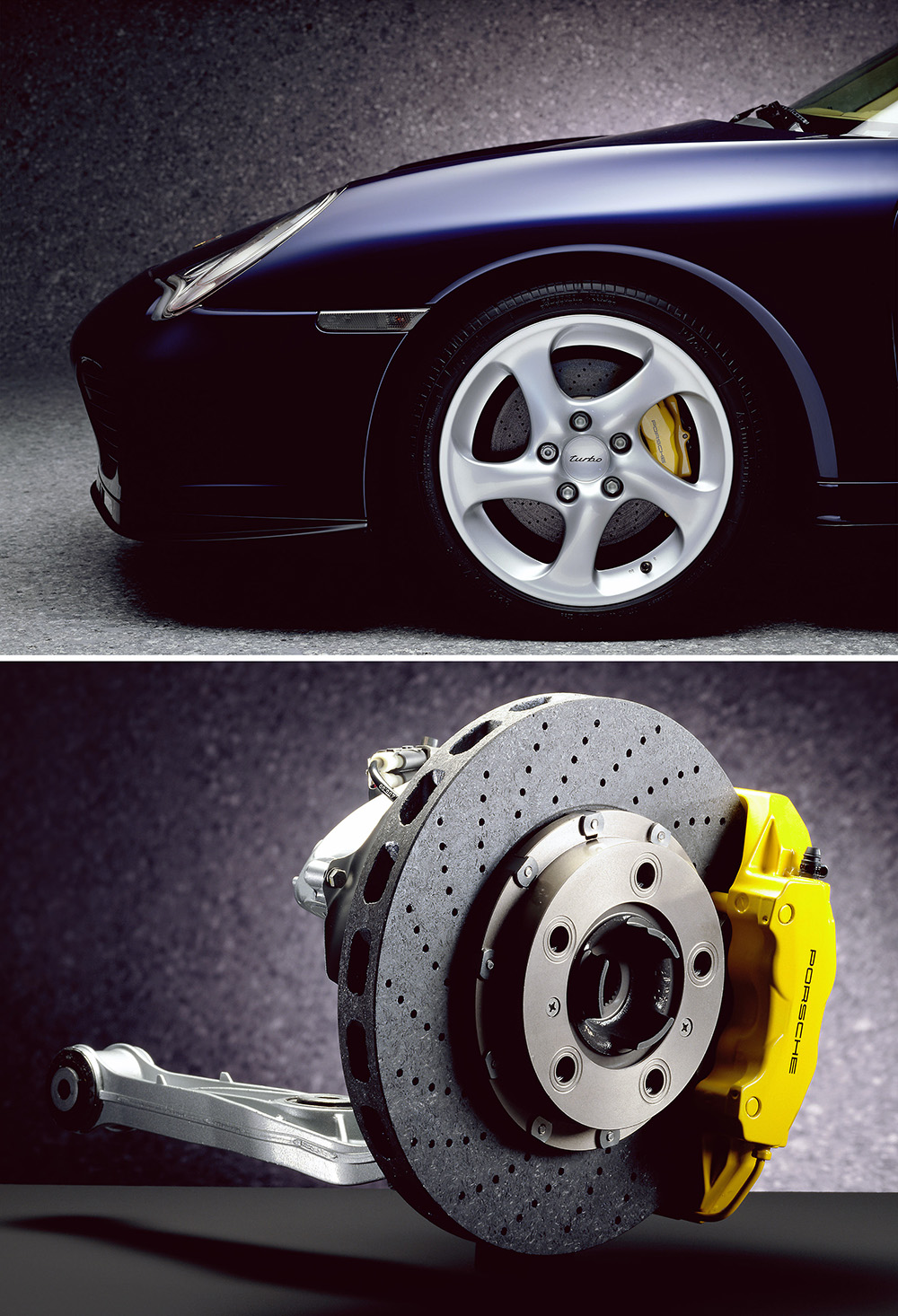
1966: Internally ventilated disc brakes
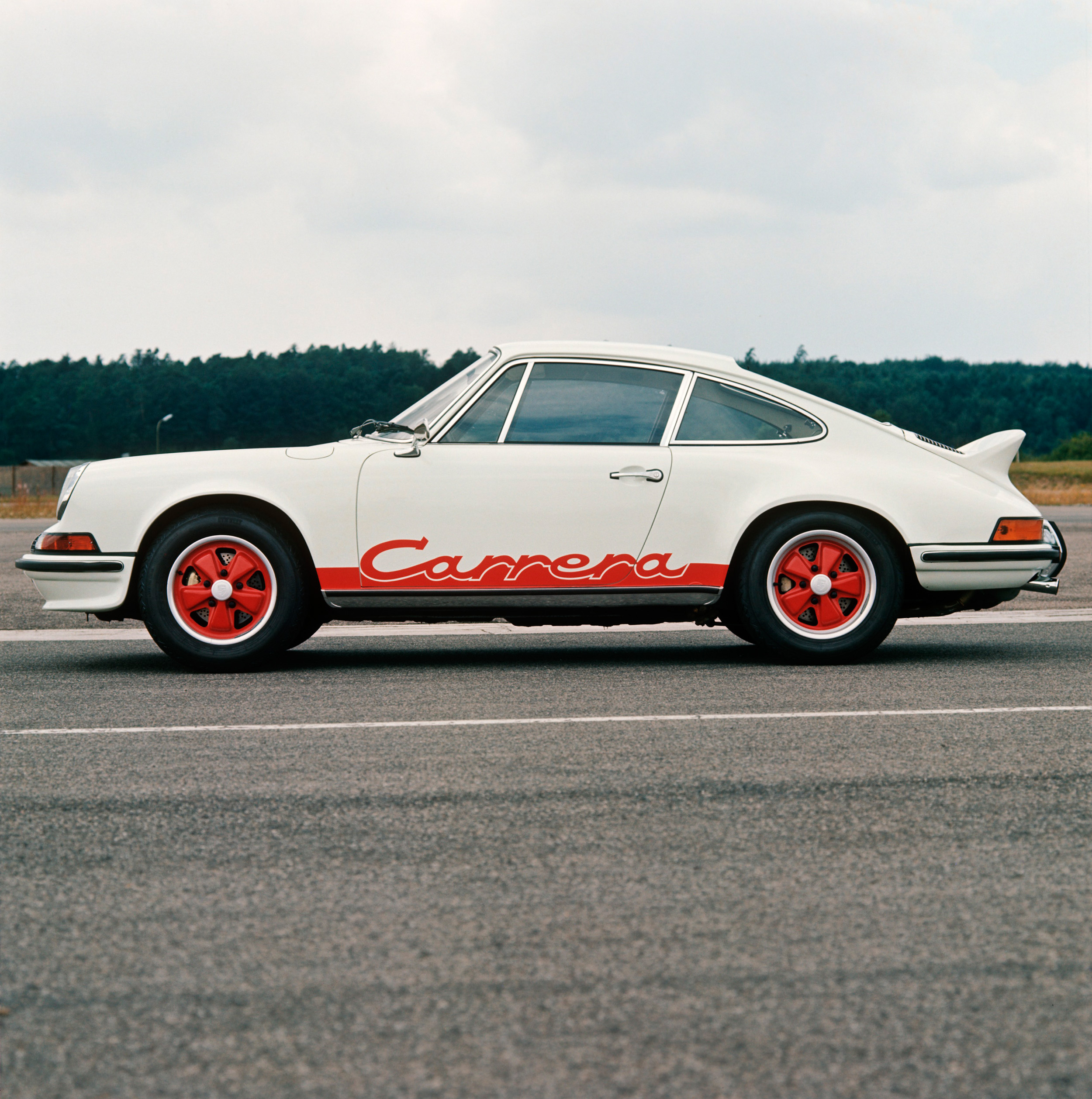
1972: Front and rear spoilers
1975: Hot-dip galvanised body In 1975, Porsche responded to the issue of corrosion with emphatic success. The 911 was the first series production car to be given a body that was hot-dip galvanised on both sides â allowing Porsche to offer a six-year corrosion guarantee, which was extended to seven years for the 1981 model year and then later to as much as ten years. (...)
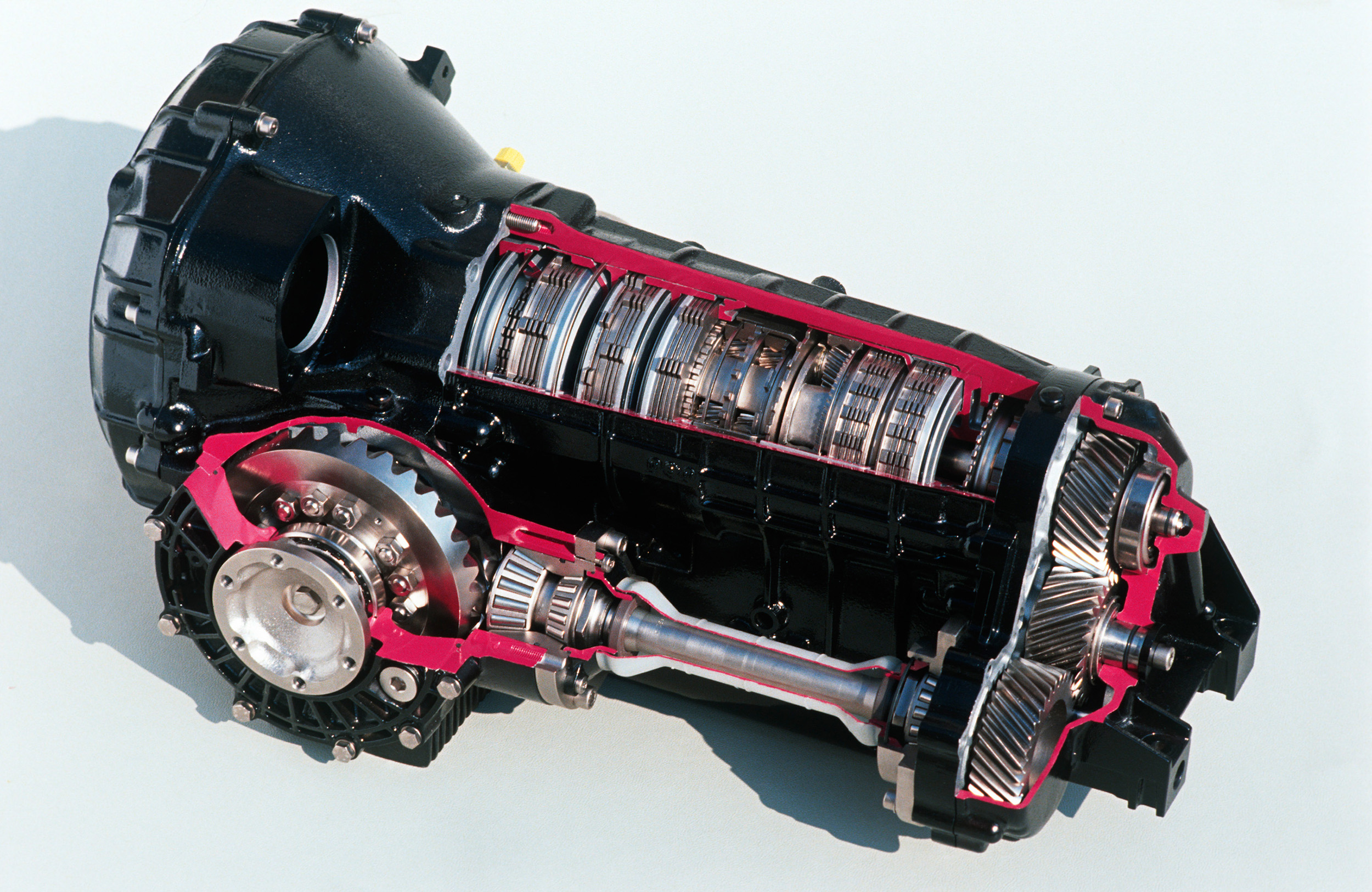
1989: Tiptronic From 1989, Porsche offered an innovative gearbox in the 964 series 911 â the Tiptronic, the perfect synthesis of comfort and sportiness. The driving data was only marginally lower than that of the same vehicles with manual 5 or 6-speed gearboxes. (...)
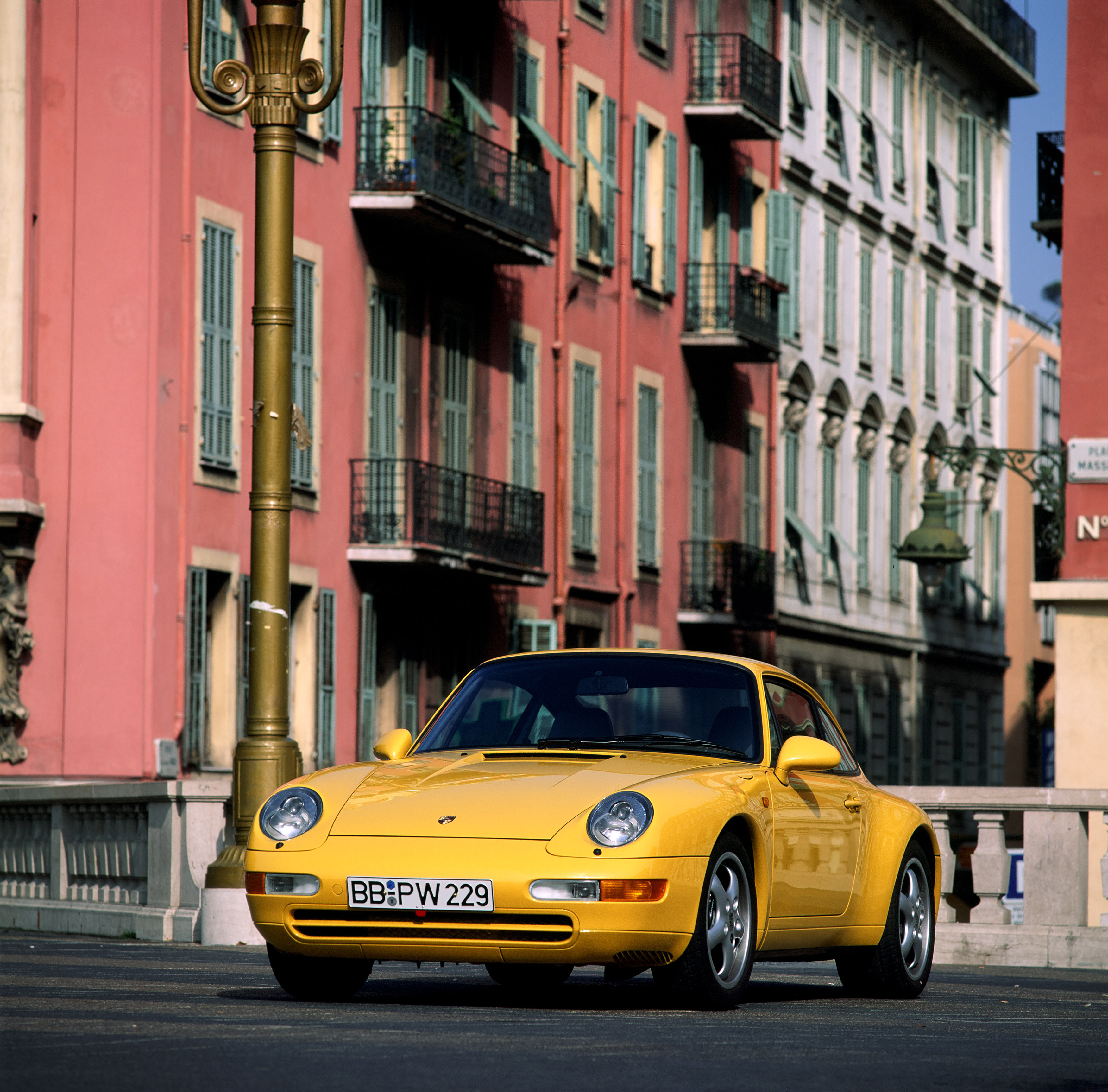
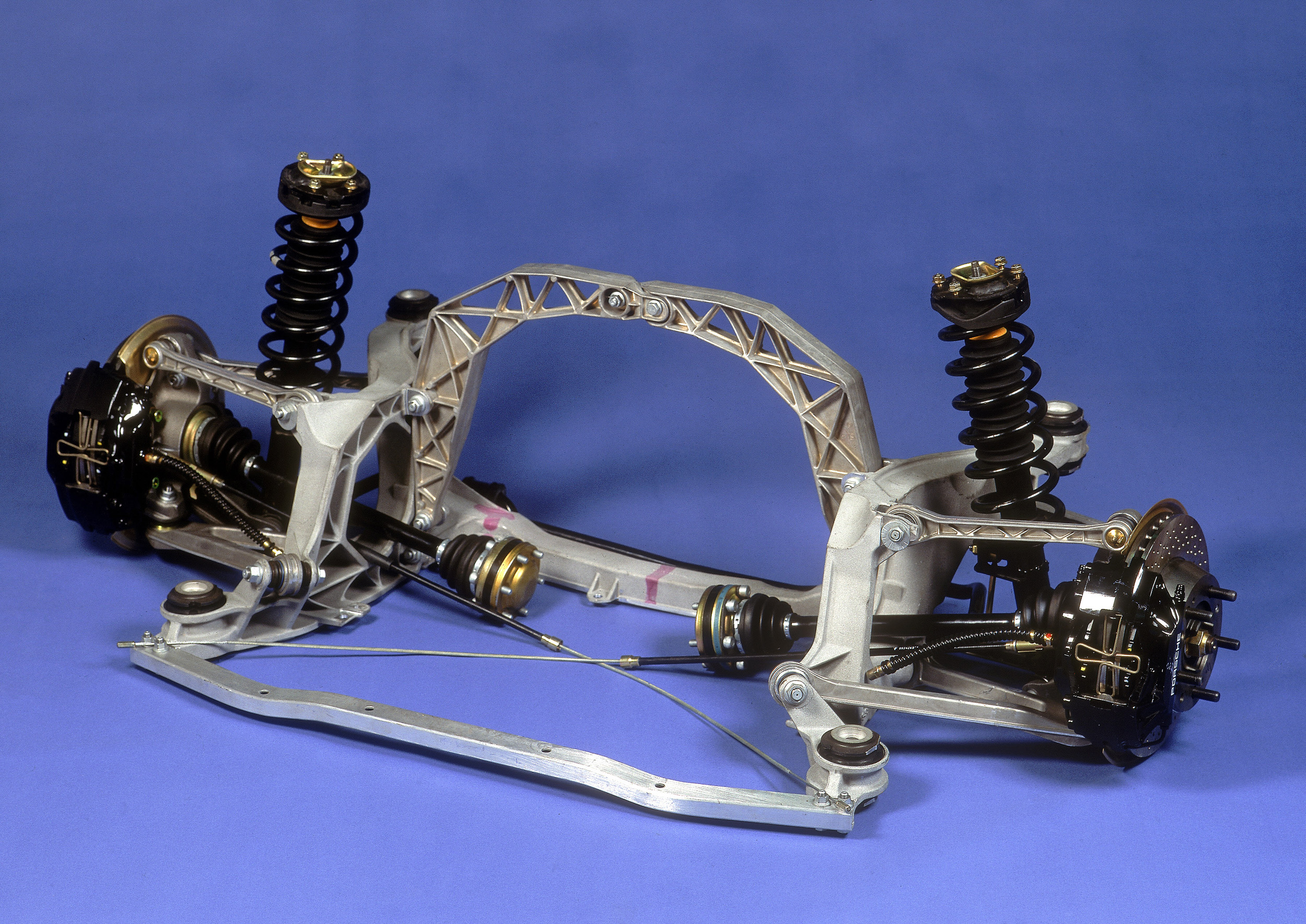
The new chassis designed in accordance with the âÂÂLSAâ concept (Light, Stable, Agile) in the 993 series finally put an end to the capriciousness of the rear engine-powered 911. It mainly affected the rear axle, which was based on a multi-link suspension tested in motor races and which facilitated excellent driving dynamics. The axle kinematics are designed to ensure that the vehicleâÂÂs suspension compresses significantly less when accelerating and driving round bends. This stabilises the overall handling. (...)