|
|
Image
|
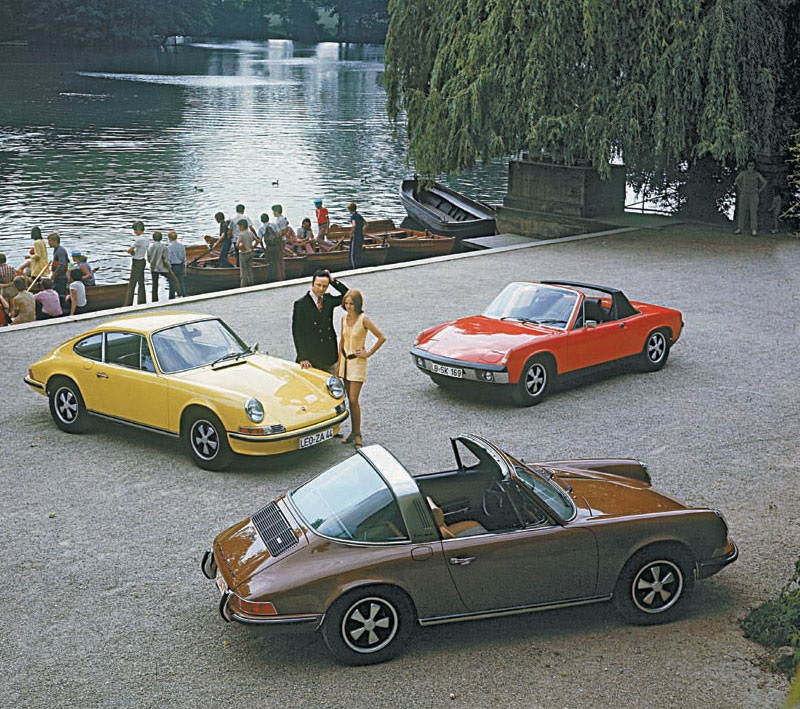
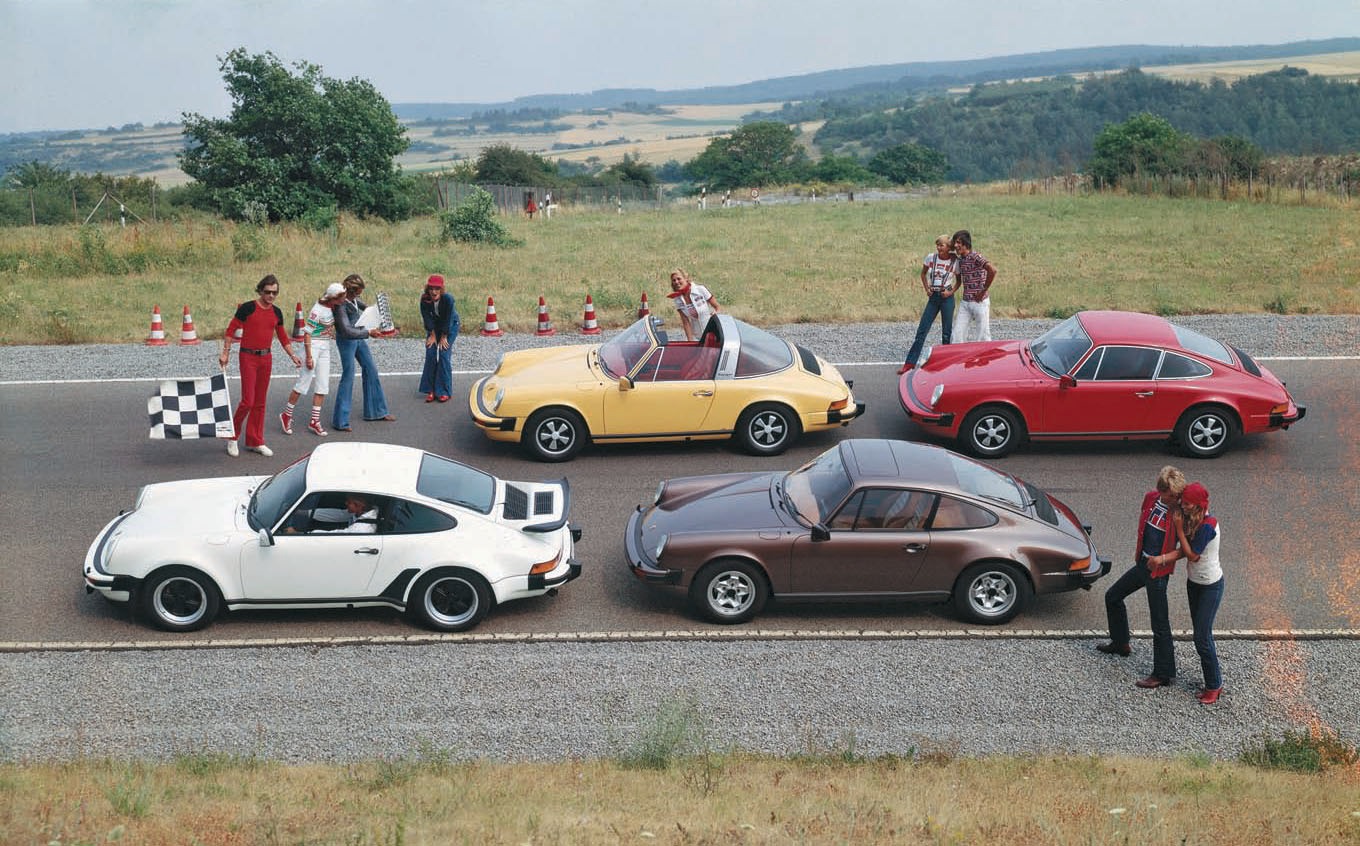
The only model missing from this 1972 lineup was a T. Models posed beside a new 2.4-liter S, with an E Targa in the foreground and a 914-6 in the rear. Porsche Archiv
|
|
|
|
|
|
|
|
Image
|
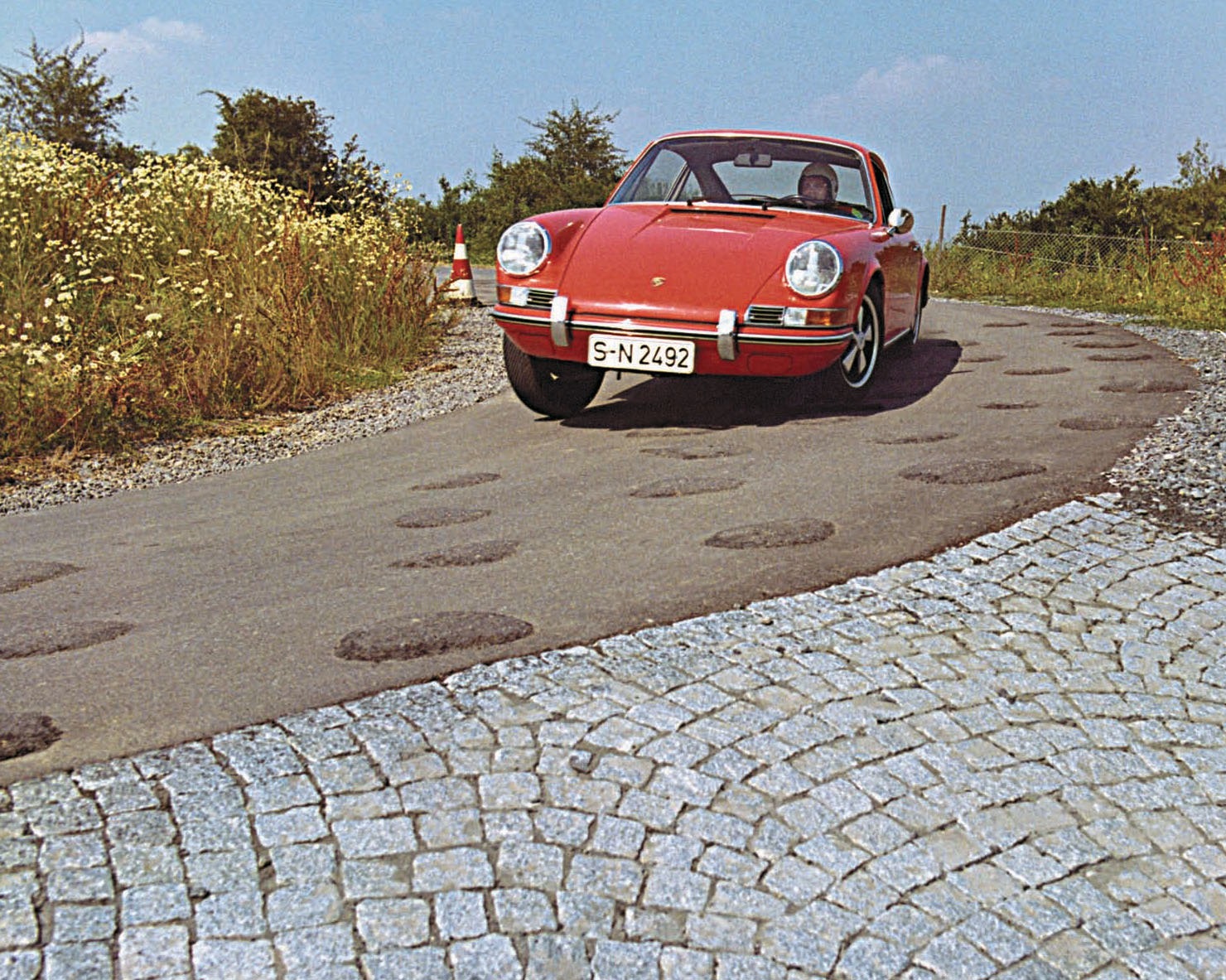
Porsche put prototypes such as this 1970 T through 8,000 kilometers of testing over these roads at Weissach. Test drivers ran 24 hours a day until they reached the distance requirement. Porsche Archiv
|
|
|
|
|
|
|
|
Image
|
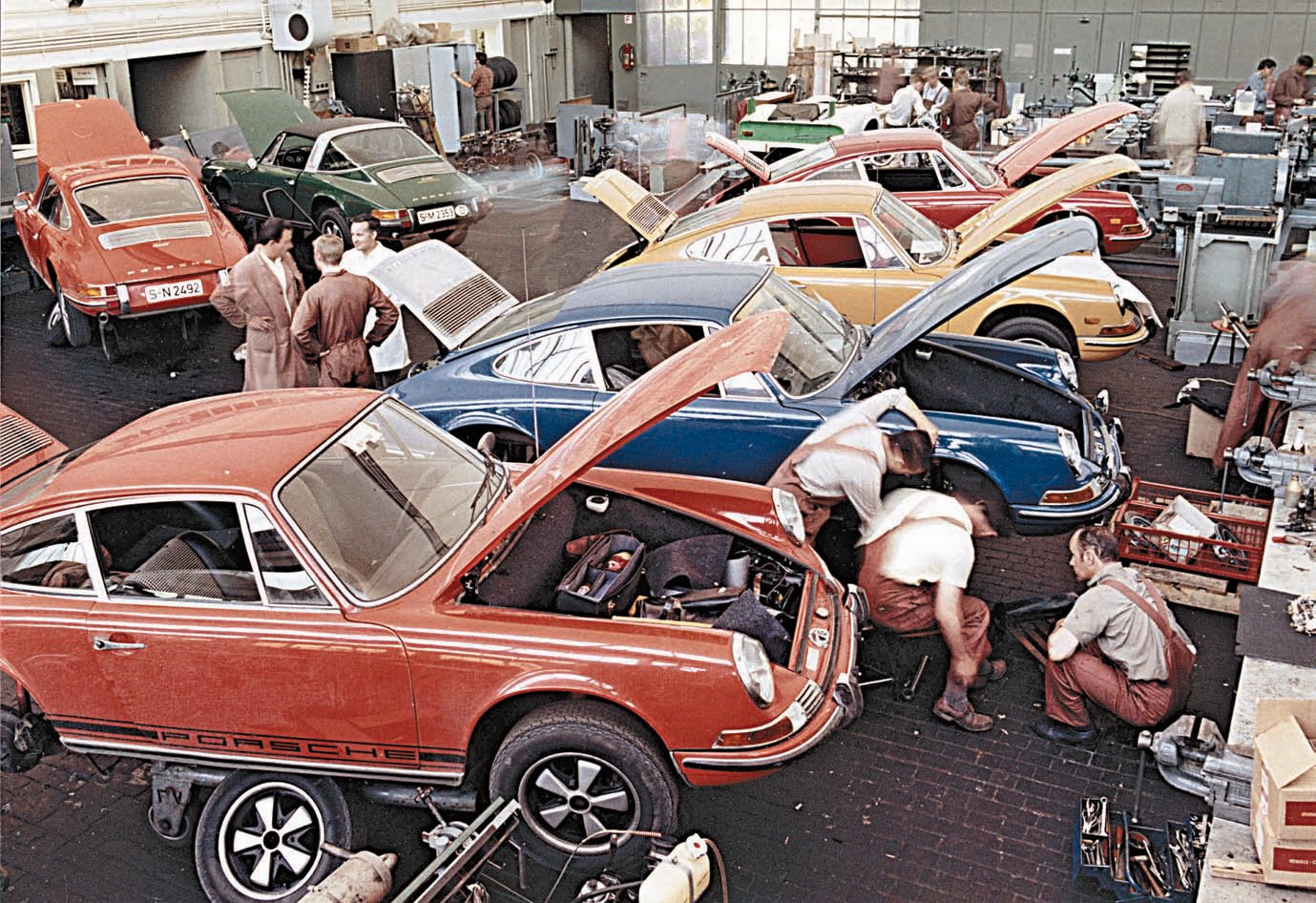
In the testing department, mechanics fitted cars with fresh tires and attended to other needs. The cluster of 1970 cars included T, E, and S models with manual and Sportomatic transmissions. Porsche Archiv
|
|
|
|
|
|
|
|
Image
|
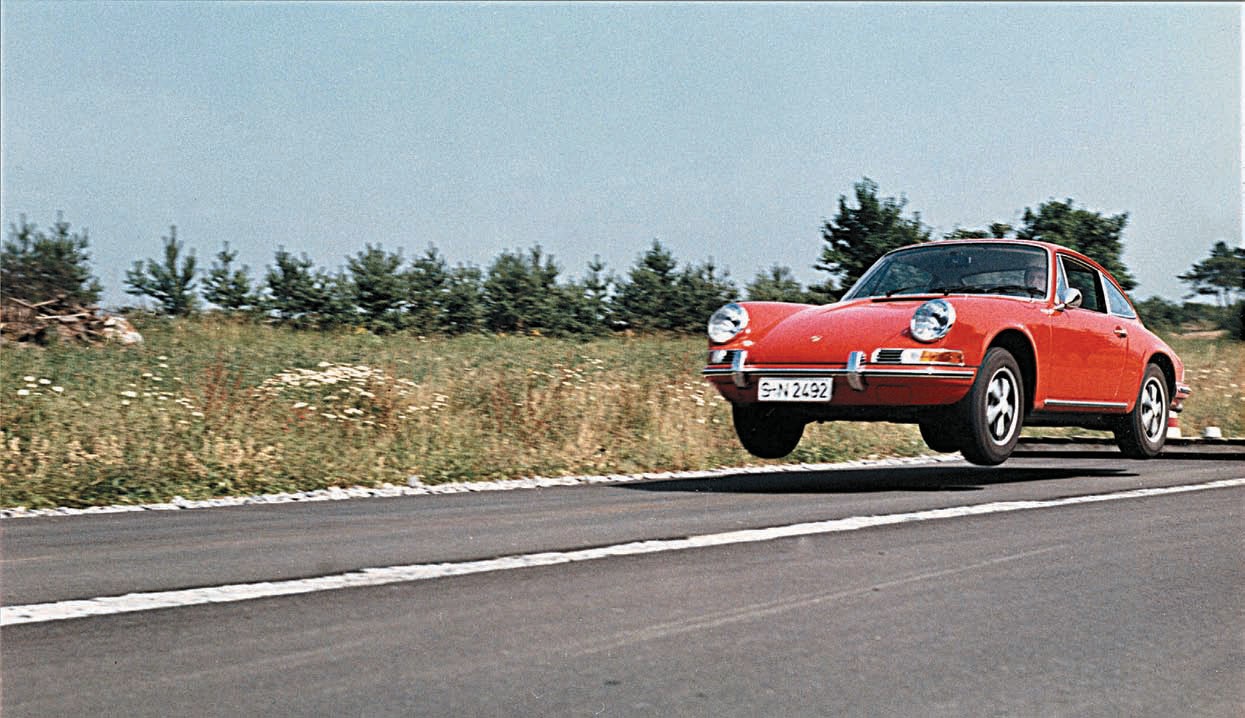
On Weissach’s open road jump test, a driver challenged the car’s functions, strength, and durability. Weissach engineers often reported that visitors from other carmakers watched these tests, shook their heads, and said, “No wonder!” Porsche Archiv
|
|
|
|
|
|
|
|
Image
|
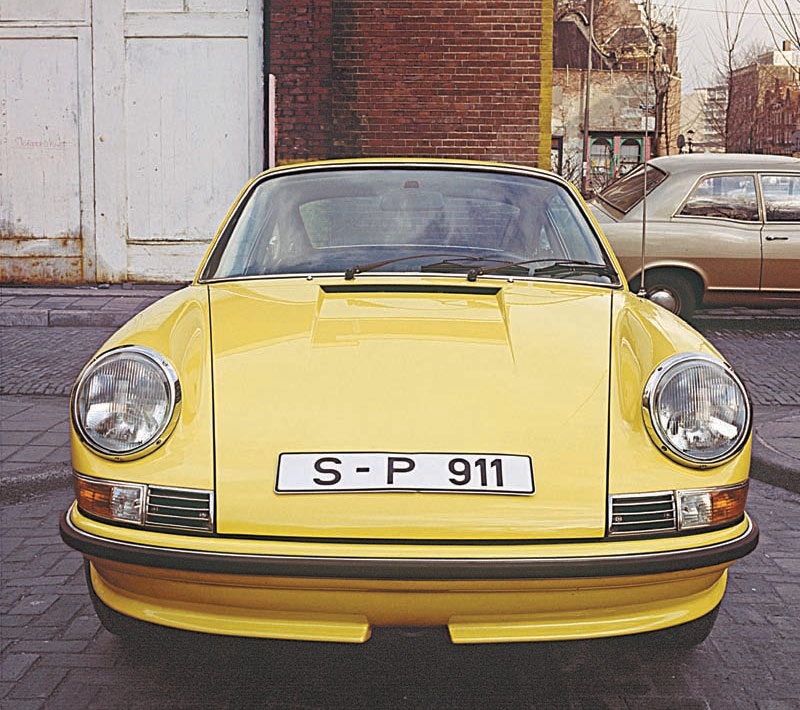
Following hours of work in the wind tunnel, aerodynamics engineer Tilman Brodbeck devised the lower lip, or chin spoiler, introduced on 1972 models. This channeled air around the front of the car and nearly eliminated front-end lift. Porsche Archiv
|
|
|
|
|
|
|
|
Image
|
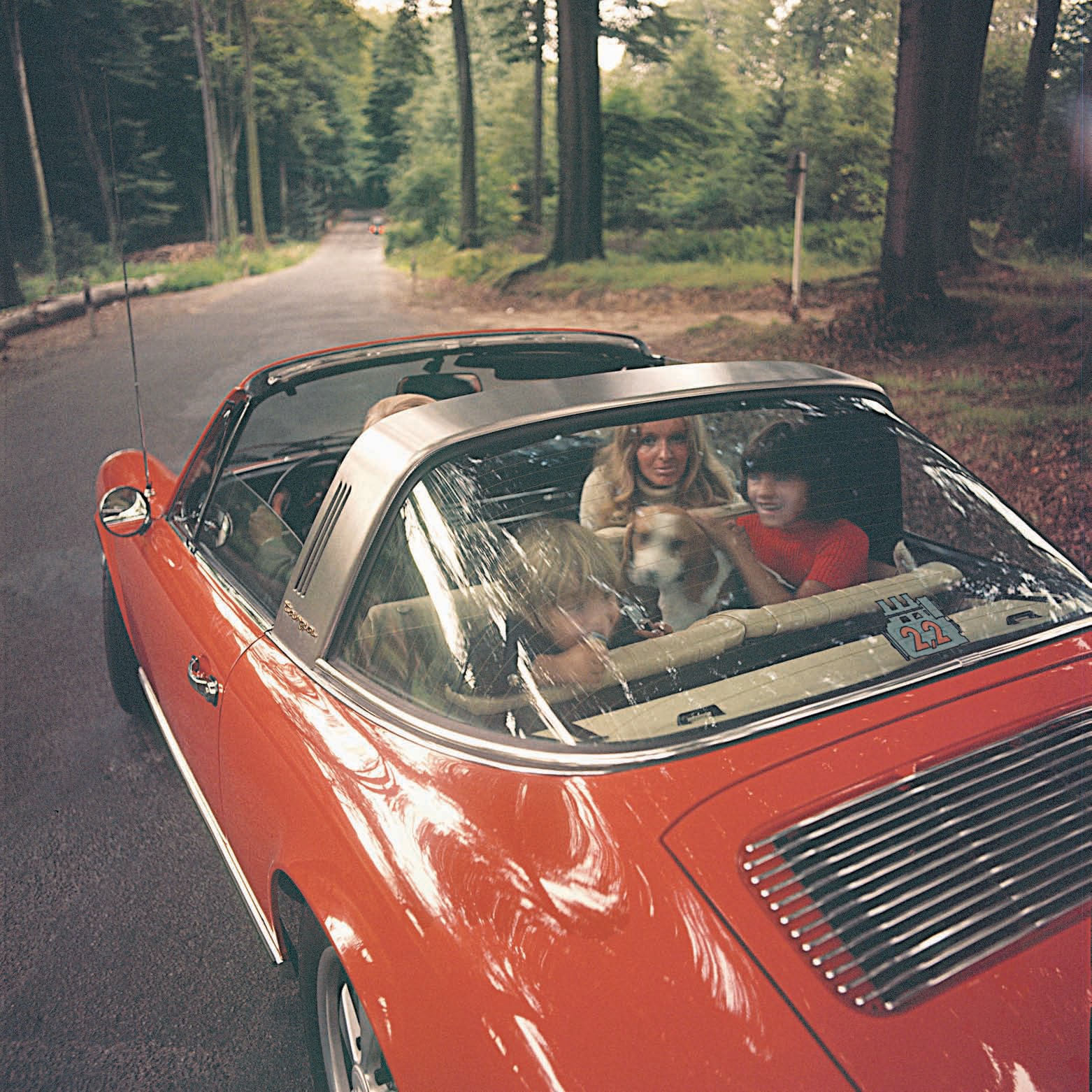
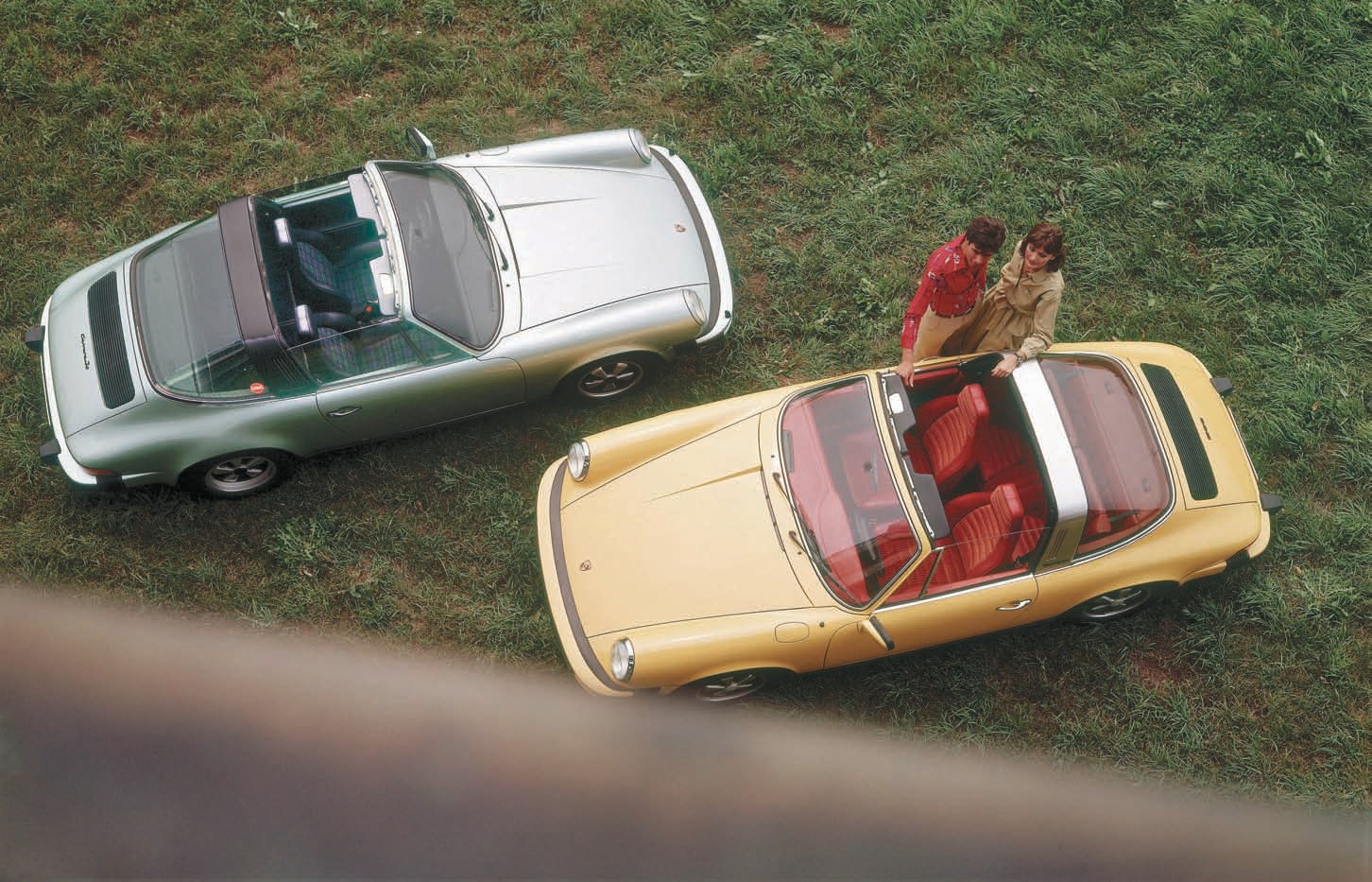
The 1971 Targa 2.2-liter T provided the perfect backseat playground for children and pets. T engines developed 125 horsepower at 5,800 rpm. Porsche Archiv
|
|
|
|
|
|
|
Dr. Ing. h.c. F. Porsche AG
|
Image
|
|
|
|
|
|
|
|
|
Image
|
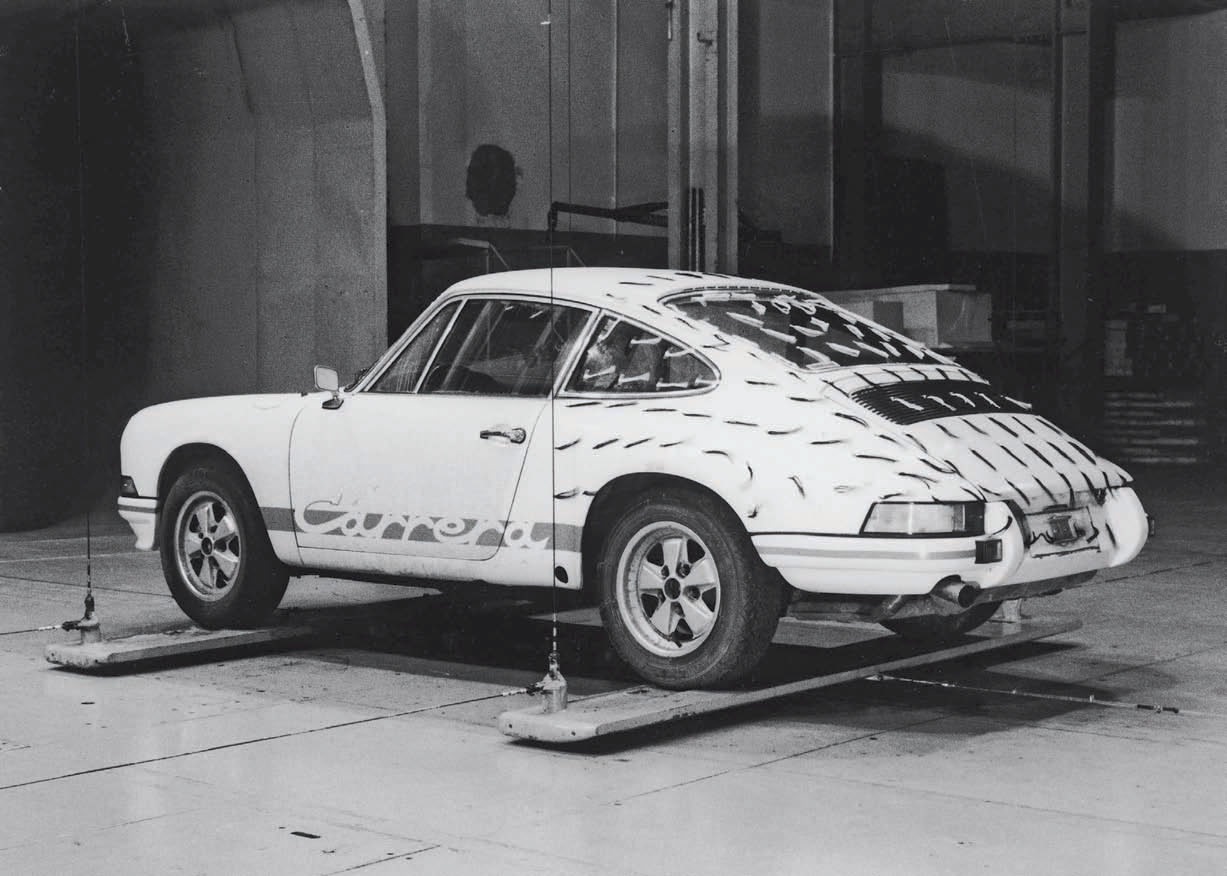
Not long after Brodbeck and his colleagues tamed the front end of the 911, they returned to the wind tunnel to address rear lift. Tape strips (and instrument readings) revealed smooth airflow over the rear that lifted the car. Porsche Archiv
|
|
|
|
|
|
|
Dr. Ing. h.c. F. Porsche AG
|
Image
|
|
|
|
|
|
|
|
|
Image
|
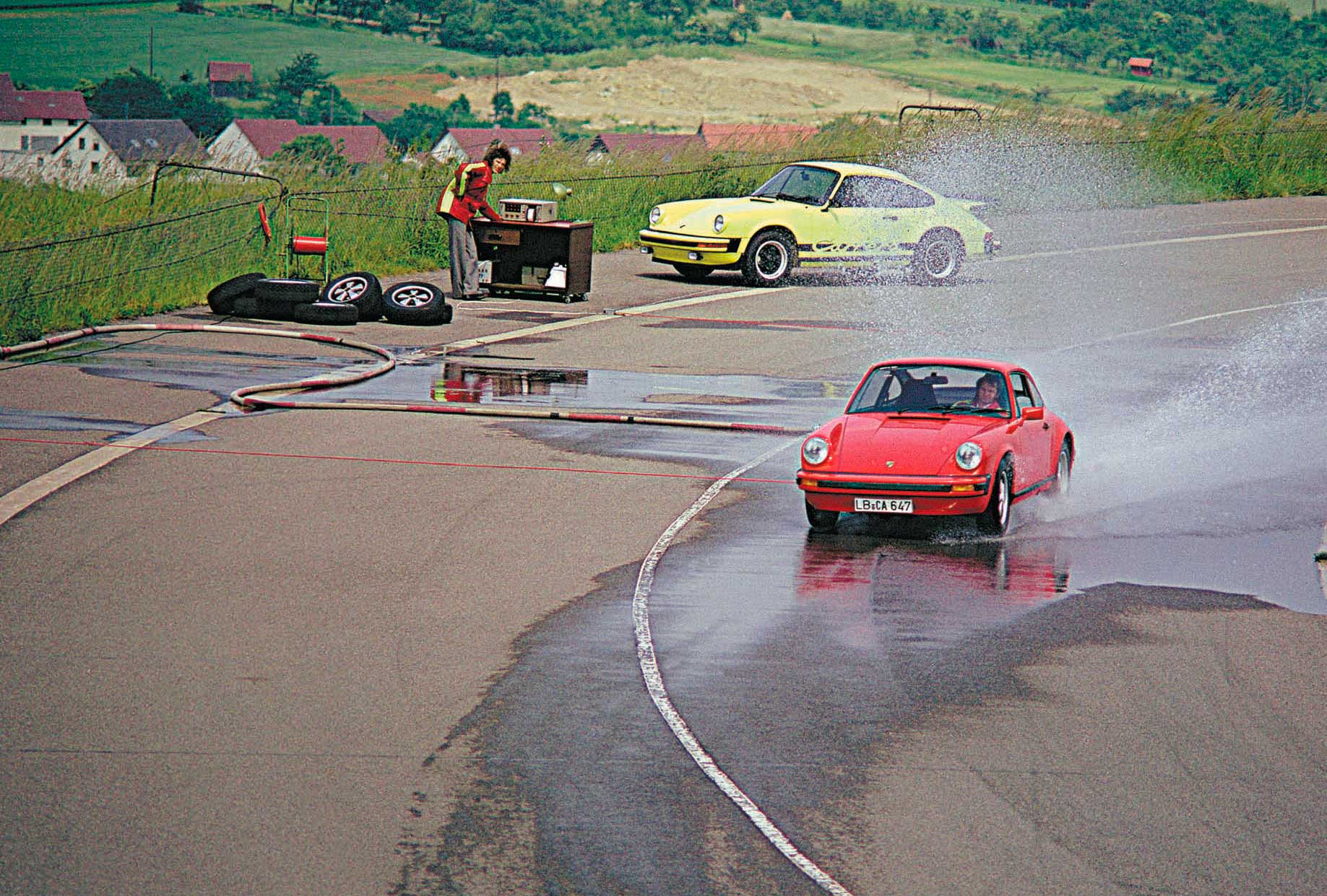
Real-world driving tests around Weissach confirmed what wind tunnel work had suggested to improve road holding and decrease front and rear lift. For 1974, Carrera models used the flat whale-tail rear wing. Porsche Archiv
|
|
|
|
|
|
|
|
Image
|
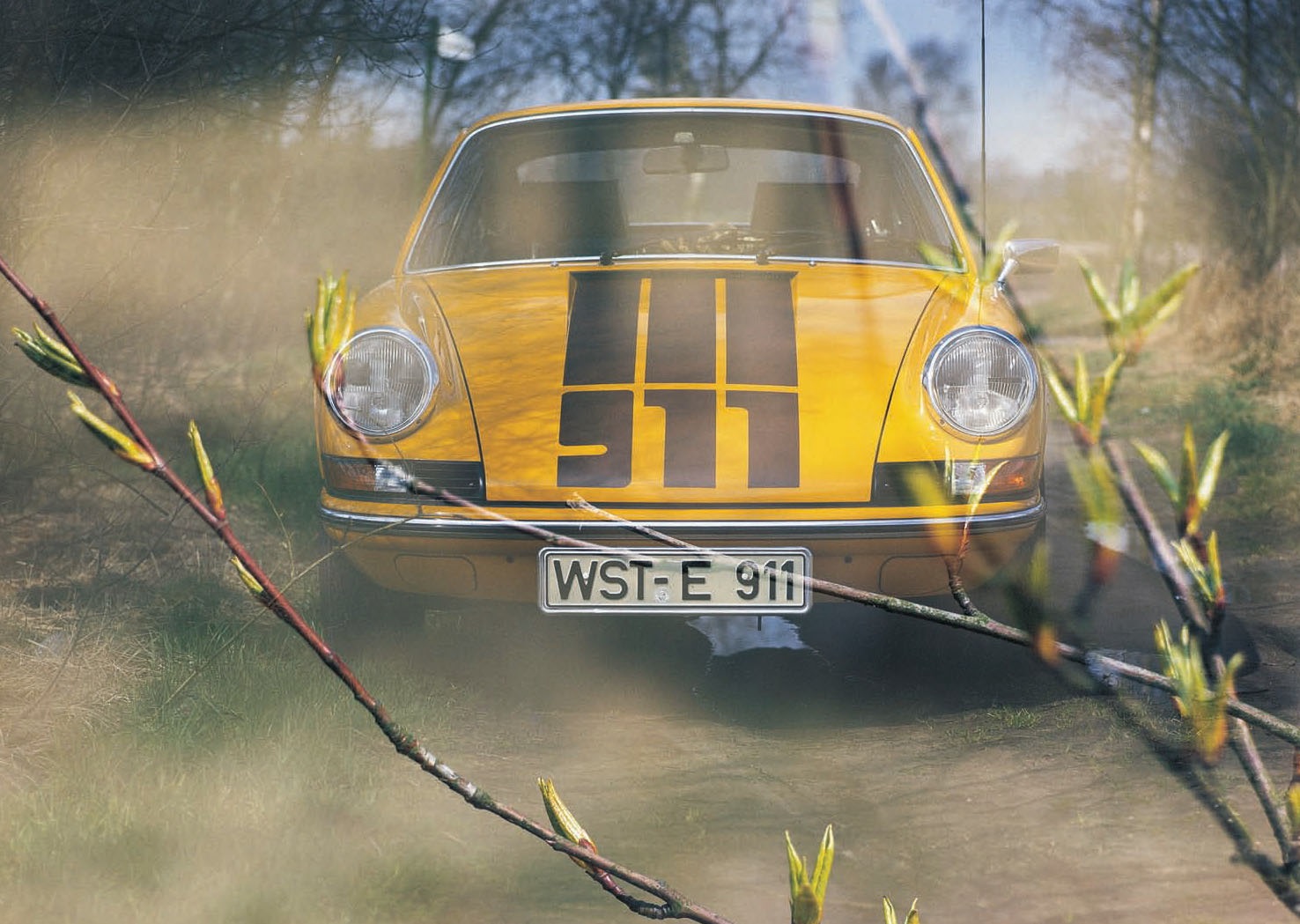
This front deck lid graphic, known as safety stripes, was optional on domestic and export 911s for 1974 models. Porsche Archiv
|
|
|
|
|
|
|
Dr. Ing. h.c. F. Porsche AG
|
Image
|
Porsche Type 911 2,7 Targa; model year 1974
|
|
|
|
|
|
|
|
Image
|
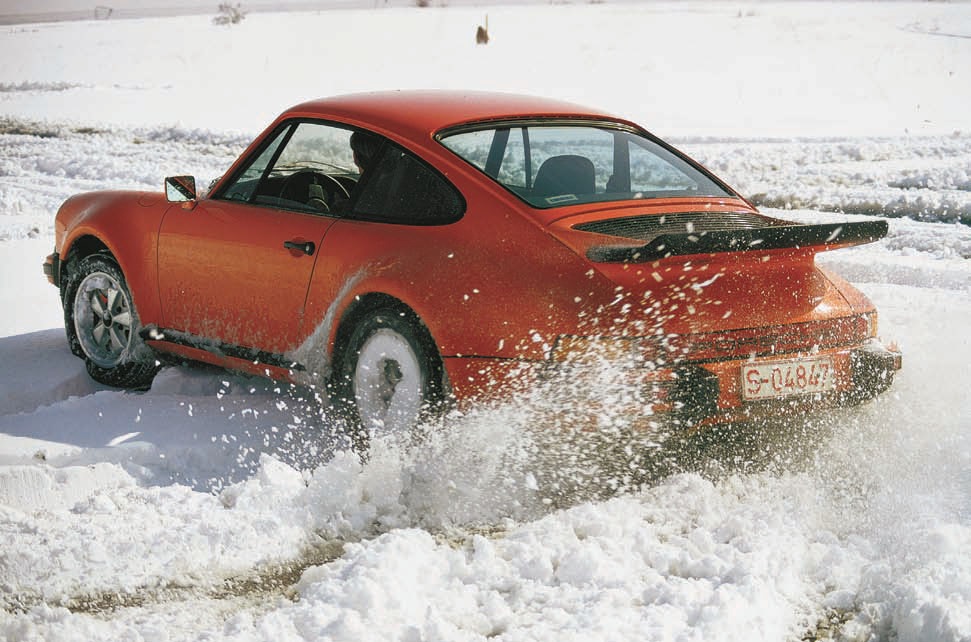
The sometimes tail-happy Model 930 Turbo appeared as a 1975 model in Europe. Its three-liter engine developed 260 horsepower, an enjoyable challenge on a large flat lot in snow. Porsche Archiv
|
|
|
|
|
|
|
Dr. Ing. h.c. F. Porsche AG
|
Image
|
|
|
|
|
|
|
|
|
Image
|
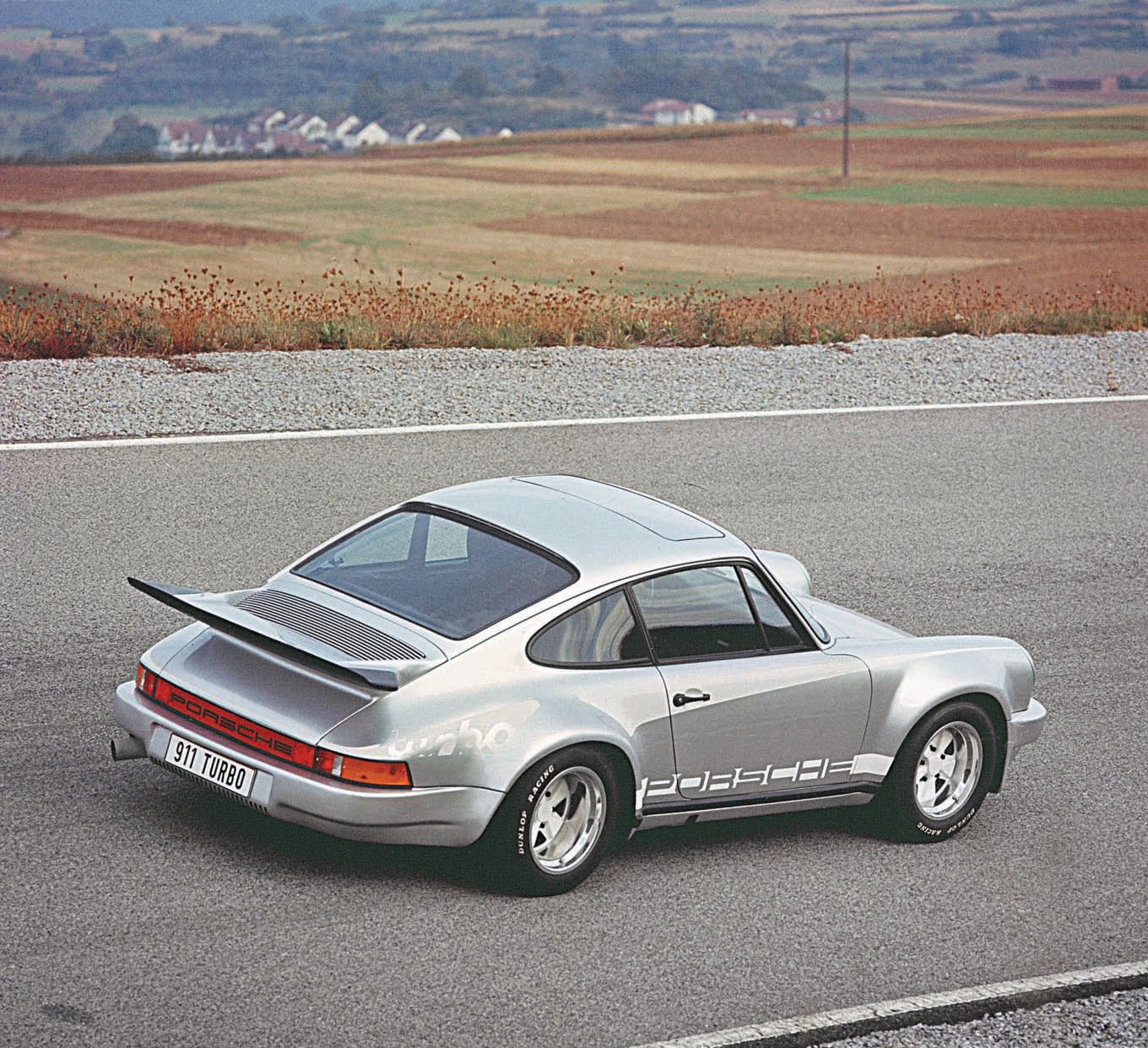
Weissach widened the 1975 Turbo’s rear track from standard 52.8 inches to 59.5 inches. This greatly improved handling and road holding. Porsche Archiv
|
|
|
|
|
|
|
|
Image
|
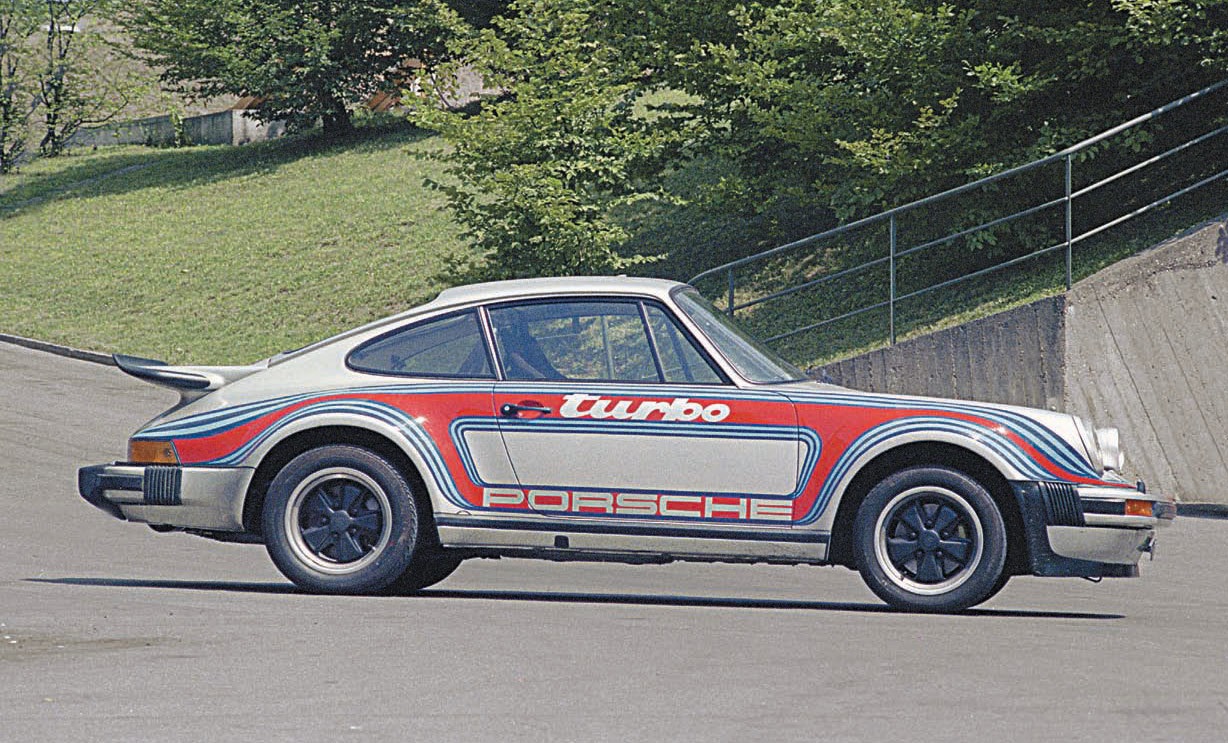
Berlin Philharmonic Orchestra conductor and music director Herbert von Karajan was a regular Zuffenhausen visitor and a good customer. Porsche created this custom-painted Martini Turbo for him in 1975. Porsche Archiv
|
|
|
|
|
|
|
|
Image
|
The 1977 model year 911 lineup posed on a Weissach test track curve for a photo. From left, a Turbo 3.0 coupe, a 911S Targa, a Carrera 3.0 coupe, and a base 2.7 coupe. Porsche Archiv
|
|
|
|
|
|
|
|
Image
|
The 3.0 Carrera, left, delivered 200 horsepower at 6,000 rpm, while the base 911 provided buyers 165 horsepower at 5,800.
|
|
|
|
|
|
|
Dr. Ing. h.c. F. Porsche AG
|
Image
|
|
|
|
|
|
|
|
|
Image
|
Porsche originally created the designation SC, or Super Carrera, for what became the RS Carrera in 1973. The name reappeared on the 911 series beginning in 1978. Porsche Archiv
|
|
|
|
|