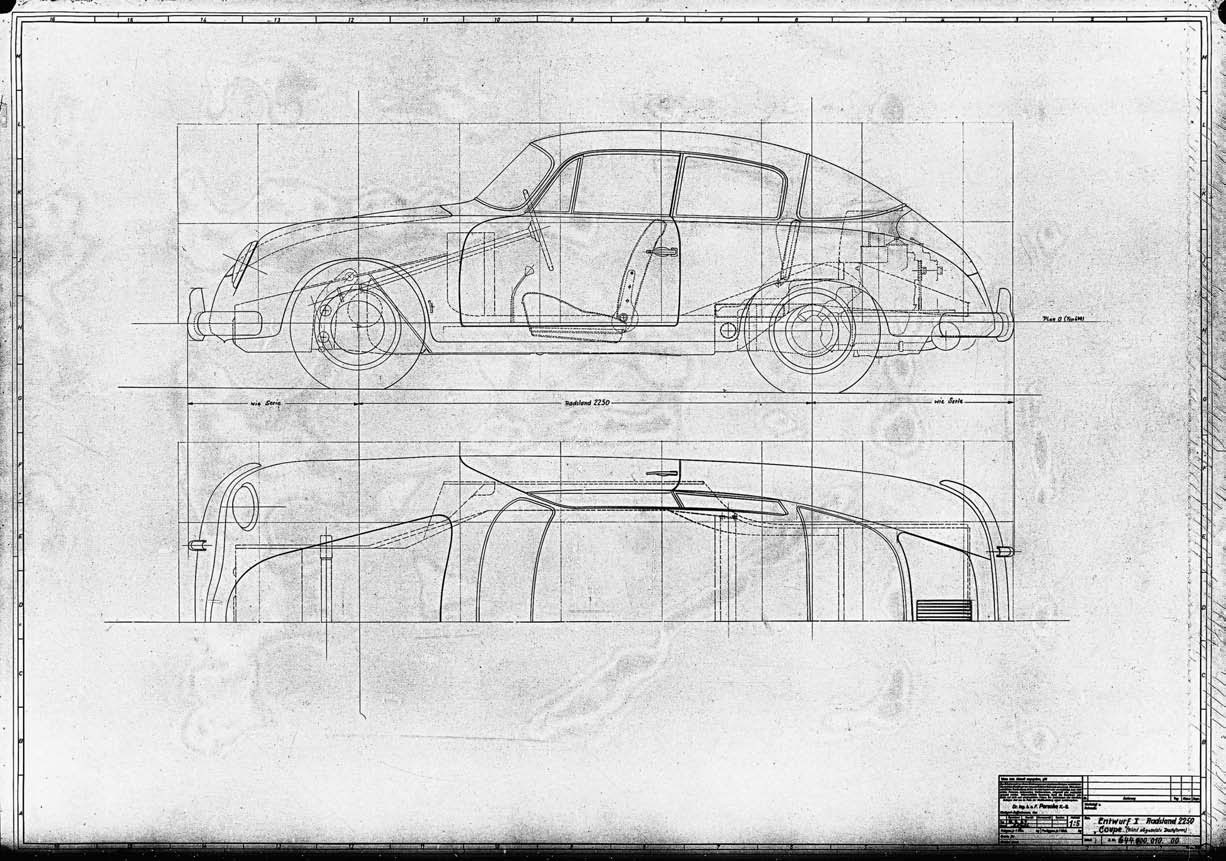
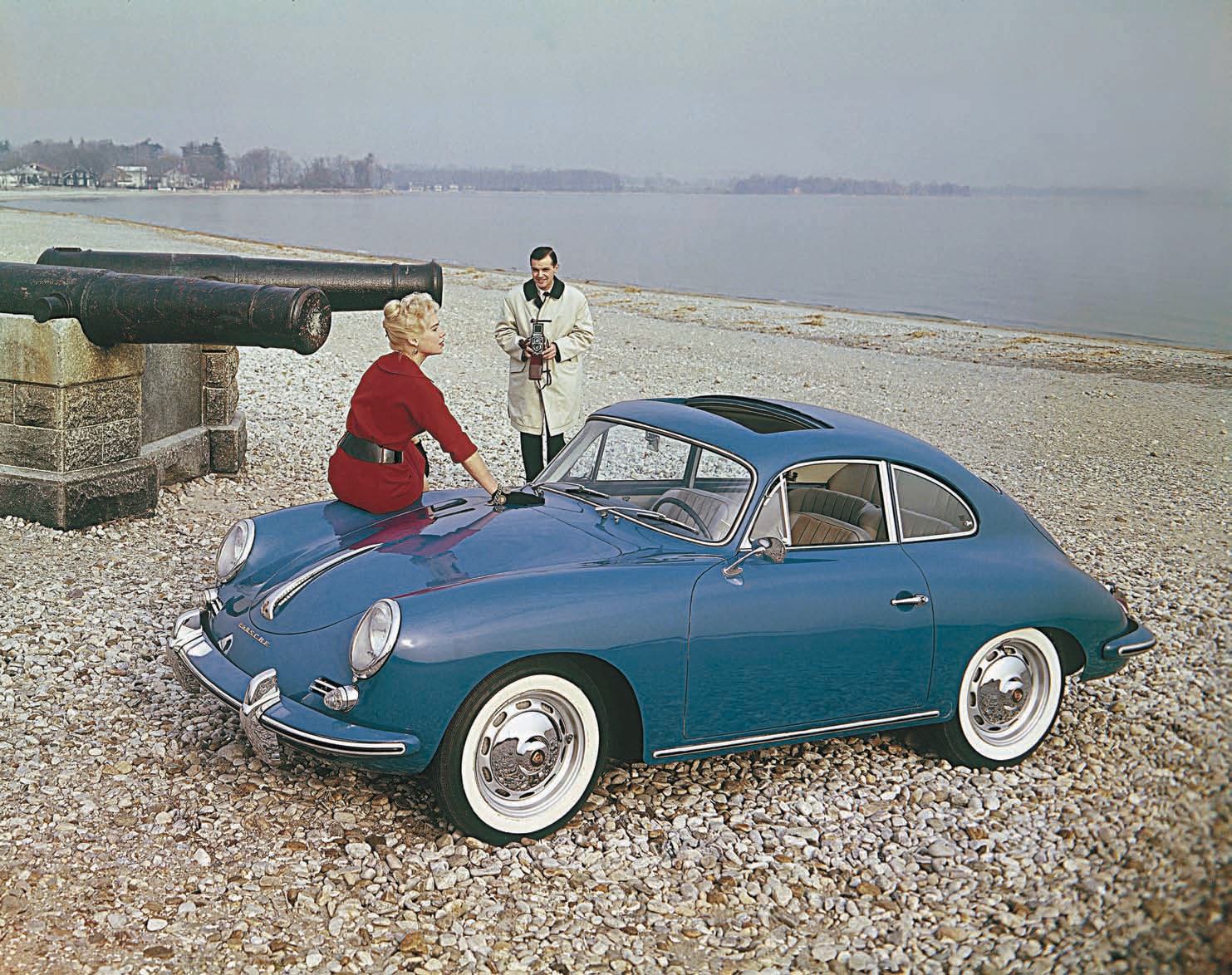
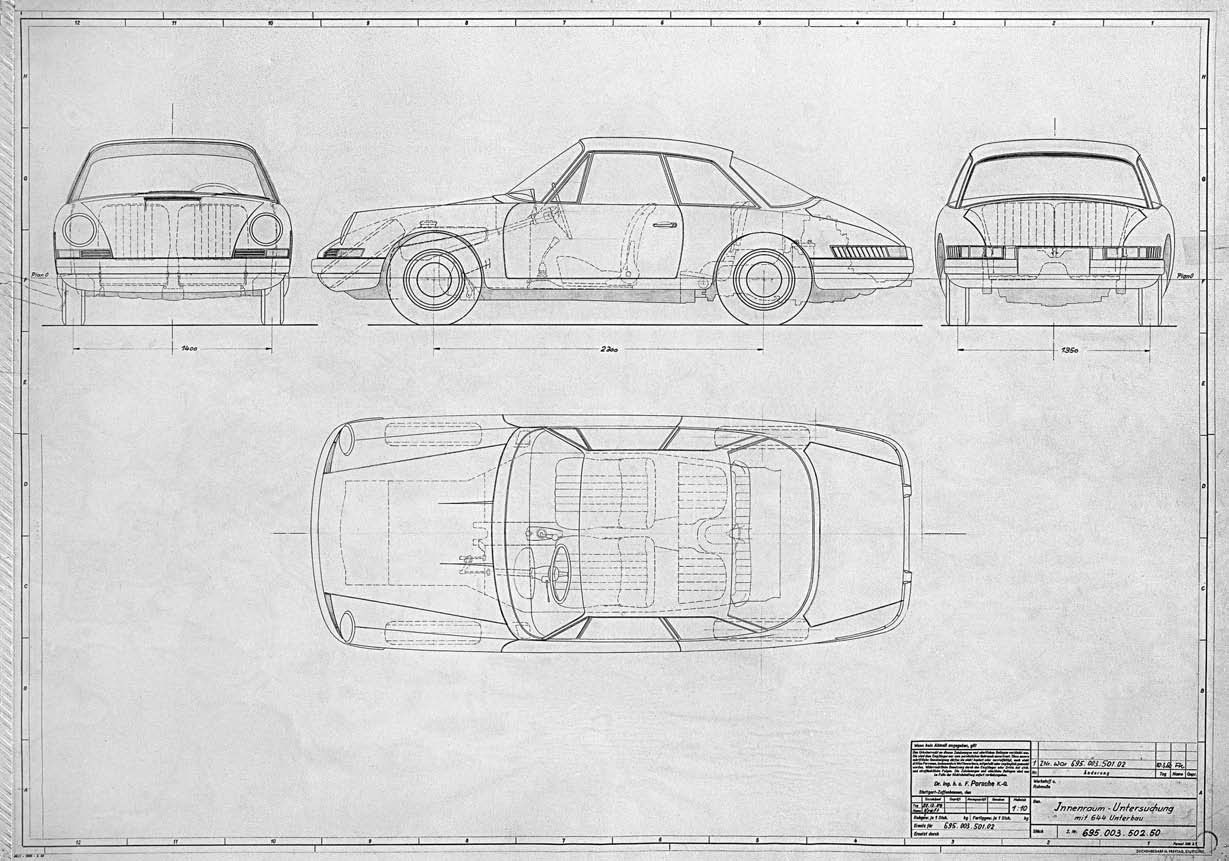
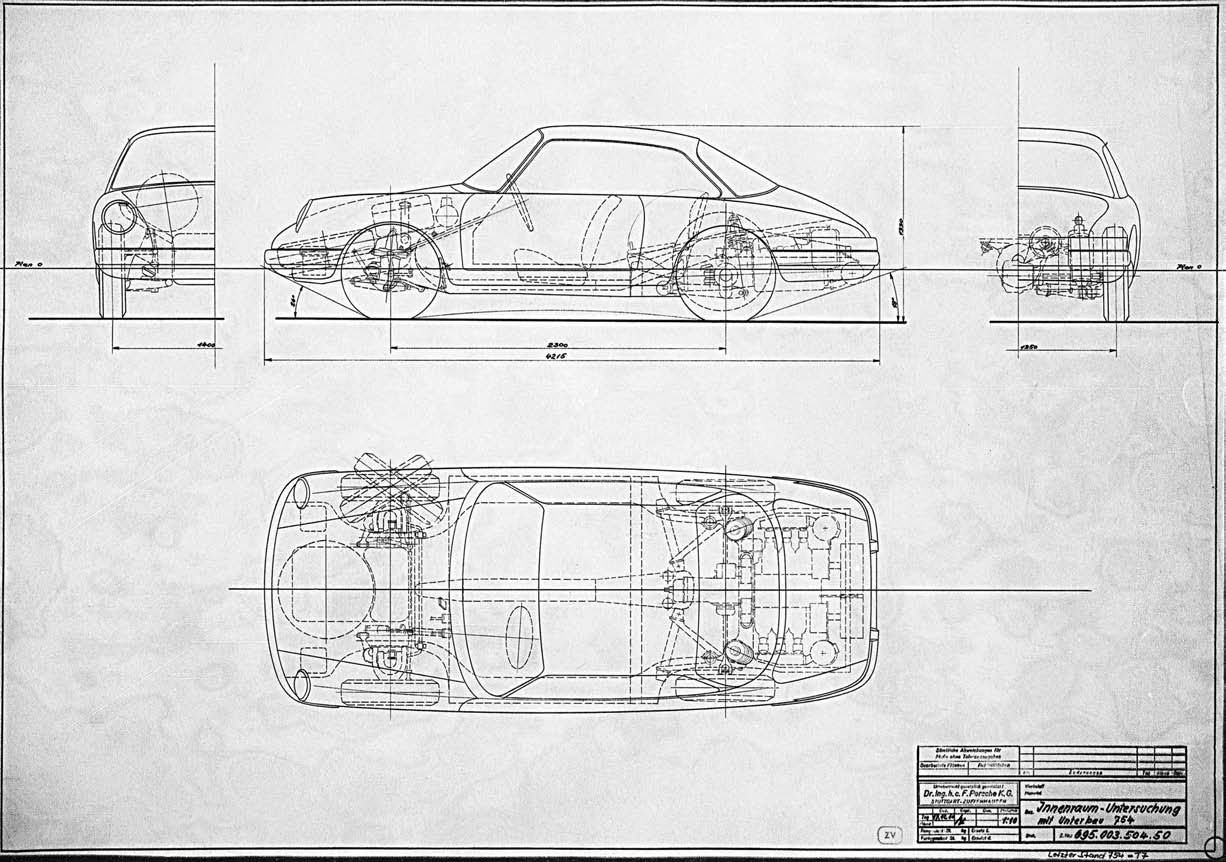
Where the company passed milestones for its 500th and 1,000th cars assembled (in 1951 on March 21 and August 28, respectively), the company manufactured 2,903 cars in 1955 alone. On March 16, 1956, company officials watched their 10,000th car drive away. By this time Ferry had begun to consider some kind of new model. In his mind, however, that car looked different from what his willful body engineer was offering. And so in February 1957 Komenda tasted the first bitter flavors of competition. He had delivered yet another oversize “stepped roof form” proposal designated the Typ 644 that too closely resembled one more swollen 356. In July Ferry reached outside the building and found a man who came highly recommended as one who might deliver other ideas for The Next Porsche. Because Komenda followed up every few months with slight variations from his 644 notchback concept, Ferry’s decision seemed ever more understandable. Historian Jürgen Lewandowski characterized those 644 variants in his book Porsche 901—Die Wurzeln einer Legende (Porsche 901—The Roots of the Legend). It did not matter, Lewandowski observed, “how many different designs of Typ 644 came from the drawing boards,” he wrote, “the 356 was still strong.” “We could have made the model out of butter for what it cost.” — Eugen Kolb Ferry’s outsider was Albrecht Graf von Goertz. He was a German who had emigrated to the United States in 1936. While he worked his regular jobs, he also modified Ford Model A and B cars, putting his own custom body on one he kept. He served five years in the U.S. Army, but soon after the war, he encountered industrial designer Raymond Loewy. Loewy saw Goertz’s personal car, funded his design school education, and then put him to work. After several years with Loewy, Goertz left in 1953 and opened his own studio. He met Max Hoffman, the Viennese auto dealer in New York City who sold Mercedes-Benz, BMW, and Porsche cars from his Fifth Avenue showroom. Through Hoffman, Goertz had earned the commission to create two new models for BMW in Munich. One was the smart-looking 503 as a 2+2 coupe and cabriolet, and the other was the sleek muscular two-seat 507 introduced in 1955. Ferry understood the impact the American market had on his sales because of his distribution arrangements with Hoffman; he believed Goertz might have valuable ideas for The Next Porsche.
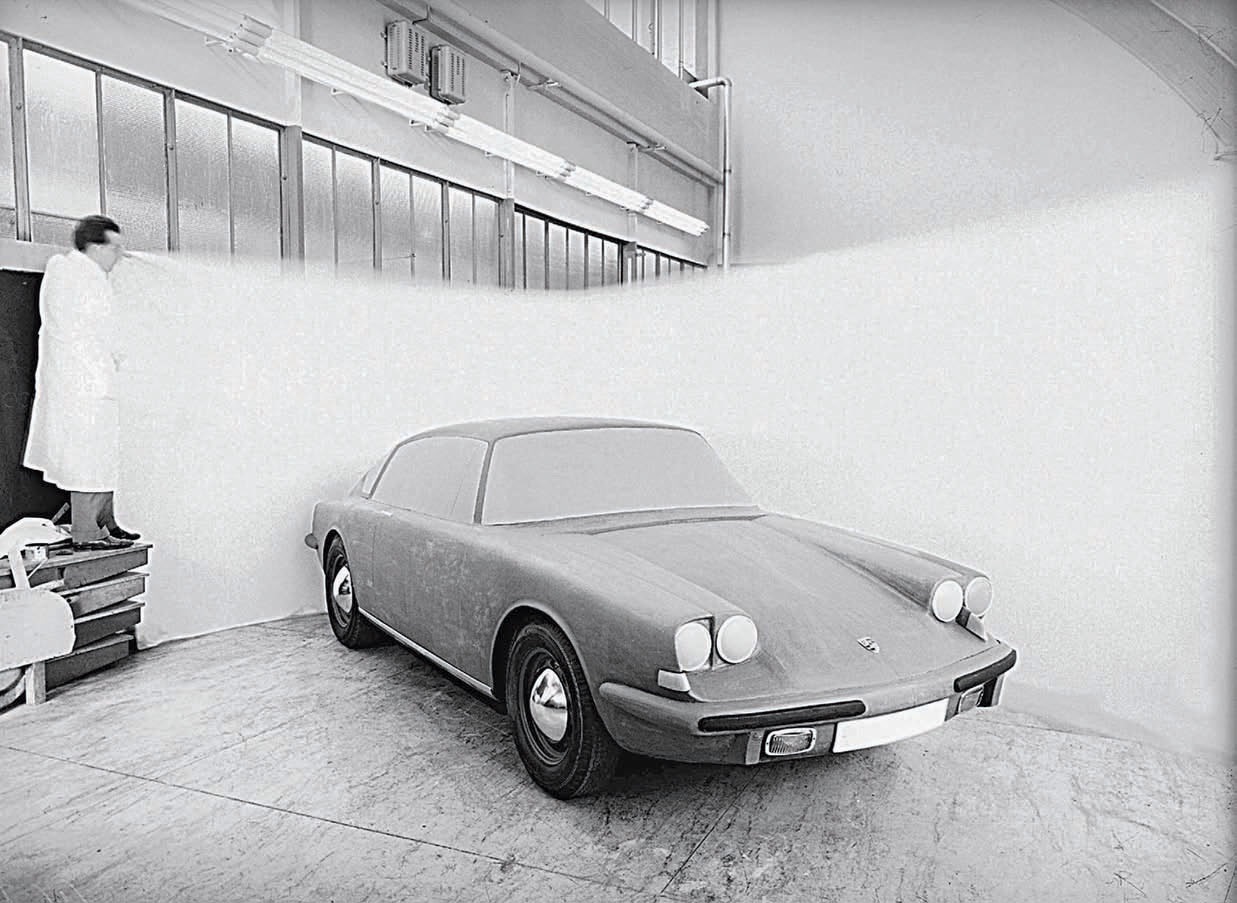
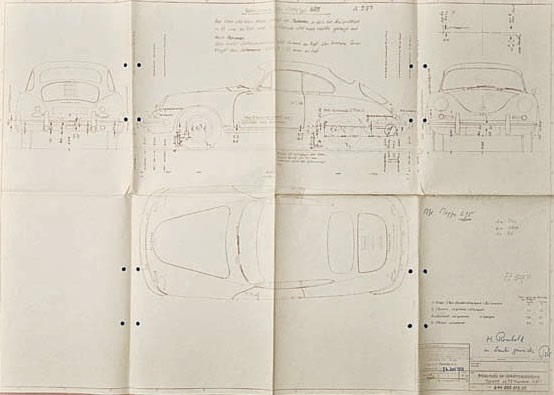
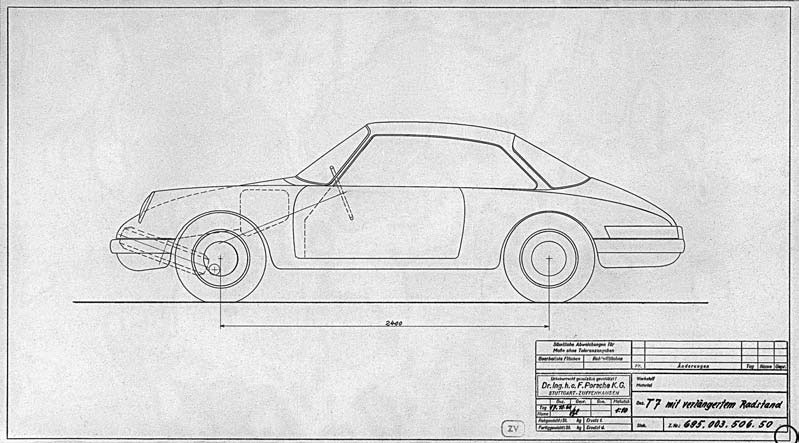
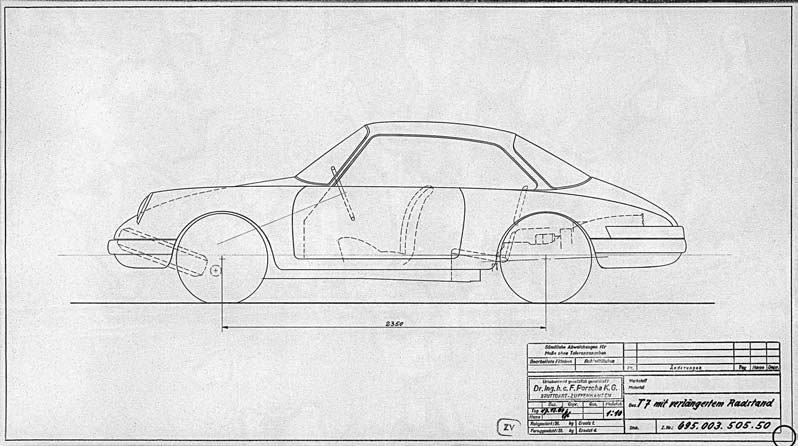
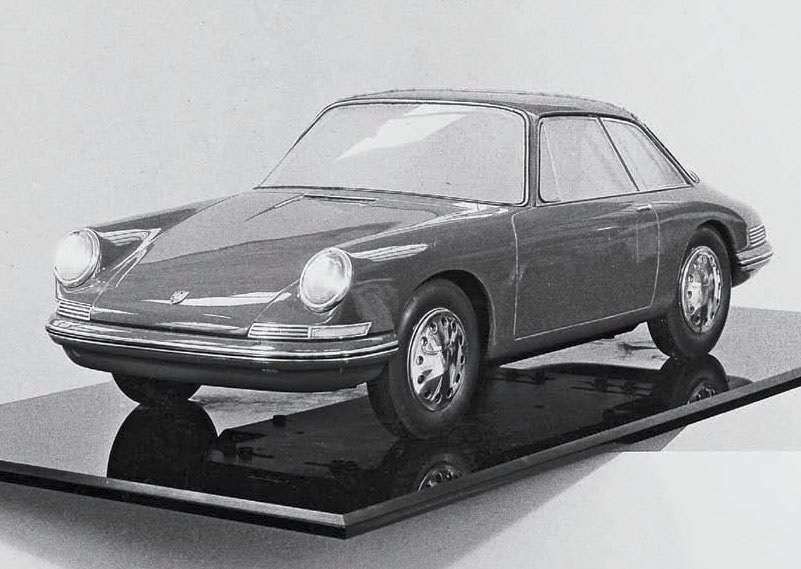
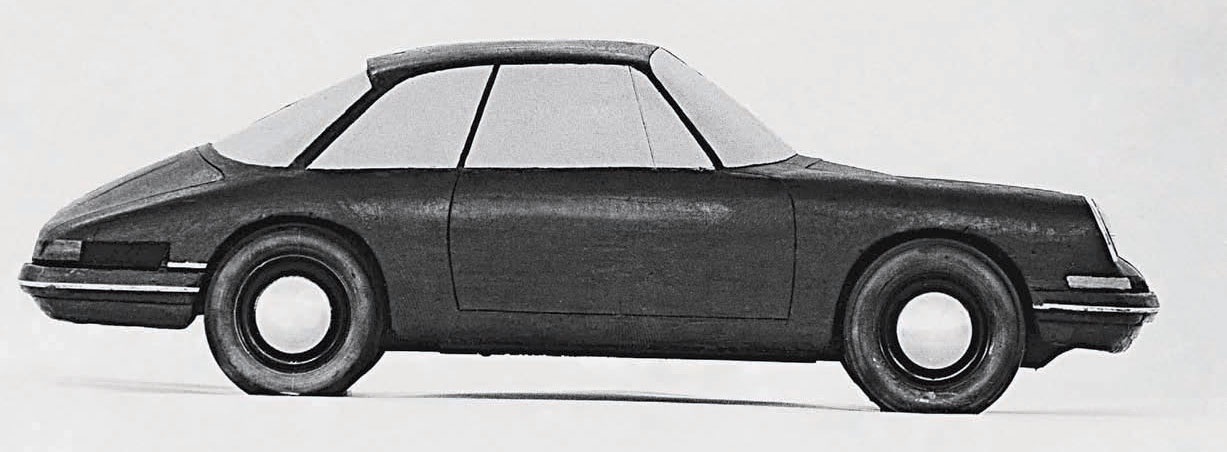
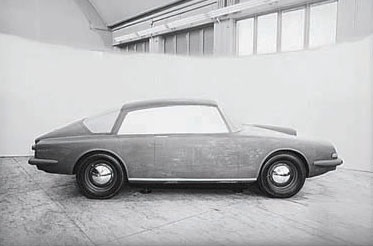
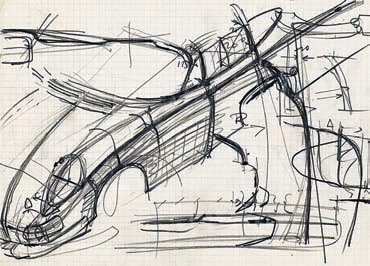
Goertz made initial sketches in his New York office and then moved into Klie’s Werk I basement studio to make his model. He followed Ferry’s guidelines and created a fastback coupe that offered greater interior and front trunk space. But as it took form on the 2,400mm wheelbase (designated the Typ 695,) it became too “American” for Porsche’s conservative Swabian tastes. Quad headlights and sharp creases with square edges seemed to take “Porsche” out of this car. For better or worse, Erwin Komenda had defined Porsche “style.” Years later, Ferry acknowledged that the details on Goertz’s proposals moved the car in the wrong direction for his aesthetic. (Ironically, Komenda’s team had developed concepts with quad headlights and separate, chrome bumpers. That had proven to be the wrong direction as well.) But Ferry had paid for Goertz’s design, so Porsche assigned his modelers to sculpt a full-size representation. It proved to be a false economy. As Eugen Kolb explained, Goertz insisted on using Plasticine, introducing the modeling medium to Porsche designers. It suited the subtle sculpting required for automotive shapes, but it was expensive. Kolb recalled that Ferry complained about the material, saying, “We could have made the model out of butter for what it cost.” Porsche modeler Ernest Bolt told historian Tobias Aichele that Ferry had them sweep up the valuable scrapings to use them again rather than send them out the door as trash. Porsche asked Goertz to try again. At the same time, despite his dissatisfaction with the first design, Porsche hired two Stuttgart plasterers to cast a mold from which he considered making a full-size fiberglass model with simulated windows to provide a realistic sense of the design. While Goertz worked on a second presentation as a body half, modeler Heinrich Klie developed his own concept. A clever system allowed them to mount each half together for comparison viewing. This two-faced model carried on the project 695 designation.
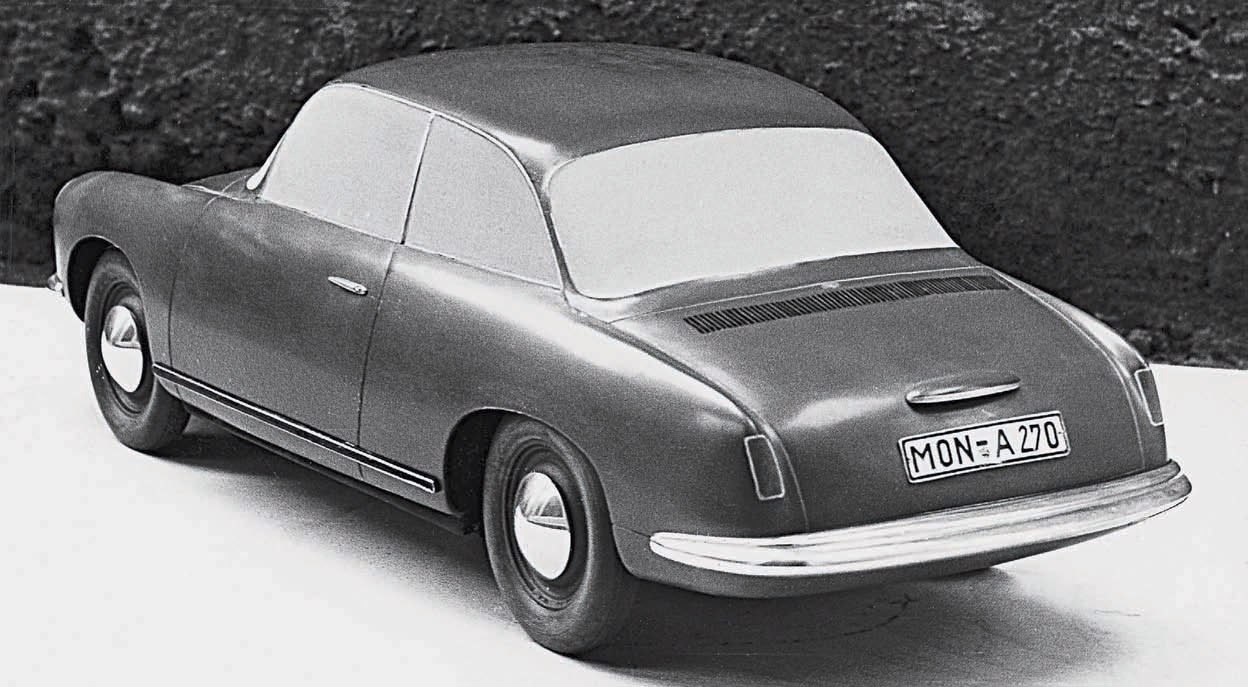
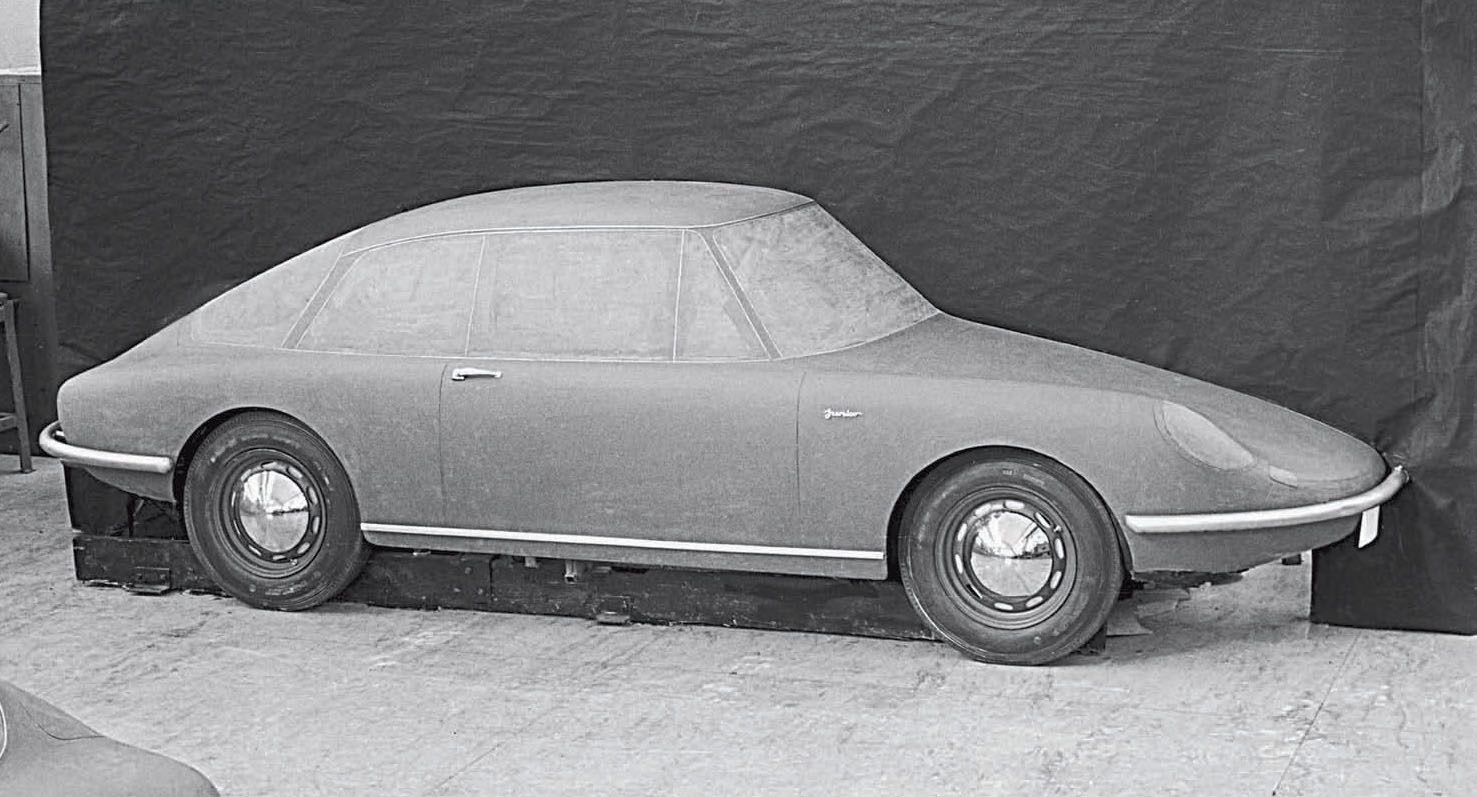
In Gmünd and then in Stuttgart, Ferry’s sons regularly visited his production facilities, design studios, and engineering workshops. When Goertz arrived, eldest son Ferdinand Alexander was 22. Throughout his lifetime, he was called a variety of names; in later years he was referred to as F. A., though he was better known at home and around the shops as “Butzi.” In written memos circulated to management in the 1950s and 1960s, he was F. Porsche Junior, or just “Junior.” He and his younger brothers Gerhard, then 19; Hans-Peter, 17; and Wolfgang, 14, were familiar faces to all the employees. F. A. had displayed some sensitivity to design, and in the summer of 1957 he spent a fair amount of time in the model shop learning from Goertz and Klie as they worked. It is unclear if F. A. participated at all in the process; however, in a recently discovered photo of that project, the name “Junior” appears on the right front fender—the side Klie modeled—in a generous nod to a contributing collaborator, and a suggestion for a potential name for the next Porsche. A few months later, in the fall of 1957, F. A. entered the Hochschule für Gestaltung (HFG), the prestigious upper school for art in nearby Ulm. It was a short-lived experience, however. As F. A. explained in an interview in October 1991 at his design offices at Zell am See in Austria, he admitted he “wasn’t so good at drawing,” and his young untrained sculpting skills barely were better. The school asked him to leave after his first semester, an occasion that prompted a bit of his own rebelliousness. When he returned to school from Zuffenhausen to retrieve his belongings, he took one of the factory’s Jagdwagens. Fellow students remember that when F. A. reached the school, he found a suitable stair-climbing gear and drove the Jagdwagen up inside the building hallway to load up his possessions.
It remains one of the sweet ironies of unfinished formal educations that this particular dropout went on to supervise, direct, and influence the design of some of history’s most style-setting vehicles and significant products. That it proved to be no drawback apparently was a family legacy. While Ferry had taken evening courses in mathematics, physics, and engineering, the luxury of completing formal university education had eluded F. A., Ferry, and Ferdinand Porsche as well. Back in Zuffenhausen, F. A. entered the company’s apprentice program in early 1958. For his first nine months, he worked for engine chief Franz-Xaver Reimspiess for whom he drew all the pieces of the Typ 547 Carrera engine. “I had to memorize them,” he said. “The specifications of the screws, of the cylinder head, the cylinder itself, crankshaft, camshafts. All these things I had to recite and draw a profile of the Carrera engine. “I was then sent to the car body division to work with Mr. Komenda. Then I worked . . . on the lights from the 356C, the bumpers. . . . It was my father’s wish that I get to know the car body division and simply gather knowledge ‘from scratch’ with the people there and work together with them. I knew Mr. Komenda and Mr. Reimspiess from my childhood, dating back to Gmünd and the old Stuttgart days before the war,” F. A. continued. “I worked with Komenda. He was very strict. He naturally had formal views. So many areas were parts of that division; there was the electrical department that was part of Mr. Komenda’s division, and the car body department. The steering wheels and all the parts were manufactured there,” F. A. said. There were many times that F. A. heard, “No, no, that’s not the way it’s done.”
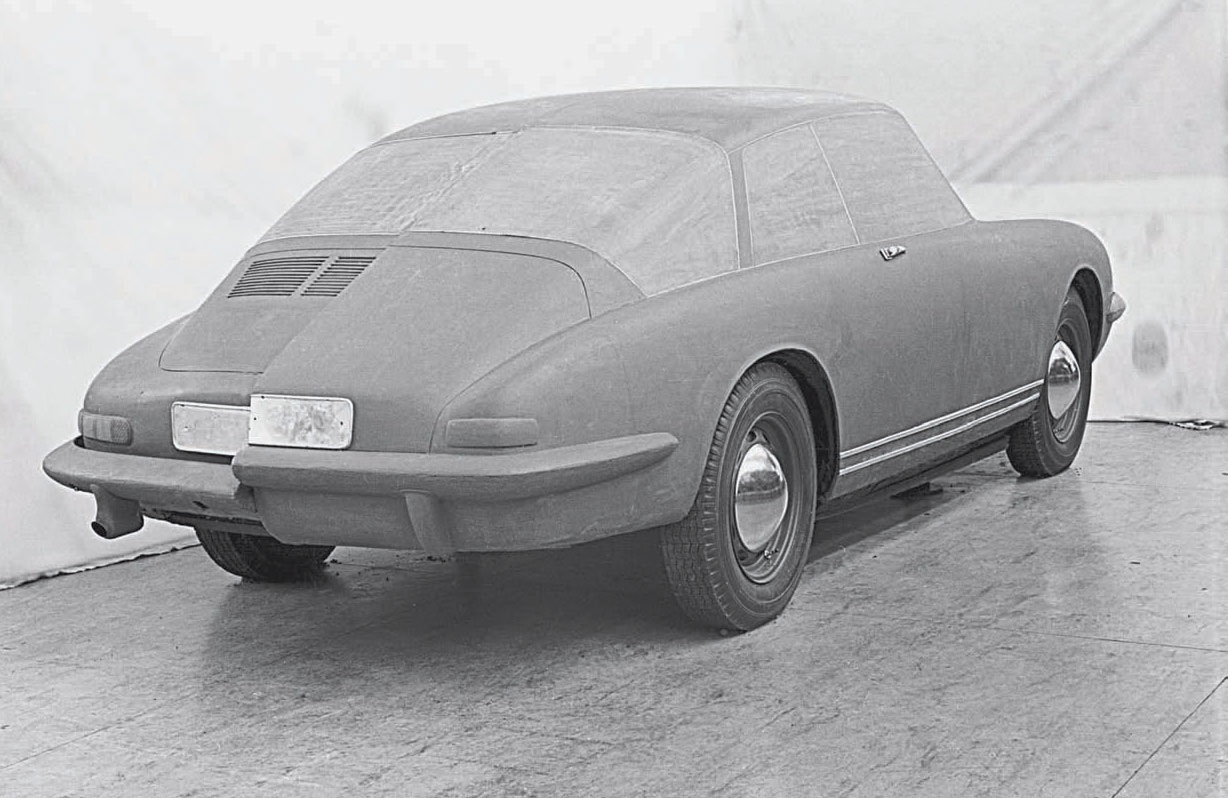
Komenda started him off in the racing division. “I was well acquainted with Mr. [Wilhelm] Hild and Mr. [Hubert] Mimler and the whole staff of the racing division,” F. A. recalled. As one of the seven people in Heinrich Klie’s design studio, F. A.’s first design assignments were to work on the Formula Two Typ 718/2 and then the first Formula One car, the Typ 787 planned for the 1960–1961 season. It was during this time, through 1958 and into 1959—not at Ulm—that his thoughts grew clearer. This was not an Introduction to Design or Fundamentals of Sculpture education he was getting. This was Ferry’s “Porsche Management 101” curriculum. F. A. sought ideas, insight, and learning wherever he could find it. Modeler Ernst Bolt told Tobias Aichele that, “Butzi wandered back and forth between the body department and the model department,” from Komenda’s workshop to Klie’s. As Aichele wrote in his history, Porsche 911: Forever Young, “Suggestions from the young designer were gladly incorporated, but overall responsibility for the Goertz-Porsche cooperative project remained with Heinrich Klie. The half-models were considerably closer to the later 911 silhouette than the first Goertz creations.” “ I was never convinced, that we must build a new Porsche just like the old one.” — F. A.