Associated albums


THE SIXTH GENERATION: 997 If Bernd Kahnau’s appraisal of 911 development is correct, that the quality of any 911 is related to the distraction of other management by other projects, then the 997 was on line to be every bit as uncompromised and as promising as the 993 had been. Porsche had an SUV to think about. The process of developing the 986 Boxster and 996 car line led Horst Marchart to reexamine the entire process of taking a car from concept to the dealership. It brought to mind a conversation he had with Peter Schutz years earlier. “Schutz had told me during a drive we made together,” Marchart said, “that he had an idea to make the 944, 928, and 911 all the same price and the customer can make the decision of which one he wants. That is unrealistic because you need market segments and you have one for the 911, one for the next, and the next. “We now know that the average 911 driver has 2.5 cars in the garage so they can have the 911, have a Cayenne, and have perhaps a sedan. The Boxster driver is a little different: 1.5 cars. We started this segments program for 996.” It led to reorganizing the development of Porsche’s cars. “So in development, the first step is describe without design what do you want, a strategy,” Marchart said. Sometimes called the lastenheft, this often is a book that defines the existing car, the state of the art, and sets targets, sometimes philosophical, sometimes metaphorical, sometimes literal. In the lastenheft for the 993, Peter Falk called for renewed agility in the 911, suggesting that the G and the recent 964 models over time had lost that attribute. “Then,” Marchart continued, “we make, normally, a concept phase. During this time we make the first design studies, the hard point development, what engine is necessary, gearbox, variations, two door, four-wheel drive. And so on. So you have a rough idea of the complete concept of the car. Where are the axles, what is the wheelbase, height of windshield, and so on. “The next step is a definition. Now the different departments start with their design of their components. Always we do this together with the team that makes the package of the car. Here is the coordination between the different components—where they are identified and modified if necessary. After this phase, we go to the board with our information and also with the design models we have made up to this time, to get the decision to go ahead.”

If the board is receptive, if Marchart or his successors are convincing, Weissach begins the three-phase vehicle development portion of the process. The time needed for each step is different for each model. “We started in 1991 with 911 and Boxster,” Marchart said. “In 1996 we began production. Nearly five years. Because all the components were completely new. If you have an existing engine and you just modify it, or you have another gearbox and you make updates, then it could be only three-and-a-half years. As a minimum.” First phase of vehicle development is design, of the car and of its components. Subcontractors and suppliers make prototype parts and they go into tests, which is phase two. Engineers have opportunities for modifications during testing. All the results and information from prototype design and testing come back into Weissach to make adjustments and develop the modifications. Typically, each modification in a design gets a number. Marchart made an inquiry and learned that—on average—each part will change ten times during these three phases. A bolt probably is not modified ten times, whereas a crankcase may undergo hundreds of changes. A normal car has between 15,000 and 17,000 parts. Keeping track of these items and their changes is part of the organization process. Before Hans-Peter Bäuerle and his colleagues perfected the hydro pulse tests on those hand-assembled body-on-white prototypes, Marchart’s drivers ran Porsche prototypes 80,000 kilometers in this second round of testing to develop the information necessary to know if the prototype was good. This took a big team. When they finished with the drives—and it took nearly five months to drive 80,000 kilometers—they needed another three months to analyze the data. That meant eight months. “So we reduced this to 35,000 and this reduces the team,” Marchart explained. “It takes out a personnel problem. The engineers kept telling me it was impossible to get the information from only 35,000 kilometers, but we changed some things and now it is possible and so they can bring the results into phase two. For instance you could drive on a smooth autobahn for 100,000 kilometers. Or go on the Belgian Blocks for 10,000 kilometers.

“You can calculate the difference so that the effect on the car is the same. Normally in the 80,000-kilometer test, you get information about other problems, the door and window seals. But those are not so big problems. If you drive 10,000 kilometers on the Belgian Road and the rear axles fall out, that is a big problem. If you drive 35,000 or even 80,000 kilometers and the door seals fail, that is not as big a problem.” The advantages of the modern-day hydro pulse tests are clear. Now most road testing is reduced to running prototypes in winter and in summer. Early on, Marchart—or Bez or Bott before him—sent cars and drivers to do winter tests while another group went to a different continent and hemisphere to perform summer tests. This sometimes gave inconsistent results. In earlier days, the procedure sent cars for winter testing in North America, then back to Weissach for modifications, and on to South Africa or Australia for summer tests. “Well, that’s not the same car we have tested in the winter because it’s changed,” Marchart explained. “Normally we need three months to prepare the prototypes. So I decided we will go in the future for summer test in Australia before Christmas time. We come back for Christmas and the cars go to North America, and after Christmas we go to drive the same car in the wintertime. That way, all the information comes together and we need make only one set of modifications. It saves money. It saves time. It saves parts.” Another significant development procedure evolved with the arrival of the 997: platform development started with the cabriolets and the coupes simultaneously. It was an idea and an approach that came from the engineers on the project themselves.

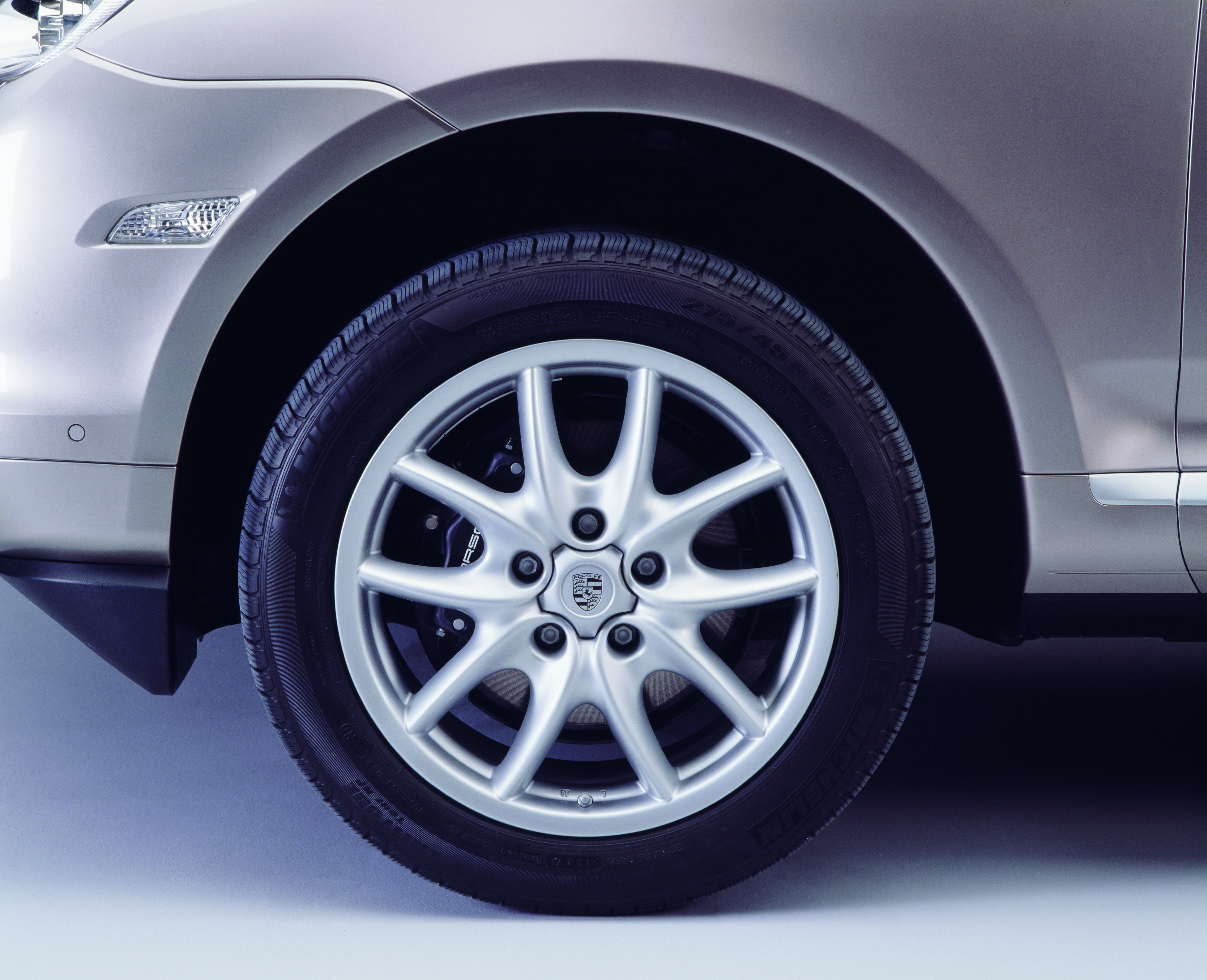
“We didn’t talk about it,” August Achleitner revealed. Achleitner was the 911 project development manager. “The convertible is more difficult, because of the body in white and the stiffness that is necessary. You have to consider some reinforcements from the beginning. You are developing, in an easier way, when you consider these special parts right from the beginning and not to make a coupe first and then, after that is finished, start to develop the convertible.” Beginning with Gerhard Schröder and Eugen Kolb, those difficulties were clear. It was nearly impossible to create an open car in 1965; it was challenging to develop the 1967 Targa; it was manageable—if hectic—to stiffen the G model for the 1983 SC Cabrio. Over the years, the engineers took notes, had memories, and started each new platform from a better-educated perspective. The starting point for 964 and 993 and 996 cabriolets was far beyond the 10 percent stiffness that Kolb and Schröder and Bäuerle discovered. For Achleitner and his development team, a separate revelation made this new procedure easier to adapt. This came from Grant Larson’s first sketches of the car and from the chassis department’s wish list. Larson made dramatic three-quarter rear views of the car with very large wide tires. It was visually arresting in its portrayal of power and potent handling. At the same time, as the chassis group contemplated what it wanted from the next generation, they reported to Achleitner. “They said, the only thing that we can change that will make the car better and faster than before is that we have to enlarge the wheels on the front and on the rear,” Achleitner said. “We just wanted to take over the body-in-white structure from the 996.” He approved enlarging the wheels not only by width, but also by diameter. “Enlarging the diameter means you also have to change the center of the wheel in relation to the body. Otherwise the car would be come too high. So every angle of all the arms of all the suspension components changed,” he added. “This led to the problem that all the forces transmitted by the wheels to the aluminum frame inside, and . . . the body in white also changed dramatically. And suddenly we had some problems with body-in-white components, some cracks. “We took an exacting look and found out that, coming from all these different and new angles, there were forces transmitted to the body. Once we understood that, we made changes and solved it, As a result, almost 80 percent of the car is completely new, and if you look at the remaining 20 percent that we did take over, this is the 3.6-liter engine of the normal Carrera,” Achleitner continued. “They said, the only thing that we can change that will make the car better and faster than before is that we have to enlarge the wheels on the front and on the rear.” — August Achleitner Not a single suspension piece came from the 996, and while this conflicted with Wiedeking’s publicly stated goal of common parts, many of these new pieces were simpler and less expensive to manufacture and easier (and therefore less expensive) to install. Significantly, Wiedeking, who in those days ranked among the world’s best business managers, understood that Porsche’s goal was to produce the best sports car possible. That goal brought awareness that predevelopment and forward planning provided benefits. Through the 993 and 996 Series, Porsche had offered narrow- and wide-body coupes and convertibles, wide-body Turbos, narrow-body Targas, and GT2 and GT3 versions. With 964s, some of these models were experiments; with 993, these were successes; and with 996, these became accepted patterns. So, if a Porsche engineer understood that any new 911 was, in its ultimate form, a GT2 RS, modifications done in design and engineering reduced development and production costs. This forced Weissach to plan all these models from the start.

IN STRENGTH THERE IS INNOVATION Across any Porsche lineup, body and platform stiffness and rigidity and light weight have always been top priorities. As long ago as 1965, Werner Trenkler and Gerhard Schröder understood that it was easy to make a coupe stiff because of its structural roof. By the time the SC cabriolet appeared, the lightweight/high-strength steel guys in Hans-Peter Bäuerle’s groups had strengthened floor pans and rocker arms. With the 997, engineers developed what they called a “third load path,” a new structural configuration that increased passive safety and greatly enhanced longitudinal bending or flexing stiffness and torsional rigidity. In a front-end impact, this system transferred forces through the top of the door to the rear of the car. An ultra-high-strength steel beam inside the sheet metal extended across the top of each door, from the base of the A-pillar at the instrument panel. With the door open, a triangular aluminum piece was visible in the B-pillar at the rear of the door. This was the point at which this door beam connected, making for a very rigid support. In the cabriolet alone, this provided 5 percent greater torsional stiffness and 9 percent greater flexing stiffness than the 996 cabriolets. The same beams were fitted in all 997 bodies. Wolfgang Dürheimer, who replaced Horst Marchart after his retirement as vice president and board member for research and development, took pride in his engineers who always kept notebooks and filled their desk drawers with ideas for the next car so when approval came, they were ready. “Don’t stop making suggestions,” he said. “If you’re not successful in bringing it into the present project, bring it next time. Do not abandon it.” Sometimes projects were refilled because their costs were too high, or a partner had not stepped up to share development. Sometimes, ideas slipped back a generation or more because technology wasn’t ready. One idea that arose during the 996 development phase, but for which electronics and hydraulics were not ready, came back for the 997, the Porsche active stability management system, PASM. By instantaneously monitoring cornering forces, body lean, and other factors, PASM had the ability to take a single automobile and turn its driving and road-holding characteristics into two or three kinds of sports cars.

“For some people,” Achleitner said, “the 996 was a little too soft at that time.” The company had not yet introduced the Turbo or 996 GT3 models, and only engineers and designers knew what was coming, but they took these comments seriously and decided the 997 needed to be a bit more muscular and sporting. “Meeting the target to make the car comfortable wasn’t so hard,” he continued, “because we did see a way to make the car better than the 996. But we learned a lot about what was possible with software. We could make tiny changes, even to accommodating a single bump in a smooth road.” It also gave them the capability to tune the suspension for coupe drivers and for the needs and expectations of those who bought a Cabrio. For example, front springs for the coupe were 10 percent stiffer than those fitted to the open car, while the cabrio’s rear suspension bushings were much harder than those for the coupe. They adjusted the range within the settings on the PASM as well, knowing convertible drivers did not push their cars as hard. So the coupe’s sport setting was about 15 percent stiffer than the sport calibrations for the Cabrio, while the open car’s softest setting was a bit gentler than the coupe ever was.

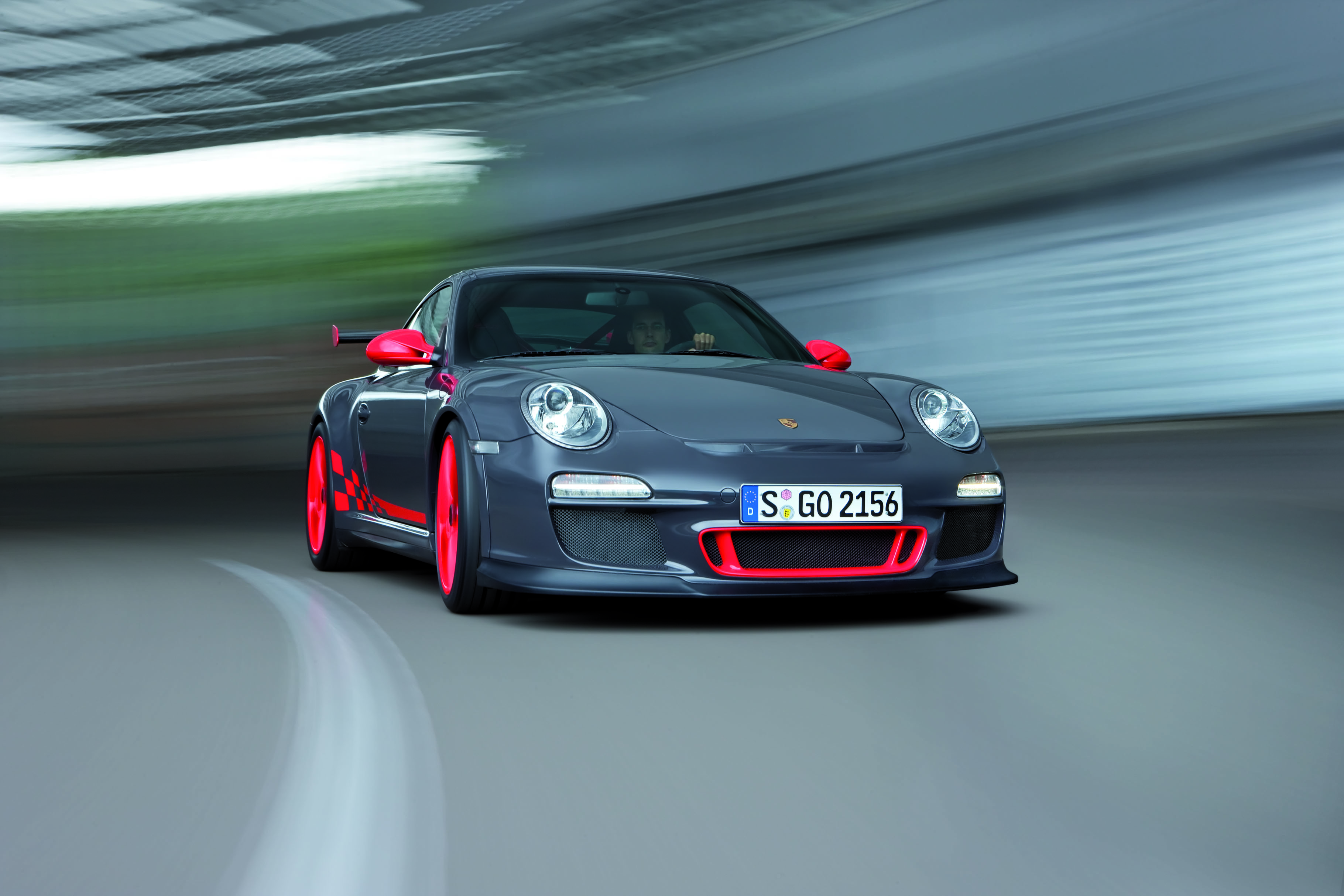
What’s more, 997 coupes offered a Sport Suspension option that lowered ride height about 0.8 inch, but this left it too low for USDOT right height regulations—and put the nose at risk for steep American driveways and curbs. The same option also provided a mechanical differential lock of 22 percent on acceleration and 27 percent during braking to improve directional stability. Powertrain engineers improved intake and exhaust flow that added 5 horsepower to the base Carrera, bringing it to 325 for the 997 versions. VarioCam Plus carried over in the 3.6-liter engine and Weissach fitted it on the new 3,823cc flat six for the Carrera S. This new engine with 99- millimeter bore with 82.8-millimeter stroke developed 355 horsepower. This propelled the Carrera S coupe from 0 to 100 kilometers per hour in 4.6 seconds and to a top speed of 182 miles per hour. The base Carrera was only a fraction slower, at 4.8 seconds on acceleration and 177 miles per hour at the top. Porsche began deliveries of the 997 Carrera and Carrera S as 2004 models in Europe and 2005 models to the United States. While Weissach finished development on the 997 versions, Zuffenhausen carried over production and sales of 996 Turbo S coupes and cabriolets. As had become the pattern, all-wheel-drive Carrera 4 and 4S versions appeared midsummer, and Targas, Turbos, GT3, GT2, and other models followed through 2006, 2007, and 2008.
Previous Page Page 19 Next Page