Associated albums


“This was very controversial.” Michael Mauer explained recently. “Because it gave the car, how should I say it, a harder character?” Another line, an edge that stirred discussions, was the roofline that started at the A-pillar. It accentuated the roof, made it look longer, and finally it descended to the rear and formed an elegant sweeping crease around the new, smaller taillights. “We had gigantic tail lamps for what, 30 years?” Kulla asked. “So we decided to make them as small as possible, as low as possible. That was actually the reason for the reflector down low. If we had to include that function in this light, it would have made it 10, 15 millimeters taller. It was vertical once, actually. Which was interesting! “Every single surface inside every lamp was done in the studio, not by the engineers, and not by the suppliers. This is design work. Because they don’t know how to handle the surface contours like we do. So we gave them a set of data, they ran tests and the simulations, and they gave us feedback so we can correct our lines. And this took place 20, 30 times. “For the longest time we have had a really soft-sloping rear on the 911,” he continued. “You probably understand that there are not many areas where we can really make a big step. So it’s always in the subtleties.” There was that word again. “Those are the things that turn a nice car into a really good one. We worked very closely with the engineers and the toolmakers. All these little details made this by far the most precise 911 ever in terms of execution,” Kulla added. “I look at this car in beautiful light,” Mauer said, “and I think, ‘Oh, damn. It will be tough to improve on that one.’” What was the toughest improvement for Achleitner and his engineers to make advancing from 997 to 991? “For me, it was quite clear. It was the reduction of weight,” Achleitner admitted. To resolve the conflicts between efficient consumption and performance, he knew they had to reduce the weight. If not, they needed more horsepower, which was in conflict with the targets for consumption. From the start, he had his engineers calculating weights. This was done without the parts on the table but from designs still in a computer. Out of these efforts, they all concluded—no matter how many times they calculated the weight—that the car was heavier. “We did two or three workshops without the parts. And then again a workshop with the parts, the prototypes, and we made many comparisons. Even using motorcycle parts! In the end we found that our colleagues had some ‘reserves.’” At this, he began to laugh: “Everyone had some small ‘reserves.’ “And we put the first car on the weight station, the first car made from the pre-series where the parts are coming from the final tools. . . .” He laughed again. “The car was lighter than we calculated. This was a very, very happy moment. And this was without exotic materials. Only with aluminum. Steel. Some magnesium parts.” Lightweight parts filled the updated engines. These were all new for the 997 and substantially changed for the 991.

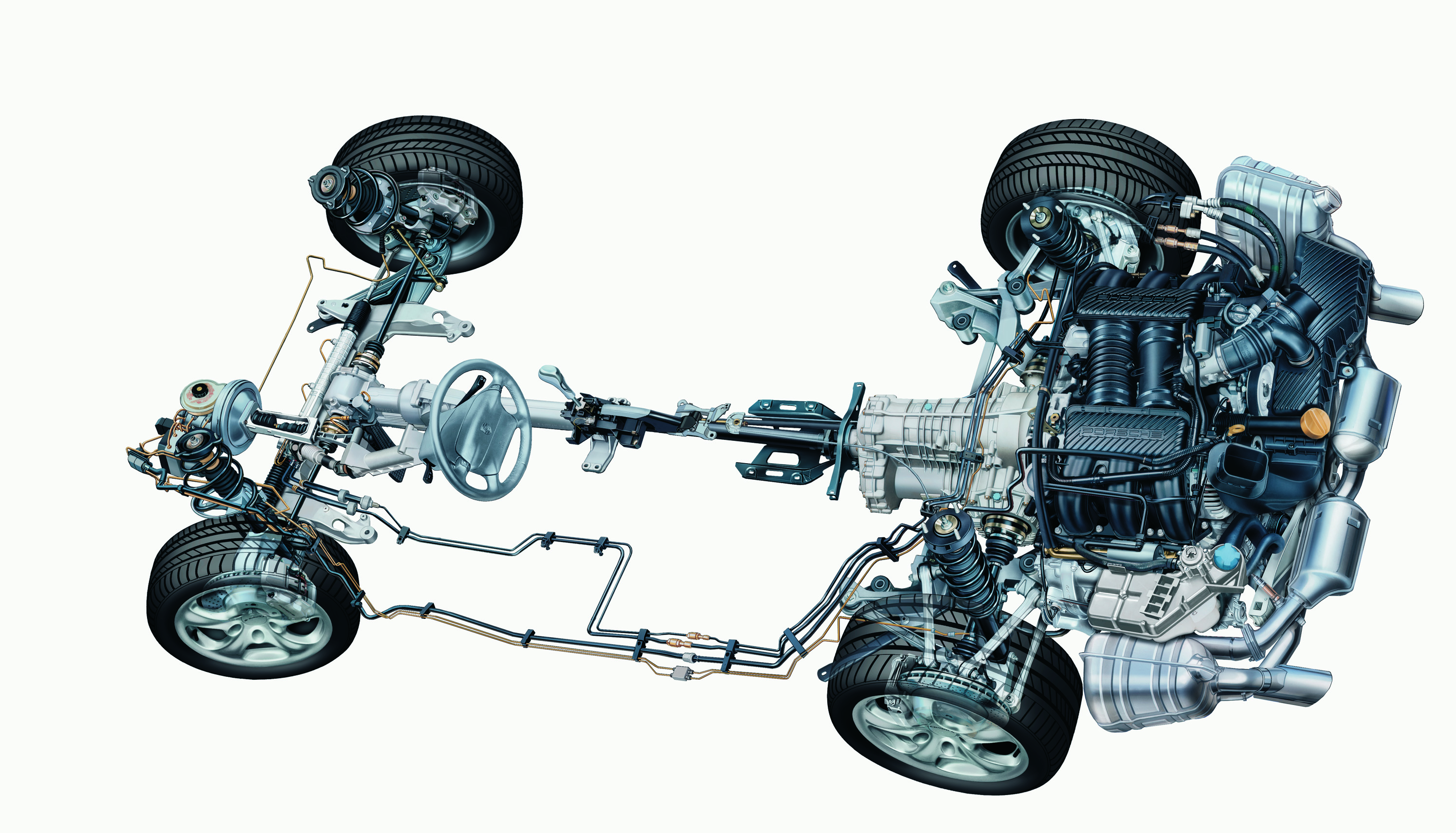
“For the 997 these were the first developments,” Thomas Wasserbäch explained. Like his colleagues, he constantly developed ideas for the next-generation car. With them written down, when that project materializes, everyone knew exactly what they wanted to do. “We wanted to bring the engine speed of the GT cars to the serial production; it was our idea to lift the speed 300 rpm more. But to do that, you have to make it a little lighter in the drivetrain,” he said. “We learned it was better to make some mounted camshafts very exactly, to make the tribology, the interplay of friction and lubrication, better. So the friction goes down. That was another idea,” Wasserbäch added. “This would improve fuel economy and performance. “Our oil pump is a variable oil pump,” he continued. “We saw when we optimized the electronic application, the oil pressure was better; it improved on racetracks. So we retuned our system and we had lower oil pressure on the road when you drove on the highway in normal conditions. And when you went on the racetracks, the oil pressure came up.” Since they had forces of 1.3 or 1.4 G lateral acceleration with the 20-inch wheels, they had to provide a system for the engine to serve those needs as well. “It truly can be a car with two characters. It’s always a special engine for this car. Its optimums you see in the packaging. There is no free space! The engine is optimally configured for this car. “You always must have ideas because it never ends,” Wasserbäch said. “In the next generation you have to look for how you can increase performance again and drop fuel consumption and emissions more. So you need ideas. Our aim is that in the future, Porsche always has flat sixcylinder engines on the market. We know we have to hold onto the flat six.”

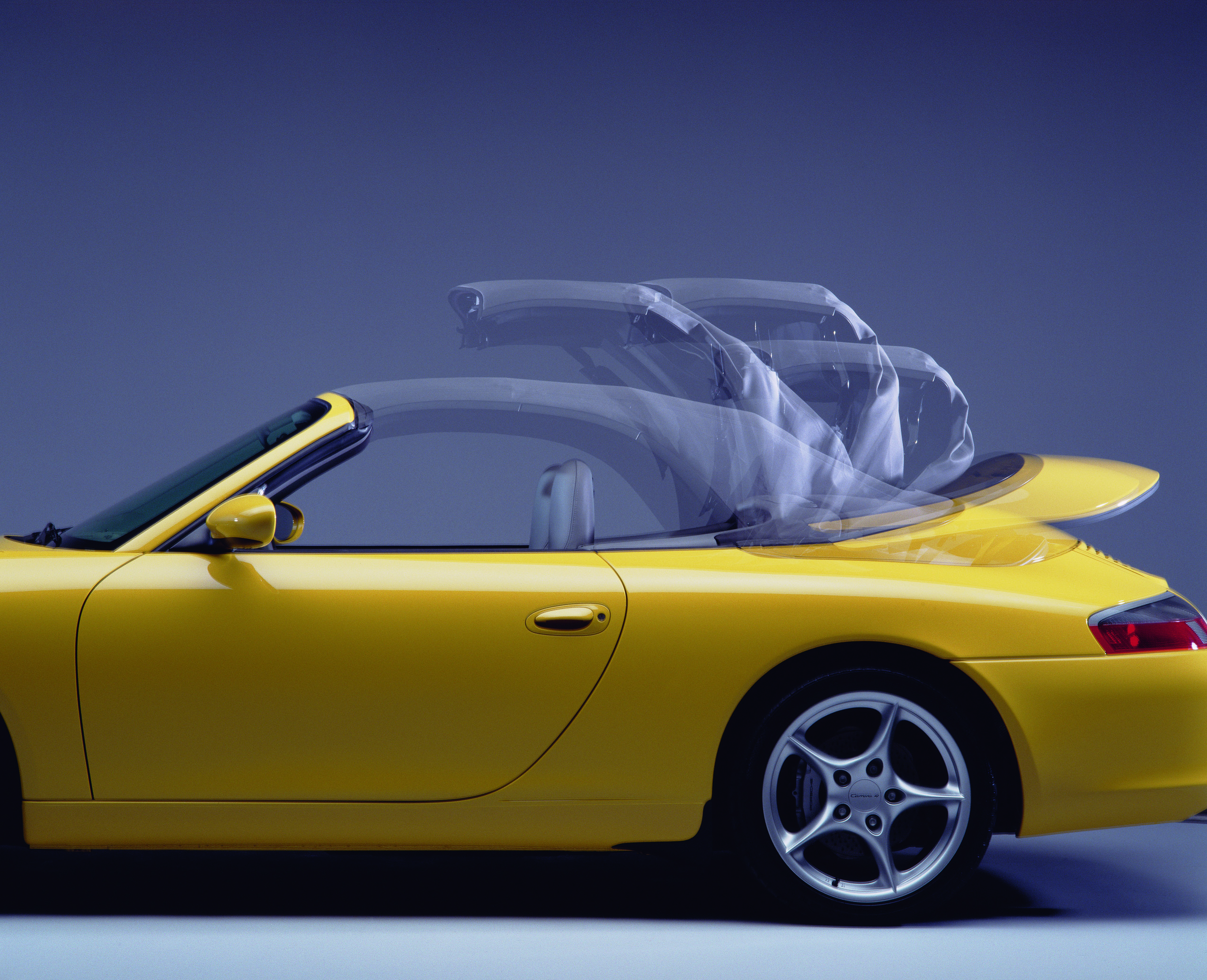
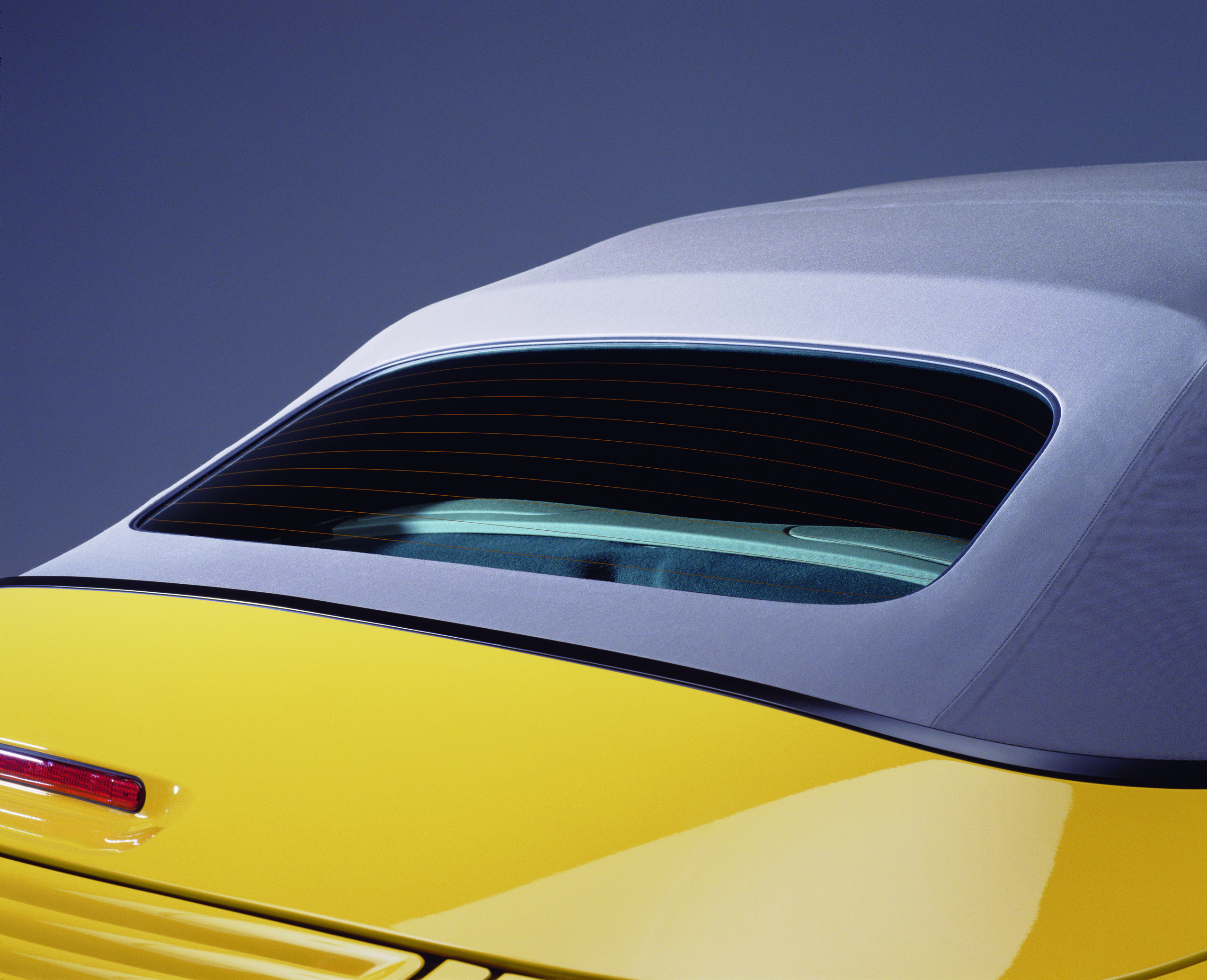
The engine for the 991 Carrera, still 3,614cc displacement, developed 350 horsepower at 7,400, while the S engine, at 3,800cc, turned out 400 at the same engine speed. Both the 991 coupe and cabriolet achieved their best acceleration times with the seven-speed PDK—making the 0 to 100 kilometer-per-hour run in 4.6 for the Carrera and 4.3 for the S. With Sport Chrono Plus, it was possible to shave another 0.2 seconds off each acceleration time. The new seven-speed manual, based on the seven-gear PDK, provided the greatest top speed potential, taking the S up to 189 miles per hour and the Carrera to an even 180. The cabriolet, introduced in the fall of 2012, provided equally sensational performance, achieving another of Porsche’s targets—to close the gap between closed and open car capabilities. Another target for Style Porsche staffers was to further improve the looks of the cloth top when it was raised. With this convertible, the look was nearly Speedster-like as the arc from windshield to rear deck lid was the smoothest—and most reflective of the coupe lines—yet. The tendency to use magnesium in the convertible top systems went further with this new system, as not only the front frame, but also the panel bows were die cast from the lightweight metal. Conscious decisions in spring and damper rates—meaning using exactly the same ones in the coupe and the convertible—provided slightly softer handling and slightly more understeer for the open car, a combination that Porsche learned over nearly thirty years of convertible production fit its open car buyers comfortably. Porsche followed along in its now-traditional path and introduced the Carrera 4 and 4S models at the end of 2012 for sale throughout the world as 2013 models. The carefully planned proliferation of models included 991 GT3 introduced at the Geneva show in March and a 2013 Fiftieth Anniversary model and Turbos throughout the year

RACING THE 911

It was inevitable. As soon as the new Porsche reached its customers, they felt the urge to test it, to compare it against the other makes out there. Neither the factory nor privateers wasted much time. Barely four months after production and deliveries began in September 1964, Peter Falk and Herbert Linge ran a factory-prepared 160-horsepower 911 on the Monte Carlo Rally, starting from Frankfurt on January 15, and finishing in Monaco on the 20th. From the start, they kept pace with another Porsche entry, a 904GTS, with Eugen Bohringer driving and factory racing mechanic Rolf Wütherich as co-driver and navigator. When the results were tallied, the Bohringer/Wütherich 904, No. 150, finished second overall and the Falk/Linge 911, No. 147, came in fifth, giving the new model its first international class win. Ferry Porsche liked his cars competing in rallies. The multi-day events usually drove through several countries and brought attention to the cars from spectators and newspapers. To anyone with doubts, events such as the Monte, the Liège (Belgium), Rome-Liège, and other long-distance runs demonstrated the versatility of these cars and their durability and tractability on hard pavements as well as on dirt, ice, or snow. The next year, Günter Klass and codriver Wütherich took first in the German Rally and first in the GT class on the Alpine Rally, and they finished well enough through the season to win the Group 3 European GT Rally Championship for 1966. Porsche 911s first appeared at Le Mans in 1966 as well. French distributor August Veuillet, founder of SonAuto, begged Zuffenhausen for cars to race and Ferdinand Piëch sent a prototype 911S for the 24-hour endurance run. Drivers Jean Kerguen and Jacques Dewez finished 14th overall, covering 2,369.3 miles averaging 98.7 miles per hour. They stayed clear of the Ford GT/Ferrari battles and won the under 2.0-liter class. Dewez drove it from Veuillet’s dealership in Paris to Le Mans and back after the race. To prove this was not some fragile prototype, Veuillet put it on sale in his 16th Arrondisement showroom on Rue Paul Valéry the following morning. The company had long supported hillclimbs as well, and since the inauguration of the European Hill Climb Championship in 1957, Porsche cars and drivers had won the outright title in either Sports Cars or GT every year since. These uphill sprints not only earned newspaper space, but also provided engineers opportunities to explore extremes of power development and weight reduction. Eberhard Mahle won the GT class championship in the seven-event series driving a factory-prepared 911 in 1966. Across the Atlantic, in early February at Daytona during the first race of the International Sports Car Championship season, Jack Ryan, Linley Coleman, and Bill Bencker finished 16th overall and first in two-liter GT class. This was the car’s first significant North American victory. They took second in class at Sebring six weeks later. In southern California, former Porsche racing mechanic Vasek Polak had become a Porsche dealer, but he never lost his roots in or love for competition. Polak teamed up with Jerry Titus, onetime jazz trumpeter–turned-mechanic-turned-racer-turned–Sports Car Graphic magazine editor. In 1966, Titus drove a Polak-prepared 911 to win the Sports Car Club of America (SCCA) D Production national championship.

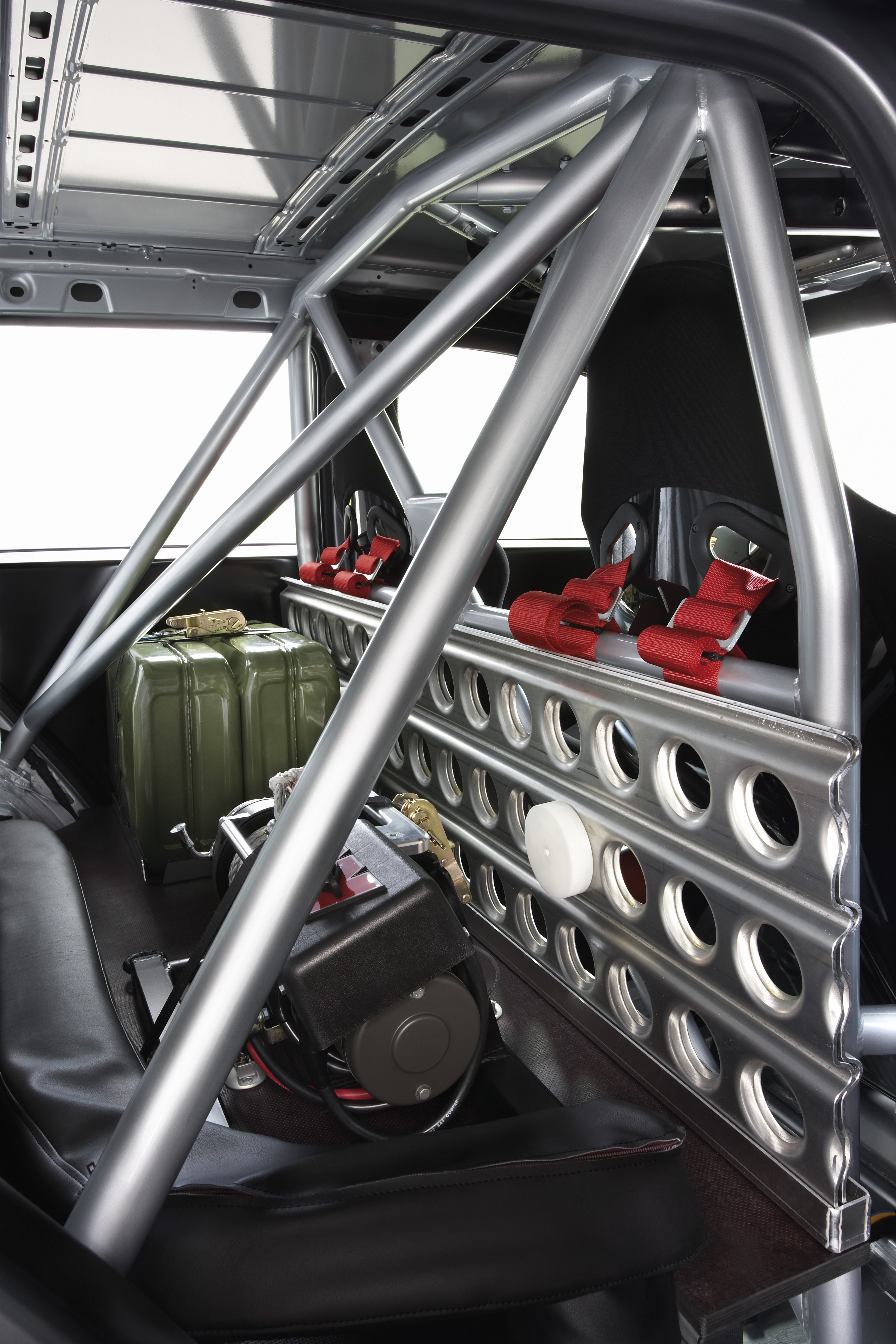
THE 911S AND THE 911R Two new models arrived for 1967 that sharpened the competitive edge for many 911 racers. The S entered dealer showrooms as a high-performance production model that many buyers took out and raced, and a much smaller run of 911R models established a pattern for special racers to come from Zuffenhausen for the next half century. Ferdinand Piëch, who ran the company’s versuchabteilung, or experimental department, developed the R (for rennen, or race) to determine 911 performance maximums and weight minimums, similar to hillclimb cars but constructed and tuned for endurance events. Compared to the fully equipped 911S, the R weighed 502 pounds less, at 1,764 pounds. Compared to the standard S 160-horsepower engine, the aggressively massaged R engine developed 210. Piëch was less interested in producing the car than learning from it, but racing and press chief Huschke von Hanstein imagined broader enthusiast interest and he worked to convince marketing and sales that Porsche could sell as many as 500 of these cars. They never agreed. After working through a series of four development prototypes during 1967, Piëch commissioned 20 preproduction cars from Karosseriefirma Baur, Karl Baur’s body manufacturing operation in Stuttgart with a reputation for uncompromising quality. Baur and Piëch left the basic 911 steel unibody unmolested, recognizing that its inherent strength was crucial for any race car’s handling. But Baur skipped body undercoating. It replaced steel body panels with thin gauge fiberglass for the front fenders, front and engine deck lids and bumpers, and doors. Baur used aluminum hinges on doors and deck lids. The exterior door handle was plastic, as was the T-handle used inside. Side and rear windows were extremely thin Plexiglas, and the windshield was half as thick as a production version. Dozens of other tiny features differentiated the R from production S models. For months racing mechanic Rolf Wütherich had a full-time job drilling holes everywhere to eliminate extra grams of weight. Once the car was lightened, the engine was the next crucial element. Frustration with the performance limits of the twin-fan Typ 745 flat six led engineers Hans Mezger and Piëch to develop the production 901/01 engine and its racing version 901/20 that used a magnesium crankcase and saw most use in the 906 race cars. The engineers evolved a special version for the R, 901/22, using aluminum cases and feather-light titanium connecting rods on its forged steel eight-main bearing crankshaft. To create the 1,991cc displacement, Mezger specified 80 millimeters bore and 66 millimeter stroke. A dual-spark plug ignition helped achieved the high horsepower output. Engineering choices for high-speed racing gave the engine radical camshafts with extensive lift and overlap between intake and exhaust open and closure. Another choice, the large Weber 46 IDA 3C carburetors, used short throttle arms that made accelerator pedal throw extremely quick. The car was meant for flat-out driving. Weissach finished assembly of the 20 Rs in fall 1967, making them 1968 models with appropriate serial numbers. Because “preproduction” and production ended with the 20 cars, it remained a prototype during its competition career so the company used it most in rallies and endurance events where its rarity was no drawback. In August 1967, drivers Vic Elford, Jochen Neerpasch, and Hans Herrmann won the 84-hour Marathon de la Route around the Nurburgring in a 911R with the Sportomatic transmission. The Marathon relocated the former Liège-Rome-Liège rally off public roads as speeds grew too high to ensure public safety. Two months later, a marathon of a more private sort engaged factory driver Jo Siffert and three colleagues, Dieter Spoerry, Rico Steineman, and Charles Vogele. The four drivers launched an officially FIA-authorized distance record attempt in a long-tail 906 that Siffert and Spoerry owned, circling the oval track at Monza. But the old concrete surface on the high banks broke their race car’s rear suspension, and when they called Zuffenhausen for help, Piëch dispatched 911 R-001 and 002 to the rescue. Loaded with spares, 002 went on ahead while engine chief Paul Hensler, chassis boss Helmuth Bott, and testing director Peter Falk supervised a few changes and upgrades to 001, including replacing the engine and fitting two identical fifth gears, one in the fourth cog position anticipating that days of wear might fatigue the other.
Previous Page Page 22 Next Page