THE PETER SCHUTZ ERA
By April 1980, Ferry had a much better grasp on things. At a reception on the terrace of his family home in the hills above downtown Stuttgart, he nailed it while speaking to another of his candidates: “We have people who know how to design automobiles, how to build them, to sell them and service them. Our problem is that we are not making any money.”
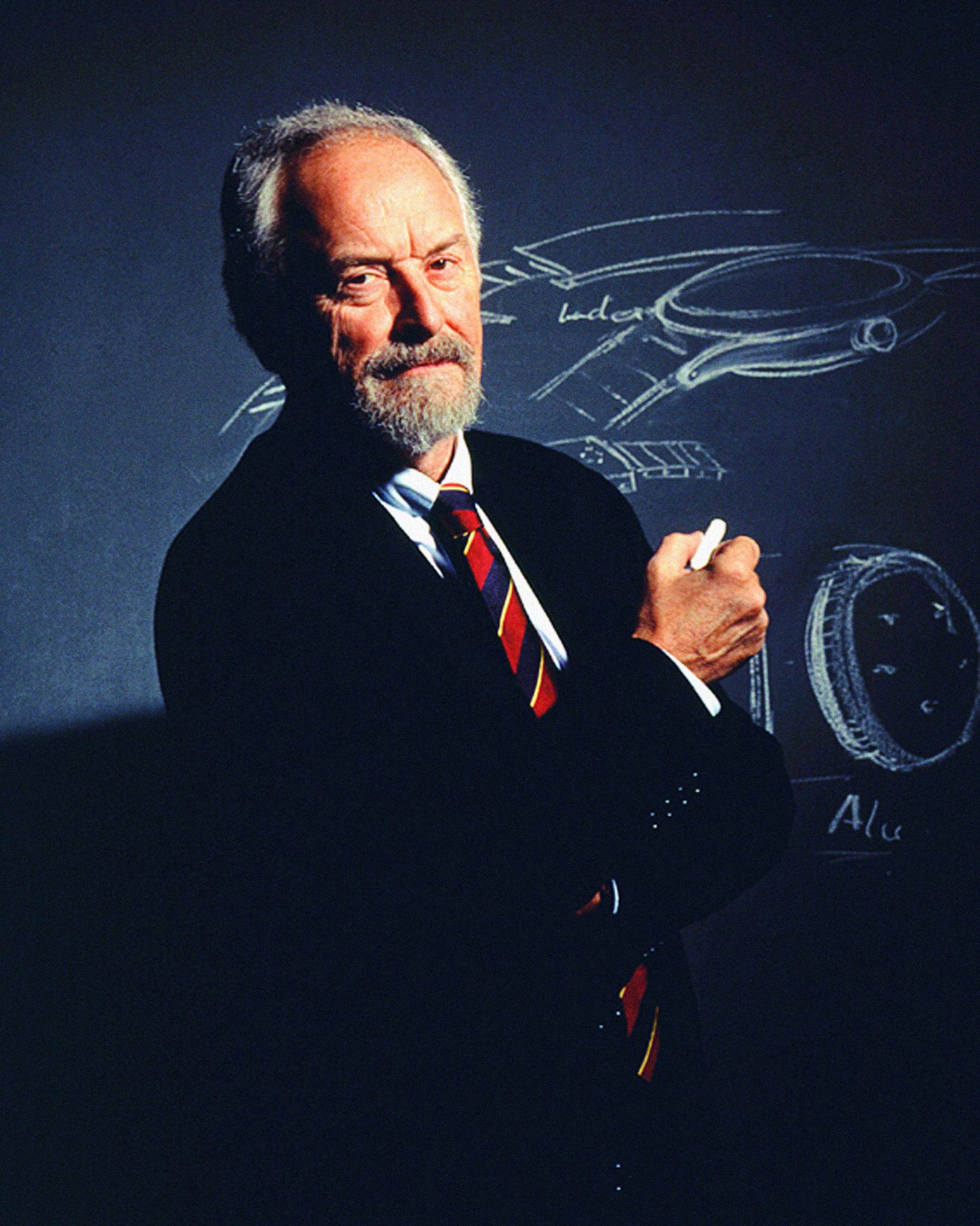
Ferry was speaking to Peter Schutz, a German-born, American-educated mechanical engineer with direct experience in sales. Schutz knew how to make money. At Caterpillar and at Cummins, he had made them money and he improved relations with labor at Cummins to such an extent that the Teamsters Union asked him to deliver their national convention keynote address.
“When we look for the reasons for our poor earnings,” Ferry continued, “we’ve got manufacturing and sales and engineering all working against each other. We are looking for someone who can get this whole organization unified and working together.”
Schutz knew how to do all that. When he left Cummins, he moved to Germany to manage Klöckner-Humboldt-Deutz (KHD), the heavy diesel engine manufacturer. He improved working conditions through employee empowerment, which increased productivity and raised company profit.
Schutz took the job that Ferry offered, and he spent several months learning about the company and its products before he arrived with his wife Sheila in January 1981. Dealers everywhere told him that Porsche’s cars were too expensive and they had quality control issues. He heard morale was low in Zuffenhausen and Weissach because Porsche was discontinuing the 911 and moving toward more 924- and 928-type automobiles. Peter figured there was more to this story.
From dealers, owners, and service people, he learned that the hydraulic camshaft drive chain tensioners routinely failed in the 911s. This was a source of quality complaints. In his first meeting with production engineers, he asked if they had a cure for this problem.
“Oh yes, but the car is going out of production,” they told him. “And the repair kits have become a profit source for the company.” Schutz heard this cynical view and worried that savvy customers attached it to every Porsche product, wondering if compromising engineering somehow made the company more money. But his biggest problem was with the engineers’ first sentence. Ferry’s finance people had shown him that the 911 remained Porsche’s most profitable automobile. Thousands of drivers seemed to love the cars.
That evening he called on Helmuth Bott, the director of engineering, at his office in Weissach. On the wall, Bott had a large bar graph that traced out production spans and life expectancies of Porsche’s products. The 928 ran out five years. Around that time the 924 became the 944 and that ran out another five years.
“The 911,” Schutz recalled in an interview in 2012, “stopped in mid-1981. There was just a short bar and then it stopped. That was only months away. I thought about everything I had heard. I walked to Mr. Bott’s desk, picked up an indelible marker, and I ran the line off the end of the graph, kept going on the wall to the corner, around the corner, and onto the next wall.
“‘You can do this, Herr Schutz?’
“‘I can do this, Herr Bott.’”
For both men the question became how to let the automotive world know. Like all his engineers, Bott had drawers filled with proposals, ideas, drawings, and notes he could not show Fuhrmann. For the former boss, the growing threat of U.S. regulations dictated the end of the 911. No more of Porsche’s money, or his staff’s time, could go into this anachronism.
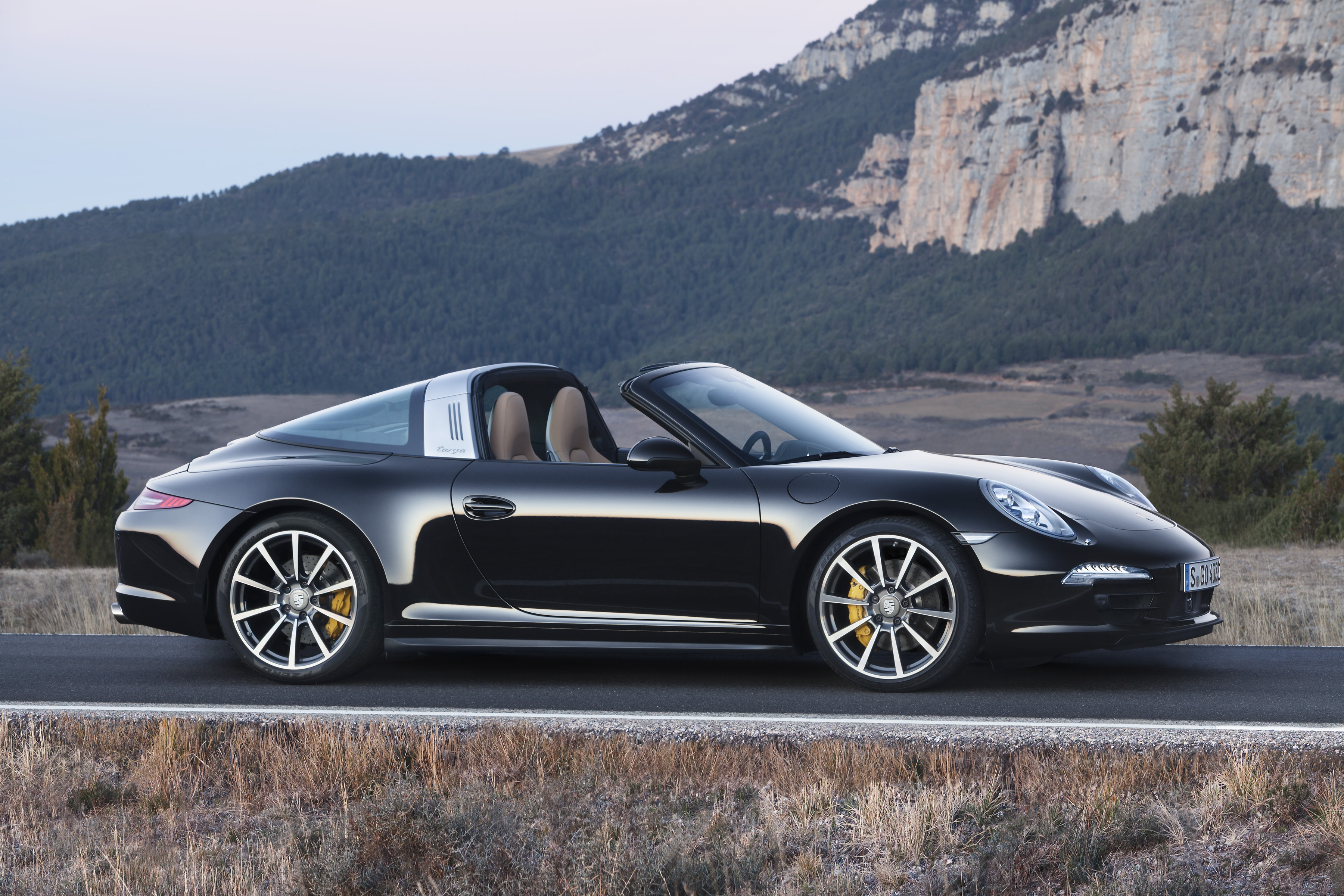
Bott felt differently and he had put in the time: an open 911? All wheel drive? His predecessor, Ferdinand Piëch, had pushed Audi’s engineers to create the Quattro with prototypes appearing in 1978. For 1980, Audi introduced production cars. Bott led Schutz downstairs to a garage where he had hidden something he called his Speedster. Two years earlier, Fuhrmann had threatened to terminate him if he put any more time into it. Schutz was learning that under Fuhrmann, no one worked on 911 models unless it was critical.
And so Porsche’s current production 911s had received just minor running changes. Engineers were allowed to replace the rubber-centered clutches—with their rapid failure rate—with units that used steel springs. Countless owners had complained about air boxes destroyed by engine backfires on cold starts. Bosch and Porsche reprogrammed the K-Jetronic’s mixture. The slow-selling Sportomatic dropped from options lists during the 1980 model year. But these were Band-Aids. Nothing in the pipeline or on the horizon gave anyone outside Porsche an indication of what Peter Schutz had done to Helmuth Bott’s wall. Something far more dramatic was essential for that purpose.
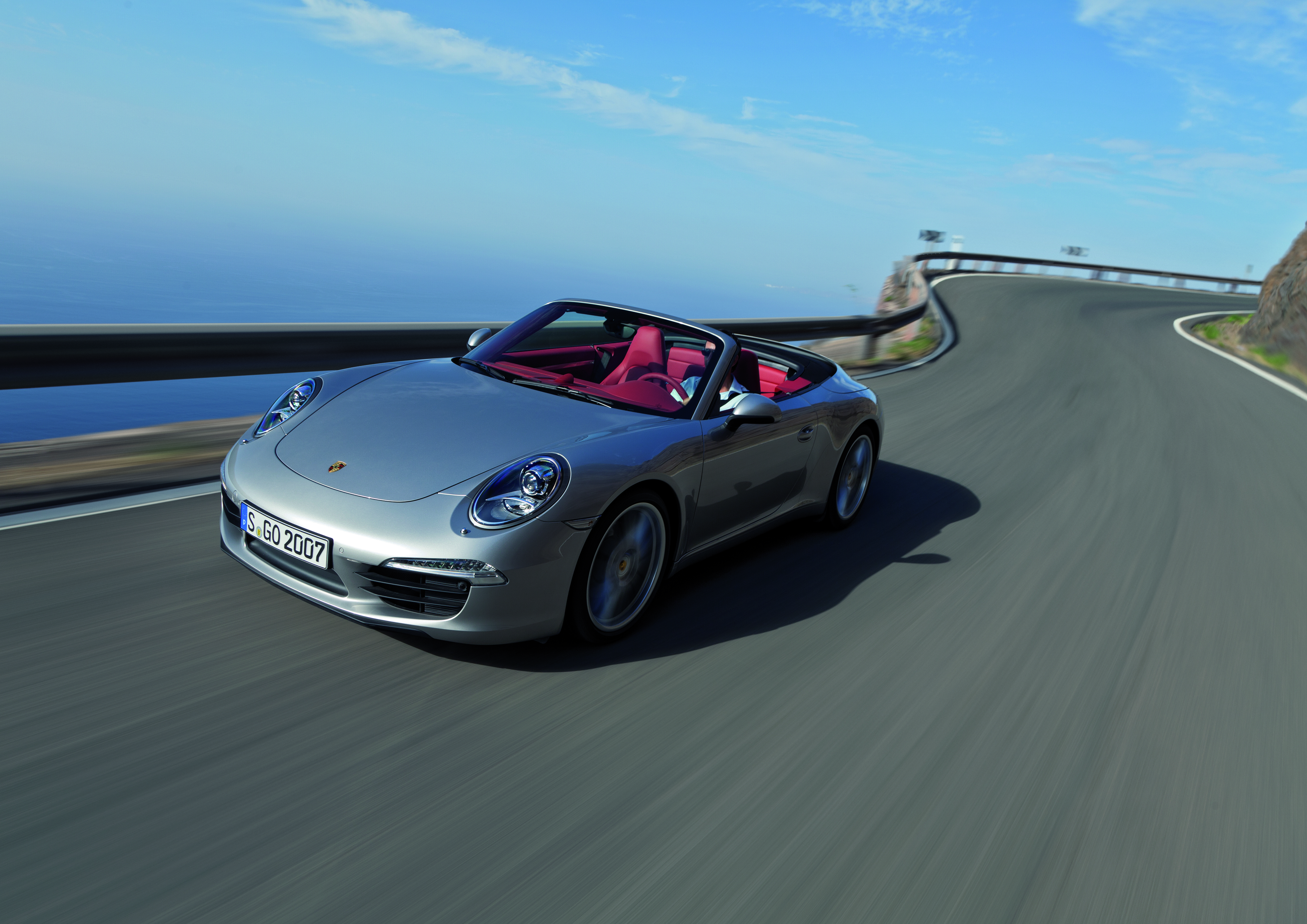
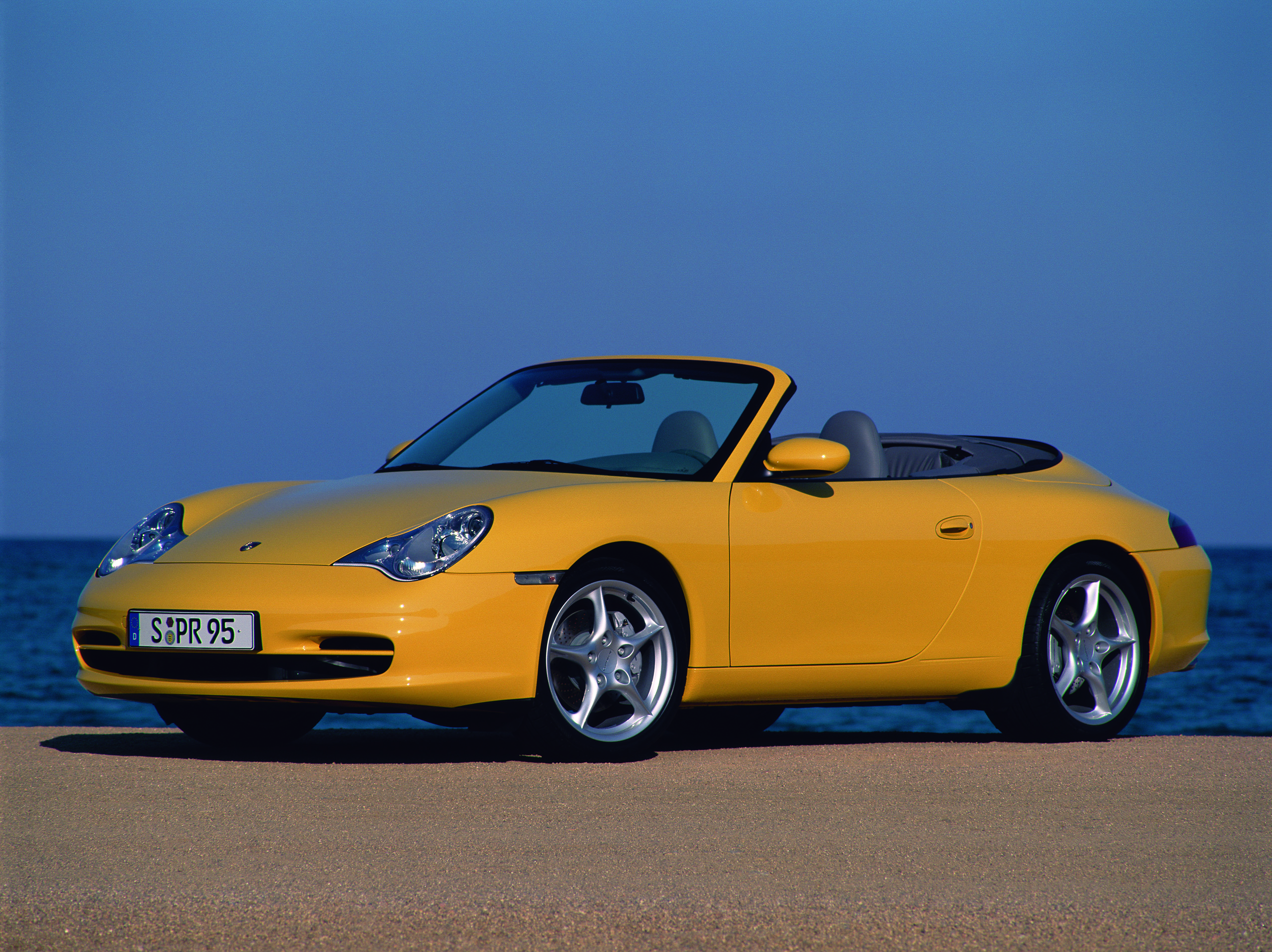
Dramatic debuted at the 1981 Frankfurt IAA. This always had functioned as Porsche’s home show, where it revealed its greatest treasures. Schutz had blessed this project early in March. On April 15, the two men saw a white prototype with a red leather interior. The next day, Bott drove it, enjoying the wind in his hair, and 18 days after that the supervisory board approved development toward production. Porsche was going to produce a 911 cabriolet.
“It was an interesting new challenge,” Eugen Kolb said of the cabriolet development process. “When Schutz saw the first prototype, he said, ‘Okay, let’s go to series production!’ And the date was clear when Schutz wanted it. So everyone suddenly was very much awake with this information— engineering, design, purchasing, sales, everyone woke up when they heard.
“Schutz saw the prototype and expected they could make it in this way very soon. It just was not possible. He did not understand how much work was needed.”
The show car, almost cobbled together on a hastily fabricated all-wheel-drive Turbo 3.3 platform, was the sensation of the show. Visitors knew Porsche, however, and they understood that what they saw, what some were ready to order on the spot, still was 18 months or two years away. For some of Schutz’s staff, that much time would have been a generous gift.
“The next studie of the convertible was presented in the Geneva auto show,” Hans-Peter Bäuerle explained. That show took place March 4–14, 1982. “It had to be designed very quickly. They made it. Put it in the display, everybody was enthusiastic. Schutz said, ‘Build it. Put it into production.’ And the guys who had to build it said, ‘Oh, my God!’ And even so, they expected to have five more years to develop it.”
But Peter Schutz was not a five-year man.
Bäuerle was a graduate in mechanical engineering from Stuttgart. Much of his studies concentrated on sheet metal forming, production engineering, and machine tools. His particular interest was aluminum. Hired in 1978, he first attended to some body manufacturing problems and producing an all-aluminum 928 prototype. Startled by this possibility, the steel industry paid attention and they began producing high-strength steels about this time. Weissach’s engineers were divided in two groups, those who designed and those who tested. Hans-Peter was a tester.
“I knew that between the 356 and the 911, there was no convertible. Because everyone knew it was not possible to make a convertible out of the 911. Only the Targa.” His assignment from Helmuth Bott was “to find a way to make a convertible out of the 911 that must work.”
In the beginning of the 1980s, Bäuerle had developed methods to measure the stiffness of car bodies. Until this time, Porsche only had done the so-called one wheel drop test. “With a car secured on a test bench on one stand at each corner, engineers lowered one. They measured the twist or torsion on the body and judged it: it’s good, it’s not good. It was not extremely precise,” Bäuerle said. With Bäuerle’s direction, Porsche began to install equipment to measure the whole body.
“ The 911 stopped in mid-1981. There was just a short bar and then it stopped. That was only months away. I thought about everything I had heard. I walked to Mr. Bott’s desk, picked up an indelible marker, and I ran the line off the end of the graph, kept going on the wall to the corner, around the corner, and onto the next wall.”
— Peter Schutz
“So we took a 911 Targa and cut away the rollover bar. From a body in white, we removed the bar, welded the axles stiff, mounted it without any rubber into the body, and put it on a rigid bench. Then we glued and screwed some measuring arms—about ten of them—all along the body. We used mechanical gauges—this was before electronics.
“It took about half a day or so to measure the bending of the car. That was first,” Bäuerle said. “We measured that by putting weights at the middle of the car, under the seat area. You get a curve that brings down the middle and brings up the ends. And you can calculate the bending stiffness of the body.”
To improve the numbers, they removed the testing equipment and welded stiffening material into the rocker panel and measured it again. There were no computer aided design (CAD) or calculating systems yet. The engineers did work by hand and eye and experience and slide rules, and they figured out where to reinforce the body to increase stiffness.
“Our goal was to get at least 60 to 70 percent of the stiffness of the coupe. We already had that base number for the closed car. And for example, if you take a coupe and you cut away the roof, you are at only 10 percent of the stiffness. So absolutely not drivable. Impossible to drive the car,” Bäuerle said. Shocking as this sounds, this was not unlike the results for any coupe on the market at this time if engineers removed the steel roof without adding any further reinforcement. Very few manufacturers had bothered to quantify it by this time.
The engineers performed torsion tests as well, setting the car on the stand, dropping one wheel, and applying a winch pulling at a prescribed force. They watched the front and the rear of the car twist and calculated the difference from level ride with gauges that gave results in Newtonmeters per one degree.
“We did this with the Targa. We found that if you cut away the bar, the torsional stiffness is 20 percent. And that is absolutely not sufficient. And maybe that is why they stopped any convertible development before this time. Because it couldn’t work.
“We reinforced behind the front wheel, the rocker panel, and also in the area where you put your feet. We combined the front sheet metal with the rocker panel so you have a good flow. And when we had a certain level, I went to Mr. Bott.
“I told him we had 60 percent. He said we have to test it.”
Bott told Bäuerle to take ten Targas out of the production line and find the worst one—these were handmade cars with human assemblers at the dawn of the age of high-strength and ultra high-strength steel.
“We selected a car, the worst of them. Actually it belonged to a guy at Weissach,” Bäuerle said. “Nobody liked him much. He had special ordered it. Gold metallic. Yellow leather interior. And we took it. He was furious. ‘I will go to Mr. Bott!’
“‘Okay. You go to Mr. Bott.’ This was safe because I knew Mr. Bott supported our project. We cut off its roll bar. Very rough. It was brutal. We welded the reinforcements in place, and then we painted it black because all prototypes were black. And we ran it on the Weissach endurance road.
“The bottom limit to get a car freed for manufacture was that it must run 8,000 kilometers around the clock with no problem. Which is about the equivalent of 180,000 kilometers on a normal road, driven hard by a professional. So it’s a rough test.
“And we had a big surprise. We did not expect this. After a thousand kilometers, the engine fell out. Big problem. Broke the mounts from vibration. And we didn’t know why because our prototype had good torsional stiffness, even better than the Targa.”
This development led to Porsche’s first dynamic stiffness testing system. A fellow engineer suspended the body on elastic straps and attached a vibrator to it. As they varied the vibration frequency, they forced the car to its own vibration frequency, called its resonance frequency. They learned that the body-in-white convertible oscillated at a lower frequency than the Targa. They added parts to the body to test the effect each had in altering that frequency.
“ It took about half a day or so to measure the bending of the car. That was first. We measured that by putting weights at the middle of the car, under the seat area.
— Hans-Peter Bäuerle
“And when we put in the engine and the gearbox, we found that as the body rotated left-rightleft, the engine and gearbox rotated right-left-right. And what was clear was that it came to a resonance catastrophe,” Bäuerle said.
“We had with us a good design engineer in our chassis department and he did something that is now in all convertibles if you open the engine compartment and look inside. The normal 911 is mounted with a schwert on the backside; we call it a sword. The convertible has a lever with a gas spring, like a shock absorber, mounted at the body and connected to the engine. It serves as a torsion damper and eliminates the engine working against the body. So we put that in and we had no problems at all with the 8,000 kilometers.”
But that was only one of the big challenges facing the convertible crew. They still needed a top.
“Eugen Kolb was the one who made the top,” Bäuerle explained. “He was actually the one with the idea to make a top that does not deform so much in the wind as other convertibles. When you drive fast, other convertible tops blow up like a tent over you.” The cobbled-together top for the show car was meant only for slow maneuvering on and off exhibition floors.
“The levers you need for the kinematic,” Kolb explained, “are new, different, compared to the 356. The 356 you have, it is like an umbrella. For the 911, to stow the top behind the seats, you need a kinematic [mechanism] that makes it close and fold and everything. And they had only bent tubes in this Geneva show study. They had nothing proper for a convertible roof.
The 997 profited, literally, in its engineering and design from the great success the 996 lineup brought to Porsche. Porsche launched the 997 for 2004 model year. Porsche Archiv
Porsche’s optional composite carbon brake system,PCCB, made downhill sprints feel comfortable and secure on the Model 997. Porsche introduced the system first as an option on 2001 911 GT2 models, and the brakes were easily recognized by their bright yellow calipers. Porsche Archiv
Minimal body camouflage involved a clever paint scheme that resembled the predecessor 996 headlight configuration. By the time development models reached this stage, engineers were fine tuning optional suspensions. Porsche Archiv
Concept sketches early on during the 997 creative process showed the car with 19-inch wheels and immensely wide tires. As engineers tested the idea with carryover 996 platforms, they realized an entirely new structure was necessary to handle the forces for this new 997. Porsche Archiv
August Achleitner’s decision to develop the Cabrio alongside the coupe was one development innovation that differentiated 997 models significantly from all that came before. It led to much greater stiffness and rigidity in both cars, which improved further with these second generation cars for 2009. Porsche Archiv
With Porsche’s economy restored, the design and engineering team were allowed to divide up light sources again. Grant Larson’s 997 face looked more familiar to longtime 911 enthusiasts. Porsche Archiv
The 2006 Model 997 Turbo delivered 480 horsepower at 6,000 rpm, a 60-horsepower increase over the second-generation 996 models. Porsche offered it only on the all-wheel-drive platform. Porsche Archiv
For the first time since the 1970s, Porsche offered a base 911 Carrera (with a 3.4-liter flat six) and a 3.8-liter Carrera S model, with corresponding differences in horsepower and trim. All-wheel-drive C4 and C4S models appeared for 2005. Porsche Archiv
This fully equipped Carrera S interior boasted not only the Porsche communication navigation system, but also the Sport Chrono Plus option, visible through the steering wheel on the dashboard. Porsche’s active stability management, PASM, also fitted to this model, was another 997 introduction. Porsche Archiv
The Z top system unfolded even at sensible speeds. The new design enabled drivers to raise or lower the roof while cruising as fast as 30 miles per hour. Porsche Archiv
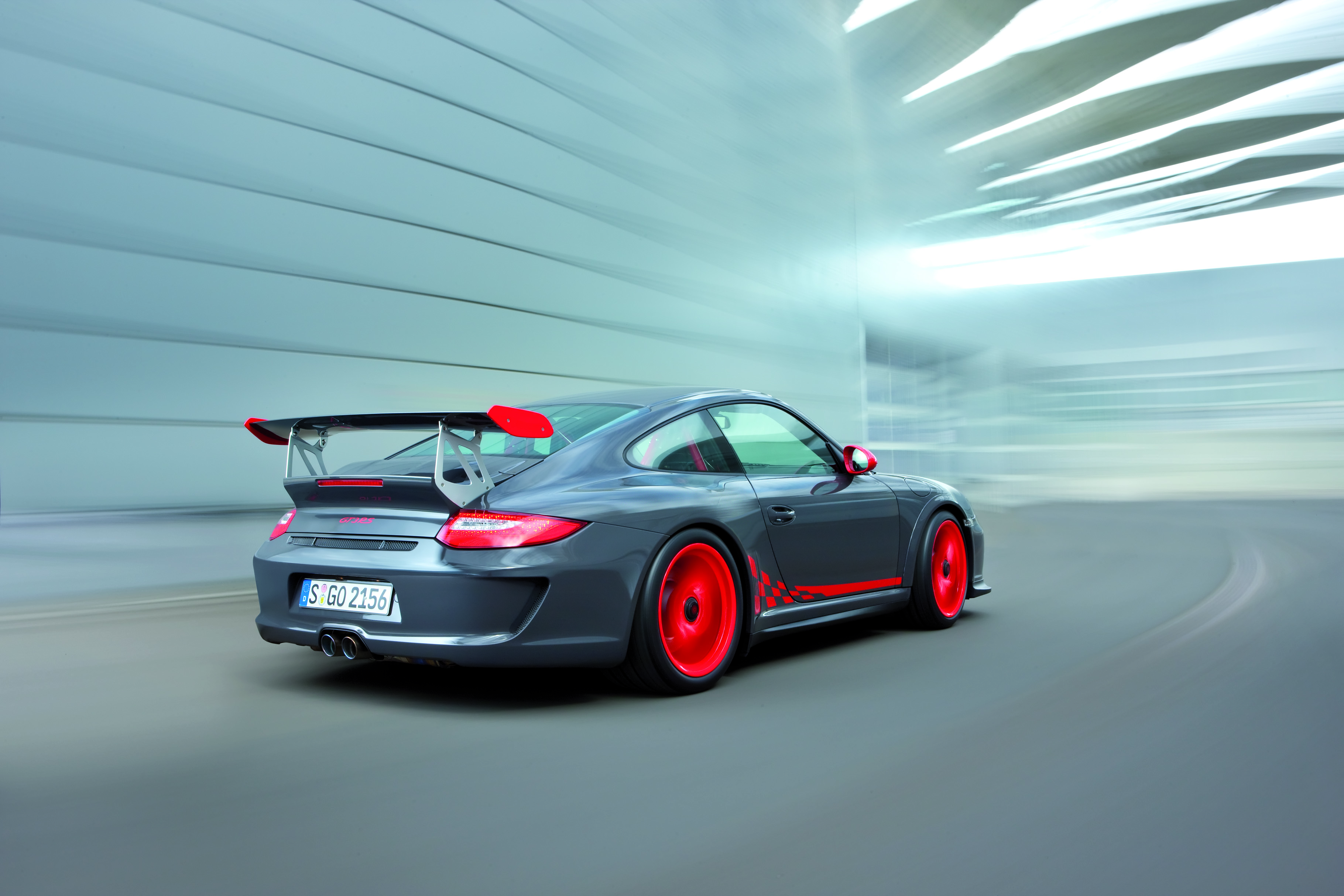
Porsche introduced the 997 GT3 for 2006 model year with new tweaks to the 3.6-liter engine to develop 415 horsepower at 7,600 rpm. Weissach made the PASM system standard on GT3 models. Porsche Archiv
The facelift 997 introduced much more than LED lights. The engine utilized direct fuel injection (DFI) for improved performance and economy and the longawaited Porsche Doppelkupplungsgetriebe PDK double clutch transmission arrived for the road. Porsche Archiv
A variety of technologies and improvements made the 2010 GTS a welcome addition to the 997/2 lineup. The 1.7-inch-wider rear track on 19-inch center-lock RS Spyder wheels made good use of the 408 horsepower available. Porsche Archiv
The new PDK transmission offered drivers a sevenspeed near-instant shifting gearbox that was a perfect mate to draw the best performance or the best fuel economy out of the new 2009 DFI flat-six engines. Fingertip levers on the steering wheel or the gearshift lever were available for those wishing to change gears themselves. Porsche Archiv